Your portfolio is a sales document. Interior designers who book consistent work aren't always the most talented ones in the room; they're the ones who present their work in a way that makes clients feel something before a single conversation starts. Whether you're pitching high-net-worth homeowners, working with real estate developers, or building your brand through social media, the format and quality of how you present your projects directly shapes how much clients trust you and how much they're willing to pay.
Flipbooks AI is one of the tools redefining how design professionals present their portfolios online. But before diving into specific tools, it's worth understanding what actually makes a portfolio work, and what kills client interest before they even get past page two.
The First Impression Problem
Clients form a judgment about your work within seconds. That judgment isn't just about the quality of the design; it's about how professional, organized, and trustworthy the presentation feels. A collection of JPEG files shared over email, or a Google Drive folder with cryptic file names, signals one thing: this designer doesn't think about presentation. And if they don't think about presentation for their own work, why would a client trust them to think about it for their home?
The format of your portfolio carries as much weight as the content inside it. A beautifully curated digital flipbook or a well-structured case study page tells a client, before they read a single word, that you take your craft seriously.
Static PDFs Are Hurting Your Conversions
PDF portfolios have been the industry default for years, but they carry serious drawbacks that most designers underestimate:
- They download to a client's device and get buried in folders
- They don't track whether anyone actually opened them
- They look broken or pixelated on mobile screens
- There's no interactivity, no page-turning, no video embedding
- Sharing them means sending large file attachments
A recent survey of interior design clients found that over 60% of initial portfolio reviews happen on mobile devices. If your PDF portfolio isn't built for mobile, you're losing those conversations before they start.

What Clients Actually Look for in a Design Portfolio
Before and After Transformations
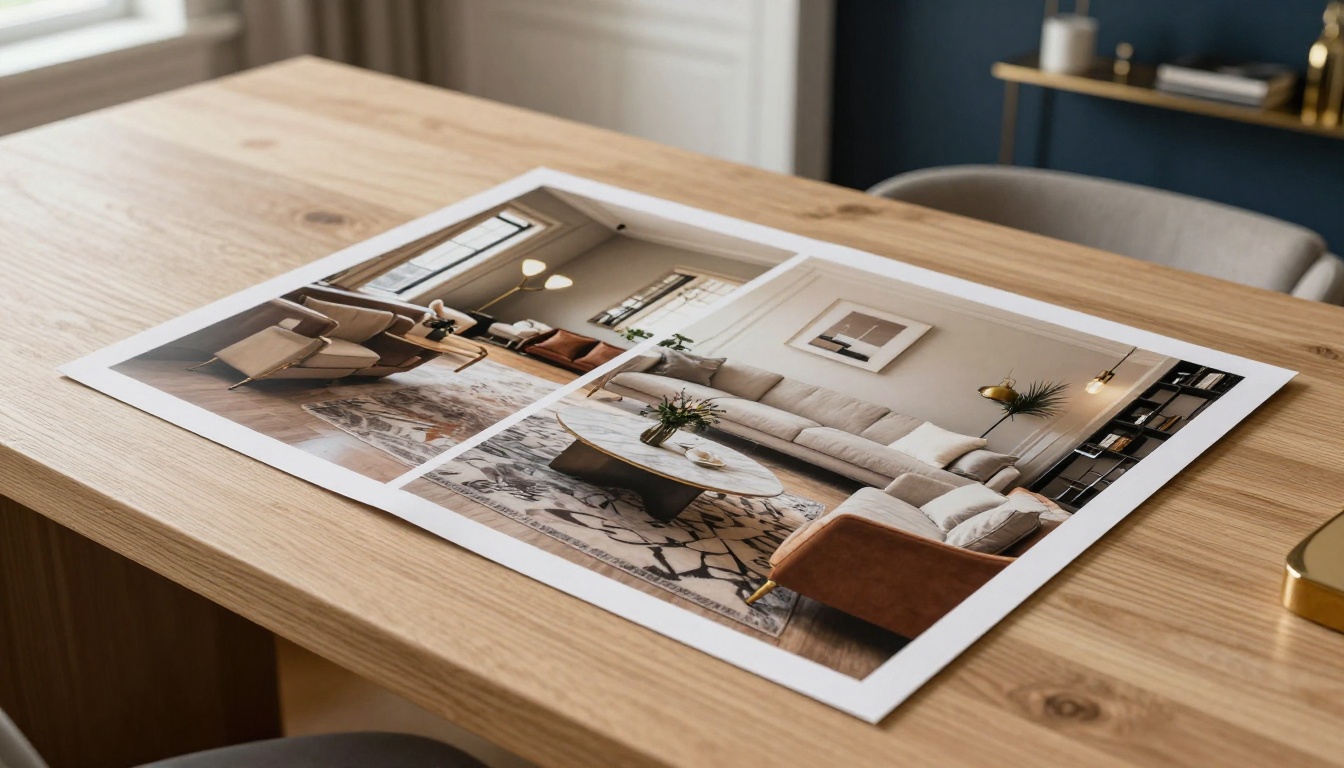
Nothing communicates your value faster than showing where a space started and where it ended. Before-and-after reveals are the single highest-converting portfolio format in interior design, because they make the transformation visible and tangible.
When presenting before-and-after content:
- Show the problem clearly: Clients need to see the original pain point, whether it's a dark cramped kitchen or a dated living room with no focal point.
- Walk through the solution: Don't just show the result. Show the thinking behind it.
- Highlight the details: Close-up shots of textured surfaces, hardware choices, and layered materials prove craftsmanship.
💡 Add a brief written note beside each before-and-after explaining the client's original brief. It shows you listen, and that you deliver.
The Project Story Arc
The most compelling portfolios don't just show rooms; they tell stories. Each project in your portfolio should follow a narrative structure:
- The brief: What did the client want? What were the constraints?
- The approach: What was your design concept or starting point?
- The process: Mood boards, material selections, spatial planning.
- The result: Professional photography, detail shots, and the client's reaction if possible.
This story arc turns a static image gallery into a persuasive case study that builds confidence in your process, not just your taste.
Interactive Flipbooks vs. Static PDFs
| Feature | Static PDF | Interactive Flipbook |
|---|
| Mobile-responsive | Partial | Full |
| Page-turning animation | No | Yes |
| Video embedding | No | Yes |
| Analytics (who viewed) | No | Yes (Professional plan) |
| Password protection | No | Yes |
| Shareable link | No (file download) | Yes |
| Offline access | Yes | Yes (downloadable) |
| Custom branding | Limited | Full |
| Load speed on mobile | Slow | Fast |
Interactive flipbooks win in almost every category that matters for client presentations. The page-turning format mimics a physical portfolio, triggering a more emotionally engaged response from viewers, while digital delivery keeps things instant and trackable.
✅ Use the Digital Portfolio Creator or Portfolio Flipbook Builder for a format that impresses clients across every device.
Video Walkthroughs and Room Tours
If you have video footage of completed projects, that content belongs in your portfolio. A 60-second room walkthrough with ambient sound communicates a spatial experience that no static photograph can match. With Flipbooks AI, you can embed video directly inside your portfolio flipbook pages, so clients get the full immersive experience without leaving the document.
Case Study Pages on Your Website
For long-term discoverability and SEO value, a dedicated case study page for each major project is worth the investment. Each page should include:
- The project overview: scope, location, and style direction
- The brief and design challenges faced
- High-resolution photography from multiple angles
- Material and finish callouts with sourcing notes
- A closing result summary or client quote
These pages build trust with organic traffic, not just direct leads.

How to Structure Your Interior Design Portfolio
Choosing Your Best 8 to 12 Projects
More is not better. A portfolio with 30 projects at varying quality levels sends a mixed message. Curate ruthlessly. Choose 8 to 12 projects that:
- Represent the style range you want to attract: If you want contemporary minimalism work, that's what should dominate.
- Show diversity of room types: Kitchens, living rooms, bedrooms, commercial spaces where applicable.
- Feature your strongest photography: A mediocre photo of a great room still makes the room look mediocre.
- Include a range of budget levels (optional): If you work across price points, showing that range signals flexibility.
⚠️ Never include a project just to fill space. One weak project can undermine the credibility of the nine strong ones surrounding it.
Organizing by Style or by Room Type
There are two main approaches to portfolio organization:
By style: Group projects into chapters such as Contemporary, Traditional, Transitional, and Eclectic. This works well if you want to attract clients with a specific aesthetic preference.
By room type: Group by kitchen, living room, bedroom, bathroom, and so on. This works better for designers positioning themselves as specialists in a particular space.
For most residential designers, organizing by style is more emotionally resonant, because clients are searching for a look first and a room type second.
Writing Project Descriptions That Sell
The copy that accompanies your project photographs does more work than most designers realize. A strong project description does four things:
- Names the location and scope without compromising client privacy
- Describes the original challenge or brief in one to two sentences
- Explains one specific design decision and the reasoning behind it
- Ends with a concrete result or client outcome
Keep it under 150 words. Clients reading a portfolio aren't reading; they're scanning. Make every sentence count.
Creating an Interior Design Flipbook That Impresses
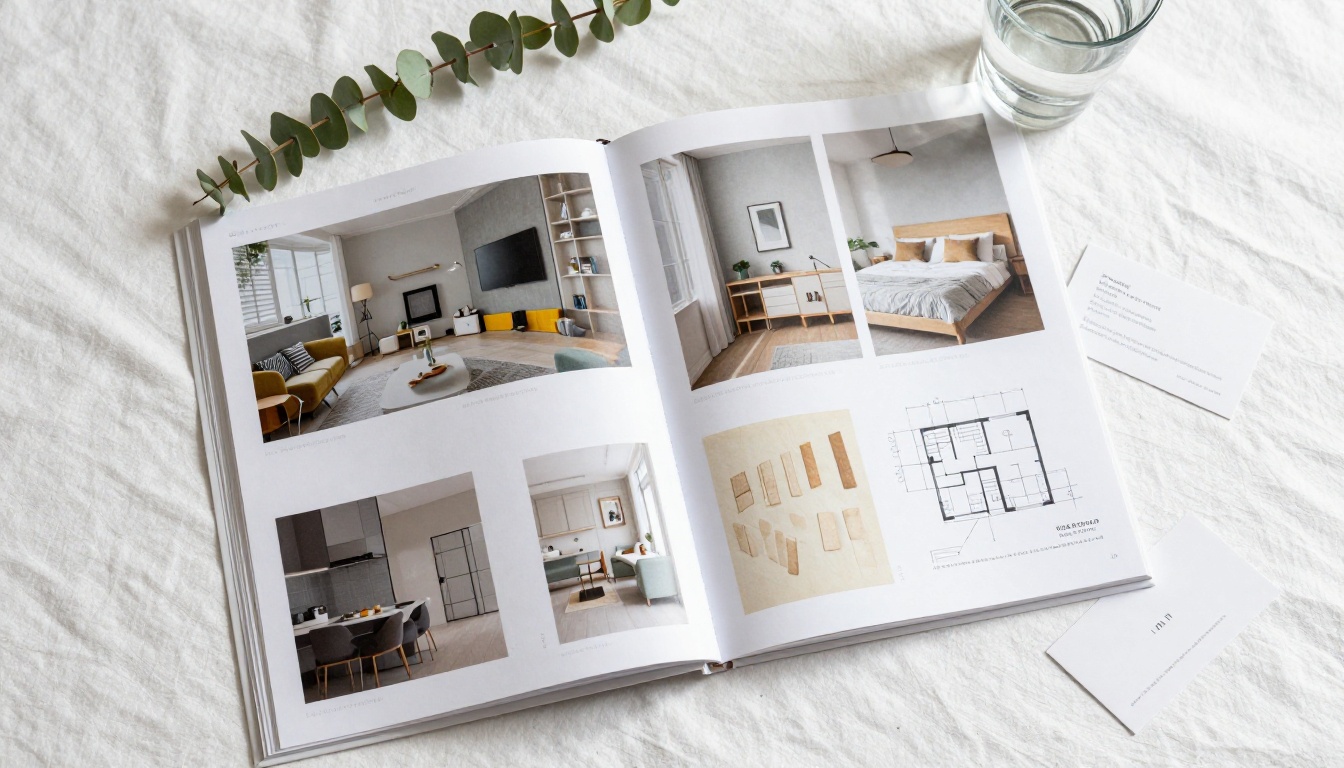
Flipbooks AI turns your PDF portfolio into a polished, interactive digital publication with page-turning effects, full mobile responsiveness, and sharing features built for professional use. Here's how to set one up.
Step-by-Step with Flipbooks AI
Step 1: Prepare your PDF
Compile your portfolio as a designed PDF. Each spread should include one project with images, a caption, and a brief description. Aim for a horizontal landscape layout for the best page-turn effect.
Step 2: Create your account
Go to Flipbooks AI and sign up. The Standard plan and above removes watermarks and allows unlimited flipbooks.
Step 3: Upload and convert
Use the PDF to Flipbook Converter to upload your portfolio PDF. Conversion takes under a minute and your flipbook is immediately viewable on any device.
Step 4: Customize your branding
Add your logo, choose your brand colors, set a custom background texture, and configure the page-turning style. For interior design portfolios, a clean white or warm cream background lets the room photography breathe.
Step 5: Embed video content
If you have video walkthroughs of completed projects, embed them directly on relevant pages inside the flipbook. Clients can watch without leaving the portfolio.
Step 6: Set up sharing options
Copy the direct shareable link to send to leads. Use the embed code to place your portfolio on your website. Set a password if you want to restrict access to specific clients or exclusive presentations.
💡 The Portfolio Flipbook Builder includes a Photography Portfolio option specifically optimized for visual-heavy creative work, making it ideal for interior designers.

Customizing Your Brand Look
Your portfolio should feel like an extension of your brand, not a generic template. With Flipbooks AI, you can customize:
- Logo placement: Title page or header position
- Color palette: Match your website and brand identity
- Page transitions: Smooth flip or slide
- Typography: Choose typefaces that align with your brand voice
- Background: White, textured, dark, or a custom image
These details matter. A well-branded portfolio communicates that you're a professional who thinks holistically about visual experience, which is exactly what interior design clients are paying for.
Sharing and Embedding Your Portfolio
| Sharing Method | Best Use Case |
|---|
| Direct link | Email to leads, social media bio link |
| Website embed | Portfolio page on your own site |
| Password-protected link | Exclusive VIP client preview |
| QR code | Business cards, printed materials |
| Offline download | In-person meetings without internet |
All of these options are available within Flipbooks AI. The Embed Flipbook on Website tool makes it simple to drop your portfolio directly into any website or landing page without technical skills required.
| Platform | Best For | Interactivity | Analytics | Mobile | Price Point |
|---|
| Flipbooks AI | Digital portfolios and publications | High | Yes (Pro) | Excellent | Free to paid tiers |
| Behance | Community visibility | Low | Basic | Good | Free |
| Houzz | Client discovery | Medium | Limited | Good | Free with ads |
| Squarespace | Website portfolio pages | Low | Basic | Good | Monthly fee |
| Google Drive PDF | Quick one-off sharing | None | None | Poor | Free |
| Issuu | Digital magazines and lookbooks | Medium | Limited | Good | Free to paid |
For designers who want professional presentation with real tracking data and no watermarks, Flipbooks AI consistently outperforms the alternatives. Check pricing plans to see which tier fits your current volume and client workflow.
Common Portfolio Mistakes Designers Make
Too Many Projects, Too Little Focus
The temptation to include everything is understandable. But a portfolio without editorial judgment looks like a catalog, not a statement of expertise. Clients don't want to sort through everything you've ever done. They want to immediately feel whether you are the right designer for their project.
Limit your portfolio to your strongest, most representative work. Refresh it at least twice a year as better projects replace older ones. Think of it as a living document, not an archive.
Ignoring Mobile Viewers
More than half of all portfolio views happen on a phone or tablet. If your portfolio isn't mobile-responsive, you're immediately at a disadvantage. Images that look beautifully composed on a desktop become cropped and confusing on a small screen.
Test every version of your portfolio on multiple devices before sending it to a client. With a flipbook format, this problem is largely solved by default since Flipbooks AI renders cleanly across all screen sizes without any extra effort on your part.
Real-World Portfolio Tactics That Work

Using Password-Protected Portfolios for VIP Clients
Not every portfolio version should be public. For high-net-worth clients or confidential residential projects, a password-protected flipbook lets you share sensitive work without putting it on a public URL. You control who sees it, and you can revoke access at any time.
This also works well for staging presentations. Before a pitch meeting, send a curated password-protected portfolio containing only the projects most relevant to that specific client's taste and budget range. It signals that you've done your homework before they've said a word.
Tracking Who Views Your Portfolio
With the Professional plan on Flipbooks AI, you get analytics showing how many people viewed your portfolio, which pages they spent the most time on, and where they dropped off. This data is genuinely useful in practice:
- If clients consistently stop on page 5, that project is a conversation starter worth prioritizing in your next pitch.
- If nobody gets past page 3, your first three spreads need reworking.
- If a lead opens your portfolio six times in three days, that's a signal to follow up immediately.
Portfolio analytics turn a passive document into an active sales intelligence tool.
✅ Lead generation forms can also be embedded directly in your flipbook (Professional plan), so interested clients can request a consultation without leaving your portfolio.
What the Best Interior Design Portfolios Have in Common
After reviewing hundreds of designer portfolios across residential, commercial, and hospitality sectors, a clear pattern emerges. The ones that actually convert leads into signed clients share these traits:
- Curated, not exhaustive: 8 to 12 projects maximum, each one stronger than the last
- Storytelling-forward: Every project has context, not just pretty pictures
- Mobile-first: Clean, readable, and visually sharp on a phone screen
- Interactive: Page-turning, embedded video, clickable links, or animated transitions
- Trackable: The designer knows when it was opened, how long it was viewed, and what page held attention longest
- Easy to share: One link, no downloads, no attachments
These aren't features of a perfect portfolio. They're the baseline for a professional one in 2027.
Your Next Step Is Simpler Than You Think
The gap between an average design portfolio and one that consistently wins clients isn't talent. It's presentation. And presentation in 2027 means interactive, mobile-ready, trackable, and branded from the first page to the last.
Flipbooks AI gives you all of that in one platform, with no watermarks on paid plans, unlimited flipbooks on Standard and above, and professional analytics on the Professional tier.
Ready to present your work the way it deserves to be seen? Create your account and have your first interior design flipbook live in under an hour.
Browse all portfolio and creative tools to find the format that fits your work best, or compare pricing plans to choose the right tier for where your business is today.



