Picking the wrong format for company news can mean your quarterly update gets 12 listens and zero shares, or a beautifully designed newsletter that no employee reads past the first page. The format is not a cosmetic choice. It shapes who actually sees the information, when they see it, and whether they act on it. Flipbooks AI sits at one end of this decision; the corporate podcast sits at the other. Both are legitimate formats. Both have real limitations. This article settles the comparison with data, cost breakdowns, and practical scenarios so you can stop guessing.

Before jumping to comparisons, it helps to define both formats clearly, because each term gets used loosely in corporate settings.
The Digital Flipbook for Company News
A digital flipbook converts a PDF into an interactive, page-turning publication that employees or stakeholders can open in any browser with no app install required. For company news, this typically means monthly or quarterly internal newsletters, executive updates, HR policy announcements, or benefits overviews formatted into a branded, visually rich document. With Flipbooks AI, you upload a PDF and the platform handles conversion, hosting, and distribution automatically.
The Corporate Podcast Explained
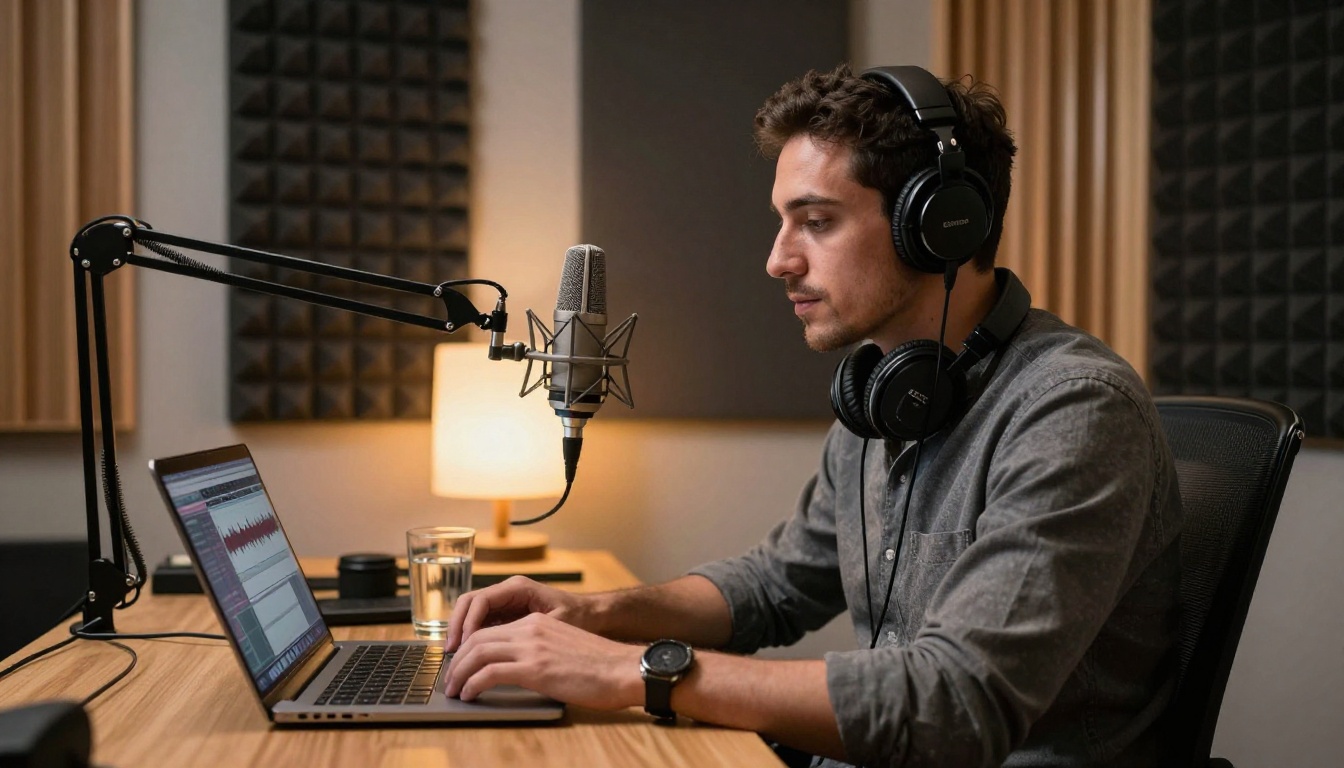
A corporate podcast is an audio recording, usually 10 to 45 minutes long, hosted on an RSS feed and distributed through standard podcast apps or a private internal link. Company podcast formats range from executive interviews and town hall recaps to department spotlights and weekly news roundups. Production requires a microphone, recording software, and editing time. Distribution can be public via Spotify or Apple Podcasts, or internal via a private RSS feed or intranet page.
The Honest Production Cost
Time and money are the first real filter. Here is what each format actually costs to produce at consistent, professional quality on an ongoing basis.
| Cost Factor | Flipbook | Podcast |
|---|
| Initial setup cost | Low (PDF design) | Medium (mic, software) |
| Per-issue production time | 2 to 4 hours | 6 to 14 hours |
| Editing required | Minimal (PDF review) | Heavy (audio editing) |
| Design skill required | Yes (layout) | No |
| Voice/on-camera talent | No | Yes |
| Hosting cost | Included in platform | $15 to $50/month extra |
| Transcription cost | None | $0.10 to $0.25 per minute |
The podcast production cycle is consistently underestimated. A 20-minute episode typically requires recording time (30 to 40 minutes), audio cleanup, noise removal, leveling, intro and outro insertion, show notes writing, and upload. That adds up to 8 to 12 hours of work per episode even for experienced teams. A flipbook newsletter, by contrast, reuses an existing design workflow most communications teams already have. The PDF exists, the conversion takes minutes, and the branded output is ready to share.

Who Actually Reads or Listens
Reach and consumption patterns differ dramatically between the two formats, and this is where the real divergence shows up in practice.
Flipbook Access Patterns
Flipbooks are synchronous with the reader's moment of availability. An employee opens the link during a coffee break, skims headlines, dives into the section relevant to their department, and closes it in under five minutes. Readers can skip, skim, and return without losing their place. The visual layout makes navigation instant: bold section headers, department callouts, and page thumbnails give readers a map of the document before they read a single word.
Podcast Listening Reality
Podcasts demand sustained attention during a specific window, typically commuting, exercising, or doing low-focus tasks. For many office workers, that window is scarce during the work day. Internal corporate podcasts consistently show lower listen-through rates than external business podcasts, because employees listening on work time feel pressure to stop and respond to other demands. A podcast episode has no visual index and no way to jump directly to the section about the benefits update or the Q3 numbers.
💡 If your audience includes remote workers or employees on the shop floor without headphone access, a flipbook guarantees accessibility. A podcast cuts out anyone who cannot listen at that exact moment.
| Category | Flipbook | Podcast |
|---|
| Consumption style | Skim-friendly | Linear only |
| Offline access | Yes (downloadable) | Yes (with app) |
| Mobile-responsive | Yes (automatic) | Yes (via apps) |
| Accessibility for hearing-impaired | Full | Requires transcript |
| Accessibility without headphones | Full | Blocked |
| Search within content | Yes | No |
| Translation potential | High (text-based) | Low (audio) |
| Shareability | Direct link, embed code | RSS link, app share |
| Analytics depth | Page views, time, clicks | Downloads, listens |
| Password protection | Yes | Rarely |
When Flipbooks Win
There are specific scenarios where the flipbook format is objectively the stronger choice for company news distribution.
Structured Information with Visual Hierarchy
Quarterly financial results, HR policy updates, org chart changes, product roadmaps, and benefits summaries all involve structured data that benefits enormously from visual formatting: tables, charts, bold headers, and callouts. A podcast cannot replicate a 12-row comparison table or a branded org chart. A flipbook renders these exactly as designed, with no formatting loss whatsoever.
Multi-Department Updates in One Publication
An internal company newsletter typically covers five to eight departments in a single issue. Readers from engineering do not need the marketing section and vice versa. A flipbook's visual layout lets every reader instantly identify their relevant sections and skip the rest. A podcast forces everyone to sit through every segment in sequence, with no visual index to help them find what matters to their role.
Formal Communications That Need a Paper Trail
Compliance updates, policy changes, and legal notices need to be documented and accessible after the fact. A flipbook with a direct link serves as a permanent, shareable artifact. The Annual Report Creator is built specifically for content that needs to exist as a professional, retrievable document with your brand applied consistently across every page.
When Your Team Works Across Time Zones
A flipbook link works identically at 9 AM in New York and 9 PM in Singapore. It requires no synchronization, no live event, and no catch-up recording. The news is there, formatted, accessible, and readable in the employee's own time zone and at their own pace.

When Podcasts Work Better
The podcast format genuinely outperforms in specific contexts. Being honest about this makes the overall comparison more useful.
CEO Messaging That Needs a Human Voice
When the CEO needs to address a difficult situation, a pivot, or a major change, the warmth, tone, and authenticity of a human voice carries weight that text and images rarely match. A short CEO audio message of five to ten minutes can land very differently than the same information in a formatted document, particularly when the message involves layoffs, restructuring, or a cultural reset.
Storytelling and Culture-Building Content
Employee spotlights, team milestone celebrations, and behind-the-scenes stories from different departments benefit from the conversational rhythm of a podcast. This format builds familiarity between leadership and staff in a way a newsletter rarely achieves, particularly when hosted by someone with a natural, warm delivery style.
Commuter-Friendly Updates for Field Teams
Sales teams, delivery drivers, and field technicians who spend hours commuting or driving can consume podcast content that they would never sit down to read. For these specific roles, audio is the only practical channel for reaching them with company updates during their working day.
Sharing and Distribution Reality
Getting the content to employees matters as much as creating it in the first place.
| Distribution Channel | Flipbook | Podcast |
|---|
| Email link | Yes | Yes (episode link) |
| Company intranet embed | Yes (embed code) | Limited |
| Slack or Teams message | Direct link | RSS or episode link |
| QR code for physical locations | Yes | Yes |
| Password protection | Yes | Rarely |
| External stakeholder sharing | Yes | Yes (if public) |
| Analytics per reader | Yes | Download count only |
The Embed Flipbook on Website tool is particularly useful for companies that want to surface the newsletter directly on their intranet homepage without requiring employees to navigate to a separate page. Podcast embeds are less standardized and depend heavily on the hosting platform's embed player quality and compatibility.
⚠️ Podcast download counts are notoriously unreliable as a performance metric. A file downloaded to a phone does not confirm it was actually listened to. Flipbook analytics show actual page-by-page reading behavior, giving you a real picture of what employees consumed.
Analytics: What You Can Actually Measure
For internal communications teams, measurement is how you justify the budget and improve the format over time.
Podcast analytics give you total downloads per episode, listening platform breakdown, geography, and on premium hosting plans an approximate listen-through rate. That is typically the ceiling of what podcast analytics offer.
Flipbook analytics on the Flipbooks AI Professional plan give you:
- Total views per publication issue
- Page-by-page time spent (so you know whether anyone read page 7 or dropped off after page 2)
- Click-through rates on all embedded links within the flipbook
- Lead generation data through embedded contact forms
- Geographic and device breakdown for global teams
- Return visitor tracking across multiple issues
For a communications director trying to prove the internal newsletter is actually being read, page-level analytics from a flipbook are irreplaceable. Knowing that 78% of employees opened the newsletter but only 34% scrolled past page 3 is actionable data that directly informs your next issue's layout. Podcast listen-through rates offer no comparable granularity or page-specific insight.

How to Turn Your Company Newsletter Into a Flipbook
Here is exactly how a communications team sets up their first digital flipbook for company news using Flipbooks AI, from first login to published link.
Step 1: Create your account
Go to flipbooksai.com/account and sign up. No credit card required to start. The platform supports unlimited flipbooks on Standard plans and above, with no watermarks on any published content.
Step 2: Design your newsletter as a PDF
Use your existing design tool, whether InDesign, Canva, PowerPoint, or Google Slides, and export as PDF. Structure the document with clear section headers per department. Recommended output: A4 or Letter format at 150 DPI minimum for sharp rendering on high-resolution displays.
Step 3: Upload and convert
From your dashboard, click "New Flipbook" and upload the PDF. The PDF to Flipbook Converter handles the conversion automatically, generating the page-turning interface within seconds regardless of document length or complexity.
Step 4: Apply your brand
In the customization panel, set your company colors for the flipbook toolbar and background. Add your logo to the header. The platform applies these settings instantly without requiring a PDF re-upload. You can also configure a custom domain for internal links that match your company URL structure.
Step 5: Set access controls
For internal newsletters, enable password protection so only employees with the correct password can view the content. For executive briefings or board materials, this feature is non-negotiable. Password protection is available on Standard plans and above with no technical configuration required.
Step 6: Distribute the link
Copy the direct link or use the embed code to place the flipbook on your company intranet, Slack workspace announcement channel, or internal email. Employees open it in any browser with no app, no plugin, and no forced login unless you require it.
Step 7: Review your analytics
On the Professional plan, open the analytics dashboard after 48 hours to review page-level reading data, total views, and click-through rates on any embedded links. Use this data to improve the next issue: move the highest-attention content to earlier pages, and cut sections that show near-zero read time.
✅ Use the Newsletter Flipbook Publisher tool for recurring internal communications. It preserves your brand settings and layout between issues so each new newsletter takes minutes, not hours, to publish.

The Hybrid Approach
Some communications teams run both formats: a monthly flipbook newsletter for structured news and a shorter podcast episode for CEO or leadership commentary. This works well when the organization has more than 500 employees with diverse roles, when leadership has the time and genuine inclination to record audio consistently, and when production resources can support both formats without burning out the communications team.
The risk is consistency. Companies that try to maintain a regular podcast alongside a newsletter often drop the podcast within six months because the production burden compounds month by month. If you are choosing a primary format for long-term sustainability, the flipbook wins on production efficiency in almost every scenario.
Making the Right Call for Your Company
The format decision comes down to three honest questions.
- What type of content are you sharing? Structured, data-rich updates favor flipbooks. Personal, narrative-driven content may favor audio.
- How diverse is your workforce? Remote-first, global teams need format-agnostic access. Flipbooks work everywhere, without headphones, without apps, without a podcast subscription.
- What can your team sustain? A quarterly flipbook published on schedule every time is worth more than a podcast that goes dark after episode 8.
For most companies sharing internal news on a regular cadence, the flipbook format delivers more consistent reach, better measurement, lower production cost, and broader accessibility across all employee types. The podcast earns its place as a supplement for culture-building content, not a replacement for structured news distribution.

The best company news format is the one your team publishes consistently, and the one your employees actually read. If you are ready to replace slow, static PDFs or inconsistent email updates with something that looks professional, loads instantly, and gives you real reader data, create your account on Flipbooks AI today.
Browse the full tools directory to find templates built for internal communications, annual reports, and department newsletters. Compare pricing plans to find the tier that fits your team's size and needs. The Standard plan covers unlimited flipbooks with no watermarks, a strong starting point for any communications team serious about doing this right.
For analytics, lead capture, and offline download options, the Professional plan includes every feature with no hidden limits. Your next company newsletter can be live in under an hour.



