Losing someone you love is one of the hardest things a person can face. And yet, in the middle of grief, there is often a quiet impulse to gather, to collect every photo, every note, every fragment of a life well lived and put it somewhere it will not disappear. A memorial or tribute flipbook does exactly that. It takes everything you have saved and transforms it into something families can actually open, share, and return to over the years. This article walks you through how to create a memorial or tribute flipbook that truly honors the person you have lost, using Flipbooks AI to bring it all together with ease.
Why a Flipbook Works Better Than a Photo Album
There is something different about a flipbook compared to a static photo album. The page-turn animation, the way sections flow from one to the next, the ability to embed video messages or audio clips alongside photographs, all of it creates an experience that feels alive. A printed album sits on a shelf. A digital flipbook lives where people actually are: on their phones, laptops, and tablets, accessible from anywhere in the world.

More Than a Slideshow
Slideshows play once and end. A flipbook stays open. Readers can pause on a page, zoom into a photograph, reread a caption, or share a specific section directly with someone who could not attend the service. That interactivity separates a memorial flipbook from anything else you could create, and it is the reason families return to them again and again over the years.
What a Printed Book Cannot Do
A printed tribute book is beautiful, but it costs money to reproduce, and sharing it means shipping physical copies. A digital flipbook created on Flipbooks AI can be shared instantly via a link, embedded on a family website, or password-protected so only close family members can access it. No printing costs. No waiting. No mailing.
| Format | Shareable | Cost | Interactive | Accessible Worldwide |
|---|
| Printed Photo Album | No | High | No | No |
| PDF File | Limited | Low | No | Yes |
| Video Slideshow | One-way | Medium | No | Yes |
| Digital Flipbook | Yes | Low | Yes | Yes |
What to Gather Before You Start
The quality of your memorial flipbook depends almost entirely on the quality of the material you collect. Before opening any tool, spend time pulling together everything that mattered.
Photographs Worth Including
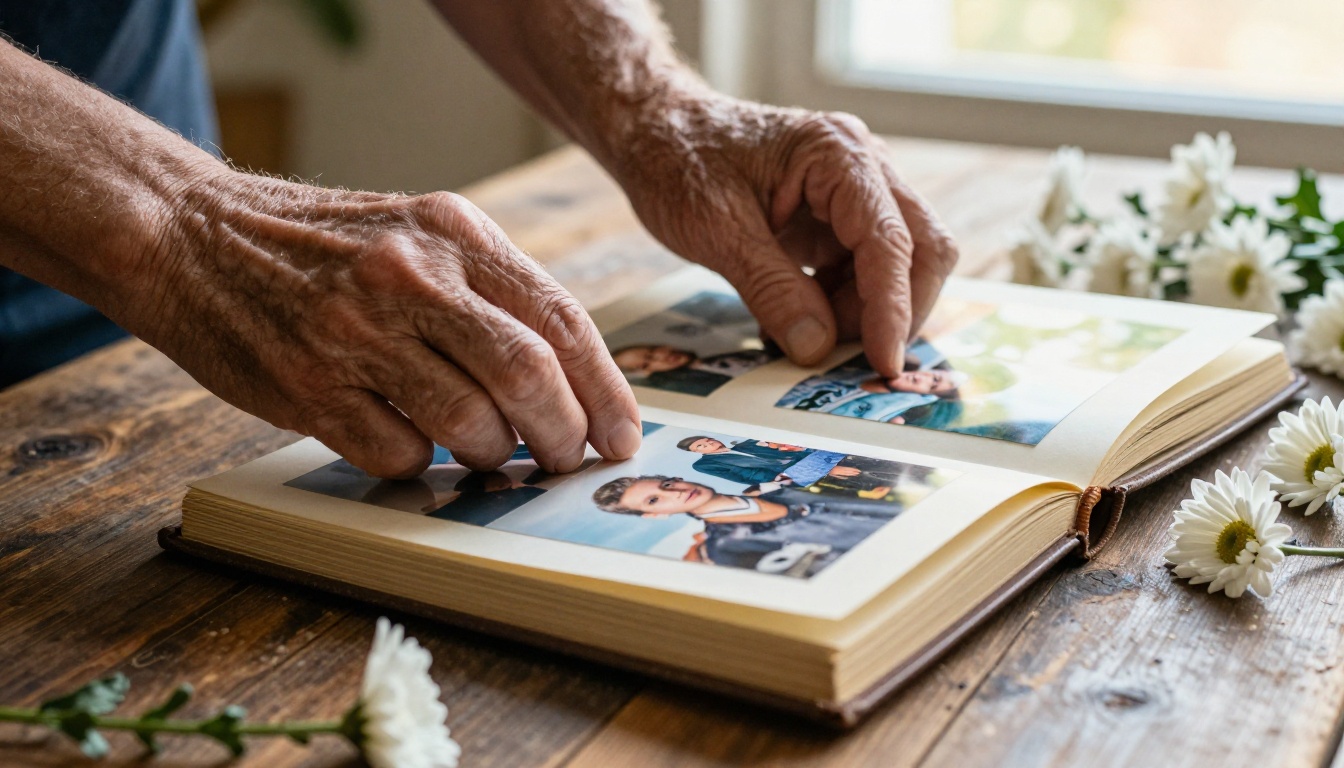
Not every photo needs to be high resolution. Old prints, scanned snapshots, Polaroids, even screenshots of digital photos from the early 2000s all have a place. Think in chapters: childhood, young adulthood, family years, later life. Mix candid shots with formal portraits. The contrast tells a fuller story.
- Early childhood and school photos
- Wedding or partnership photos
- Holiday and travel snapshots
- Candid everyday moments at home
- Final years and family gatherings
- Group photos with friends and community
Written Tributes and Stories
Ask family members to write one or two paragraphs each, not formal eulogies but specific memories. The fishing trip. The recipe they always made. The thing they used to say. Specific details make a tribute feel real rather than generic, and they are the parts people read aloud to each other.
Documents and Mementos Worth Scanning
Some of the most powerful pages in a memorial flipbook are the ones that show the person's handwriting. Scan birthday cards, letters, handwritten recipes, old certificates, or even a page from a diary if available. These details are irreplaceable, and scanning them preserves them permanently.
💡 Scan documents at 300 DPI minimum before uploading. This keeps text sharp and legible even at full-screen zoom on large monitors.
3 Types of Memorial Flipbooks
Not every tribute takes the same form. Depending on who the person was and how you want to honor them, there are three primary approaches worth knowing before you begin.

| Type | Best For | Tone | Suggested Length |
|---|
| Celebration of Life | Memorial services, community sharing | Warm, joyful | 20-40 pages |
| Remembrance Album | Close family, anniversary tributes | Intimate, reflective | 15-30 pages |
| Family Legacy Book | Preserving history for future generations | Historical, narrative | 40-80 pages |
Celebration of Life Books
These are built for sharing. A celebration of life flipbook is typically used at or after a memorial service and shared with everyone who attended or wished they could. The tone is warm and often joyful, focusing on the person's humor, passions, and the impact they had on the people around them. Photos dominate, with short captions and brief tributes from multiple contributors.
Remembrance Albums
A remembrance album is more personal. It is the version you share only with close family or keep privately. It can include more intimate photographs, handwritten letters, and memories that might not suit a public tribute. The Wedding Album Flipbook tool offers a beautiful starting format that adapts naturally to tribute use, with elegant page layouts built for meaningful photographs.
Family Legacy Books
If your loved one lived a long life with a rich history, a family legacy book preserves that history for generations. These longer flipbooks include genealogical information, historical context, and stories that future grandchildren will one day want to read. Think of it as a living document that captures not just who the person was, but where the family came from.
How to Create Your Tribute Flipbook with Flipbooks AI
Flipbooks AI makes it straightforward to turn your collected materials into a polished, shareable memorial flipbook. Here is the full process, step by step.

Step 1: Build Your Layout as a PDF
Start by designing your tribute in a tool like Canva, Google Slides, or Adobe InDesign. Lay out your pages with photos, captions, and text. Export as a PDF when done. Keep your file size under 100MB for the smoothest upload experience. Canva has free templates that work well as starting points.
Step 2: Create Your Account
Create an account on Flipbooks AI. The Standard plan and above offer unlimited flipbook creation, no watermarks, and full access to customization features. No credit card is required to start. The entire signup process takes less than two minutes.
Step 3: Upload Your PDF
Once logged in, select "New Flipbook" and upload your PDF. The platform converts it automatically into a page-turn flipbook with a realistic animation effect. This typically takes under two minutes depending on the size of your document.
Step 4: Customize the Appearance
After conversion, you can personalize every aspect of the flipbook:
- Set a custom cover and thumbnail image
- Choose background colors or soft textures that match the memorial's tone
- Add your loved one's name in the flipbook header
- Enable soft page-turn sound effects for a more immersive reading experience
- Embed audio tributes or video messages directly into specific pages
Step 5: Set Your Privacy Options
For a memorial flipbook, privacy often matters deeply. Flipbooks AI lets you enable password protection so only invited family members and friends can view the flipbook. Share the password privately via email or a family group chat. If you prefer an open tribute, you can also publish it with a direct link that anyone can access.
Step 6: Publish and Share
Once published, you have multiple sharing options:
- Share via a direct link in email or messaging apps
- Embed the flipbook on a memorial or family website using the provided embed code via the Embed Flipbook on Website tool
- Download it for offline viewing at family gatherings
- Use the PDF to Flipbook Converter for a streamlined workflow if you are starting from an existing PDF
✅ Professional plan users can access analytics to see how many people viewed the flipbook, which pages held their attention longest, and where readers came from. This is especially meaningful when sharing a tribute widely across multiple countries or communities.
What to Put on Each Page
One of the most common questions is how to organize content once you have it collected. This section structure works well for most memorial flipbooks and gives readers a natural, emotional arc from beginning to end.

| Section | Content to Include | Suggested Pages |
|---|
| Opening | Portrait photo, name, dates, brief intro quote | 1-2 |
| Early Life | Childhood photos, birthplace, family origins | 3-6 |
| Milestones | School, career, relationships, achievements | 7-12 |
| Passions | Hobbies, travel, causes, what they loved | 13-17 |
| Family Tributes | Written memories from family and friends | 18-24 |
| Final Chapter | Later years, farewell moments, legacy | 25-28 |
| Closing | Final quote, service details, thank you | 29-30 |
⚠️ Avoid trying to include everything. A memorial flipbook that covers 80 years of life in 30 well-chosen pages is far more powerful than one that tries to document every moment in 120. Curate with intention.
Writing Captions That Actually Mean Something
Captions are often an afterthought, but in a memorial flipbook they carry enormous weight. Avoid generic captions like "Summer 1987." Write something specific instead: "Dad's first fishing trip after retiring. He caught one small trout and talked about it for a year." That kind of detail is what people cry over, in the best possible way.
Using Color and Layout Intentionally
Color sets the emotional tone of the entire flipbook. Soft, muted tones (cream, sage, dusty rose, warm grey) work well for reflective tributes. Bright, vibrant palettes suit celebration of life books where the emphasis is on joy and energy. Whatever palette you choose, stay consistent throughout so the flipbook reads as a unified piece rather than a patchwork of different styles.

Sharing the Flipbook After a Service
The most important moment for a memorial flipbook is often the days immediately after a funeral or memorial service. People are reaching for something to hold onto, and a digital flipbook offers exactly that.
Who to Share It With
- Immediate family: Share privately via a password-protected link for the most intimate version
- Extended family and friends: Use a group email or messaging app with a direct link
- Community and colleagues: Share on a memorial Facebook group or community page
- Future generations: Archive the flipbook link permanently in a family document or cloud folder
Keeping It Updated Over Time
A memorial flipbook does not have to be static. You can update it on anniversaries, add newly scanned photographs that surface later, or include tributes from people who submit memories after the initial publication. Flipbooks AI allows you to replace or update the underlying PDF and re-publish without changing the share link. Everyone who already has the link will see the updated version automatically.
💡 Set a calendar reminder on the anniversary of your loved one's passing to revisit and update the flipbook. It becomes its own quiet ritual, and one that many families find deeply comforting year after year.
4 Mistakes That Weaken a Memorial Flipbook
Even with the best intentions, it is easy to create a tribute that feels scattered or impersonal. These are the four most common mistakes worth avoiding.

1. Including Too Many Photos Without Context
A page of twelve unlabeled photos tells no story. Every image needs at least a short caption or a sentence of context. Who is in the photo? When was it taken? Why does it matter? Without that, the reader is left guessing, and the emotional weight is lost.
2. Using Only Formal Photos
Headshots and posed portraits are necessary, but the candid moments are the ones people remember. The blurry photo from a birthday dinner. The one where they were laughing so hard their eyes were closed. These images hit hardest, and they are usually the ones families argue over when trying to narrow down selections.
3. Forgetting the Person's Voice
If any recordings, videos, or audio clips exist, include them. A 30-second voice memo from a voicemail. A short video from a birthday celebration. A clip from a family reunion. Hearing someone's actual voice transforms a flipbook from a document into a presence. It is the detail that makes people stop and sit quietly for a moment.
4. Rushing the Design
Grief creates urgency, but a rushed design shows. Give yourself time to get the layout right. A well-organized, cleanly designed flipbook will be looked at for decades. It is worth the extra day or two of effort before publishing.
Start Building One Today
A memorial or tribute flipbook is one of the most meaningful things you can create for someone you have lost. It preserves not just photographs but personality, voice, and story. It gives grieving families something to gather around, something to share across distances, and something to return to when they need to feel close again.
Flipbooks AI makes the creation process straightforward enough that you can build a beautiful tribute in a single afternoon, even if you have never created a digital publication before. Upload your PDF, customize the design to reflect the person's spirit, set your privacy options, and share it with everyone who loved them.
The person you are honoring deserves something that lasts. A digital flipbook, built with care and shared with love, is exactly that.



