Your nail art deserves better than a phone gallery that clients scroll through awkwardly at your station. Whether you work from a home studio, rent a chair at a salon, or run your own shop, the way you present your work directly affects how many bookings you get and what prices you can charge. A digital flipbook changes that completely. Flipbooks AI lets you turn your nail art photos into a polished, page-flipping portfolio that clients can browse before they even step through the door.
Why Nail Artists Lose Bookings
The Painful Reality of Phone Galleries
Most nail technicians show their work the same way: handing a client their phone and hoping they scroll the right direction. It works, sort of. But it looks unprofessional, it is hard to organize, and clients can accidentally swipe into your personal photos. Instagram is better, but the algorithm decides who sees your work, and you have no control over the layout.
The result is that talented nail artists get passed over not because their work is poor, but because it is hard to see.
Static Photos vs. Interactive Flipbooks
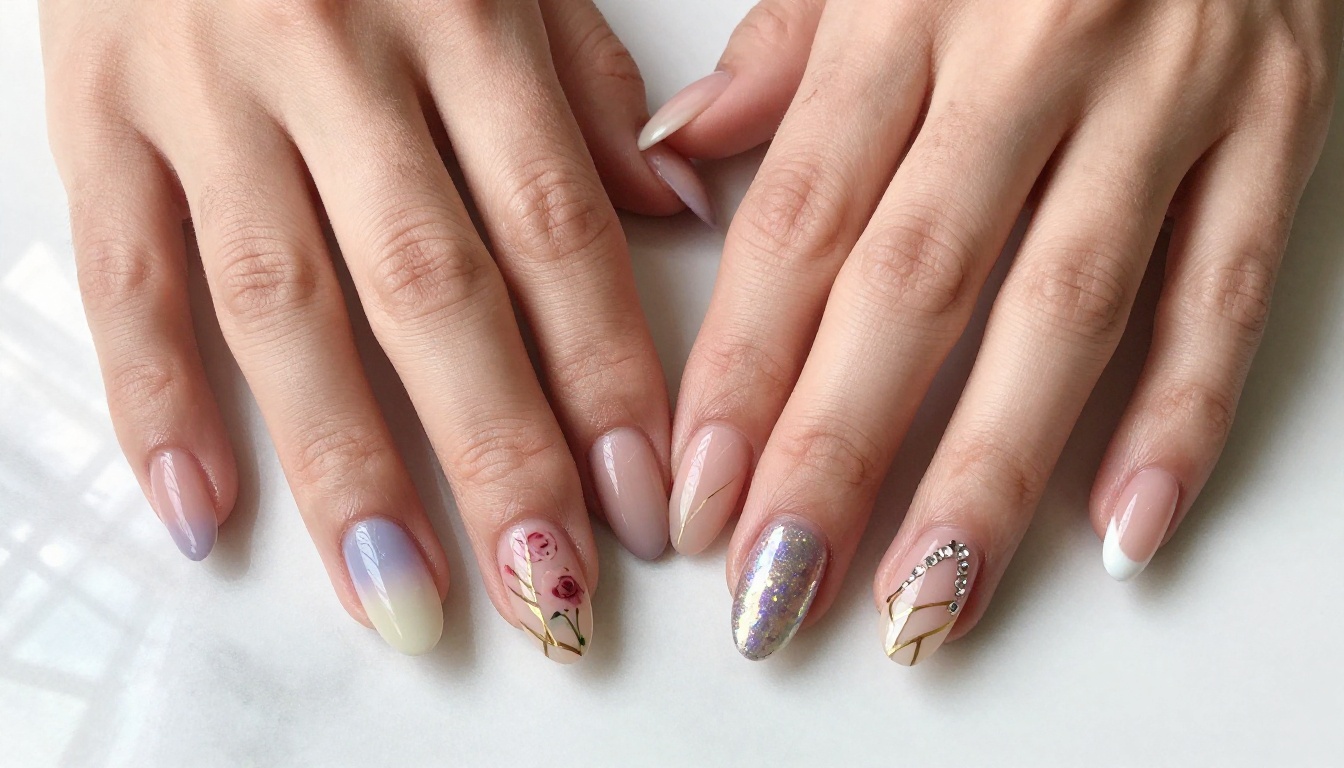
There is a real difference between a flat photo and an experience. When a client flips through a beautifully designed digital lookbook, they feel the quality before they have sat down. They can browse by style (florals, geometrics, ombre, French tips), by season, or by occasion. That kind of organized presentation builds trust and makes it easier to say yes to a booking.
| Format | Client Experience | Organization | Shareability | Brand Impression |
|---|
| Phone gallery | Awkward, disorganized | None | Low | Poor |
| Instagram grid | Passive scrolling | Hashtag-only | Medium | Moderate |
| Printed portfolio | Professional but static | Manual | None | Good |
| Digital flipbook | Interactive, engaging | Full control | High | Excellent |
What Makes a Great Nail Art Flipbook
Organize by Design Style
The first thing to think about is structure. A disorganized flipbook is no better than a disorganized phone gallery. Group your designs by style, occasion, or season so clients can navigate to exactly what they want.
Good categories for a nail art flipbook include:
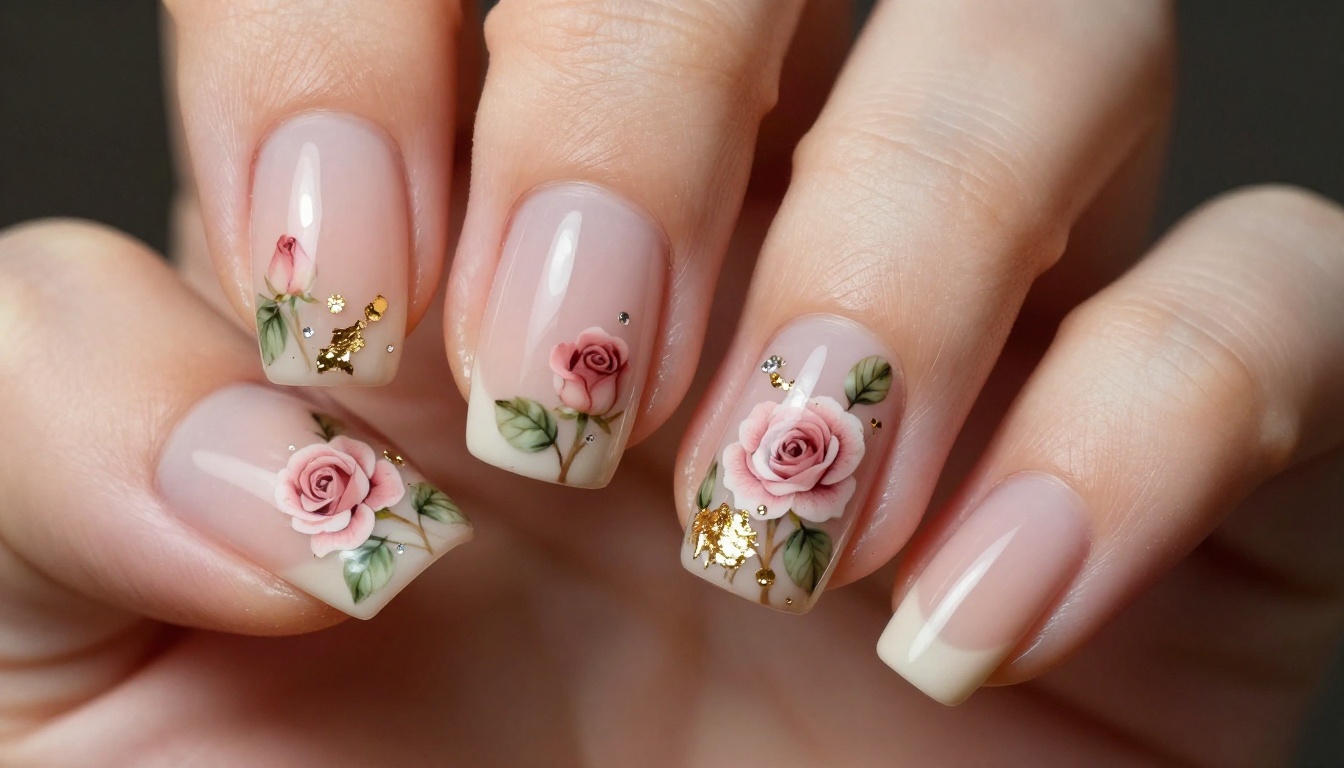
- Florals and botanicals: roses, cherry blossoms, tropical leaves
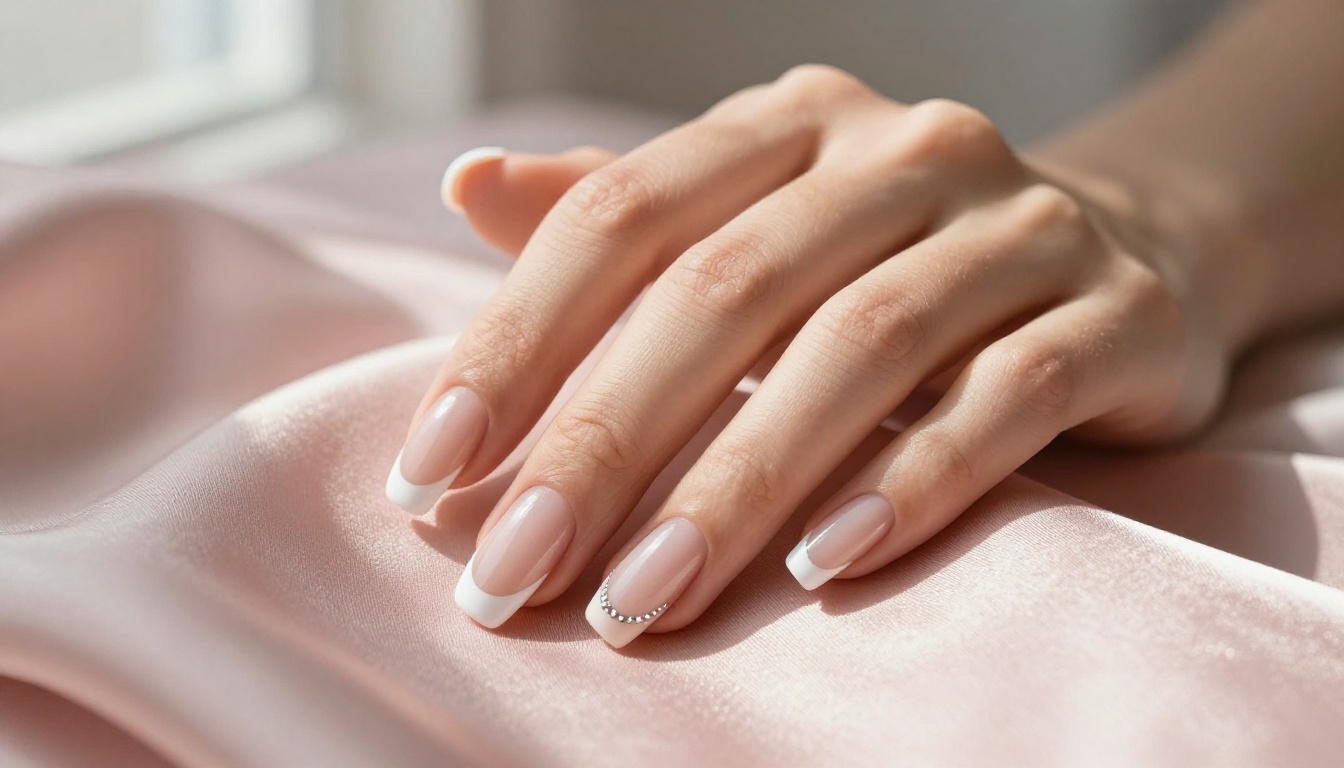
- Minimalist and geometric: clean lines, negative space, French variations
- Ombre and gradient: single-color fades, sunset palettes, pastel blends
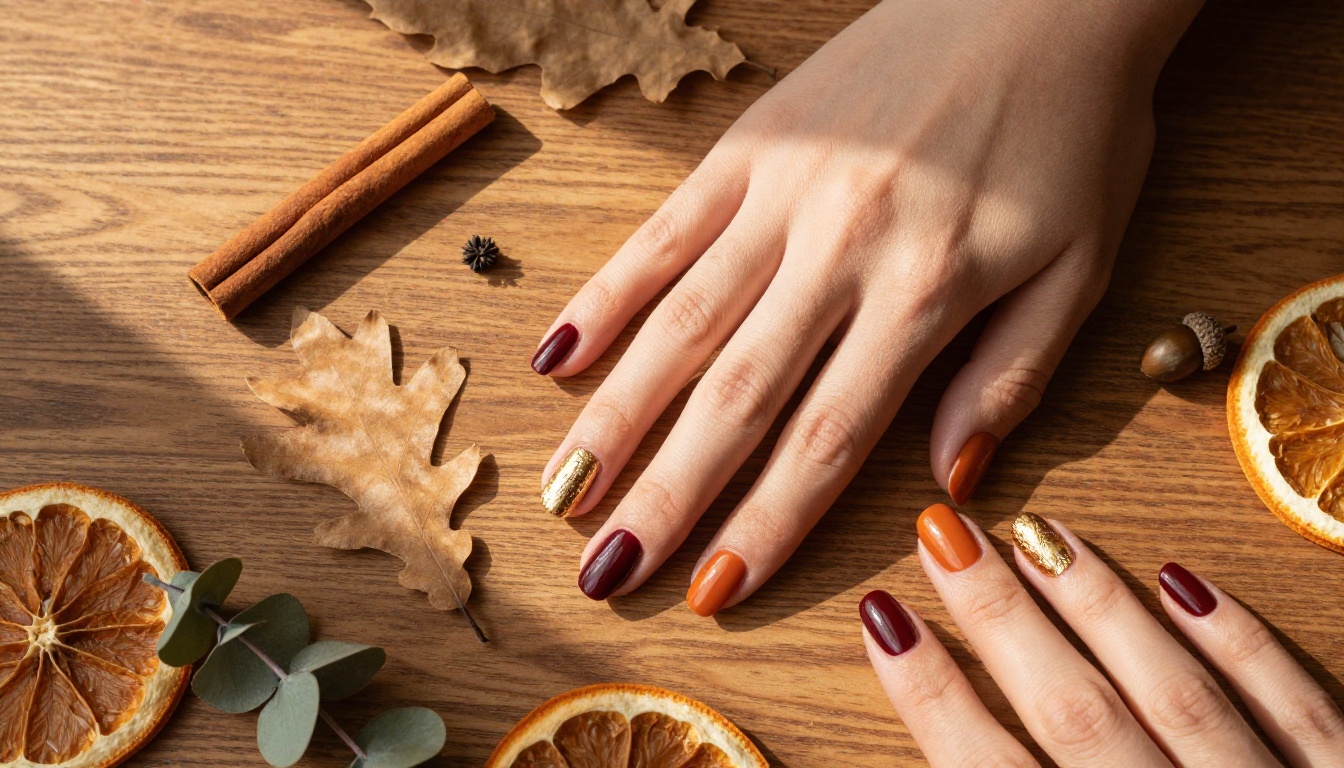
- Seasonal collections: holiday sets, summer brights, autumn earth tones
- Nail art for events: weddings, birthdays, formal occasions
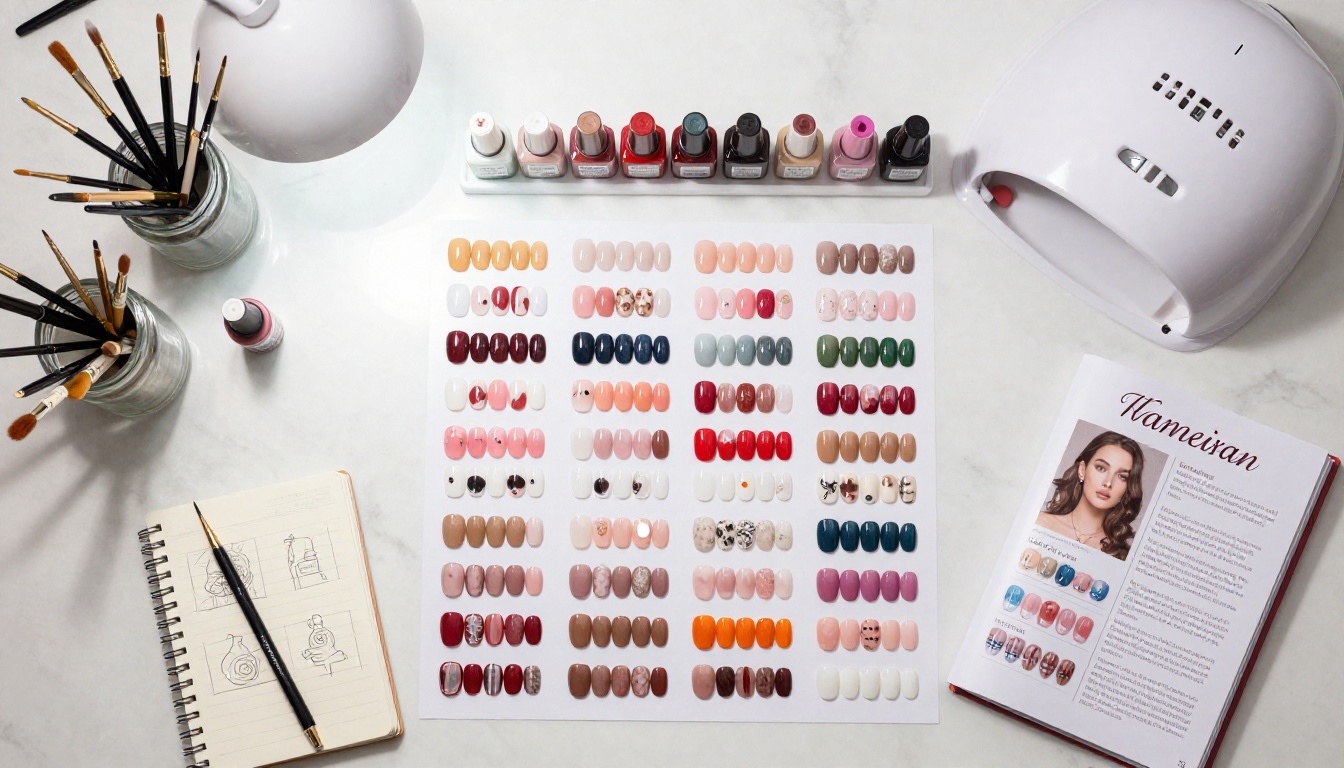
- Press-on sets: if you sell custom sets, this section alone is worth building a flipbook for
💡 Add a one-sentence caption on each page next to the design. Something like "Gel, 3-week wear, available in custom colors" tells clients exactly what they need without them having to ask.
Seasonal Collections That Sell
Seasonal drops work incredibly well for nail artists. A dedicated "Summer 2025" flipbook you share in May, or a "Holiday Party Nails" flipbook you send out in November, these do not just showcase your work. They create urgency. Clients see a limited collection and book before the season fills up.
This approach also keeps your content fresh. Instead of posting the same photos everywhere, you create a new flipbook each season and share one clean link across every platform.
How to Make a Flipbook for Your Nail Art Designs
This is the part most nail artists assume is complicated. It is not. Here is the exact process from start to finish.
Step 1: Collect and Sort Your Best Photos
Before building anything, gather your photos. You need at least 15 to 20 strong images to make a flipbook worth sharing. Be selective. One blurry photo in a professional flipbook damages the impression of all the clean ones around it.
For each design you include, try to have:
- A straight-on shot of all nails together
- A close-up of the detail work on one or two nails
- Clean lighting: natural window light or a ring light works well, no harsh shadows across the nail bed
If you do not have great photos of older work, start with your current best and add to the flipbook as you photograph new sets.
Step 2: Build Your PDF Layout
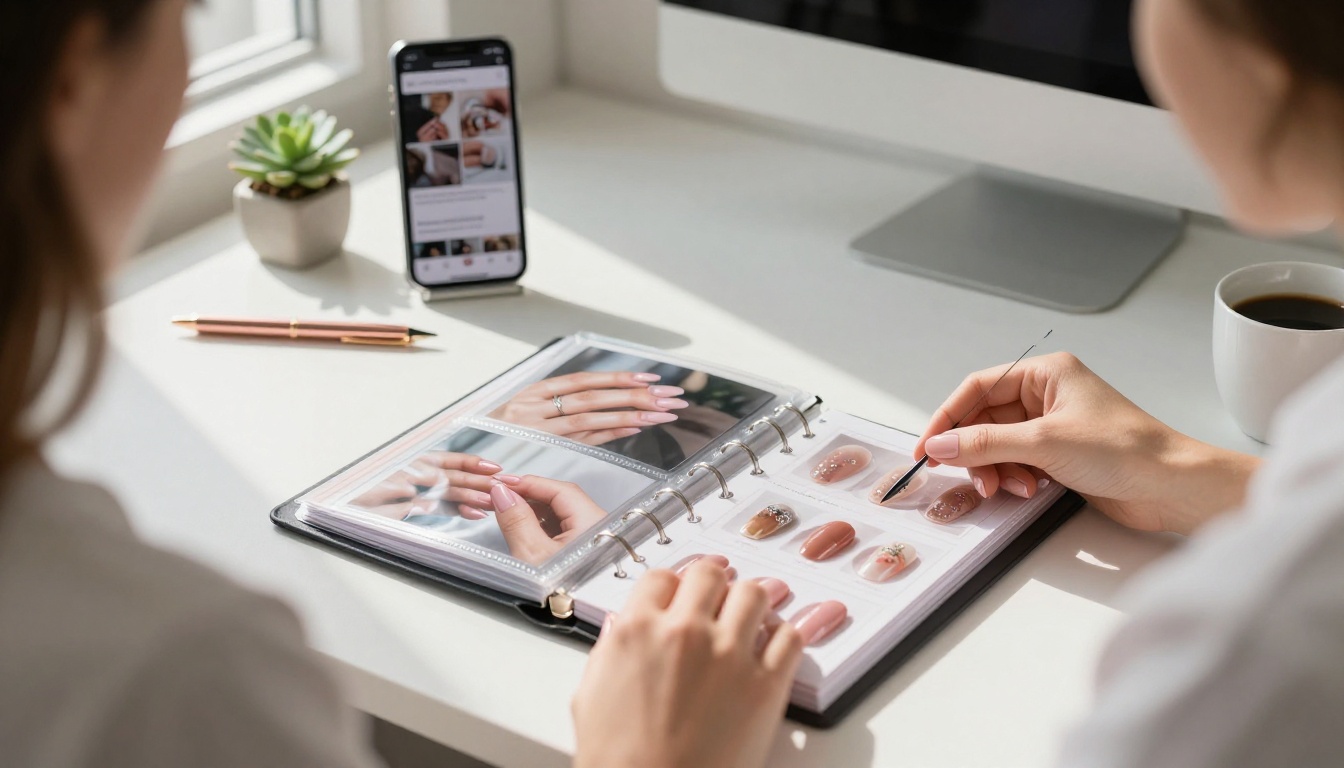
A flipbook is built from a PDF. You design the layout, then convert it. Free tools like Canva make this straightforward. Use Canva's free plan, drag in your photos, add minimal text (design name, finish type, wear duration), and export as PDF.
Layout options that work well for nail art:
- One design per page: gives each look room to breathe and lets details stand out
- Two designs per page: good for comparison sets or showing before-and-after nail prep
- Full-bleed cover page: use your most striking design as the visual opener
- Consistent typography: two fonts maximum, used consistently throughout
Keep the PDF file size under 50MB so it loads quickly on mobile devices.
Step 3: Upload to Flipbooks AI
Once your PDF is ready, head to Flipbooks AI and create your account. The upload process takes about two minutes:
- Click "Create New Flipbook"
- Drag your PDF into the upload area
- Wait for conversion (usually under 60 seconds)
- Preview your flipbook with the page-turn animation
The PDF to Flipbook Converter handles everything automatically. Your pages become an interactive flipbook with smooth animations that look polished on both desktop and mobile.
✅ Flipbooks AI never adds watermarks to your published flipbook. Your portfolio looks completely professional, no platform branding anywhere.

Step 4: Customize Your Flipbook
This is where your branding comes in. Once the flipbook is created, you can:
- Add your salon name and logo so clients immediately know whose work they are looking at
- Set a custom background color to match your brand palette
- Enable page thumbnails so clients can jump to sections without flipping one by one
- Add your booking link as a clickable button directly inside the flipbook
- Password-protect it for exclusive VIP lookbooks you share only with returning clients
For nail artists who want to send pre-booking inspiration privately, password protection is particularly useful. Share an exclusive link with your waiting list before you open bookings to the public.
Step 5: Share With Clients
Once published, you get a clean, shareable link. That link belongs everywhere:
- In your Instagram bio, replacing the generic link
- In WhatsApp replies to clients asking what designs you do
- In your email signature
- Embedded on your website using the Embed Flipbook on Website tool
- In booking confirmation emails as a design inspiration resource
💡 Generate a QR code pointing to your flipbook and print it on a small card displayed at your station. Clients waiting for their appointment can browse your full portfolio while they sit.

Flipbook Ideas That Actually Book More Clients
Seasonal Lookbooks
A seasonal lookbook is the highest-converting type of flipbook for nail artists. It creates a defined menu. Clients do not have to describe what they want from scratch. They flip through, point at a design, and say "that one." That single interaction eliminates miscommunication and keeps appointments on schedule.
| Season | Theme | Design Focus |
|---|
| Spring | Cherry blossom, soft pastels | Florals, gradients, blush tones |
| Summer | Tropical, bold brights | Vibrant colors, vacation-ready sets |
| Autumn | Earth tones, harvest | Burgundy, burnt orange, gold foil |
| Winter | Holiday, icy whites | Glitter accents, deep reds, snowflakes |
| Valentine's Day | Romance | Reds, hearts, French with pink tips |
| Wedding season | Bridal elegance | Nude, blush, crystal accents |
Style Menus for Appointments
Think of this the same way a restaurant thinks about its menu. Clients arrive knowing what they want because they have already browsed. A style menu flipbook organizes your offerings by category, shows what each tier of nail art involves, and sets expectations before the appointment starts.
A well-structured style menu might look like:
- Page 1: Solid colors and basic nail art (one color, classic French, simple ombre)
- Pages 2 to 3: Intermediate designs (florals, geometrics, minimal art)
- Pages 4 to 5: Premium designs (hand-painted art, crystals, full press-on sets)
- Page 6: Add-on services (nail repair, chrome powder, cuticle treatment)
- Page 7: Pricing and booking link
This reduces the "how much is that?" conversation mid-appointment and positions your premium work at the right price from the start.
Press-On Nail Collections
If you sell custom press-on sets, a flipbook is one of the most effective ways to showcase your catalogue. Each set gets its own page with size options, finish type, and price. Share the link in DMs, include it in your Etsy shop listings, or send it as a follow-up to inquiries.
The Digital Portfolio Creator and Portfolio Flipbook Builder are purpose-built for exactly this kind of product showcase.
Flipbooks AI Plans for Nail Artists
Pricing is straightforward. Here is how the plans compare for someone running a nail art business:
| Feature | Free | Standard | Professional |
|---|
| Number of flipbooks | 1 | Unlimited | Unlimited |
| Watermark | None | None | None |
| Custom branding | Limited | Yes | Yes |
| Password protection | No | Yes | Yes |
| Analytics (viewer data) | No | No | Yes |
| Lead generation forms | No | No | Yes |
| Offline download | No | No | Yes |
| Embed on website | Yes | Yes | Yes |
For most independent nail technicians, the Standard plan covers everything: unlimited flipbooks, no watermarks, custom branding, and password protection for private lookbooks. The Professional plan adds analytics so you can see who viewed your portfolio and when, which is useful for following up with potential clients who browsed but did not book.
Compare all pricing plans to find what fits your current stage.
⚠️ Avoid using the free plan for client-facing work. Even without a watermark, the limited customization options make it harder to present a fully branded experience. The Standard plan is affordable and gives you everything you need.
The Algorithm Problem
Social media is useful for discovery, but it is a poor portfolio tool. The algorithm decides which posts get seen, older work disappears without trace, and you have no control over how your gallery looks to someone visiting for the first time. A client who visits your Instagram today might only see your last nine posts, not your best work from six months ago.
A flipbook is always organized, always current, and always shows exactly what you want it to show. It works independently of any algorithm.
The Professionalism Gap
There is a measurable difference in how clients perceive a nail artist who says "I will send you my Instagram" versus one who sends a clean link to a professional digital lookbook. The second version signals that this is a business, not a side hobby. That perception justifies higher prices and attracts clients who are serious about their bookings.
Shareable at the Right Moment
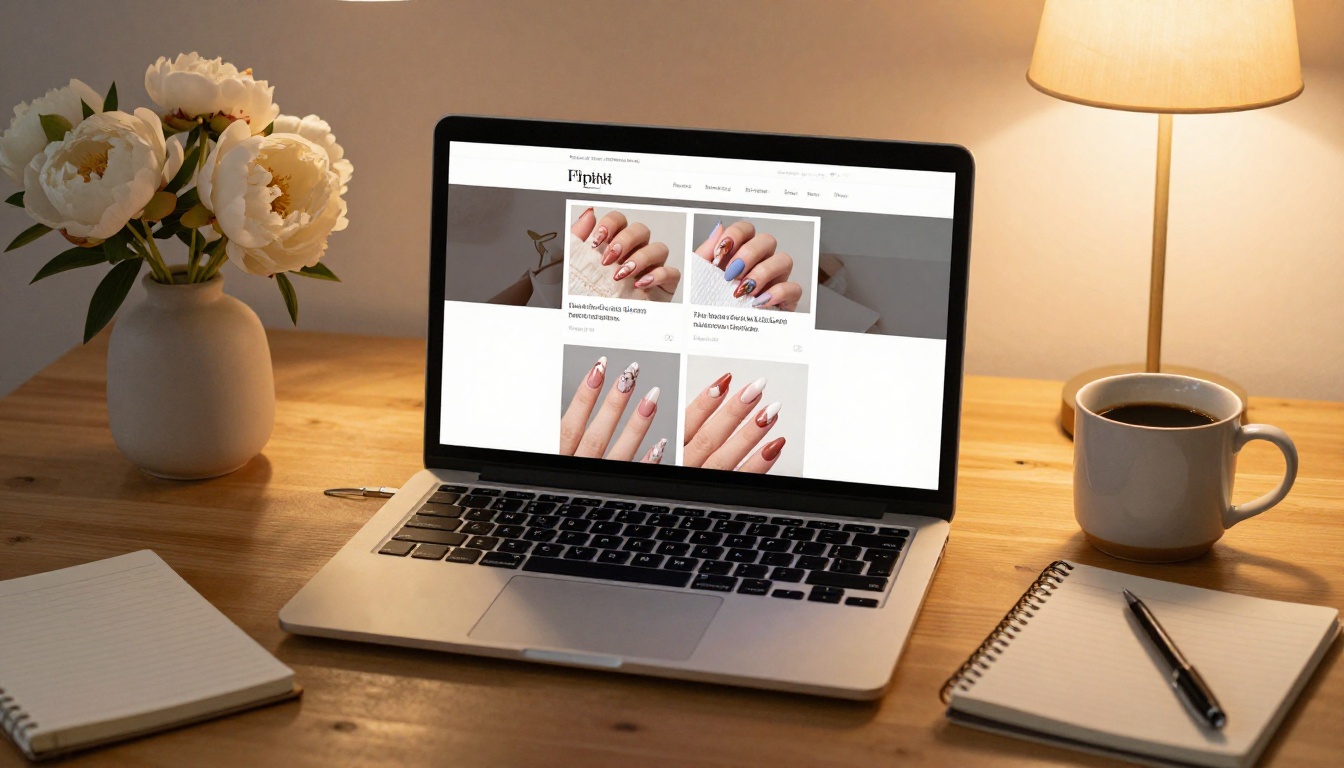
The best moment to send your portfolio is the instant someone asks "what kind of nail art do you do?" on WhatsApp or Instagram DM. A link is perfect for that moment. A phone gallery is not. A flipbook link goes anywhere: text message, email, DM, printed QR code, website embed, or booking platform profile.
Real Scenarios Where Nail Art Flipbooks Work
Home-based nail technician: Creates one main portfolio flipbook organized by design style. Shares the link in her booking form so every client arrives knowing what they want, cutting consultation time in half.
Chair renter at a salon: Uses a seasonal lookbook to promote limited availability slots. Sends a "Holiday Nail Sets" flipbook to her regulars in November and fills her December calendar without posting a single ad.
Mobile nail artist: Attaches a flipbook link to every appointment confirmation email. Clients browse on the way to the session and arrive with a design already picked out, keeping appointments on schedule.
Press-on nail seller: Creates a product catalogue flipbook with every available set, size options, and pricing. Links it from every platform she uses, making it easy for buyers to browse the full range without asking questions one by one.
✅ Each of these scenarios requires zero technical experience. If you can put photos into Canva and export a PDF, you can have a live flipbook ready to share in under 20 minutes.
Your Work Belongs in a Real Showcase
You spend hours on a single set of nails. A blurry photo buried in a phone gallery does not do that work justice. Neither does an Instagram post that disappears into the feed within 48 hours. A properly built flipbook puts your best designs front and center, organized, branded, and shareable in exactly the moments that matter most.
The process is shorter than most people expect. One afternoon to organize your photos, an hour in Canva to build the layout, and ten minutes to upload and customize on Flipbooks AI. You end up with a professional portfolio that works for you every time a potential client asks what you do.
Ready to put your nail art where it belongs? Create your account on Flipbooks AI and build your first flipbook today, no technical experience required.
Want to see the full range of what is available? Browse all tools and templates to find the right format for your nail art business.
Looking at pricing? Check out the plans and start with unlimited flipbooks, no watermarks, and full custom branding from day one.



