The PDF had a great run. For nearly three decades, it was the default format for sharing reports, catalogs, brochures, and everything in between. But something has shifted. Marketing teams, sales departments, educators, and publishers are quietly stepping away from PDFs, and they're not coming back. Flipbooks AI is one of the platforms seeing this migration firsthand, as professionals convert their static documents into something far more capable.
So what changed? The format itself didn't. That's precisely the problem.
The PDF Problem Nobody Talks About
Static Content in a Dynamic World
PDFs were designed for print. The entire format is built around the concept of a fixed page, a frozen snapshot of content that looks identical whether you're viewing it in 1995 or today. That was brilliant when the goal was consistent printing. It's a serious disadvantage when your audience expects interactivity, responsiveness, and live content.
Modern readers click. They tap, swipe, and expect things to respond. A PDF can't embed a playable video without workarounds. It can't show real-time pricing, updated inventory, or dynamic content. Every time your information changes, someone has to edit the source file, re-export it, re-upload it, and redistribute it. That cycle is expensive in both time and money.
💡 Any document you update more than once per quarter is a strong candidate to move away from PDF format.
Mobile Rendering Failures
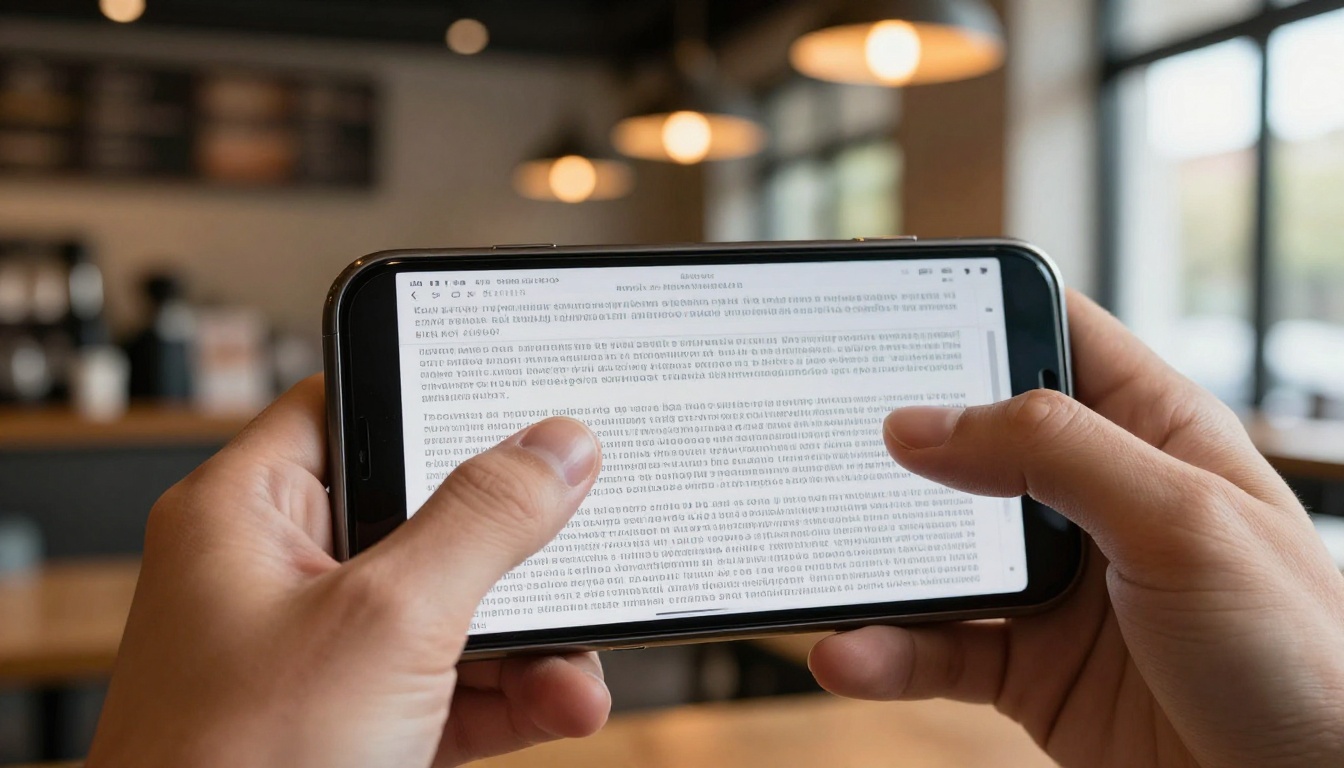
More than 60% of digital content is now consumed on mobile devices. PDFs were never built for small screens. They render at fixed dimensions, force users to pinch and zoom, and frequently require a dedicated app to open properly. On iOS and Android, PDFs often open in a separate viewer, completely outside the browser, breaking the reading experience and any tracking you might have hoped to do.
Think about what happens when a sales rep sends a product catalog via email on a Friday afternoon. The prospect opens it on their phone. The text is tiny, the layout is cramped, and they close it within ten seconds. That catalog took days to produce and failed at the final moment because the format couldn't adapt.
Zero Analytics, Zero Insight
Here's the quiet killer: you have no idea what happens to a PDF once you send it. Did the recipient open it? Which pages did they read? Did they share it with someone else? Where did they stop reading?
PDFs offer none of this. You get a download event at best from your server logs. Beyond that, the document disappears into a black hole.
This matters enormously for sales and marketing teams. Knowing that a prospect spent four minutes on the pricing page of your proposal is actionable intelligence. A PDF never gives you that.
What the Data Tells Us

Declining Open Rates on PDF Attachments
Email deliverability studies consistently show that messages with PDF attachments face higher spam filter rates. Inboxes are smarter now. Large attachments trigger caution. Many corporate email systems block PDFs entirely or sandbox them before delivery.
The result: your carefully crafted report may never even reach its intended audience.
Bounce Rates on PDF Landing Pages
When PDFs are hosted as direct download links, analytics tools can track the bounce behavior around them. The pattern is consistent: users land, see a PDF link, and a significant portion abandons immediately. The friction of downloading, opening a separate application, and navigating a static document is enough to lose attention in a world optimized for instant gratification.
Interactive digital documents that open directly in the browser, with no download required, consistently outperform PDF equivalents on time-on-page and sharing metrics.
The Real Cost of Sticking with PDFs

Lost Engagement Opportunities
Every page flip, every click on an embedded link, every second spent reading is data. Interactive formats capture all of it. PDFs capture none. For content marketers, this represents a continuous loss of audience intelligence that compounds over time.
Consider a real estate agency sending out property brochures. In PDF format, they send 500 emails and receive 20 replies. They have no idea which properties generated the most interest, which pages were ignored, or which recipients forwarded the document to a partner or family member.
With an interactive Real Estate Brochure, every one of those behaviors becomes measurable and actionable.
Brand Perception Damage
A PDF that opens slowly, renders poorly on mobile, or shows as a gray box on certain devices says something about the brand that sent it. In 2026, sending a static PDF to a prospect or customer signals that the sender hasn't kept pace with how people consume content.
Sophisticated buyers in B2B markets notice the difference between a company that sends a dead document and one that shares a polished, interactive, branded experience.
⚠️ If your sales collateral or investor deck is still a PDF attachment, you may be losing deals before the conversation even begins.
PDF vs Flipbook: A Direct Comparison
| Feature | PDF | Interactive Flipbook |
|---|
| Mobile-friendly | No | Yes, fully responsive |
| Requires download | Yes | No, opens in browser |
| Page-turn animation | No | Yes |
| Embedded video | Limited or broken | Yes, native support |
| Clickable links | Yes | Yes |
| Real-time analytics | No | Yes (Professional plan) |
| Password protection | Basic | Yes |
| Custom branding | No | Yes |
| Lead capture forms | No | Yes (Professional plan) |
| Search engine indexing | Difficult | Yes |
| Shareable link | Awkward download | Clean branded URL |
| Offline access | Yes | Yes, downloadable |
What Professionals Are Switching To
Interactive Flipbooks
The HTML5 flipbook has emerged as the most natural successor to the PDF for document-heavy workflows. It preserves the familiar page-by-page structure that readers expect, while adding everything PDFs can't deliver: responsiveness, interactivity, analytics, and shareability.
Platforms like Flipbooks AI make the conversion from PDF to flipbook a matter of minutes. The PDF doesn't get thrown away. It becomes the source material for something far more capable.
Digital Catalogs and Brochures
Product catalogs are one of the highest-impact use cases for this shift. Retail brands and manufacturers that once relied on PDF catalogs are moving to digital formats because the engagement difference is dramatic.
A Product Catalog built as a flipbook lets readers tap on products, watch demonstration videos, and click through directly to purchase pages. A PDF catalog lets readers squint at product numbers.
Restaurants are making the same move. A Restaurant Menu Creator produces a mobile-friendly, shareable menu that customers can browse before they arrive and share with friends deciding where to eat.
Use Cases by Industry

Analytics: The Feature That Changes Everything

For anyone who has ever wondered what happens after they hit send, analytics on digital publications is genuinely revelatory.
With the Professional plan on Flipbooks AI, document senders can see exactly which pages attracted the most time, where readers dropped off, how many unique visitors accessed the document, and even capture leads directly within the publication itself.
The gap between sending a PDF and sending a tracked flipbook isn't just technical. It's strategic.
✅ Use page-level analytics to identify which sections of your catalog, brochure, or report generate the most interest, then restructure your next publication to lead with that content.
What you can track with a Professional flipbook:
- Total unique visits and repeat views
- Average time spent per page
- Pages with the highest drop-off rates
- Geographic location of readers
- Devices and browsers used
- Lead capture submissions within the document
None of this is available with a PDF.
How to Convert Your PDF in Minutes with Flipbooks AI
The process is straightforward. Here's exactly how it works on Flipbooks AI:
Step 1: Create Your Account
Head to flipbooksai.com and create your account. The free plan lets you get started immediately with no credit card required.
Step 2: Upload Your PDF

Click the upload button and drag your PDF onto the interface. Flipbooks AI handles the conversion automatically with no software to install, no plugins, and no technical configuration. Your PDF converts to a fully navigable flipbook within seconds.
The PDF to Flipbook Converter supports all standard PDF formats and preserves your original layout with full fidelity.
Step 3: Customize Your Flipbook
Once converted, you can apply brand colors, upload a custom logo, adjust typography, and add multimedia elements. Embed a YouTube video directly into a product page. Add clickable hotspots that link to your website or store. Insert audio narration for training manuals or guided tours. Every page can become a layered, interactive experience.
💡 Use password protection for sensitive documents like investor decks, internal reports, or client proposals. Available on all paid plans, it keeps your content private while still making it shareable via a direct link.
Customization options available:
- Custom brand colors and logo placement
- Page transition effects and reading direction
- Embedded video and audio on any page
- Clickable links and call-to-action buttons
- Background music or narration tracks
- Mobile-optimized layouts with auto-scaling text
Step 4: Share Anywhere and Track Everything

Share your flipbook via a clean, branded URL. Embed it directly on your website using the Embed Flipbook on Website tool with a single line of code. Generate a QR code for print materials, trade show signage, or packaging. Distribute via email without any attachment size concerns.
With the Professional plan, every share generates analytics data you can act on immediately.
Flipbooks AI Plans at a Glance
| Plan | Flipbooks | Watermarks | Analytics | Lead Gen | Offline Download |
|---|
| Free | Limited | Yes | No | No | No |
| Standard | Unlimited | No | No | No | Yes |
| Professional | Unlimited | No | Yes | Yes | Yes |
Review all features at flipbooksai.com/pricing.
Who Should Make the Switch Now

Marketers and Content Teams
If you produce catalogs, lookbooks, newsletters, or campaign materials, the shift to interactive flipbooks pays back quickly. The Interactive Lookbook Designer and Newsletter Flipbook Publisher are purpose-built for these workflows.
Analytics alone justify the switch: knowing which content resonates turns every publication into a research tool that informs the next one.
Sales Teams
Sales reps sending proposals, one-pagers, or product sheets via PDF are operating without feedback. An interactive document that notifies you when a prospect opens it, tracks which sections they re-read, and captures contact information through a built-in form changes the follow-up conversation entirely.
The Sales Presentation Flipbook tool is specifically designed for this workflow.
Educators and Publishers
Course materials, training manuals, and academic publications that live as PDFs create friction for learners. The Training Manual Flipbook and Interactive E-Book Publisher bring the interactivity students expect from digital experiences into educational content.
✅ For educational institutions, the Yearbook Flipbook Maker and School Newsletter Creator solve two perennial distribution challenges at once.
Creative Professionals
Photographers, designers, architects, and artists sharing portfolios as PDFs are underselling their work. The format flattens what should be a rich, scrollable, shareable experience. The Photography Portfolio Flipbook and Digital Portfolio Creator present work the way it deserves to be seen.
The Shift Is Already Happening
PDFs aren't disappearing entirely. For legal documents, signed contracts, and archival records, they remain the right choice. But for every document meant to be read, shared, and acted upon, the PDF is increasingly the wrong tool.
The professionals making the switch aren't doing it to be trendy. They're doing it because the results are measurably better: higher engagement, stronger mobile performance, real analytics, and documents that work the way their audiences actually consume content.
Quick checklist: Is your document ready for the switch?
If you checked even two of those boxes, the PDF version of that document is costing you something.
Ready to see the difference for yourself? Get started for free on Flipbooks AI and convert your first PDF in minutes. Browse all available tools and templates to find the right fit for your use case, or compare pricing plans to unlock the full feature set including analytics and lead generation.



