Most solar clients don't walk away from a deal because of the price. They walk away because the quote gave them nothing to hold onto. A 14-page PDF with kilowatt specs, equipment footnotes, and costs buried on page 11 is not a proposal. It is friction. And friction kills contracts.
Solar companies that replace those static documents with interactive flipbook proposals are closing at higher rates, fielding fewer confused follow-up calls, and shortening the decision window from weeks to days. Flipbooks AI lets any solar sales team upload a PDF quote and convert it into a branded, page-turning digital proposal in minutes, no design skills required.
This piece breaks down exactly what goes wrong with traditional solar quotes, what a flipbook proposal does differently, and how to build one that gets signatures.
Why Solar Quotes Lose Clients
The solar sales process has a well-documented drop-off problem. A prospect requests a quote, a rep spends hours building it, and then: silence. The client receives the file, sees the size of it, and sets it aside to look at later.
Later usually means never.
The Wall of Numbers Problem
Traditional solar proposals are built by engineers, not buyers. They include system output projections in kilowatt-hours, shading analysis data, inverter efficiency percentages, and equipment model codes. None of those figures mean much to someone buying solar for the first time.
What clients actually need to see is simple:
- How much will I save each month?
- How long until the system pays for itself?
- What is the total out-of-pocket cost after incentives?
- What financing options are available?
When those four questions are buried inside a technical document, the client feels out of their depth. That feeling maps directly to hesitation, and hesitation maps to a lost deal.
What Clients Actually Want to See
Clients aren't looking for a spreadsheet. They want a story. They want to see Month 1, Month 6, Year 5, Year 20 laid out visually, with clear numbers at each stage. A page that shows "Here is what your bill looks like today" flipping to a page that shows "Here is what it looks like after installation." That is what a solar flipbook proposal delivers.
What a Solar Flipbook Looks Like
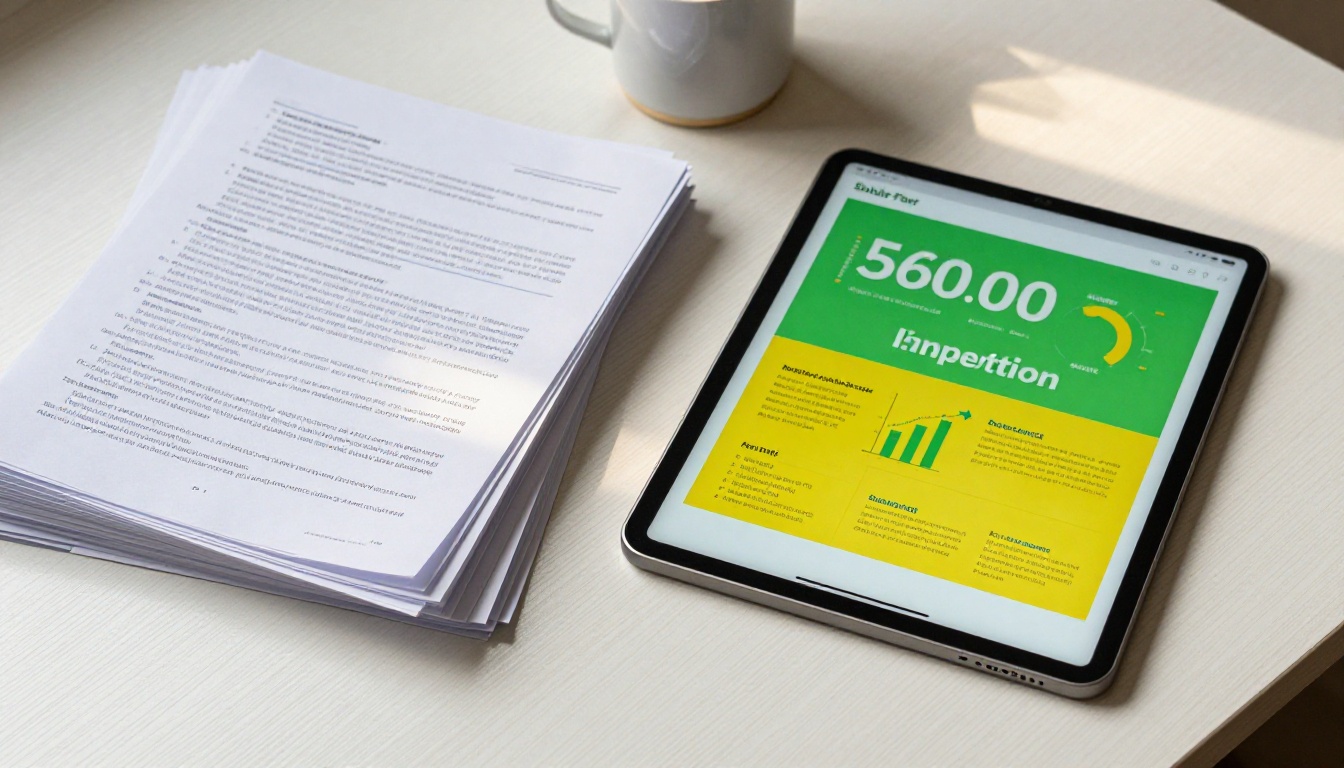
A solar flipbook proposal is not a restyled PDF. It is an interactive document that clients flip through page by page, with each spread dedicated to one idea, one number, one visual. The format forces clarity: you can only fit so much on a single spread, which means every section has to earn its place.
The Opening Spread: Big Picture First
The opening spread of a solar flipbook sets the emotional hook. Before costs and before specs, the client sees their estimated savings and a single headline number: "You could save $38,400 over 25 years." That number, on a clean branded page, shifts the entire conversation from cost to investment.
Breaking Down System Costs Visually
Once the big picture is clear, the flipbook walks through costs in a structured sequence: gross system price, federal tax credit deduction, state incentives, and net cost. Each step appears on its own page or visual block. A bar chart showing the reduction from gross to net cost is more persuasive than a table of numbers because it shows the deduction happening, not just the result.
The Payback Timeline Made Simple
The payback period is the number most clients obsess over, and it is also the one most often buried in fine print. A flipbook proposal dedicates a full spread to a timeline chart: Year 1 through Year 25, showing cumulative savings climbing past the system cost and continuing upward. When clients see the crossover point visually, the investment logic clicks into place.
Paper Quote vs. Flipbook Proposal
| Feature | Paper/PDF Quote | Flipbook Proposal |
|---|
| Format | Dense text and tables | Visual, page-by-page layout |
| Readability | Low for non-technical clients | High, scannable and visual |
| Mobile-friendly | No | Yes, fully responsive |
| Branding | Minimal | Custom colors, logo, fonts |
| Sharing method | Email attachment | Shareable link or embed code |
| Analytics | None | View tracking (Professional plan) |
| Interactivity | None | Clickable links, embedded content |
| Client confusion rate | High | Significantly lower |
💡 Flipbook proposals don't just look better. They structurally prevent misreading by keeping one concept per page spread.
What Goes Inside a Solar Flipbook
A strong solar flipbook is not just a reformatted quote. It is a selling document built around the client's questions, in the order they naturally think them.
Must-Have Sections for Every Solar Quote
- Opening spread: Client name or address, company branding, total savings headline
- Current situation: Today's average monthly bill vs. projected bill after solar
- System summary: Panel count, system size in kW, estimated annual production (simplified)
- Cost breakdown: Gross price, incentives, net cost, and available financing
- Payback timeline: Year-by-year savings chart through the 25-year mark
- What is included: Equipment, installation, warranty, and monitoring details
- Next steps: Clear call to action with contact info and signing instructions
Charts and Data That Actually Convert
Not all visuals are equal. The charts that consistently move clients from interested to signed include:
- Monthly bill comparison bar chart, side by side: today vs. after solar
- 25-year cumulative savings line graph, showing exactly when the system pays for itself
- Incentive waterfall chart, gross cost cascading down through tax credits and rebates to net cost
- Year 1 vs. Year 10 savings snapshot, illustrating how savings grow as utility rates rise

Financing Options Laid Out Clearly
Financing is where many solar deals stall. Clients hear "zero down" and assume there is a catch. A flipbook proposal devotes one page to each financing scenario: cash purchase, solar loan, and lease or PPA, with monthly payment, total cost over term, and estimated savings for each option. Side-by-side comparison stops confusion before it starts.
⚠️ Never combine all financing options onto one page. Each option gets its own spread. Clients who see all three options at once will compare them in their heads instead of using your numbers.
Solar Flipbook Features by Plan
| Feature | Standard Plan | Professional Plan |
|---|
| Unlimited flipbooks | ✅ | ✅ |
| Custom branding | ✅ | ✅ |
| Password protection | ✅ | ✅ |
| Mobile-responsive design | ✅ | ✅ |
| Embed on website | ✅ | ✅ |
| No watermarks | ✅ | ✅ |
| View analytics | ❌ | ✅ |
| Lead generation forms | ❌ | ✅ |
| Offline downloads | ❌ | ✅ |
✅ For solar sales teams, view analytics on the Professional plan are especially useful. You can see which pages each client spent the most time on, so your follow-up call addresses the right questions immediately.

How to Build a Solar Proposal Flipbook
Flipbooks AI is built for exactly this use case. Here is how solar reps create and share a polished proposal in under 15 minutes.
Step 1: Create Your Account
Head to flipbooksai.com/account and sign up. The Standard plan covers unlimited flipbooks with full branding and no watermarks, ever. If your team needs view tracking to know which clients are actually reading proposals, the Professional plan adds analytics and lead generation forms.
Step 2: Upload Your Solar Proposal PDF
Click "New Flipbook" and upload your existing solar proposal PDF. The PDF to Flipbook Converter handles the conversion automatically, preserving your charts, tables, and page layout while adding the interactive page-turning interface clients will actually use.
💡 Before uploading, revise your PDF so that critical numbers such as monthly savings, payback period, and net cost each appear on their own visual page rather than buried in text paragraphs. The flipbook format rewards focused, single-topic spreads.
Step 3: Add Your Branding
Once converted, use the customization panel to add your company logo, brand colors, and font choices. Solar companies with strong local brand recognition should make the proposal look immediately familiar. Clients who recognize the brand on page one feel more confident about everything that follows.
Step 4: Set Up Sharing
Every flipbook on Flipbooks AI gets a shareable link you can paste directly into an email or text message. No file attachments, no download required. The client clicks the link and the flipbook opens in their browser on any device. You can also use the Embed Flipbook on Website tool to place your proposal template directly on your site. Password protection is available for proposals with private client pricing details.
Step 5: Track and Follow Up
On the Professional plan, analytics show which pages each recipient spent time on and when they opened the link. When you call back 24 hours after sending the proposal, you can say: "I noticed you spent some time on the payback timeline. Happy to walk through that together." That level of personalization is what closes deals.

What Solar Sales Reps Report After Switching
The shift from PDF quotes to interactive flipbook proposals produces consistent results across different market sizes and company types.
Fewer Confused Questions After Sending
The most immediate change sales reps notice is a drop in "I don't really get this part" follow-up messages. When a proposal is built around the client's questions rather than the engineer's data, most concerns resolve before the follow-up call. Clients arrive at the conversation with a specific position: "I like option 2 but want to ask about the loan term." That is a far better starting point than blank confusion.
Faster Decisions on Both Sides
Paper quotes create a multi-day decision lag because clients want to sit with them and show a spouse or family member who then has to decode the same confusing document. Flipbooks are built to be shared. A client can forward the link to their partner, who opens it on their phone and gets the same clear, scannable experience. The follow-up conversation can happen the same afternoon.
💡 For residential solar companies, consider creating a brief solar savings flipbook, separate from the full proposal, as a leave-behind tool homeowners can share immediately after the first visit.

Common Mistakes in Solar Flipbook Proposals
Even well-designed flipbooks underperform when a few common errors are present.
Too Much Information Per Page
The flipbook format's strength is focus. When a single spread tries to show a monthly savings chart, a 25-year projection, two financing options, and a warranty table, it collapses back into the same cognitive overload as the original PDF. One idea per spread, always.
Missing the Incentive Calculation
The federal solar investment tax credit (ITC) is currently 30% of the gross system cost. Clients who don't see this clearly calculated on its own page often underestimate how affordable solar actually is. Make the incentive visible, specific, and personal: "Your estimated ITC credit: $7,140."
No Call to Action at the End
A proposal that ends on the last spec page loses momentum. The final spread of every solar flipbook should have a clear next step: schedule a site assessment, sign the proposal digitally, or call the rep directly. Include a phone number and a direct link. Don't make the client wonder what to do next.

Solar Flipbook Proposals by Client Type
Different solar buyers respond to different proposal formats. Adjusting your flipbook structure based on who you're selling to makes a measurable difference in conversion rates.
| Client Type | What They Care About Most | Flipbook Focus |
|---|
| First-time homeowner | Monthly savings, how financing works | Lead with bill comparison and simple financing page |
| Investment property owner | ROI, long-term returns | Emphasize 25-year cumulative savings and tax benefits |
| Business owner | Payback period, operational savings | Include commercial depreciation and demand charge savings |
| Environmentally motivated buyer | Carbon offset, energy independence | Add CO2 equivalent page with tree or mile equivalencies |
| Cost-skeptical client | True net cost, incentive breakdown | Dedicated incentive waterfall chart as early spread |
✅ The Sales Presentation Flipbook and Online Brochure Designer tools on Flipbooks AI are well-suited for building solar proposals tailored to specific buyer profiles.
What Makes a Solar Flipbook Worth Sharing
The best solar proposals are the ones clients forward. When a homeowner sends your flipbook to their neighbor with a message like "check out what we're doing," you have just generated a referral with zero extra effort. That only happens when the flipbook is clean, branded, and makes the client look savvy for choosing solar.
Proposals that clients share have a few things in common. They are mobile-friendly so they look great on any phone. They are not cluttered with technical jargon. And they have a visual identity that reflects well on whoever sent them. A polished solar flipbook is a statement of the installer's professionalism, not just a document.
Stop Sending PDFs Nobody Reads
The solar industry has a proposal problem. The technology has never been better: payback periods are shorter, panel efficiency is higher, financing options are more accessible. But the documents used to communicate all of that are still rooted in a format designed for engineers, not homeowners.
If your close rate is not where you want it, the problem might not be the product or the price. It might be the proposal.
Flipbooks AI gives solar companies a fast, professional way to rebuild that first impression. Upload your PDF, add your branding, share the link. Your next client gets a proposal they can actually follow, page by page, visual by visual, and you get a clearer shot at the signature.
Ready to build your first solar flipbook? Create your account and start today. Compare pricing plans to find the right fit for your team size and volume.
Browse all sales and business tools on Flipbooks AI, including the Sales Presentation Flipbook and the Brochure Flipbook Maker, both built for client-facing work that needs to look polished from page one.