There is a gap between what clients will pay for a static PDF catalog and what they will pay for an interactive one, and it is not small. In most B2B and retail contexts, businesses using interactive digital catalogs report faster deal cycles, higher average order values, and clients who return more often. The shift from print-style PDFs to dynamic, clickable experiences changes how buyers perceive value before they even look at the price tag. If you are still sending flat files when your competitors are sending experiences, that gap in perceived value is costing you real money. Flipbooks AI makes it possible to close that gap without hiring a development team or rebuilding your assets from scratch.
The Price Gap Nobody Talks About
Salespeople notice it first. A static PDF gets a polite "thanks, I'll look at it later." An interactive catalog gets "can you walk me through this right now?" The difference in immediate attention alone changes the conversation, and changed conversations lead to changed outcomes.
That difference in attention translates into willingness to pay. When buyers invest time in an experience, they mentally anchor more value to what they are buying. Behavioral economists call it the endowment effect: people value things more once they have spent time with them. An interactive catalog forces active participation rather than passive scrolling, which creates a fundamentally different psychological relationship between the buyer and the product.
💡 The average viewer spends 3x longer on an interactive catalog than on an equivalent PDF. That time investment directly correlates with purchase intent.
The second reason for the price gap is perceived professionalism. A beautifully designed interactive catalog with embedded video, clickable product links, and smooth page-turn animations signals that the seller has invested in their presentation. That signal translates directly into buyer confidence, and confident buyers are less price-sensitive.
What "Interactive" Actually Means
The word gets used loosely, so it is worth being specific. A truly interactive catalog does several things a static PDF cannot:
- Clickable hotspots: Products link directly to purchase pages, spec sheets, or contact forms
- Embedded video: Product demonstrations, brand films, or testimonial clips play inline without leaving the page
- Animated page turns: The physical sensation of flipping pages, replicated digitally, creates a tactile quality that flat documents lack
- Lead capture forms: Viewers can request quotes, book consultations, or join mailing lists without ever leaving the catalog
- Behavior tracking: You know exactly which pages viewers spent time on, which products they clicked, and where they dropped off
- Password protection: High-value catalogs can be gated for qualified leads only, increasing perceived exclusivity

None of these features exist in a static PDF. Each one individually would justify a price premium. Together, they create a buying experience that feels closer to a premium website than a document, and buyers price it accordingly.
Why Buyers Pay More: 5 Real Reasons
Understanding the specific mechanisms behind the price premium helps you build your case when pitching interactive formats to clients or stakeholders.

1. Reduced Friction in the Buying Process
Every click a buyer has to make outside of your catalog is a chance for them to get distracted. Interactive catalogs eliminate that friction. A buyer sees a product they like, clicks the embedded link, and lands on the purchase page in seconds. Fewer steps between interest and action means higher conversion rates across the board.
2. Richer Product Storytelling
A static image of a chair tells you what it looks like. An embedded 30-second video shows it in a living room, reveals the fabric texture, and shows someone sitting in it comfortably. That additional context reduces the buyer's uncertainty, which is one of the primary reasons people hesitate before buying.
3. Exclusivity Signals Value
When a catalog is password-protected or requires a login to access, it feels exclusive. Buyers who feel they have been given special access subconsciously assign higher value to what they are about to see. This is the same psychology behind private shopping events and members-only showrooms, applied to your sales materials.
4. Mobile-First Accessibility
Buyers increasingly review materials on their phones during commutes, between meetings, or while traveling. An interactive catalog built for mobile does not just survive this context, it thrives in it. A PDF that requires pinching and zooming creates frustration. A responsive flipbook that fills the screen and turns pages with a swipe creates delight. Delight is what buyers remember when they are deciding whom to call back.
5. Proof of Process Sophistication
When a client receives an interactive catalog, the implicit message is: "We are the kind of company that presents information this way." That message carries significant weight in competitive pitches where multiple vendors are being evaluated side by side.
| Factor | Static PDF | Interactive Catalog |
|---|
| Time viewer spends | 1-2 minutes | 4-8 minutes |
| Clickable product links | No | Yes |
| Embedded video | No | Yes |
| Mobile experience | Poor | Excellent |
| Lead capture | No | Yes (Professional plan) |
| Buyer behavior tracking | No | Yes |
| Password protection | No | Yes |
| Perceived professionalism | Standard | Premium |
The ROI Numbers Are Hard to Ignore
The business case for interactive catalogs is not purely psychological. The data is concrete and repeatable across industries.

Businesses that switch from static PDFs to interactive flipbook formats consistently report measurable improvements across several metrics:
| Metric | Average Improvement |
|---|
| Average time-on-catalog | +180% |
| Product click-through rate | +65% |
| Lead form completion | +40% |
| Sales cycle length | -25% |
| Return viewer rate | +55% |
| Quote request rate | +35% |
⚠️ These figures are averages across industries. Your specific results will depend on catalog quality, product type, and how well the interactive elements are implemented.
The sales cycle reduction is the one that tends to get executive attention fastest. Shorter cycles mean faster revenue recognition, less time for deals to go cold, and lower cost-of-sale. When you can attribute a 25% shorter average cycle to the introduction of interactive catalogs, the ROI calculation becomes straightforward for any finance team to approve.
Industries Where This Happens Most
Not every sector sees the same lift, but several industries have made interactive catalogs central to how they sell.
Real Estate
Property listings with interactive brochures that include floor plans, neighborhood maps, embedded virtual tour videos, and mortgage calculators close faster and at higher asking prices than listings supported only by static images. Buyers feel more informed before the showing, which compresses negotiation time considerably.

Flipbooks AI offers a dedicated Real Estate Brochure Creator purpose-built for this use case, with all the embedding and sharing features that real estate professionals need to present properties professionally.
Fashion and Retail
Seasonal lookbooks with video runway clips, fabric texture close-ups, and direct product links produce significantly higher conversion rates than static lookbook PDFs. Buyers retain more product information and make larger basket-size decisions when they can browse at their own pace through a rich digital experience.

The Interactive Lookbook Designer and Fashion Catalog Creator tools make this straightforward for brands of any size, from independent boutiques to multi-location retail chains.
Hospitality and Food Service
Restaurants, hotels, and catering companies that use interactive menus and brochures report higher average ticket values. When a diner can watch a 15-second video of a signature dish being plated, they are more likely to order it. When a hotel guest can flip through a spa menu with embedded treatment videos, add-on bookings increase reliably.
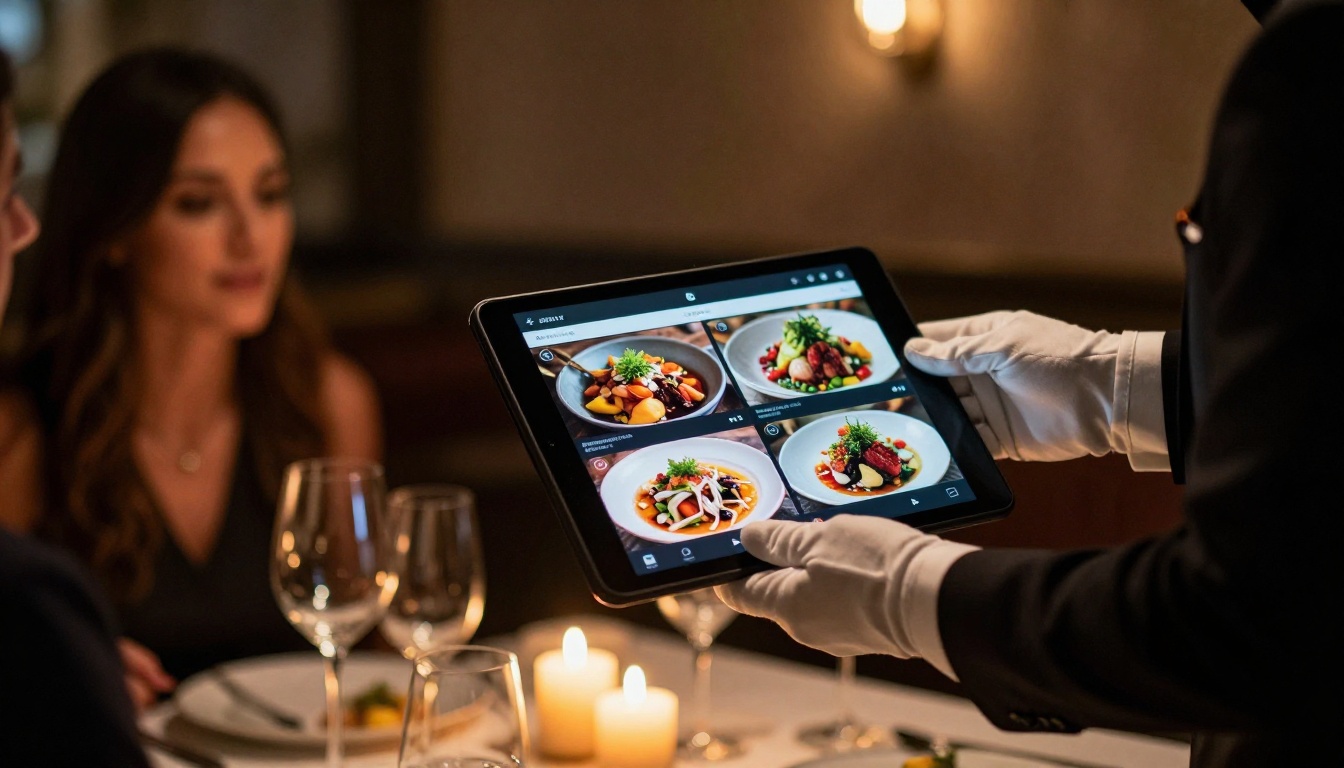
The Restaurant Menu Creator and Spa & Wellness Menu tools are built specifically for this sector's visual-first selling environment.
B2B Manufacturing and Wholesale
Product catalogs with hundreds of SKUs become dramatically more useful when buyers can search, filter by category, click through to spec sheets, and request quotes inline. What used to require a phone call to a sales rep can now happen at 11pm on a Sunday when the buyer finally has time to review your catalog. That asynchronous selling capability alone justifies the switch.
How to Build an Interactive Catalog with Flipbooks AI
Flipbooks AI converts your existing PDF catalog into a fully interactive flipbook in minutes. No design software required. No coding. Here is how it works from start to finish.

Step 1: Create your account
Go to flipbooksai.com/account and sign up. The free plan lets you start immediately with no watermarks required on any flipbook you publish.
Step 2: Upload your PDF
Drag and drop your existing PDF catalog. Flipbooks AI converts every page automatically, preserving your typography, colors, images, and layout exactly as designed. The conversion typically takes under 60 seconds for a standard catalog.
Step 3: Add interactive elements
Once uploaded, use the editor to:
- Add clickable links to product pages or order forms on any page
- Embed video thumbnails so clips play inline on relevant product spreads
- Insert lead capture forms for quote requests or consultation bookings
- Configure table of contents navigation so buyers can jump directly to sections
Step 4: Apply your branding
Set your brand colors for the flipbook toolbar and viewer interface. Upload your logo. Choose a custom background or page backdrop. The result should feel like an extension of your brand identity, not a generic document viewer.
Step 5: Set sharing and privacy options
- Generate a shareable direct link for email campaigns and sales outreach
- Copy an embed code to place the catalog directly on your website or landing pages
- Enable password protection for exclusive catalogs or confidential pricing materials
- Turn on offline downloads if buyers need catalog access without an internet connection
✅ The Digital Catalog Maker and Product Catalog Generator tools provide purpose-built templates for the most common catalog formats, cutting setup time significantly.
Step 6: Track viewer behavior after publishing
With the Professional plan, every view is tracked. You see which pages held attention longest, which products got clicks, and which viewers completed your lead forms. That data feeds directly back into your next catalog iteration, making each version sharper than the last.
Pricing Your Digital Catalog Work
If you are an agency or freelancer building interactive catalogs for clients, the pricing conversation changes the moment you can demonstrate what a catalog actually does for conversion rates.

Instead of selling "a PDF converted to flipbook format," sell "a catalog asset that tracks buyer behavior and feeds your sales team real-time intent signals." That is a fundamentally different value proposition, and it commands a fundamentally different fee structure.
| Service Tier | What It Includes | Typical Price Range |
|---|
| Basic Conversion | PDF to flipbook, default settings | $150-$400 |
| Branded Interactive | Custom branding, links, basic sharing | $500-$1,200 |
| Full-Feature Catalog | Video embeds, lead forms, behavior tracking, password protection | $1,500-$4,000+ |
| Ongoing Management | Monthly updates, analytics reporting, A/B testing | $300-$800/month |
The biggest lever in this table is the jump from "Branded Interactive" to "Full-Feature Catalog." That jump is enabled almost entirely by features available on the Professional plan, specifically buyer behavior analytics, lead generation forms, and advanced sharing controls. The cost of the plan is a fraction of the price differential clients will pay for those capabilities.
See the full pricing plans to find which tier fits your current workflow and client roster.
Reading the Numbers After Launch
The feature that separates professional interactive catalog work from amateur implementations is what happens after the catalog is published and shared.

With analytics enabled on the Professional plan, you get a precise picture of buyer behavior in real time:
- Pages with the most time: This tells you which products or sections generate the most interest, even when buyers do not click through to purchase
- Click-through patterns: Where buyers go after clicking reveals what they are actively considering versus what they are merely curious about
- Drop-off points: If page 14 consistently loses viewers, something on that spread needs to change before the next send
- Return visits: A buyer who comes back to a catalog three times before calling is a much warmer lead than a first-time viewer
That data is what justifies charging more for the catalog itself, for the ongoing management retainer, and for the strategic consulting work that comes from actually understanding what your catalog is doing in the market.
💡 Share a monthly viewer behavior report with your clients. Seeing exactly how their buyers move through the catalog is often the single most persuasive argument for renewing and expanding the working relationship.
Interactive catalogs also perform better in search when embedded on a website, because the time-on-page metrics improve the page's behavioral signals. A static PDF download contributes nothing to that. A flipbook embedded on a product page keeps visitors on-site longer, which compounds the ROI beyond the immediate sales conversation.
Stop Sending Flat Files
The buyers who pay more for interactive catalogs are not paying for the technology. They are paying for the confidence, the clarity, and the professional signal that a well-built interactive catalog delivers. They are paying because the experience reduces their uncertainty and makes the decision to buy feel right before a single conversation with your sales team happens.
Static PDFs are not going to disappear overnight. But in every competitive pitch where one vendor brings a flat file and another brings a rich, clickable experience buyers can actually interact with at their own pace, the outcome is increasingly predictable.
Ready to stop sending flat files? Create your first interactive catalog on Flipbooks AI and see what happens to your next client conversation. Browse all available tools and templates to find the right format for your specific industry and use case. Or compare pricing plans to choose what makes sense for where you are right now.



