Coin collectors have always faced the same frustrating paradox: the more valuable the collection, the harder it becomes to manage, share, and protect the records of it. Paper binders yellow and crack. Spreadsheets strip out the visual context that makes numismatics meaningful. Printed catalogs become outdated the moment the ink dries. That is why a growing number of collectors are turning to Flipbooks AI to build interactive digital catalogs that do what no physical format ever could.
The Problem with Traditional Coin Catalogs
For decades, the standard tools for cataloging a coin collection have not changed much. Binders with plastic coin pages, typed or handwritten index cards, Excel spreadsheets, and occasionally a printed photo album. Every one of these methods shares the same fundamental weakness: they cannot scale with a serious collection without creating enormous friction.
Binders and Paper Wear Out
Physical binders are the backbone of most hobbyist coin catalogs. They seem logical at first. You can arrange coins visually, add notes, and flip through pages manually. But the reality of long-term use tells a different story.
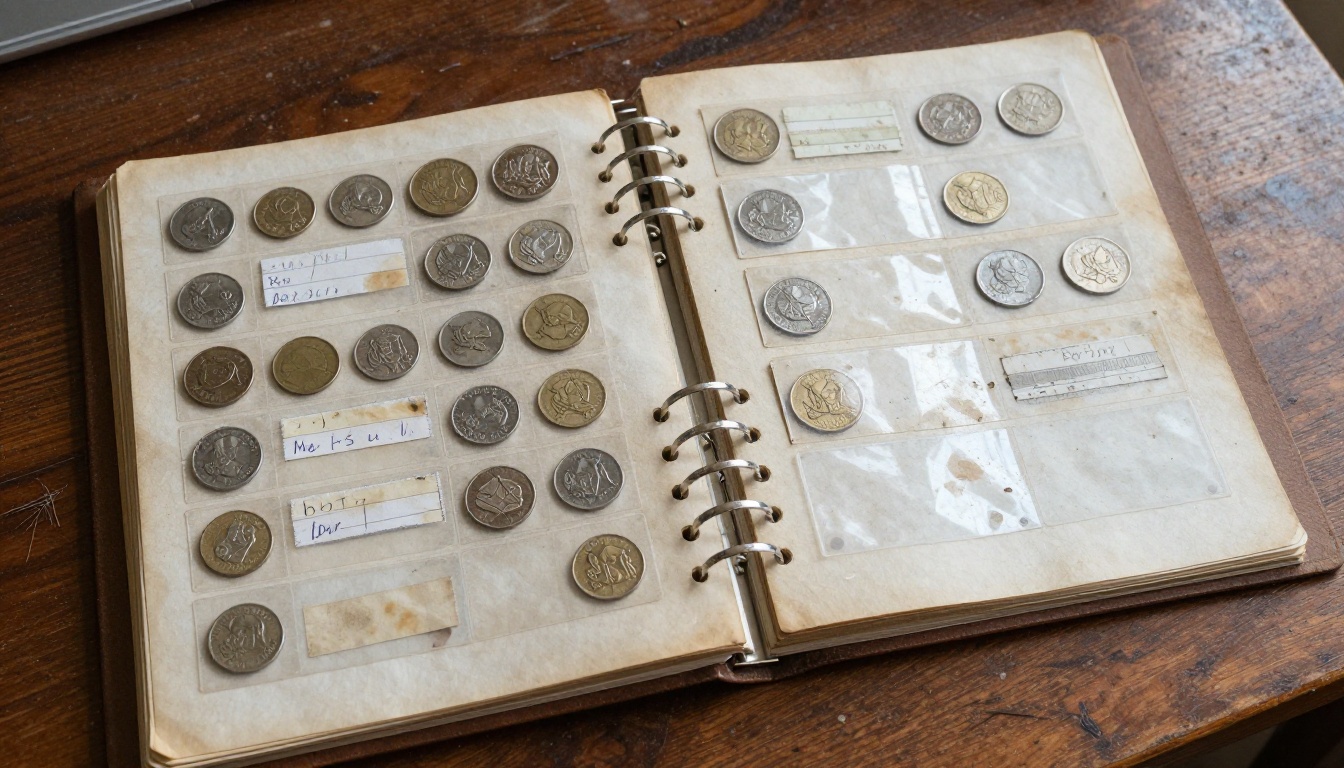
PVC-based plastic pages off-gas and damage coins over time. Pages tear, fade, and lose their labeling. A binder dropped once can scatter an entire graded set across the floor. Worse, binders are a single point of failure with no backup. If your catalog burns in a house fire or floods in a basement, it is gone permanently, along with decades of careful documentation.
The physical wear problem compounds at scale. A collection of 300 coins might fit in two binders you can manage by hand. A collection of 3,000 coins becomes a wall of binders that takes 20 minutes to locate a single piece. The system that worked at 100 coins actively fights you at 1,000.
Spreadsheets Miss the Visual Detail
Many collectors graduate from binders to spreadsheets thinking they are making a real upgrade. Excel and Google Sheets let you sort by denomination, year, mint mark, grade, and purchase price. That is genuinely useful. But spreadsheets strip coins of their most important attribute: what they actually look like.
A Morgan dollar in MS-65 condition looks dramatically different from one graded VF-30. No spreadsheet cell captures that difference. You cannot compare two coins' surface quality from a formula. The visual layer of numismatics, which is precisely what drives grading decisions and market value, is completely invisible in a spreadsheet-only system.
⚠️ Warning: Spreadsheets also create serious version control problems. If you share your catalog with another collector or an appraiser via email, you immediately have two versions that can drift apart. There is no authoritative single source.
What a Flipbook Catalog Actually Does
A flipbook catalog is a digital publication format that mimics the experience of physically turning pages, but in a browser or mobile device. When built properly, it combines the visual richness of a photo catalog with the organizational power of a database, and the shareability of a web link.
The Page-Turning Digital Experience
The format matters for a specific reason: it maps directly to how numismatists already think. Collectors are accustomed to paging through reference books, albums, and auction catalogs. A flipbook preserves that familiar mental model while adding capabilities that paper never had.
Every page can carry high-resolution coin photographs, metadata fields, provenance notes, and even embedded video walkthroughs of particularly significant pieces. The result is a living document that represents a collection completely, and can be updated instantly whenever the collection changes.
Embedded Images for Every Coin
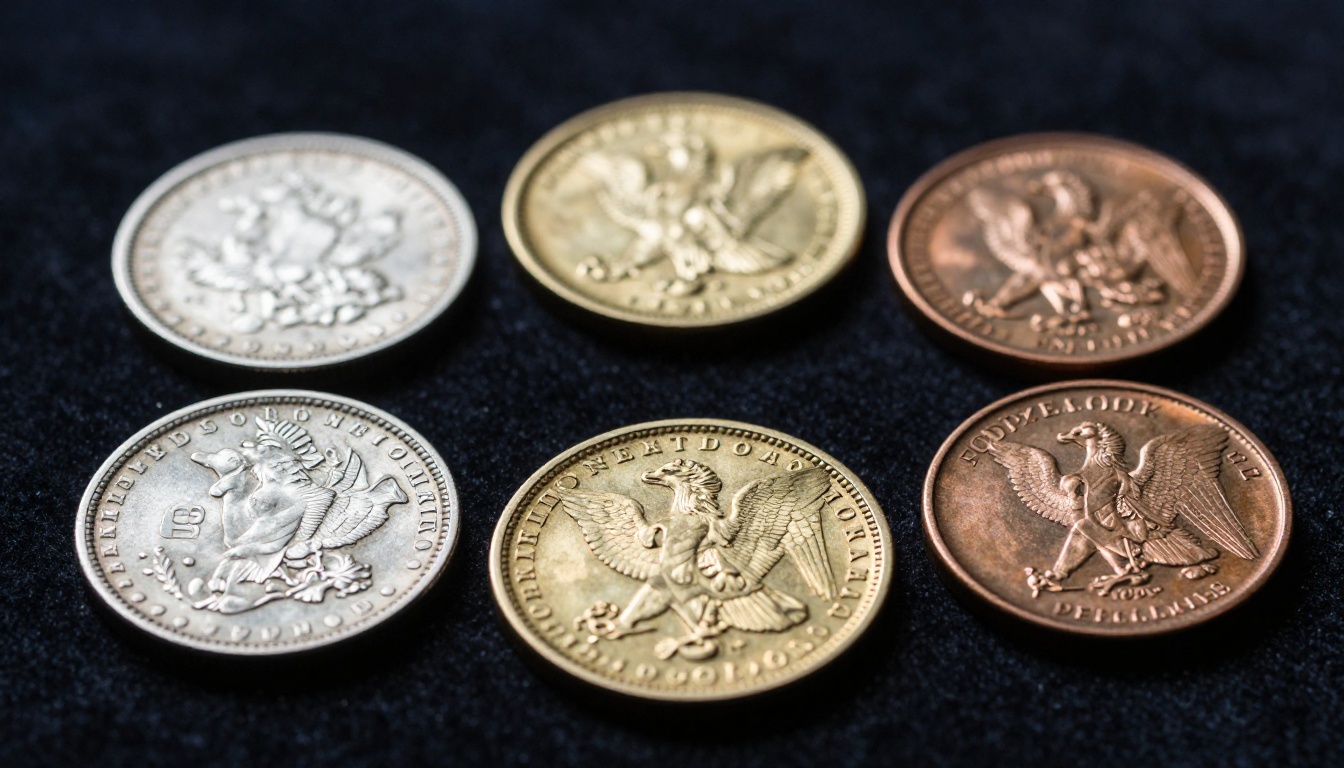
This is the core structural advantage. Unlike a spreadsheet row, a flipbook page holds the obverse and reverse photographs of each coin at full resolution. An appraiser reviewing the catalog sees exactly what a physical inspection would reveal. An heir inheriting the collection understands immediately what each piece is and why it matters.
💡 Pro tip: Photograph coins under raking light from a 45-degree angle to reveal surface marks and luster that straight-on shots miss. These images translate directly into compelling, informative flipbook pages.
How Coin Collectors Benefit
The shift from paper or spreadsheet to flipbook catalogs is not just a formatting preference. It produces concrete, practical benefits across every use case a serious collector faces.
Organization at Scale
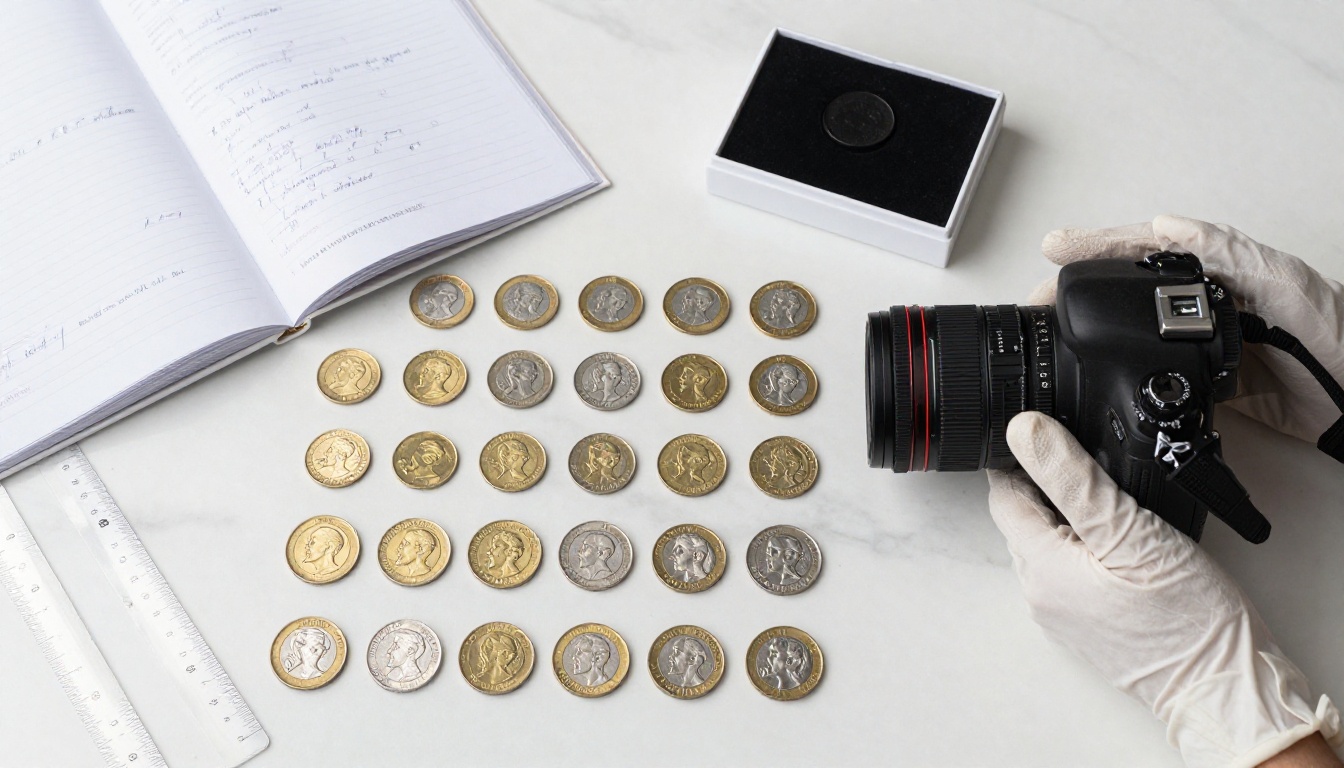
A mid-size collection of 500 coins across multiple series becomes genuinely difficult to navigate in a binder or even a well-organized spreadsheet. A flipbook catalog with proper sections, a table of contents, and clickable navigation handles that scale without breaking a sweat.
You can organize by series (Morgan dollars, Walking Liberty halves, Mercury dimes), by date range, by mint state grade range, or by monetary value. The structure adapts to how your collection is actually organized rather than forcing your coins into a rigid row structure.
| Organization Method | Physical Binder | Spreadsheet | Flipbook Catalog |
|---|
| Visual coin photos | Yes (limited size) | No | Yes (full resolution) |
| Sortable metadata | No | Yes | Yes |
| Section navigation | Manual page flipping | Filter and sort | Click-through TOC |
| Scalability | Degrades fast | Moderate | Excellent |
| Backup and recovery | None | Cloud if synced | Automatic cloud |
| Sharing capability | Physical handoff only | File attachment | Live shareable link |
| Password protection | None | Basic file password | Yes (platform feature) |
Sharing with Other Collectors
One of the most underrated aspects of the flipbook format is how it changes the social side of the hobby. Coin clubs, online forums, and auction houses all benefit from seeing a real visual catalog rather than a list of item numbers.
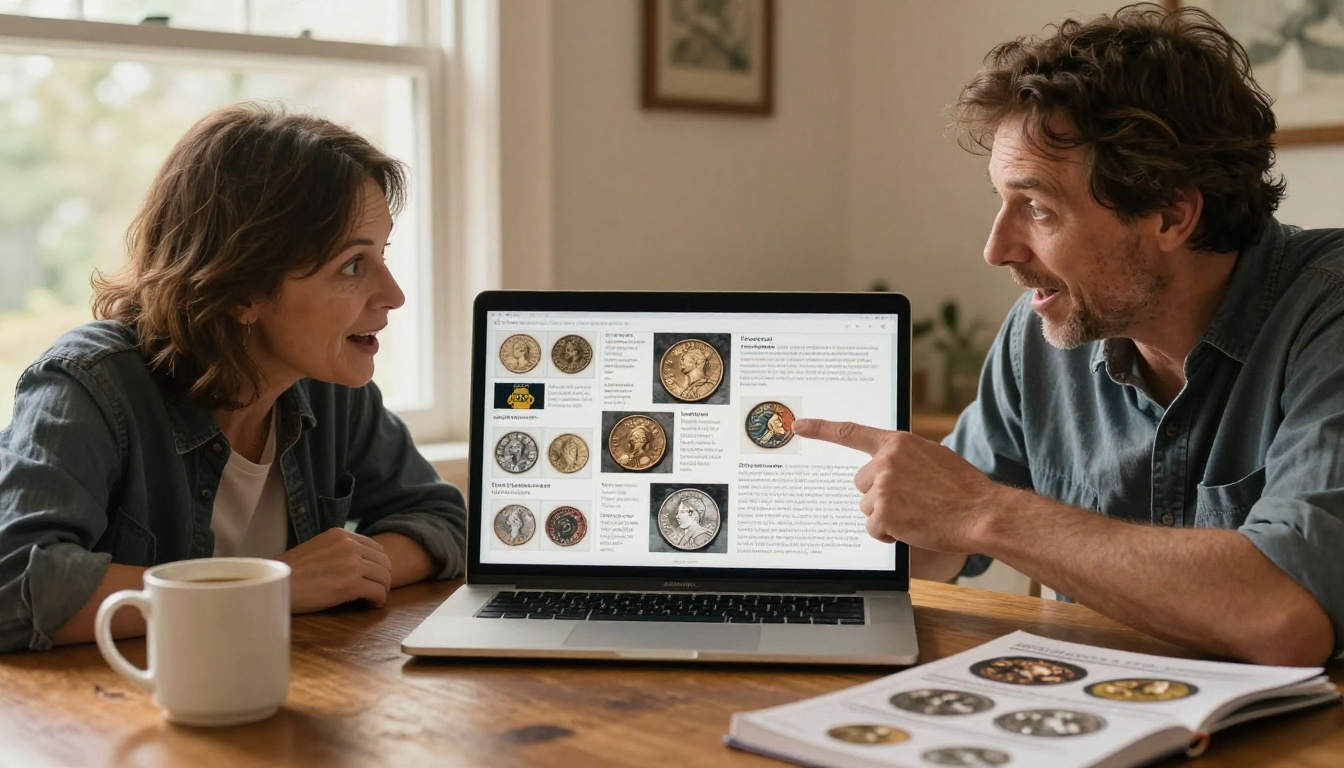
With a flipbook catalog hosted online, you send a single link to anyone in the world. A dealer in another city can browse your collection before a show. A fellow collector on a numismatic forum sees your complete Morgan dollar set in minutes. No files to download, no special software required, just a browser on any device.
✅ Best practice: Use password protection when sharing a catalog with appraisers or insurers. Reserve the public link for coin clubs and forums where broader visibility is the point.
Insurance and Appraisal Documentation
This use case alone justifies the effort for any serious collector. Insurance companies require itemized documentation of a collection's contents to pay claims. Appraisers need clear visual evidence to assign values to specific coins.
A flipbook catalog provides both in a single, shareable document. You can include purchase receipts, grading certificates, and provenance documentation alongside each coin's photographs. When the collection changes, you update the catalog and share the updated link immediately. No reprinting, no re-scanning, no emailing large attachments back and forth.
How to Build Your Coin Catalog with Flipbooks AI
Flipbooks AI provides a dedicated Digital Catalog Maker that turns a structured PDF into a fully interactive flipbook in minutes. Here is exactly how a coin collector uses it from start to finish.
Step 1: Prepare Your Catalog PDF
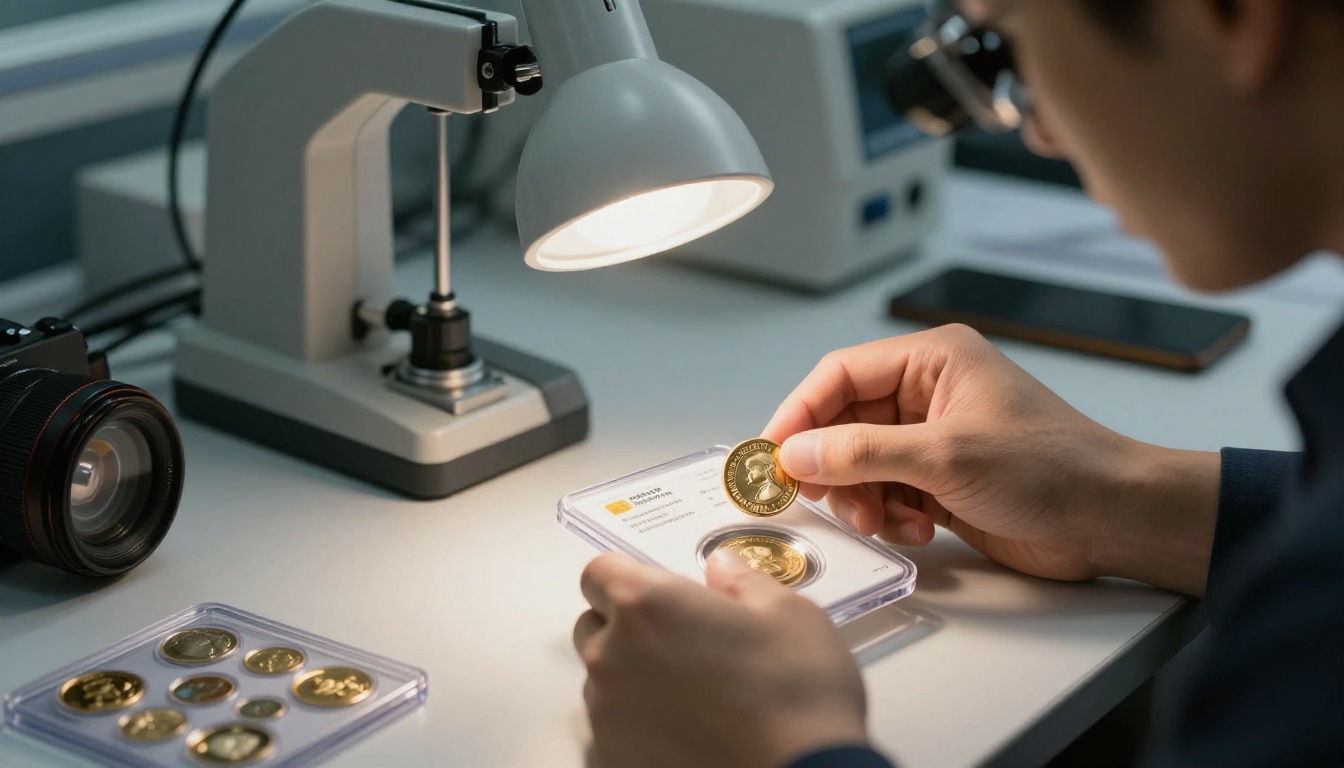
Start by creating your catalog layout in any PDF-compatible tool. Microsoft Word, Google Slides, Canva, and Adobe InDesign all work. Structure it like a reference book: a title page, a table of contents, then sections organized by series, denomination, or date range.
For each coin entry, include:
- Obverse and reverse photographs (minimum 300 DPI)
- Year, mint mark, and denomination
- Grade and certification number (PCGS, NGC, ANACS, etc.)
- Purchase price and acquisition date
- Current estimated market value
- Any provenance notes or auction history
Export the finished layout as a PDF. That file is what you upload to Flipbooks AI.
Step 2: Upload and Convert
Create an account on Flipbooks AI and use the PDF to Flipbook Converter. Drag your catalog PDF into the upload field. The platform processes it automatically, converting each page into a crisp, interactive experience with page-turning animation and zoom capability for inspecting coin details closely.
The conversion takes under two minutes even for large catalogs. A live preview appears immediately after upload.
Step 3: Customize Your Catalog
Once uploaded, you have full control over the catalog's appearance and functionality:
- Branding: Add your name, collector alias, or club name
- Colors: Match the catalog's scheme to your preferred aesthetic (dark backgrounds suit coin photography particularly well)
- Table of contents: Auto-generate or customize navigational links by section
- Zoom settings: Enable readers to zoom into coin photographs for close examination of surfaces and luster
- Background: Set a page background that complements your photography style
Step 4: Share or Protect
After customization, choose how the catalog reaches its audience:
- Public link: Share with coin clubs, forums, or social media
- Password protection: Restrict access to appraisers, insurers, or trusted buyers
- Embed code: Place the catalog directly on your personal website or collector portfolio
- Offline download: Create a downloadable version for shows and conventions where internet access is unreliable (available on the Professional plan, see pricing)
💡 Pro tip: The Catalog Flipbook Creator tool on Flipbooks AI is specifically optimized for item-by-item catalog layouts, making it particularly well-suited for coin collections with many individual entries per page.
Flipbooks vs. Other Digital Catalog Options
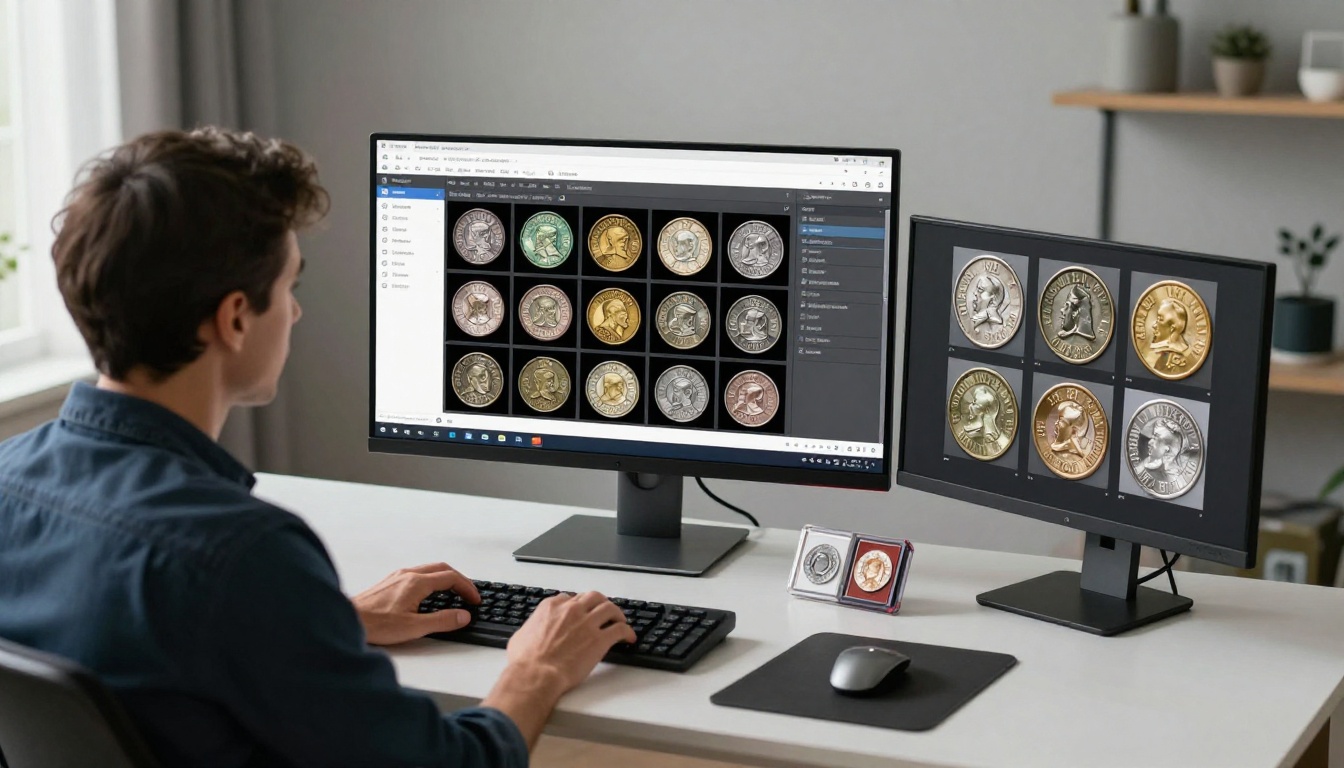
Several digital options exist beyond flipbooks: dedicated numismatic apps, private databases, and cloud photo albums. Each has real strengths, but a direct comparison shows why flipbooks stand out for most collectors.
| Platform Type | Visual Quality | Shareability | Setup Effort | Cost | Offline Access |
|---|
| Numismatic apps (PCGS CoinFacts, etc.) | High | Limited | Low | Free to moderate | Partial |
| Google Sheets with Drive photo links | Low | Good | Moderate | Free | Partial |
| Personal website gallery | High | Excellent | Very high | Moderate to high | No |
| Printed photo catalog | High | Physical only | Very high | High per print run | Yes |
| Flipbook catalog | High | Excellent | Low | Low to moderate | Yes (Pro plan) |
The flipbook format hits the strongest balance across all five dimensions. It requires no technical skills to set up, produces a visually rich result, shares via a simple link, and costs a fraction of printed alternatives while remaining fully updatable.
Real Use Cases from Coin Collectors
The abstract benefits become concrete when you look at the specific scenarios where coin collectors reach most urgently for their catalogs.
Estate Collectors and Inheritance Documentation
When a serious collection passes to heirs, the difference between a documented collection and an undocumented one can amount to tens of thousands of dollars in realized versus missed value. Heirs who receive a flipbook catalog with clear photographs, grades, and valuations know exactly what they hold. They can work with dealers, auction houses, or estate attorneys from a position of knowledge rather than guesswork.
Several collectors have specifically built flipbook catalogs as part of their estate planning, noting that the visual format is far more accessible to non-collector family members than a technical spreadsheet would ever be.
Active Traders and Coin Dealers
Dealers who maintain want lists and rotate inventory face a specific cataloging challenge: the catalog changes constantly. New acquisitions arrive, sold pieces need removal, and current market valuations shift with every auction result.
A flipbook catalog hosted on Flipbooks AI updates by replacing the underlying PDF. The link stays the same, so customers and trading partners always see the current version without anyone needing to request a new file. That single capability pays for itself at the first dealer show.
Junior Collectors Building Habits Early
Young collectors who start building catalogs from the very beginning develop habits that serve them for decades. A well-organized digital catalog from the first 50 coins makes it far easier to scale to 500 or 5,000 without needing to rebuild the entire system from scratch.
The flipbook format is visually engaging for younger collectors in a way that a spreadsheet simply is not. Seeing a collection presented as a real publication motivates consistent documentation and genuine pride in the hobby.
Plan Options for Coin Collectors
Flipbooks AI offers pricing tiers that match different collector profiles, from casual hobbyists to serious numismatists with large, frequently updated collections.
| Feature | Free | Standard | Professional |
|---|
| Flipbooks | 1 | Unlimited | Unlimited |
| Watermarks | Yes | No | No |
| Password protection | No | Yes | Yes |
| Custom branding | No | Yes | Yes |
| Analytics | No | No | Yes |
| Lead generation | No | No | Yes |
| Offline downloads | No | No | Yes |
| Embed on website | Yes | Yes | Yes |
For most collectors, the Standard plan provides everything needed: unlimited catalogs, no watermarks, password protection for private sharing, and custom branding. The Professional plan adds analytics (see exactly how often your catalog is viewed and by whom) and offline downloads, both valuable for active dealers and those who attend regular coin shows.
Your Collection Deserves Better Than a Binder
The case for why coin collectors catalog with flipbooks comes down to this: the format matches how collectors actually use their catalogs. You browse visually, you share with others, you update as the collection grows, and you document for purposes that matter well beyond the hobby itself.
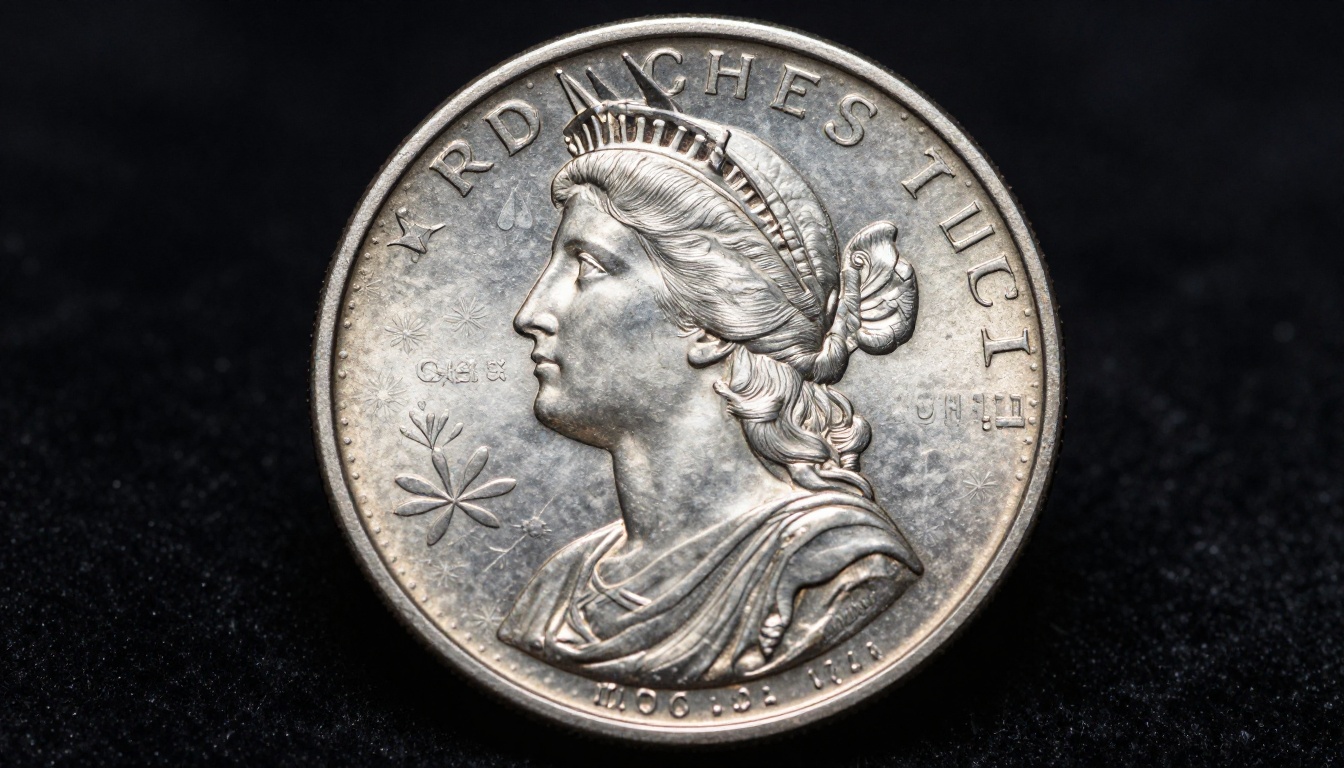
No binder does all of that. No spreadsheet comes close. A flipbook catalog built on a modern platform handles every one of those needs while producing something you are genuinely proud to show other collectors, dealers, and appraisers.
Ready to build yours? Get started for free on Flipbooks AI and create your first coin catalog today. Browse the full tools directory to find catalog-specific tools built for exactly this kind of work, or check pricing plans to choose the right tier for your collection's size and ambitions.



