The average small business spends between $1,200 and $5,000 on a single print brochure run, and that's before a single copy reaches a customer's hands. Add design fees, revisions, shipping, and the near-certain need to reprint when something changes, and the real cost climbs fast. Meanwhile, a digital flipbook on Flipbooks AI can be created, updated, and shared globally for a fraction of that budget. The difference is not just price. It's a fundamentally different model for how marketing materials work in 2026.
The Real Price of Printing Paper Brochures
Most businesses see the quote from the print shop and think that's the total cost. It is not. Printed brochures carry a long chain of expenses that begin before the printer starts and continue long after the boxes arrive.
Design and Pre-Press Costs
Before a single sheet goes through a press, someone has to design the brochure. Professional graphic design fees range from $500 to $3,000 for a trifold brochure, depending on the designer's rate and the number of revision rounds. Stock photography licenses add another $50 to $500 per image. Pre-press preparation, including color profile conversion, bleed setup, and proof approval, can add hours of billable work.
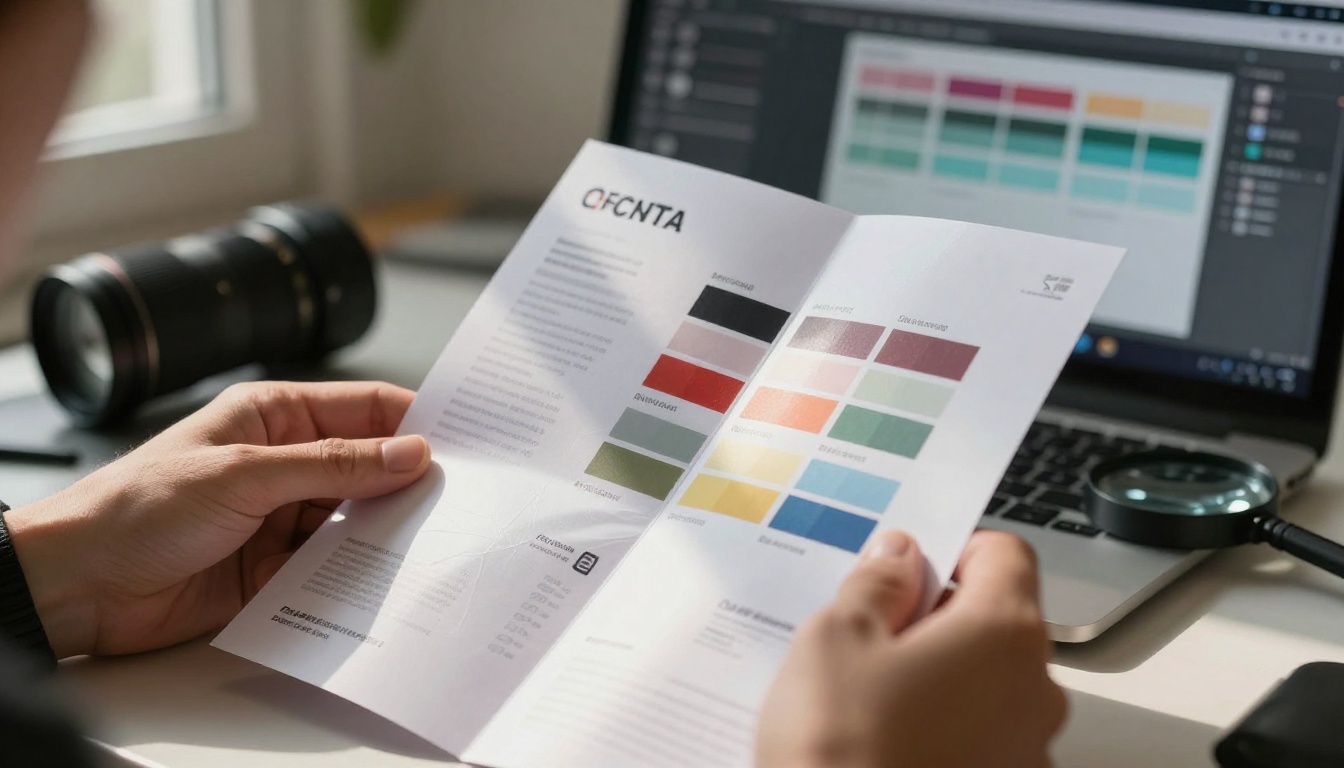
Most print shops require files submitted in very specific formats. If your designer isn't fluent in print production, correction fees apply. Digital publishing skips this entirely. Upload a PDF to Flipbooks AI and the conversion happens automatically, no pre-press specialist needed.
Minimum Print Run Economics
Here is where paper brochures punish small businesses the most. Offset printing, the standard for quality color brochures, only becomes cost-effective at volume. The per-unit cost at 500 copies is four to six times higher than at 5,000 copies. That forces businesses into a choice: pay a premium for a small run or commit to thousands of copies they may not need.
⚠️ Warning: Overprinting to lower per-unit costs is a false economy. Brochures that sit in storage for 18 months often become outdated before they're used, ending up in the recycling bin.
Digital flipbooks have no minimum. Whether you need one viewer or one million, the cost structure doesn't change.
Paper, Ink, and Finishing Expenses
Quality matters in print, and quality costs money. A standard 100lb gloss coated paper with UV coating runs significantly more than uncoated stock. Add spot UV, embossing, or foil stamping for premium feel, and costs multiply quickly. These are not optional extras for competitive industries. Real estate agents, luxury hotels, and automotive brands routinely use these finishes to signal value.
| Finishing Option | Approximate Cost Per 1,000 Units |
|---|
| Standard 4-color print | $350 to $600 |
| Gloss UV coating | +$80 to $150 |
| Spot UV on select areas | +$120 to $200 |
| Foil stamping | +$200 to $400 |
| Embossing or debossing | +$150 to $350 |
A digital flipbook delivers the same visual impact with page-turn animations, embedded video, and interactive elements at zero additional cost per feature.
Distribution and Shipping: Where Costs Explode
Printing the brochure is only half the battle. Getting it into the hands of the right people is an entirely separate expense.

Postage and Fulfillment Costs
Direct mail campaigns using brochures typically cost $0.50 to $3.00 per piece when you factor in envelopes, postage, and the labor to stuff and mail them. For a campaign reaching 2,000 prospects, that's $1,000 to $6,000 in distribution alone, on top of the printing costs already spent.
Trade show distribution adds another dimension. Shipping boxes of printed materials to a conference venue involves freight costs, potential damage, and the logistical burden of carrying heavy materials. Leftovers get thrown away or shipped back at additional cost.
Geographic Reach vs. Physical Limits
A printed brochure physically cannot reach a prospect on another continent without significant airmail or courier expense. A digital flipbook shared via link or embedded on your website reaches anyone with an internet connection instantly, at no additional cost per recipient.
💡 Pro Tip: Use Flipbooks AI to generate a shareable link that works on any device. Send it via email, WhatsApp, LinkedIn, or embed it directly on your website with one line of code.
Storage and Inventory Management
Printed brochures need physical space. A run of 5,000 trifolds takes up approximately two to three large cardboard boxes. Warehousing that inventory, tracking quantities, and reordering when stock runs low adds invisible overhead that rarely appears in the initial budget calculation.
The Update Problem: Reprinting Is Non-Negotiable
Nothing exposes the fragility of printed materials faster than a price change, a new product, or a rebranding.
Every Change Costs Money
In a digital flipbook, updating a price, swapping an image, or correcting a typo takes minutes. In print, every change triggers a new print run with the full cost structure attached. Minimum quantities, setup fees, and shipping start over from zero.

Consider a restaurant that prints 2,000 menus and six months later adjusts prices. Every existing menu becomes inaccurate. The entire stock gets discarded and reprinted. Use a Restaurant Menu Creator on Flipbooks AI instead and the update costs nothing: open the editor, change the number, republish. Everyone with the link immediately sees the current version.
Seasonal and Campaign-Specific Content
Promotional brochures tied to a season or campaign have a hard expiration date. Spring sale brochures printed in February are useless by June. Any unsold or undistributed copies are dead weight. Digital flipbooks can be archived, reactivated, or updated for a new campaign without reprinting a single page.
| Scenario | Paper Brochure Cost | Digital Flipbook Cost |
|---|
| Initial creation (design + print 2,000 units) | $1,800 to $4,500 | $0 to $49/month |
| Update one price or phone number | $800 to $2,000 (reprint) | $0 (edit in dashboard) |
| Distribute to 500 additional prospects | $250 to $900 (postage) | $0 (share link) |
| Translate to a second language | $1,500+ (new design + print) | $0 (duplicate and edit) |
| Add a video or interactive element | Not possible | Included |
The cumulative cost gap grows with every update cycle.
Environmental Cost and Brand Perception
Paper brochures are not just expensive financially. They carry a growing reputational cost as clients and customers increasingly value sustainability.
The Waste Reality
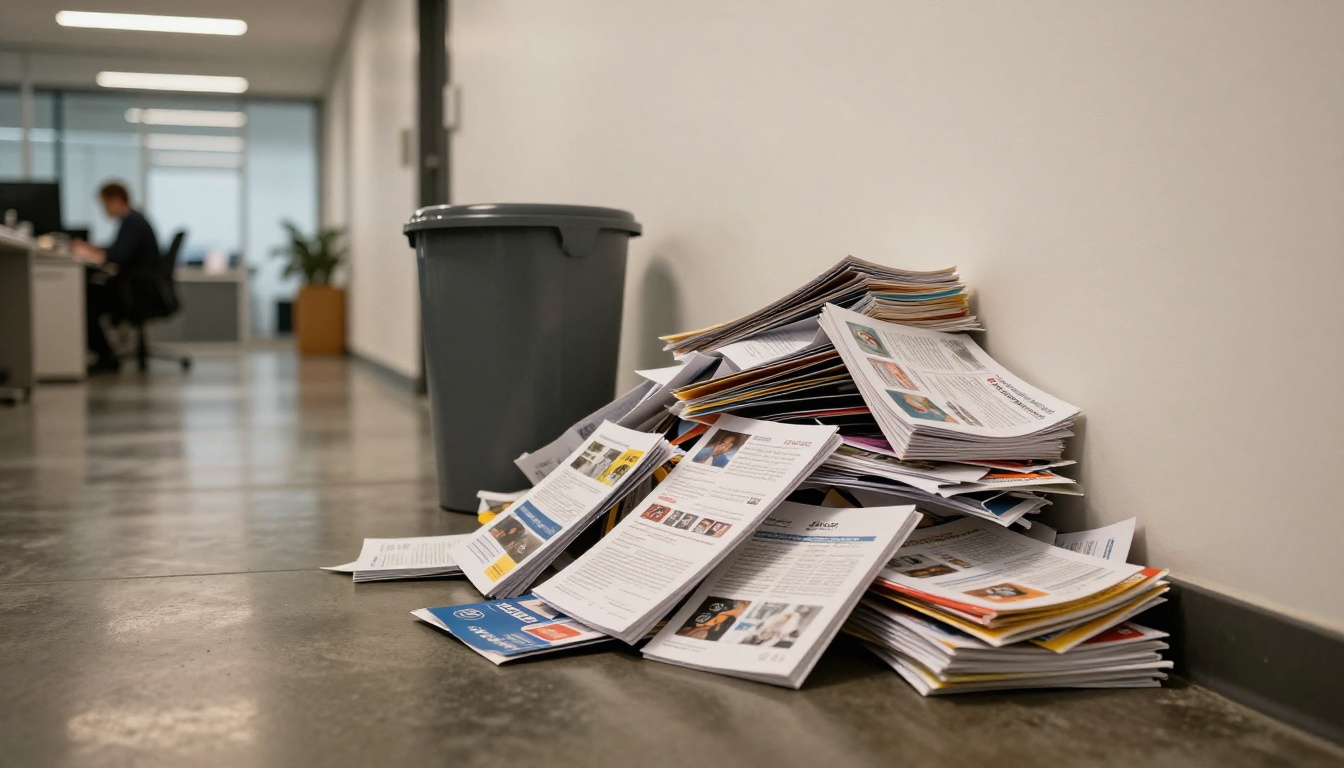
Research from the printing industry consistently shows that between 30 and 50 percent of printed marketing materials are never read by an intended recipient. A portion gets thrown away immediately. Another portion sits in storage until the content becomes outdated and then gets discarded. Commercially printed color brochures on coated stock are often not recyclable due to the lamination and UV coatings used.
Sustainability as a Competitive Signal
B2B buyers increasingly evaluate vendors on environmental practices. A company that sends digital brochures instead of printed ones signals operational efficiency and environmental awareness. For industries like construction, property development, and corporate services, this distinction matters.
The Online Brochure Designer on Flipbooks AI lets you build a professional brochure that looks as polished as any print piece without consuming a single sheet of paper.
Where Digital Flipbooks Win Every Category
The cost comparison is not close. But cost alone undersells the case for digital flipbooks. They also do things printed brochures simply cannot.

Interactivity That Print Cannot Match
A digital flipbook on Flipbooks AI can include:
- Embedded videos showing product demonstrations or testimonials
- Clickable links that take readers directly to product pages or booking forms
- Audio narration for guided walkthroughs
- Animated page turns that create a premium reading experience on any device
- Lead capture forms on the Professional plan to convert readers into prospects
None of these are possible in print.
Analytics and Performance Data
When did someone open your flipbook? Which pages did they spend the most time on? Did they click through to your pricing page? Printed brochures offer zero visibility. Digital flipbooks on the Professional plan provide detailed analytics that let you refine your materials based on real reader behavior.
Access Control and Privacy
Need to share a confidential price list or an internal training manual? Password-protect it with a single checkbox. The Brochure Flipbook Maker makes it easy to create materials for different audiences with access controls that paper simply cannot provide.
| Feature | Paper Brochure | Digital Flipbook |
|---|
| Real-time updates | No | Yes |
| Embedded video | No | Yes |
| Analytics and tracking | No | Yes (Professional) |
| Password protection | No | Yes |
| Instant global distribution | No | Yes |
| Interactive links | No | Yes |
| Mobile optimization | Limited | Yes |
| No watermarks | Yes | Yes |
| Offline availability | Yes | Yes (download) |
| Lead generation | No | Yes (Professional) |
How to Replace Your Paper Brochure with a Digital Flipbook
Switching from paper to digital is simpler than most businesses expect. Here is the full process on Flipbooks AI.

Step 1: Upload Your Brochure PDF
If you have an existing brochure, export it as a PDF from any design tool and upload it directly.
- Create a free account at flipbooksai.com
- Click "New Flipbook" and select your PDF file
- The platform converts it to a fully interactive flipbook in seconds, no technical skills needed
For specific brochure types, dedicated tools handle the workflow out of the box:
Step 2: Customize and Brand It
Once uploaded, the editor gives you full control:
- Add your brand colors, logo, and custom domain name
- Insert clickable links on any page element or image
- Embed YouTube or Vimeo videos directly into specific pages
- Set a custom thumbnail and social share image
- Choose from multiple page-turn animation styles
Step 3: Set Access and Sharing Options
Control exactly who sees your flipbook and how they access it:
- Public link: Share via email, social media, or QR code on printed materials
- Password protected: Restrict access for clients, internal teams, or confidential pricing
- Embed code: A single line of HTML embeds your flipbook on any webpage
- Custom domain: Share with your own branded URL on Standard plan and above
Step 4: Track Performance and Capture Leads
The Professional plan unlocks analytics that no printed brochure can match:
- Page-by-page view duration
- Total opens and unique viewer counts
- Click-through rates on embedded links and calls to action
- Lead capture through forms embedded directly in the flipbook
- Offline downloads for prospects who need access without internet
✅ Best Practice: Add a lead capture form on the pricing or contact page of your flipbook. Prospects who reach that section are high intent. Capture them there before they close the tab.
Real-World Use Cases: Industries Saving with Digital
The shift from paper to digital flipbooks delivers measurable savings across every industry that relies on printed marketing materials.
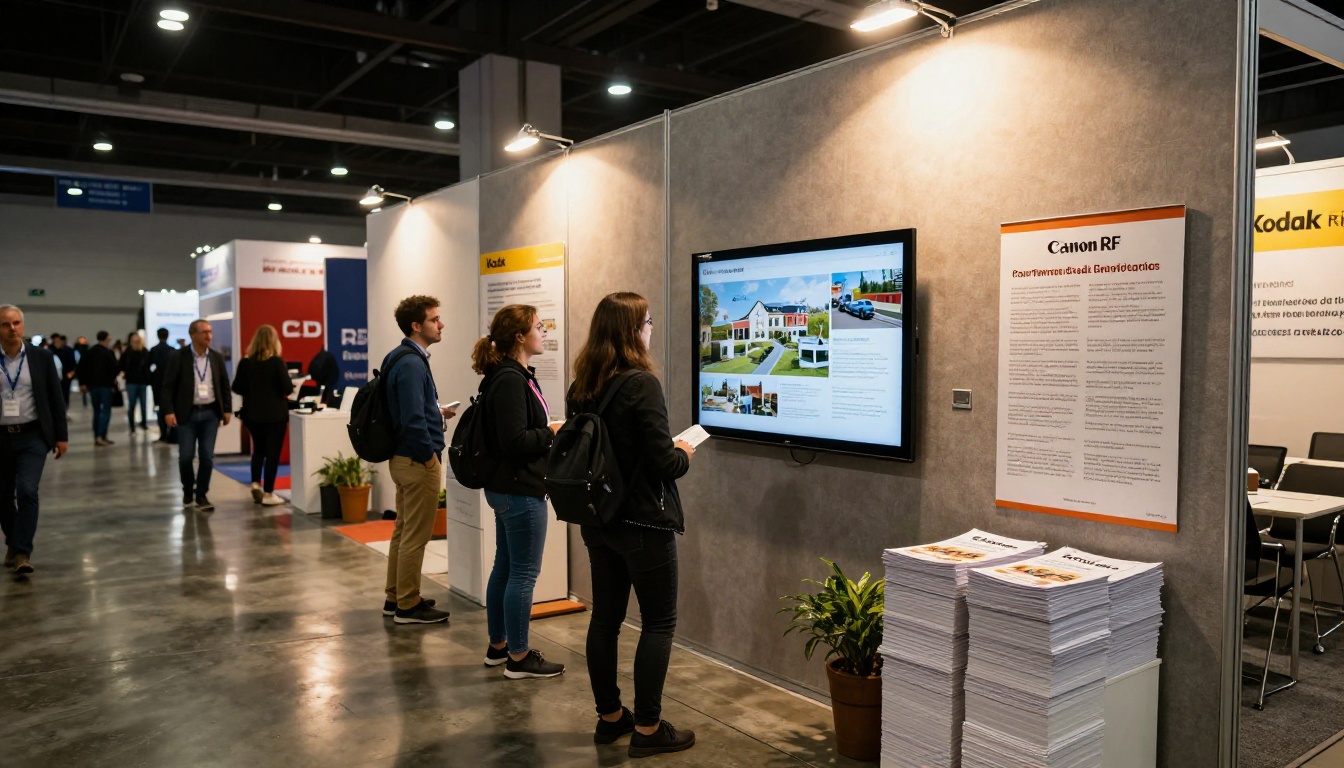
Real estate agencies printing 1,000 property brochures per new listing spend $800 to $2,000 per property. A digital flipbook reaches more buyers with embedded virtual tour video, clickable floor plans, and instant sharing to property portals. The Real Estate Brochure Creator is purpose-built for this workflow.
Hotels and resorts traditionally print seasonal packages and wedding brochures in large runs. Switching to digital eliminates seasonal reprints and allows embedding room tour videos directly in the brochure. The Hotel Brochure Designer handles this from upload to publish in minutes.
Retail and fashion brands running seasonal lookbooks previously faced four print runs per year. A digital Interactive Lookbook Designer lets them publish weekly with shoppable links on every product image.
Event organizers no longer need to reprint programs when a speaker time changes. The Event Program Maker allows real-time updates that every attendee with the QR code link sees immediately.
The Numbers Side by Side
Here is a realistic annual budget comparison for a mid-size business running four brochure campaigns per year:
| Cost Category | Paper Brochures (Annual) | Digital Flipbooks (Annual) |
|---|
| Design and production | $6,000 to $12,000 | $0 to $2,400 |
| Printing (4 runs x 2,000 units) | $4,800 to $14,000 | $0 |
| Distribution and postage | $3,000 to $8,000 | $0 |
| Storage and fulfillment | $500 to $1,500 | $0 |
| Update and reprint costs | $1,200 to $4,000 | $0 |
| Platform subscription | $0 | $228 to $588/year |
| Total | $15,500 to $39,500 | $228 to $2,988 |
The savings range from $12,000 to over $35,000 annually for a business this size. For larger organizations with more frequent campaigns, the gap is even wider.
What to Do This Week
The process of replacing printed brochures with digital flipbooks does not require a full organizational overhaul. Start with the next campaign that would otherwise go to print.
- Identify a brochure currently in production or due for a reprint
- Export or redesign the content as a PDF
- Upload it to Flipbooks AI and convert it in minutes
- Share the link with your sales team, add it to your email signature, embed it on your website
- Track analytics over 30 days and compare reach to the previous print run
The results tend to be immediate. More viewers, zero reprinting costs, and the ability to update on the fly without touching a print budget.
Ready to stop paying printing markups on every campaign? Start for free on Flipbooks AI and convert your first brochure today. Browse all available brochure tools and templates to find the right format for your industry, or compare pricing plans to see which tier fits your volume.



