The pet industry generates over $150 billion annually, and a huge chunk of that revenue starts with a catalog. Whether it's a boutique dog accessory brand or a large-scale pet food distributor, how you present your product line directly affects how much of it sells. That's why more pet brands are ditching printed booklets and switching to digital flipbook catalogs on Flipbooks AI. The reasons go beyond aesthetics.
The Real Problem with Print Pet Catalogs
Print worked when it was the only option. Today, it's a liability for most mid-sized pet brands trying to stay agile.
Print Costs That Eat into Margins
A full-color, 40-page pet product catalog can cost anywhere from $3 to $12 per unit to print and distribute at scale. Add design revisions, shipping to retailers, and reprints when a product line changes, and you're looking at a significant recurring cost that doesn't scale well.
For smaller brands, this makes seasonal catalog pushes financially painful. For larger brands, it creates a bottleneck where marketing decisions are driven by print deadlines rather than actual customer demand.
⚠️ Most printed catalogs become partially outdated within 60 days of print. Discontinued SKUs, updated pricing, and new product launches all create friction between what the catalog says and what's actually available.
Outdated Before It Ships
The pet industry moves fast. New product lines, reformulated recipes, limited-edition accessories, and seasonal collections can appear and sell out within weeks. A printed catalog locked in 3 months before distribution can't keep up with that pace.
This is the core tension pushing pet brands toward digital alternatives.

What a Flipbook Catalog Actually Does
A digital flipbook mimics the physical experience of turning catalog pages while adding every advantage of a web-based document. It loads in a browser, works on mobile and desktop, and can be updated without reprinting anything.
It Flips Like Print, Works Like Digital
The page-turning animation isn't a gimmick. For catalog browsing, it works with how people actually read product books: cover to cover, or flipping to a specific section. This familiar format reduces the learning curve for customers already comfortable with print catalogs.
What's different is everything underneath. Links are clickable. Products can link directly to purchase pages. Videos can be embedded. And the whole thing can be shared with a single URL.
Mobile-Ready from Day One
Over 70% of pet product research now happens on a smartphone. A PDF downloaded to a phone is hard to read and impossible to navigate without pinching and zooming. A flipbook catalog built on a platform like Flipbooks AI renders correctly on every screen size without any extra work.
💡 Mobile-responsive flipbooks typically see 2-3x more time-on-page than PDF equivalents sent via email, because the reading experience isn't fighting the device.
Why Pet Brands Specifically Love Flipbooks
The pet industry has some unique marketing dynamics that make flipbooks especially well-suited to this space.
Showcasing Products in Context
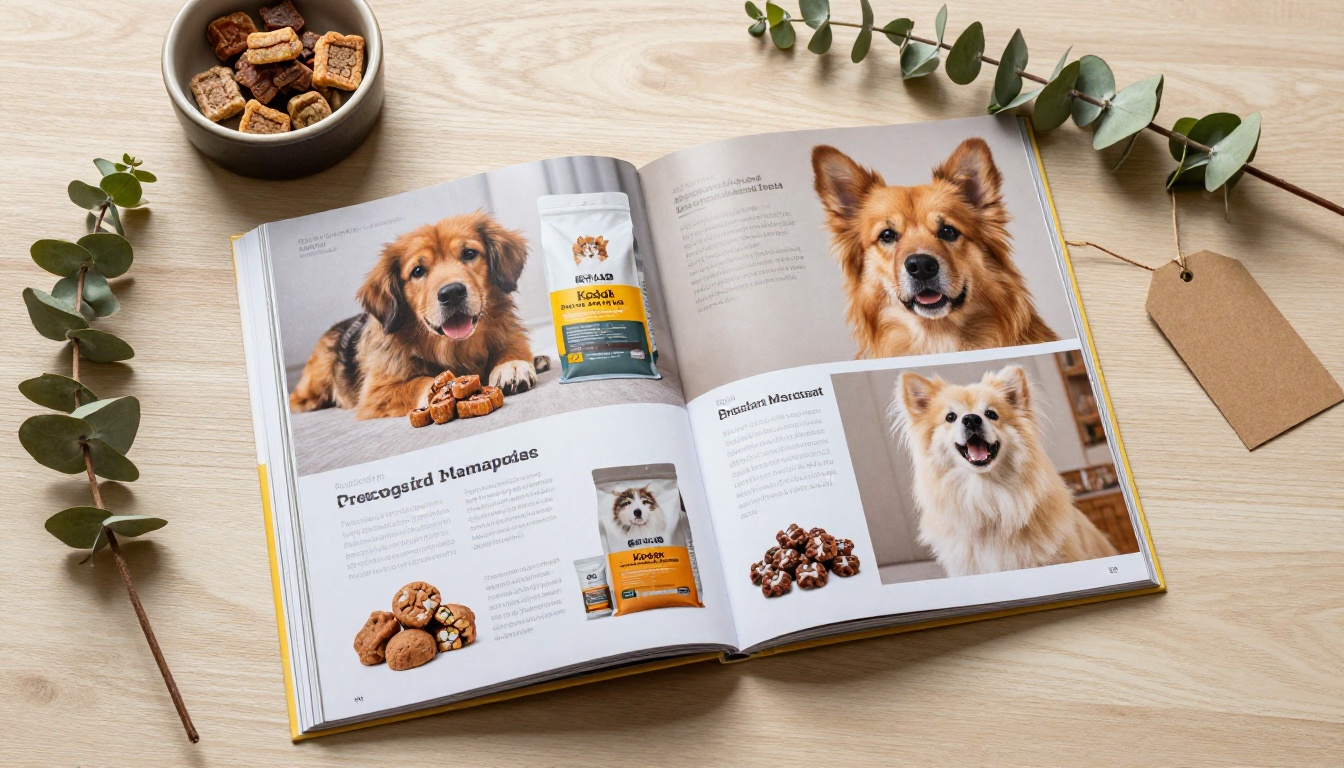
Pet products are emotional purchases. A bag of premium kibble isn't just food; it's a statement about how much someone cares for their animal. A photo of the bag alone rarely closes the sale. A catalog spread showing the ingredients, the dog's reaction, the brand story, and the lifestyle around the product does.
Flipbook catalogs give pet brands the layout flexibility to do exactly that. Multi-page product spreads, ingredient close-ups, and brand story sections all fit naturally in the flipbook format. The Catalog Flipbook Creator tool makes building these layouts straightforward from an existing PDF.
The Share Factor Pet Owners Drive
Pet owners are among the most sharing demographics online. When someone finds a great product catalog, they send it to their dog-walker, their breeder, or the group chat they have with other cat people. A print catalog can be handed to one person. A flipbook URL can be forwarded to thousands in a single tap.
This organic sharing behavior means a well-designed flipbook catalog functions as passive marketing. Every time a customer shares the link, your brand reaches a new audience without any additional spend.
Seasonal Updates Without Reprinting
Holiday collections. Summer grooming specials. Back-to-school pet supply bundles. Pet brands release seasonal content constantly, and the traditional approach means either printing new catalogs for each season or maintaining a generic catalog that doesn't reflect current promotions.
With a digital flipbook, updating a seasonal catalog takes hours, not weeks. Swap the product images, update the pricing tables, change the front page, and republish. The URL stays the same, so any previously shared links automatically show the updated version.
✅ Best practice: maintain one "master" catalog URL per season and update it in place, so all your retailer partners and social media links stay valid throughout the season.
Flipbook vs. Print vs. PDF
Here's a direct comparison of the three main catalog formats for pet brands:
| Feature | Print Catalog | PDF Document | Digital Flipbook |
|---|
| Update after publishing | Reprint required | Upload new file | Edit in place, same URL |
| Mobile experience | N/A | Poor (zoom/scroll) | Optimized |
| Shareable via link | No | Partially | Yes, single URL |
| Page-flip experience | Yes | No | Yes |
| Embedded video | No | Limited | Yes |
| Click-through to products | No | Sometimes | Yes |
| Print cost per unit | $3-$12 | $0 | $0 |
| Reader behavior data | None | None | Full (Professional plan) |
| Password protection | N/A | Partial | Yes |
| Offline access | Yes | Yes | Yes (download option) |
The pattern is clear. Print wins on tactile experience. PDF costs nothing to copy. But a digital flipbook does everything both do, minus tactile feel, while adding capabilities neither has.
How to Build a Pet Brand Flipbook Catalog
Creating a flipbook catalog for a pet brand is a straightforward process. Here's how to do it with Flipbooks AI.
Step 1: Prepare your catalog PDF
Start with your existing catalog in PDF format. If you're designing from scratch, tools like Adobe InDesign, Canva Pro, or Affinity Publisher all export clean PDFs optimized for flipbook conversion. Use high-resolution images, especially for product photography. Blurry images in a print catalog are forgivable; in a digital flipbook with zoom capability, they are not.
Step 2: Upload and convert
Log in to your Flipbooks AI account and use the PDF to Flipbook Converter to upload your file. The conversion happens automatically and preserves your layout, fonts, and image quality. For a full pet catalog with 40-60 pages, conversion typically takes under 2 minutes.
Step 3: Brand your flipbook
This is where most pet brands underestimate how much they can customize. Beyond uploading the PDF, you can:
- Add your brand colors to the flipbook interface and controls
- Upload a custom logo that appears in the viewer header
- Set a branded thumbnail image that shows in link previews when shared on social media
- Enable a custom domain so the flipbook lives at
catalog.yourpetbrand.com
- Toggle page sound effects on or off for the right browsing feel
Step 4: Add interactive elements
The Digital Catalog Maker allows embedding additional functionality directly into catalog pages:
- Clickable product links: Each product image can link directly to the product page on your store
- Embedded video: Add product demos, feeding tutorials, or brand story videos into relevant pages
- Audio: Some brands add ambient narration to brand story sections
Step 5: Set your sharing and privacy options
Pet catalogs often serve different audiences: retail buyers, veterinary clinics, end consumers, and wholesale distributors. Flipbooks AI lets you control access per audience:
- Public link: Anyone with the URL can view (ideal for consumer-facing catalogs)
- Password protection: Retail buyer pricing catalogs that shouldn't be public
- Embedded on your website: Use the embed code to show the catalog directly on your site's catalog page
Step 6: Publish and distribute
Once published, share the catalog URL across:
- Email newsletters to your customer list
- Social media bio links (especially Instagram and TikTok for pet brands)
- Direct messages to retail buyers and distributors
- QR codes printed on product packaging that link to the full catalog
- Your website navigation or footer
💡 QR codes on product packaging that link to a flipbook catalog are one of the highest-converting tactics pet brands use. A customer who just bought your product is already invested; showing them the full range at that moment drives repeat purchases.
Features Pet Brands Actually Use
Not all flipbook features get equal use across industries. Here's what pet brands specifically rely on:
| Feature | Pet Brand Use Case | Plan |
|---|
| Custom branding | Match flipbook UI to brand colors and logo | Standard |
| Password protection | Wholesale price lists for retail partners | Standard |
| Embedded video | Product demo videos, training content | Standard |
| Clickable links | Direct product page links from catalog images | Standard |
| Offline download | Trade show catalogs when WiFi is unreliable | Standard |
| Analytics dashboard | See which products get most views | Professional |
| Lead generation forms | Capture retail buyer info from within catalog | Professional |
| Custom domain | Host at catalog.brandname.com | Professional |
✅ The Professional plan analytics are particularly valuable for pet brands launching new product lines. Seeing which pages readers spend the most time on tells you which products have the most interest before you commit to full production runs.
Analytics That Matter
Traditional catalog distribution gives you zero data. You send 500 catalogs to a mailing list and have no idea which products generated interest. Digital flipbook analytics change that completely.
With the Professional plan, pet brands can see:
- Total views per catalog and per page
- Average time spent on each page
- Geographic distribution of readers
- Device breakdown (mobile vs. desktop)
- Traffic sources (direct link, embedded, social share)
This data directly informs inventory decisions, product development priorities, and where to concentrate marketing spend.

Real-World Pet Brand Use Cases
Here's how different types of pet businesses apply flipbook catalogs:
| Brand Type | Catalog Purpose | Main Benefit |
|---|
| Premium pet food brand | Ingredient story and product range | Educates before purchase |
| Pet accessory retailer | Seasonal collection lookbook | Visual-first product presentation |
| Veterinary clinic | Recommended product catalog | Trusted source, passive revenue |
| Pet grooming service | Service and product menu | Replaces printed price lists |
| Pet supply wholesaler | Trade buyer catalog with pricing | Password-protected, always updated |
| Dog trainer / behaviorist | Recommended gear catalog | Affiliate-linked product pages |
| Independent pet boutique | Monthly new arrivals | Email-shareable, low production cost |
Each of these use cases plays to the flipbook format's strengths: visual presentation, shareability, updatability, and access control.
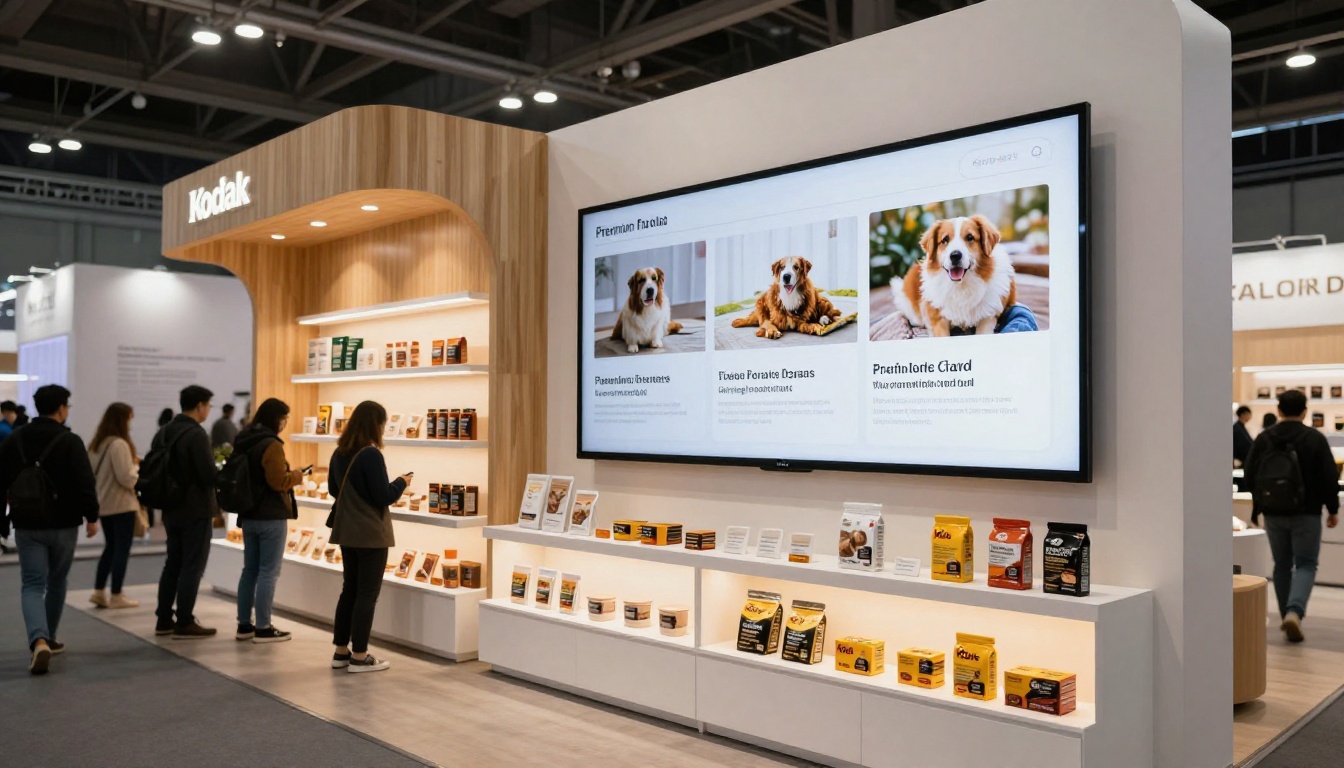
The Cost Reality
One of the clearest arguments for flipbook catalogs is the math. Consider a mid-sized pet brand producing two seasonal catalogs per year.
Print scenario:
- Design: $2,000-$5,000 per catalog
- Print run (2,000 copies): $8,000-$20,000
- Shipping to distributors: $1,500-$4,000
- Reprints for errors or updates: $3,000-$8,000
- Annual total: $29,000-$74,000
Flipbook scenario:
- Design (same cost as print): $2,000-$5,000 per catalog
- Flipbooks AI subscription: $0-$588/year
- Hosting and distribution: $0
- Updates and revisions: $0 additional
- Annual total: $4,000-$10,588
The savings don't require a spreadsheet to justify. And those savings compound each year as print costs rise and digital distribution costs stay flat.

Flipbooks AI Plan Breakdown for Pet Brands
| Plan | Price | Included | Best For |
|---|
| Free | $0/mo | Basic flipbook, platform branding | Testing before committing |
| Standard | From $15/mo | No watermarks, unlimited flipbooks, custom branding, password protection, offline downloads | Small to mid-size pet brands |
| Professional | From $49/mo | Everything in Standard plus analytics, lead generation, custom domain | Established brands, wholesalers |
💡 The Standard plan's "no watermarks, ever" policy matters for pet brands. A catalog with a third-party watermark on every page sends the wrong signal about brand investment. Start at Standard if you're serious about presentation.
Check the full pricing breakdown to see which plan fits your catalog volume and feature needs.

What to Do Next
Pet brands that shift from print to digital flipbook catalogs consistently report three things: lower distribution costs, better visibility into what customers care about, and faster turnaround on seasonal updates. The format works because it respects how people already browse products while adding capabilities that print physically cannot offer.
If you have an existing PDF catalog, you can convert it to a flipbook and see the result in minutes. Get started for free on Flipbooks AI, no credit card required. If you want to see what plans include before committing, the pricing page has a full feature breakdown by tier.
Browse all available catalog tools to find the specific template and workflow that fits your brand's catalog format, whether that's a product range flipbook, a seasonal lookbook, or a wholesale buyer price list.



