The moment someone takes your handout, a clock starts ticking. Studies on marketing material retention consistently point to the same uncomfortable truth: most printed handouts, brochures, and flyers are discarded within hours, often within minutes. You spent money on design, printing, and distribution. Your audience spent approximately zero seconds reading it.
This is not a fluke. It is a predictable pattern with identifiable causes, and fixing it starts with knowing exactly why printed materials fail before they even get a chance to do their job. Flipbooks AI exists precisely because this problem is both widespread and completely solvable.
What Actually Happens to a Handout After the Event
The 30-second lifespan of most printed materials
Most printed marketing materials have a lifespan measured in seconds, not days. Research from the Data and Marketing Association found that direct mail response rates sit around 4.4%, which means the vast majority of printed materials generate zero action. At events and trade shows, the numbers are even more stark: more than 60% of event handouts are discarded before attendees leave the building.
The sequence plays out with clockwork regularity:
- Attendee accepts the handout out of social courtesy
- Handout is tucked under an arm or into a bag
- Bag gets full, handout migrates to the nearest flat surface
- That flat surface is a table near the exit
- The table near the exit becomes a collection point for all discarded materials
- Cleaning staff clears the collection point at the end of the event
That is not marketing. That is waste with extra steps.
Where printed handouts physically end up
The destinations for discarded printed marketing materials follow a predictable shortlist:
- The nearest bin at the event or conference venue
- The hotel room floor when attendees return from multi-day conferences
- The bottom of a bag where it quietly degrades until the bag gets cleaned out
- The office recycling bin when the bag eventually gets emptied
- A pile on the desk that becomes a visual "I will deal with this later" promise that is never kept
💡 If your marketing material ends up in a pile, it is already dead. Nobody returns to piles with genuine intent to read them.
7 Reasons Printed Handouts Get Tossed

Knowing the failure modes matters because each one points directly to a fixable problem.
Too much text, not enough reason to stay
The single biggest design mistake in printed marketing materials is treating a handout like a product manual. Dense paragraphs, small font, minimal whitespace: these do not signal quality. They signal that reading this will be work. Audiences make a value judgment within the first five seconds of looking at your material. If the visual hierarchy is unclear, they will not invest the effort needed to find out what you are offering.
No physical home for it
Digital content exists in a place: a bookmark, a saved link, an email. A printed handout has no place to live in your audience's daily workflow. Your brochure competes with every other object in someone's bag or briefcase. It has no persistent location that can be returned to intentionally.
It cannot be searched or shared
Ask someone to share an interesting article they saw last week and they will pull up a link in seconds. Ask them to share an interesting brochure they received at an event and you will get a blank stare. Printed content is inherently unshareable and unsearchable. Every new reader requires a new print run.
Physical friction in a digital world
People carry less than ever: slim wallets, small bags, wireless earbuds. A printed handout is physical bulk in an era when everyone is actively reducing the number of objects they carry. At trade shows and conferences, bags become heavy quickly. Your tri-fold brochure is the first thing that gets "lightened."
It degrades faster than the message does
A printed brochure with a coffee ring stain is not just aesthetically compromised: it is psychologically devalued. The moment a printed material looks damaged or worn, the brand behind it takes a credibility hit. Digital materials look exactly the same on day 365 as they did on day one.
No interactivity, no retention
Interactivity is not just a feature: it is a retention mechanism. When someone can click, scroll, watch a video, or fill out a form inside your marketing content, they spend more time with it and remember more of it afterward. A printed brochure offers none of this. It is passive by design.
It competes with a phone in every pocket
Every attendee at every event has a supercomputer in their pocket connected to the entire internet. Asking someone to read a printed brochure instead of checking their notifications, messages, or social feeds is a significant ask. Printed content sits at a natural disadvantage against devices specifically engineered to hold attention.
⚠️ Ignoring the attention competition from smartphones does not make it go away. Your marketing strategy needs to account for how attention actually works today, not how it worked two decades ago.
The Real Cost of Print-and-Discard Marketing
What your print budget actually buys
Printing is not cheap when you calculate the full cost. Consider a mid-size company printing brochures for a regional trade show:
| Cost Component | Typical Range |
|---|
| Design (per piece) | $500 – $3,000 |
| Print run (500 copies, full color) | $400 – $900 |
| Shipping to venue | $80 – $250 |
| Staff time distributing materials | $200 – $500 |
| Total per event | $1,180 – $4,650 |
| Cost per brochure actually read | $12 – $50+ (assuming 10-20% read rate) |
For a multi-event annual marketing calendar, these numbers scale into tens of thousands of dollars per year spent on materials that most recipients never engage with in any meaningful way.
Environmental waste most brands ignore
There is an environmental dimension to printed marketing waste that most companies quietly avoid discussing. According to the Environmental Paper Network, the global printing and writing paper industry accounts for approximately 1% of total global greenhouse gas emissions. Marketing materials make up a significant portion of that figure.
When a printed handout goes into a recycling bin rather than a landfill, that feels like the responsible outcome. But even recycling carries an energy cost: water consumption, chemical processing, transportation. The most environmentally responsible printed handout is the one that never gets printed because the audience gets its information digitally instead.
✅ Calculate your annual print marketing spend, then ask what percentage generated a measurable return. Most companies find the number is under 15%.
Print vs Digital: What the Numbers Say
The comparison between print and digital marketing materials is not even close on most metrics that matter to a business:
| Metric | Printed Handout | Digital Flipbook |
|---|
| Distribution cost per recipient | $2 – $10 | $0 |
| Update cost after printing | Full reprint required | Instant, free |
| Analytics available | None | Full (clicks, time, pages) |
| Shareability | Physical only | Unlimited, instant |
| Searchability | None | Full text search |
| Multimedia support | None | Video, audio, links |
| Mobile accessibility | Physical presence required | Any device, anywhere |
| Shelf life | Weeks to months | Indefinite |
| Environmental footprint | High | Minimal |
| Customization after distribution | Impossible | Real-time |
The gap is not marginal. On every metric that determines whether marketing content creates a measurable business result, interactive digital content outperforms printed materials significantly.
💡 The real ROI comparison is not "print cost vs digital cost." It is "cost per conversion." Digital materials with analytics let you actually measure that number. Printed materials cannot tell you anything.
What Stays with Your Audience
Why interactive content has longer retention
Content that demands active participation is retained significantly better than passive content. A Nielsen Norman Group study found that users spend an average of 5.59 seconds reading written content before deciding whether to engage further. Interactive elements, including page-flip animations, embedded video, and clickable sections, dramatically increase that dwell time.
When someone spends more time with your content, they form a stronger association with your brand. This is measurable through behavioral analytics: which pages they spent the most time on, which links they clicked, which sections prompted them to request more information.
Links, videos, and live updates
A digital brochure or flipbook can do things a printed handout structurally cannot:
- Embed videos that autoplay or play on click within the document itself
- Include hyperlinks that navigate to product pages, booking forms, or social profiles
- Update content in real time so that price changes, new products, or event details are reflected without redistributing anything
- Capture leads through embedded forms directly inside the document
- Track performance with granular analytics per page, per section, and per user session
None of these are optional extras. They are the features that turn a marketing document into an actual sales tool.
How to Create a Digital Brochure with Flipbooks AI
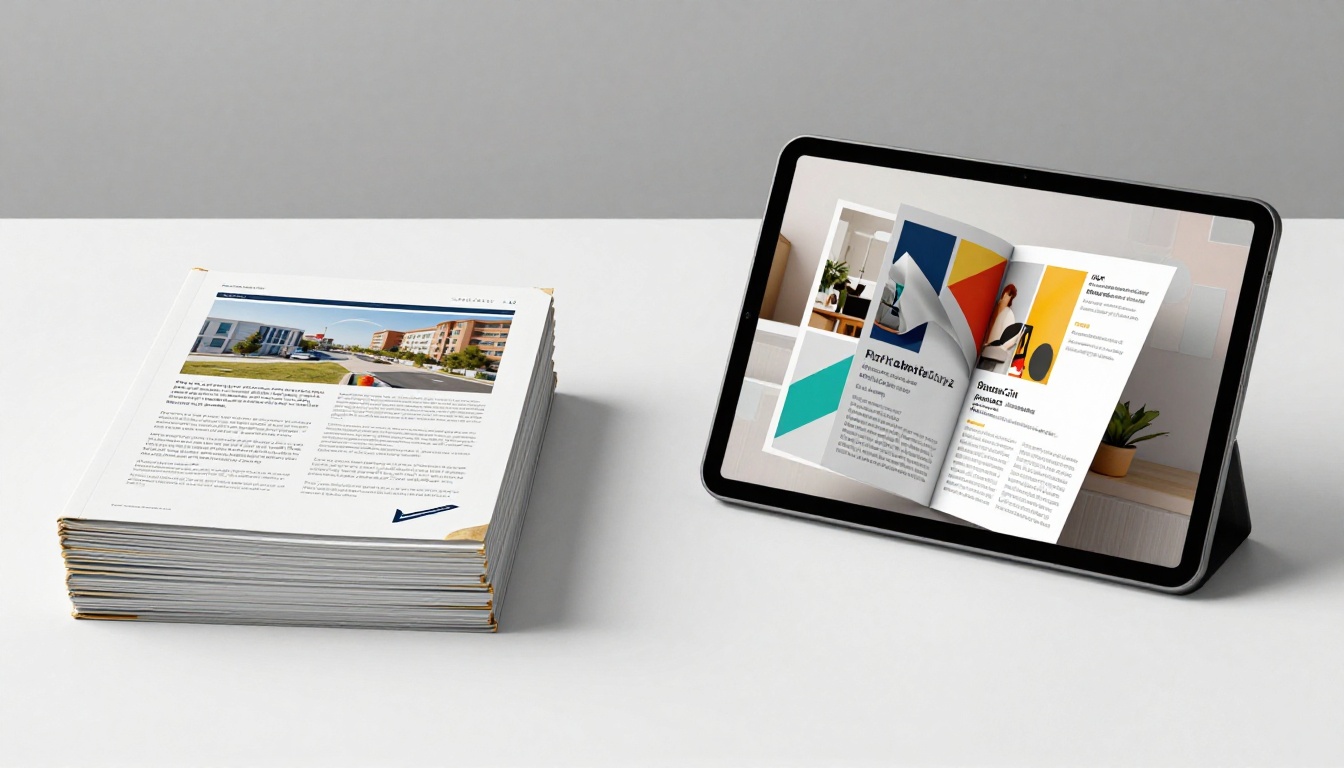
Flipbooks AI converts your existing PDF marketing materials into fully interactive digital flipbooks with realistic page-flip animations, embedded media support, and comprehensive analytics. If you already have a print brochure designed, you can convert it in under five minutes.
Here is how the process works:
Step 1: Create your account
Head to flipbooksai.com/account and sign up for free. No credit card required to start. The Standard plan and above includes unlimited flipbooks and no watermarks, ever.
Step 2: Upload your PDF
From your dashboard, click "Create New Flipbook" and upload your existing PDF brochure, catalog, or handout. Flipbooks AI supports files up to 500MB and any number of pages. The conversion happens automatically, preserving your layout and design.
Step 3: Apply branding and appearance
Once converted, use the editor to:
- Apply your brand colors to the flipbook interface
- Add your logo to the viewer chrome
- Choose background colors or textures
- Enable or disable specific page effects
- Set the opening page display and thumbnail style
Step 4: Add multimedia and interactivity
This is where digital outperforms print completely. Inside the editor you can:
- Embed YouTube or Vimeo videos onto specific pages
- Add clickable hotspots that link to external URLs
- Insert audio narration for specific sections
- Add contact forms or lead capture widgets (Professional plan via flipbooksai.com/pricing)
Step 5: Share and distribute
When your flipbook is ready, distribution options include:
- Direct link: Share a clean URL via email, WhatsApp, or LinkedIn
- Embed code: Paste a snippet to host the flipbook directly on your website using the Embed Flipbook on Website tool
- Password protection: Restrict access to specific audiences
- QR code: Generate a scannable code that opens the flipbook on any mobile device instantly
Step 6: Track performance
With the Professional plan, you get page-by-page analytics showing exactly how long readers spend on each section, where they drop off, and which links they click. This data is the difference between guessing what works and actually knowing.
✅ Convert your most recent printed brochure into a flipbook first. Send both the print version and the digital link to the same audience at your next event. Compare the results. The data will make the decision for you.
Real-World Use Cases Where Digital Wins
Trade shows and conferences
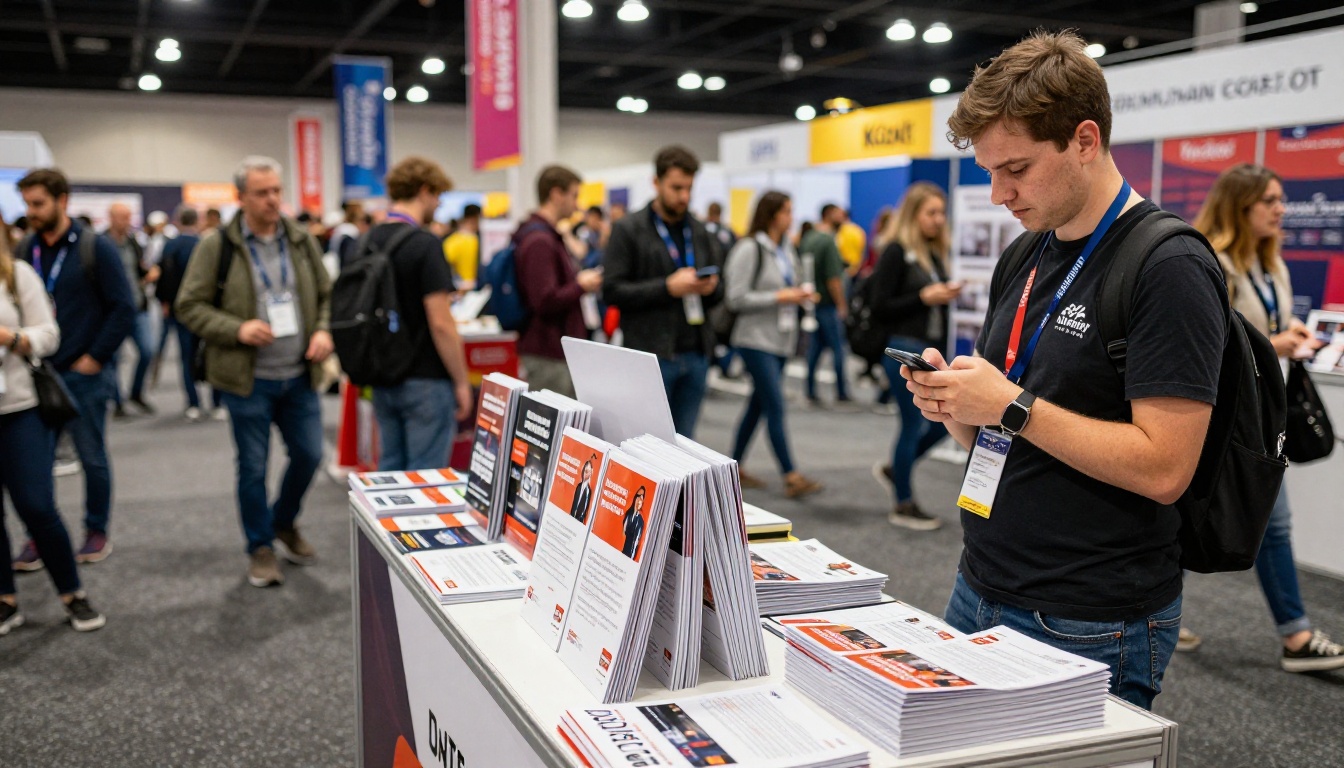
Instead of shipping pallets of brochures to an event, booth staff share a QR code that opens a polished interactive flipbook. Attendees scan with their phone camera, the flipbook opens instantly, and the interaction is logged in your analytics dashboard. No shipping costs. No leftover inventory. No bin full of your brand materials at the end of the day.
Real estate and property tours
Real estate agents have long relied on printed property brochures. A printed brochure for a high-value property handed to thirty viewers might reach five serious buyers. A digital flipbook linked from a QR code on the property sign reaches every curious passer-by, any time of day or night. The Real Estate Brochure creator on Flipbooks AI is built specifically for this workflow.
Restaurant menus and hospitality
Paper menus accumulate wear and require reprinting every time prices or items change. A digital menu distributed via QR code at the table always shows current pricing, can embed video of dish preparation, and can be updated in minutes when seasonal specials rotate. The Restaurant Menu Creator handles this with dedicated templates and hospitality-specific formatting.
Corporate reports and presentations
Annual reports, investor decks, and partner presentations are some of the most expensive printed materials in any company's output. Shipping a printed annual report to 500 stakeholders costs thousands of dollars and produces a document that may get skimmed once. A digital version built with the Annual Report Creator gets shared via email, opens on any device, and lets executives track exactly how many stakeholders actually opened it and which sections held their attention.
Stop Handing Out Trash
Printed handouts get thrown away because they ask too much of the reader and offer too little in return. They are static in a dynamic world, expensive in an era when distribution can be free, and untraceable in a marketing environment where every dollar needs to justify itself with data.
The businesses that hold onto print-first marketing strategies do so out of habit, not effectiveness. The ones converting to digital distribution by sharing interactive flipbooks via QR codes, embedded website links, and email campaigns are spending less, reaching more people, and actually measuring the results.
The most powerful thing about a digital flipbook is not the page-flip animation. It is the analytics dashboard that tells you exactly how many people opened your content, how long they spent on each page, and which call to action they clicked. Printed materials cannot tell you anything. They just end up in the bin.
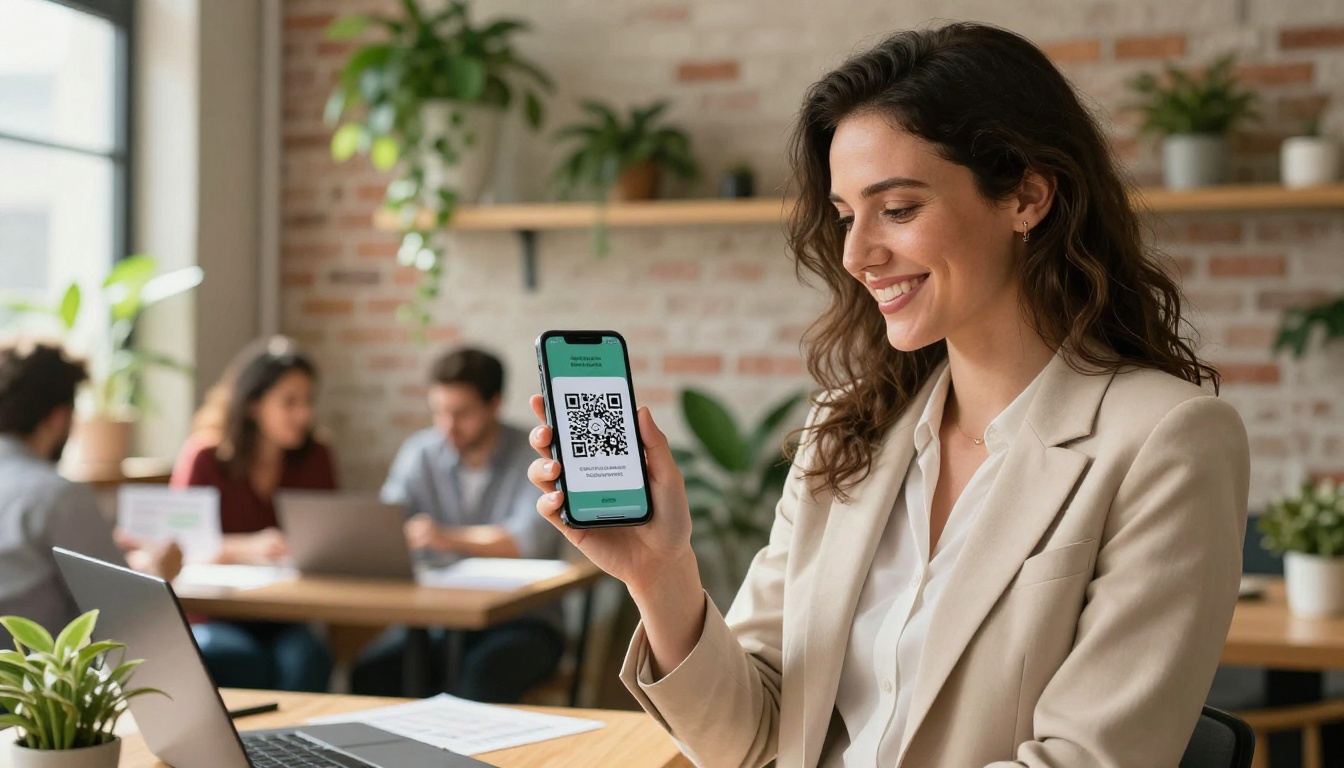
Your next event does not need a print run. It needs a QR code and a well-designed digital flipbook that works on every device, stays current without reprinting, and tracks every interaction automatically.
Ready to stop printing materials nobody reads? Create your first flipbook for free on Flipbooks AI. Browse all available tools and templates to find the format that fits your industry. Or see pricing plans to choose the features that match your distribution needs.
The brochures in that bin at the end of your last event cost real money. The next event's marketing does not have to.



