You send the brochure. They open it, scroll two pages, and close the tab. You never hear from them again. If that scenario sounds familiar, the problem almost certainly isn't your offer, it's the format you're delivering it in. A plain PDF brochure in 2026 carries the same energy as a fax machine in a WeWork lobby. Flipbooks AI exists because this problem is costing businesses real money, every day.

Why PDFs Feel Flat in 2026
The format made sense once
When Adobe introduced PDF in the early 1990s, it was revolutionary. A document that looked identical no matter which machine opened it? That was genuinely impressive. For over a decade, PDFs were the gold standard for sharing brochures, reports, menus, and catalogs. Nobody questioned it.
Fast forward to today. Buyers interact with social video, interactive product pages, and dynamic content before lunch. Then your sales rep sends them a 3.4MB PDF that takes eight seconds to load, requires pinch-zooming on mobile, and offers no clickable links, no embedded video, and no way to tell if anyone actually read it.
The bar has moved. The PDF format did not.
What the research shows
Attention spans for digital content are shorter than ever. Studies on digital reading behavior consistently show that users spend less than 15 seconds deciding whether to engage with a digital document. A static PDF that dumps a wall of text and small stock images in front of a cold lead doesn't pass that test.
Worse, a low-effort PDF signals a low-effort brand. Perception matters enormously in marketing materials. When your brochure looks like it was created in Word and exported to PDF, that's the brand impression you're leaving.
5 Signs Your PDF Brochure Is Hurting You
It loads slowly and loses people immediately
PDFs bloated with high-resolution images routinely exceed 5MB. On a mobile connection, that's a multi-second wait before the document even opens. According to Google's load speed data, 53% of mobile users abandon a page that takes more than three seconds to load. Your brochure is losing readers before they see a single word.
Readers drop off after page one
Without navigation aids, visual hierarchy, or interactive elements to pull the eye forward, PDF readers stop scrolling. There's no page-flip animation, no thumbnail sidebar, no engaging chapter structure. The reading experience is linear and passive. Page one is where most readers stop.
You get zero data on reader behavior
When did they open it? How far did they scroll? Which product caught their attention? A PDF tells you nothing. You're operating blind, spending marketing budget on materials with no feedback loop to optimize.
It breaks on mobile devices
Open most multi-page PDF brochures on a smartphone and you'll see the problem immediately. Small text, images that don't reflow, constant pinching and zooming. More than 60% of web traffic now comes from mobile devices. A brochure that punishes mobile readers is actively damaging your brand.
It looks generic and forgettable
The standard PDF layout is a grid of text and images. No motion, no interactivity, no branded experience. When every competitor is sending the same format, nobody's brochure stands out. It becomes easy to skip past and forget.
PDF vs. Interactive Flipbook: Side-by-Side
| Feature | Plain PDF | Interactive Flipbook |
|---|
| Mobile Experience | Poor, requires zoom | Fully responsive |
| Page Navigation | Scroll only | Page-flip, thumbnails, TOC |
| Embedded Video | Not supported | Supported |
| Clickable Links | Limited | Full interactivity |
| Load Speed | Slow (large files) | Optimized streaming |
| Reader Analytics | None | Full tracking |
| Sharing | Email attachment | Shareable URL or embed |
| Branding | None after download | Custom colors, logo |
| Lead Generation | None | Built-in forms |
| Password Protection | Requires third-party | Built-in |
The difference isn't cosmetic. Every single row in that table represents a real friction point that's either helping or hurting your conversion rate.
💡 A flipbook URL shared via email or LinkedIn loads instantly in any browser on any device, with no download required.
What's Actually Happening When Someone Gets Your PDF
Walk through this scenario. A prospect receives your brochure as an email attachment. Here's the typical journey:
- Email arrives in inbox with a 4.8MB attachment
- Prospect is on their phone, decides to check it later
- "Later" doesn't come. The email gets buried.
- If they do open it, the PDF app opens slowly
- They see page one: a dense layout with your company name and a tagline
- They scroll half a page and close it
- You never know any of this happened
Now run the same scenario with an interactive digital brochure shared as a link:
- Email arrives with a clean, clickable link
- Prospect taps it on their phone, opens instantly in browser
- A full-screen branded brochure with professional page-turn animation loads
- Thumbnail navigation at the bottom lets them jump to sections
- They tap an embedded video that autoplays
- They click a product link that goes directly to your store
- You receive a notification showing time-on-page, sections read, and clicks
That's not a marginal improvement. That's a different product category entirely.

Industries Where This Gap Is Most Expensive
Real estate
Property brochures are among the most design-intensive marketing materials in any industry. Buyers expect full-bleed photography, floor plans, neighborhood guides, and agent contact information. A PDF can carry that content. An interactive brochure from the Real Estate Brochure Creator lets buyers zoom into floor plans, watch video walkthroughs, and book viewings directly from the document.
Hospitality
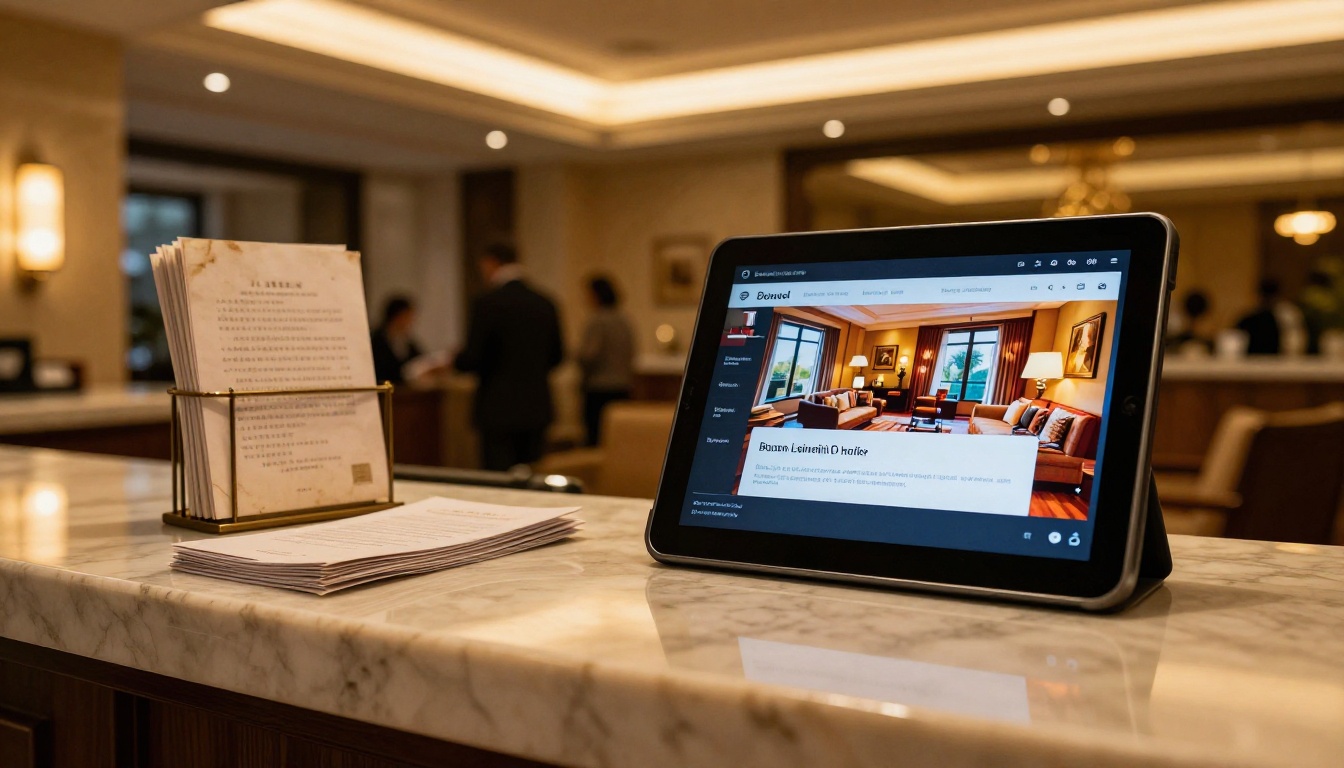
Hotels and resorts invest heavily in photography. When that photography gets compressed and flattened into a PDF brochure, the visual impact drops significantly. Interactive digital brochures restore the full quality, add ambient video, and include direct booking links. The Hotel Brochure Designer tool was built specifically for this use case.
Automotive
Car brochures live and die on visual quality: 360-degree imagery, color selectors, trim comparisons. A PDF handles none of that. The Automotive Brochure Generator gives dealerships an interactive format that matches the buying experience customers actually expect.
Fashion and retail
Lookbooks and product catalogs depend on visual storytelling. Flat PDFs compress that story into a grid. An interactive flipbook with embedded video, clickable product tags, and smooth page animations is a fundamentally different selling tool. The Interactive Lookbook Designer handles exactly this format.
| Use Case | PDF Result | Interactive Result |
|---|
| Product Catalog | Static images, no cart links | Clickable SKUs, embedded video |
| Hotel Brochure | Compressed photos, no booking | Full photography, direct booking link |
| Real Estate Listing | Flat floor plans | Zoomable plans, video tour |
| Fashion Lookbook | Grid layout | Page-flip, shoppable tags |
| Restaurant Menu | Tiny text on mobile | Mobile-first layout, food photography |
| Annual Report | Dense data tables | Interactive charts, click-through data |
| Event Program | Print layout on screen | Schedule navigation, venue map |
⚠️ Sending a PDF brochure to a prospect who's already browsed your website creates a jarring downgrade in experience quality.
How to Convert Your Brochure with Flipbooks AI
Converting an existing PDF brochure into a professional interactive flipbook takes minutes, not days. Here's exactly how it works on Flipbooks AI:
Step 1: Sign up for free
Go to flipbooksai.com/account and create your account. The process takes under two minutes. No credit card is required to start.
Step 2: Upload your PDF
Drag and drop your existing brochure PDF into the upload area on the PDF to Flipbook Converter. The system processes your document and generates a page-flip preview automatically.
Step 3: Customize the branding
In the editor, apply your brand colors, upload your logo, and choose a background style. You can also add a custom domain or subdomain for the published URL on higher tier plans.
Step 4: Add interactive elements
This is where the format earns its value. Embed YouTube or Vimeo videos directly onto pages, add clickable hyperlinks to products or booking pages, insert audio narration, and set up password protection if the brochure is for private distribution.
Step 5: Publish and share
When you're satisfied, publish the flipbook. Flipbooks AI generates a shareable URL and an embed code you can drop directly into your website. Share the URL via email, WhatsApp, LinkedIn, or any other channel. The Embed Flipbook on Website tool makes this trivially easy.
Step 6: Monitor performance
On the Professional plan, you get full reader analytics: page views, time spent per page, geographic data, and lead capture forms. You'll know exactly which sections resonate and which ones don't.
✅ No watermarks, ever. Unlimited flipbooks on Standard plan and above. No technical skills required.

The Feature Gap Is Growing
It's not just about aesthetics. The functional capabilities of interactive digital brochures are expanding rapidly, while the PDF format has remained largely static for two decades. Here's what modern digital brochures can do that PDFs simply cannot:
- Lead generation forms embedded directly in the document
- Analytics dashboards showing per-page engagement data
- Offline downloads for readers who need access without internet
- Password protection for confidential proposals or private client materials
- Multilingual support with built-in translation layers
- SEO visibility for publicly published flipbooks
- Embed anywhere using a single line of HTML code
Browse all flipbook tools to see which format fits your specific distribution channel.
What the Engagement Numbers Show
Brands that have moved from PDF brochures to interactive flipbooks consistently report measurable improvements in reader engagement. The pattern holds across industries:
| Metric | PDF Brochure | Interactive Flipbook |
|---|
| Average Time on Document | 45-90 seconds | 3-7 minutes |
| Pages Viewed Per Session | 1.2 | 4.8 |
| Link Click-Through Rate | Near 0% | 15-35% |
| Mobile Completion Rate | Below 10% | 55-70% |
| Share Rate | Rare | Frequent (link-based) |
These aren't marginal gains. A reader spending seven minutes with your brochure versus 45 seconds represents a fundamentally different sales interaction.
💡 Interactive brochures shared as URLs can be updated after sending. Fix a typo or update a price without resending anything to anyone.

Real Estate: A Detailed Example
A mid-size real estate agency sends 200 property brochures per month as PDF email attachments. They have no data on open rates, no way to know which properties generate interest, and no direct links to inquiry forms.
After switching to interactive flipbooks using the Real Estate Brochure Creator:
- Each brochure link can be tracked individually per recipient
- Embedded video walkthrough increases time-on-page from 50 seconds to 4 minutes
- A clickable "Schedule a Viewing" button appears on the last page
- The agency can see which floor plan page gets the most attention
- Brochures can be updated with new price information without resending
This is a different sales tool, not just a prettier version of the same one.
The Sharing Problem with PDFs
One of the quietest ways PDFs damage your reach is in how they're shared, or more accurately, how they're not shared. A PDF is a file. Sharing it means attaching it again. Most people don't bother forwarding a large attachment they received from someone else.
A flipbook URL is trivially easy to share. One tap, one paste, done. The person who receives your brochure can forward the link to a colleague, share it in a group chat, or post it to a company Slack channel without any friction. The brochure travels with your branding intact, your links active, and your analytics running the entire time.
What Modern Buyers Expect
The benchmark for digital experience is set by the best apps and websites buyers use every day. When your marketing materials feel worse than a Wikipedia article in terms of mobile usability, you've created a mismatch between your brand promise and your brand reality.
Interactive digital brochures, catalogs, and publications are now the baseline expectation in most B2B and B2C contexts. The buyers who aren't explicitly comparing formats are still experiencing the difference. They just don't articulate it. They simply engage more with brands that make their materials easy to consume.
The Cost of Staying with PDFs
There's a real opportunity cost to sticking with a format that doesn't perform. Every cold brochure that gets closed after 45 seconds without a link click is a missed conversion. Every prospect who tried to open your PDF on their phone and gave up is a lead you spent money to generate and then failed to convert.
✅ The Brochure Flipbook Maker handles any brochure type, from trifold corporate overviews to 40-page product catalogs.
The shift to interactive digital brochures isn't a design trend. It's a functional upgrade that directly affects open rates, time-on-page, click-through rates, and ultimately, closed deals.
Time to Stop Sending PDFs
The format you use to share your brochure is a signal. A PDF says your content is static, your brand is static, and your approach to marketing is static. An interactive flipbook says the opposite.
Every brochure you send is an opportunity to either reinforce or undercut your brand impression. The tools to fix this are fast, affordable, and require no design skills. Your existing PDF files are already the raw material.
Ready to make the switch? Get started for free on Flipbooks AI and convert your first brochure in under five minutes. Browse all flipbook tools to find the right format for your industry. Or compare pricing plans to find the tier that fits your volume.
The PDF had a good run. It's time to move on.



