A booking agent opens your email, gives it about ten seconds, and either clicks through or moves on. That is the whole game. Your electronic press kit (EPK) is the page that wins or loses those ten seconds, and the service you pick to build it decides how professional you look, how much you pay each month, and whether anyone can open the thing on a phone. This breakdown compares the main EPK services, what they cost, which free routes hold up, and a modern alternative: a flipbook press kit built on Flipbooks AI.
💡 Quick answer: If you want a one-click profile inside a booking marketplace, go with a dedicated EPK platform. If you want full control, no monthly lock-in and a press kit that looks like a magazine, publish a PDF as a flipbook. Most working musicians end up combining both.
What an EPK Actually Needs
Before comparing services, it helps to know what you are paying for. An EPK is not a website and not a social profile. It is a single, shareable package that answers every question a promoter, journalist or playlist curator might have, so nobody has to email you back.
The Core Ingredients
Every strong press kit includes the same building blocks, whether you are a solo singer-songwriter or a six-piece band:
- Short bio: three versions, at 50, 150 and 300 words.
- High-resolution photos: at least four, including one landscape and one portrait crop.
- Music and video: two or three tracks, plus a live clip.
- Press quotes and playlist placements: social proof, even small.
- Live history: past venues, festivals and support slots.
- Stage plot and tech rider: a one-page version is enough.
- Contact details: a real email and a booking contact, not just a DM handle.
Why Booking Agents Skim
Promoters open dozens of kits a week. They scan for three things: does this act sound right for my room, can they draw a crowd, and are they easy to work with? A cluttered kit hides all three. A clean one, with a strong opening spread and links to audio, answers them in seconds.
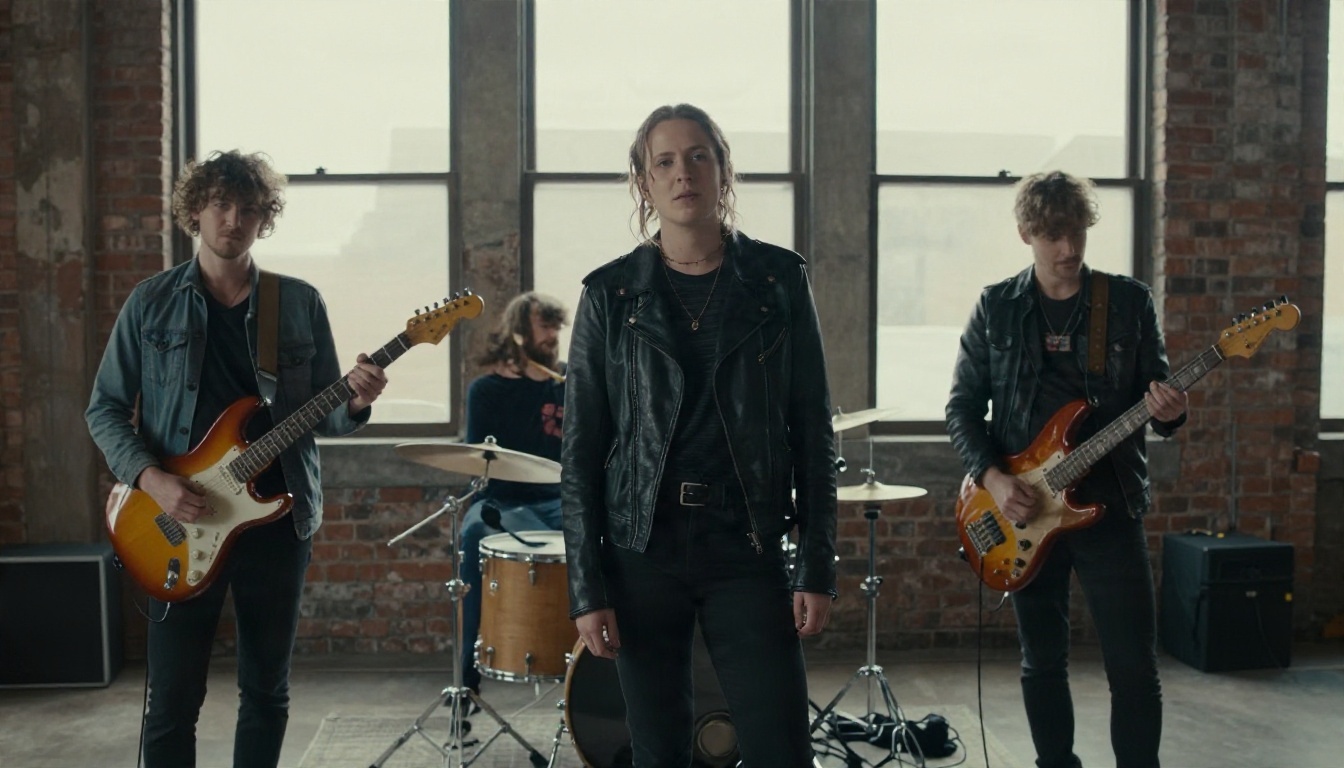
EPK Services Compared
The market splits into three camps: dedicated music platforms, general website builders, and link-in-bio tools. Each solves a slightly different problem.
Sonicbids and ReverbNation
These are the names most musicians hear first. They bundle an EPK with a marketplace, so your profile lives where promoters already search.
- Strengths: built-in audience of bookers, standard layout that promoters recognize, opportunity listings.
- Weaknesses: rigid templates, your kit looks like everyone else's, and the best features sit behind a paid tier. If you stop paying, your page can lose features or visibility.
Website Builders
Tools like Bandzoogle, Squarespace and Wix let you build a branded band site with a dedicated press page.
- Strengths: your own domain, store and mailing list tools, full design freedom.
- Weaknesses: a website is not a kit. Booking agents want something they can forward to a venue owner or download. You also carry hosting and domain costs year-round.
Link-in-Bio Tools
Linktree and similar apps are fast and cheap. They work well as a hub for fans, but they are weak as a professional EPK. A list of buttons does not tell a story.
| Option | Best For | Design Control | Downloadable | Marketplace Reach |
|---|
| Sonicbids / ReverbNation | Getting found by bookers | Low | Limited | High |
| Bandzoogle / Squarespace | Full band website | High | Weak | None |
| Linktree style tools | Fan hubs | Low | No | None |
| Google Drive PDF | Quick, free sharing | Medium | Yes | None |
| Flipbook press kit | Polished, forwardable kit | High | Yes (offline) | None |
What EPKs Really Cost
Pricing changes often, so treat the numbers below as ballpark figures and confirm on each provider's page before you commit.
Monthly Fees Add Up
A typical paid EPK stack looks like this: a marketplace profile at roughly $10 to $20 a month, a website builder at around $12 to $30 a month, and a design tool subscription at about $13 to $15 a month. That is easily $400 a year for a kit that mostly sits idle between tours.
| Cost Item | Typical Range (Approx.) | Billing | Notes |
|---|
| Marketplace profile | $10 to $20 per month | Monthly or annual | Higher tiers add opportunities |
| Band website builder | $12 to $30 per month | Monthly or annual | Domain often extra |
| Design subscription | $13 to $15 per month | Monthly | Needed for premium templates |
| Professional photographer | $150 to $600 once | One time | Worth it, whichever tool you use |
| Flipbook press kit | See pricing | Plan based | No watermark on any plan |
Hidden Costs
The sticker price is rarely the real price. Watch for:
- Domain renewals that jump after the first year.
- Paid add-ons for audio players, video hosting or password protection.
- Watermarks on free tiers, which make you look like an amateur.
- Time. Rebuilding a kit in a rigid template every time you release a single costs hours you could spend writing songs.
⚠️ Watch out: Free plans with a platform watermark on your press kit can hurt you more than having no kit. If a promoter sees someone else's logo on your page, it signals you did not invest in your own brand.
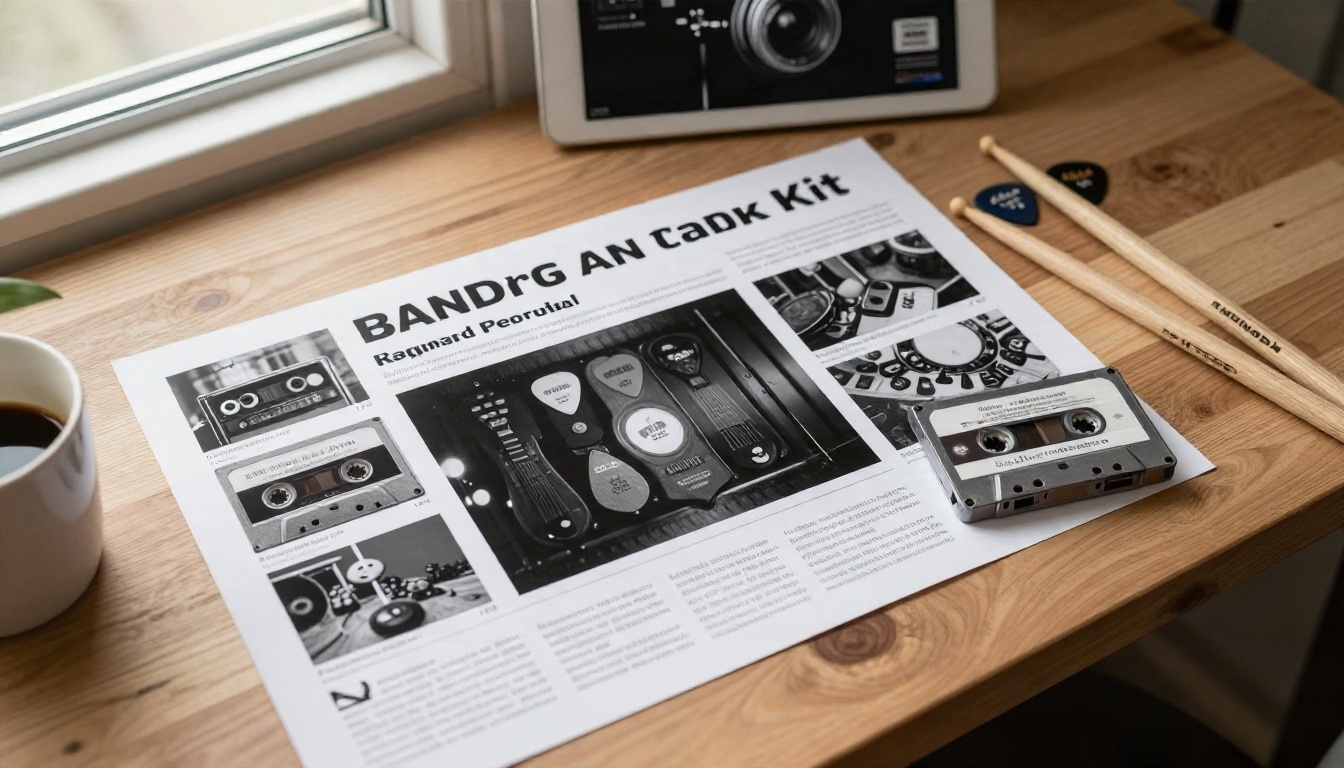
Free EPK Options That Work
You do not need to spend money to send a professional kit. You do need to be disciplined about layout.
Google Drive and Canva
The most common free route is a PDF made in Canva or Google Slides, stored in Drive, and shared with a link. It works, and it costs nothing. A few tips make it far better:
- Design at landscape 16:9 so it reads well on laptop and phone screens.
- Put your best photo and a one-line pitch on page one.
- Add clickable links to Spotify, YouTube and your booking email.
- Keep the file under 10 MB so it opens fast.
- Name it clearly: Artist-Name-EPK-2026.pdf.
Where Free Falls Short
Free tools show their limits fast:
- No tracking. You will never know whether the venue opened your kit.
- Clunky viewing. A PDF forces pinch-and-zoom on a phone.
- Version chaos. Old copies float around in inboxes for years.
- Weak media. Audio and video usually open in a separate tab, breaking the flow.
That last point is why many artists keep the free design workflow but switch the delivery format to a flipbook, which keeps the page-turning feel and embeds media directly.
EPK Templates Worth Using
A template saves hours, but only if the structure matches your act. Here is what to look for.
Solo Artist Layout
Solo acts win on personality. Lead with a full-bleed portrait, follow with a short story about your sound, then a tight photo spread and a clear list of upcoming dates. Keep the stage plot simple, since one person and a guitar rarely need a diagram.
Band and DJ Layouts
Bands need a lineup page with each member's role and a group photo. DJs and producers benefit from a mix-focused layout: a featured set, venue logos, and a technical rider listing equipment requirements. Producers who share work with labels can use a dedicated press kit design tool to keep every page consistent.
| Artist Type | Opening Page | Must-Have Page | Optional Extra |
|---|
| Solo singer-songwriter | Portrait and one-line pitch | Live video links | Lyric sheet |
| Full band | Group photo and lineup | Stage plot and rider | Merch preview |
| DJ or producer | Featured mix and logos | Technical rider | Residency history |
| Classical or jazz ensemble | Concert photo and repertoire | Program samples | Education offerings |
| Wedding or cover band | Event highlight reel | Song list and packages | Client testimonials |
✅ Best practice: Keep your kit to 8 to 12 pages. Anything longer belongs in a separate folder of assets that you send only on request.
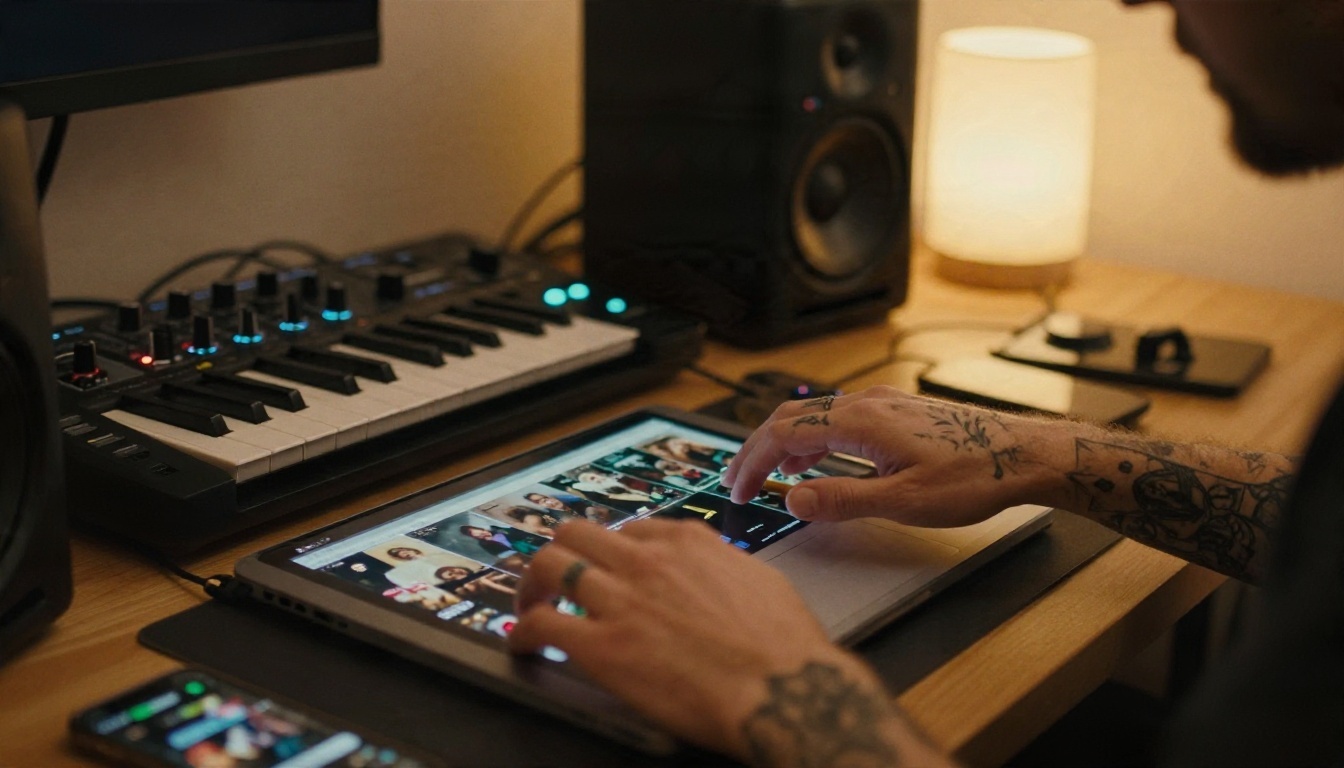
How to Create an EPK with Flipbooks AI
If you already have your kit as a PDF, turning it into a flipbook takes minutes. The PDF to Flipbook Converter handles the conversion, and the result is a mobile-responsive publication with realistic page turns. Here is the workflow.
Upload and Convert
- Create an account on Flipbooks AI.
- Click to start a new flipbook and upload your PDF from Canva, Google Slides, InDesign or Pages.
- Wait a few seconds while each page is converted into a flipping spread.
- Preview the result on desktop and phone before sharing it.
Brand It
Open the customization panel and set your look:
- Custom branding: add your logo and artist name.
- Colors: match the background to your album artwork palette.
- Page effects: choose a page-curl style and speed.
- Multimedia: embed audio previews and video clips right on the page, so a promoter can press play without leaving your kit.
Share and Track
Pick how the kit travels:
- Direct link: drop it in an email or DM.
- Embed code: place it on your band site using the Embed Flipbook on Website tool.
- Password protection: lock unreleased material for label contacts only.
- Offline download: let a festival buyer save the kit for later.
On the Professional plan you also get analytics and lead generation, so you can see who opened your kit and capture contact details. That turns a static PDF into a tool you can follow up on. Review the plans and features to see what fits your budget.
💡 Pro tip: Send the link with a one-line message such as "Here is our 2026 press kit, 10 pages, with live clips on page 4." Telling a booker where the good stuff lives raises your odds of a reply.
Musicians who also run a merch table can build a matching price list with the Digital Price List Generator, and visual acts can showcase shoots through the Digital Portfolio Creator.
Which Option Fits You
There is no single winner. The right pick depends on your stage, your budget and how often you pitch.
| Your Situation | Best Pick | Why |
|---|
| Brand new, zero budget | Canva PDF plus Drive link | Costs nothing, quick to build |
| Actively pitching venues | Flipbook press kit | Polished, trackable, forwardable |
| Want marketplace gigs | Sonicbids or ReverbNation profile | Built-in booker traffic |
| Selling music and merch | Bandzoogle or Squarespace site | Store and mailing list tools |
| Touring act with a label | Flipbook plus password protection | Private releases stay private |
Three Common Mistakes
- Sending raw attachments. Large files clog inboxes and bounce.
- Hiding the music. If the audio sits three clicks deep, nobody hears it.
- Never updating. A kit that lists a 2022 tour tells promoters you went quiet.
A Realistic Setup
Here is a lean stack that many independent artists run: keep a free Drive folder with raw assets, design the kit once in Canva, publish it as a flipbook for sending and embedding, and keep a basic profile on one booking marketplace for inbound leads. Total monthly cost stays low, and your kit looks sharper than most paid templates. Songwriters and educators who produce lyric booklets or sheet music can use the Interactive E-Book Publisher for the same effect.
Build Your Press Kit Today
The best EPK service is the one that gets your music heard by the right person with the least friction. Marketplaces bring traffic, website builders bring control, and free tools bring a starting point. A flipbook brings the polish, the media and the tracking, without a watermark or a long contract.
Ready to try it? Create your free account on Flipbooks AI, upload your PDF, and send your first flipbook press kit this week. You can also browse all flipbook tools for templates that fit your act, or compare pricing plans when you are ready for analytics and lead capture.



