You spent weeks choosing samples, printing a catalog and booking a booth. Then the glass shelf arrives cracked, the light strip won't switch on, and the case you need to ship home weighs more than the airline allows. A trade show display case looks simple on a product page. On the show floor it is a lighting rig, a security measure, a freight item and a storage problem all at once.
This article walks through each part of the setup: the lighted case itself, the storage case that protects it between events, the shipping case that gets it there in one piece, and the alternatives for teams that would rather carry less. Along the way we'll look at where a digital catalog built with Flipbooks AI can replace a shelf of printed material and free up space in the case for the products that matter.
What a Trade Show Display Case Does
A display case has three jobs at an expo. It protects products from handling. It frames them so a visitor 10 feet away can tell what you sell. And it signals value, because anything behind glass looks more expensive than the same item on a bare table.
Before you buy, decide which job matters most. A jewelry brand needs security first. A food or gadget brand needs visibility first. A software company showing a few hardware accessories needs portability first.
Floor Standing Cases
Floor standing cases, often called showcases or tower cases, run roughly 60 to 72 inches tall. They have a locking cabinet at the base, two to four glass shelves and often a built in light bar. They work well as a booth anchor because they hold stock below and display above.
The tradeoff is size. A tower case is awkward to move through a loading dock and takes real floor space in a 10 by 10 booth.
Tabletop Cases
Tabletop cases sit on a counter or table and usually measure 20 to 36 inches wide. They suit small items like cosmetics, watches, tech accessories and sample kits. They are much easier to carry, and many fold flat or break down into a few panels.
Pop Up and Collapsible Cases
Collapsible cases use a lightweight aluminum frame with snap in glass or acrylic panels. They ship in a single carrying bag and assemble in minutes. They are less sturdy than a welded showcase, but for a team flying to a show they are often the only sensible choice.
| Case type | Typical height | Best for | Weak point |
|---|
| Floor standing showcase | 60 to 72 in | Jewelry, collectibles, premium goods | Weight and floor space |
| Tabletop case | 8 to 24 in | Small samples, accessories | Needs a table, limited capacity |
| Collapsible aluminum case | 30 to 60 in | Traveling teams | Less rigid, more setup steps |
| Acrylic cube or pedestal | 12 to 36 in | Single hero products | Scratches easily |
Trade Show Display Case With Lights
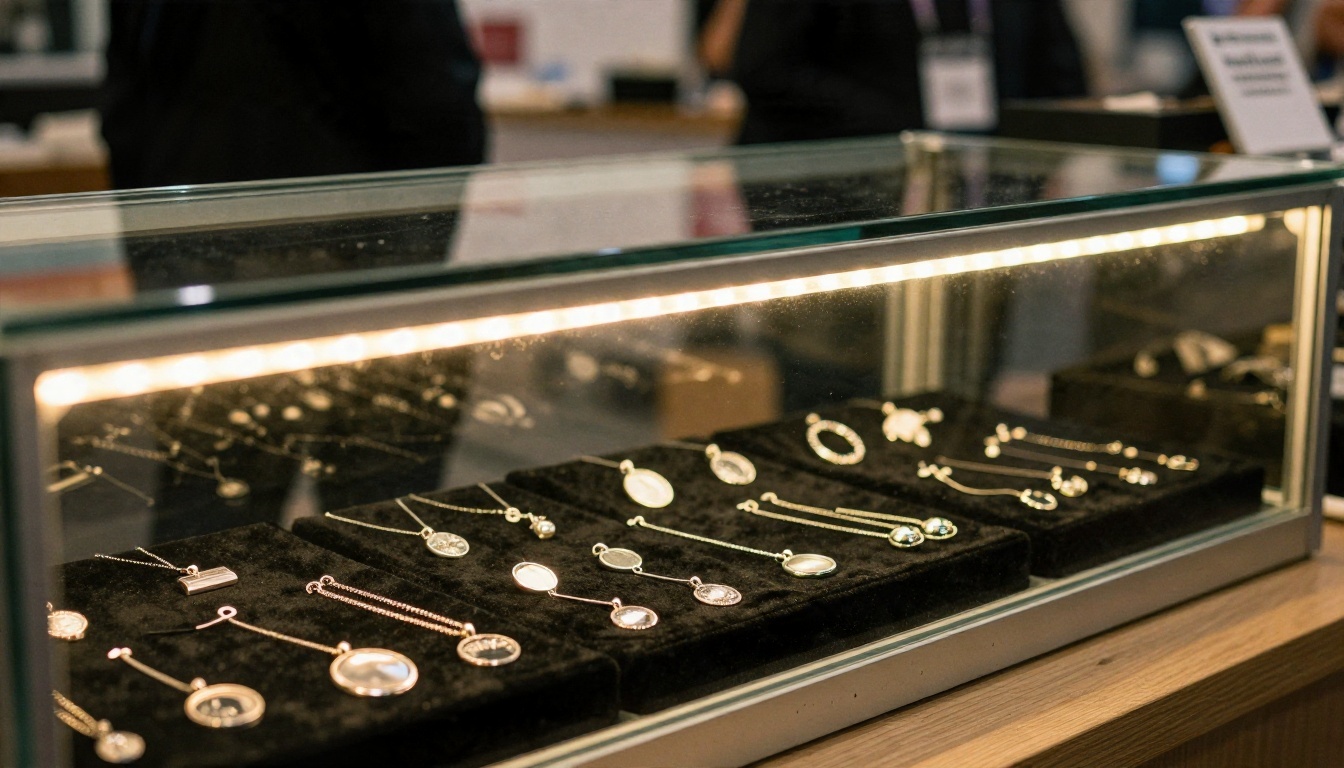
Expo halls are bright but flat. Overhead fixtures light the aisles evenly, which means a product in a glass case often looks dull next to the carpet and backdrop. Interior lighting fixes this by adding contrast and pulling the eye to the shelf.
LED Strips vs Halogen Spots
Most modern lighted cases use LED strips or LED puck lights. Older showcases still use halogen spots. The difference matters at a show because heat and power draw both count.
| Light source | Heat | Power draw | Color quality | Verdict |
|---|
| LED strip | Very low | Low | Good to excellent | Best default choice |
| LED spot or puck | Low | Low | Excellent for single items | Great for hero products |
| Halogen spot | High | High | Excellent | Avoid for chocolate, cosmetics, wax |
| Fluorescent tube | Moderate | Moderate | Fair | Outdated, bulky |
Look for a color rendering index (CRI) of 90 or higher if color accuracy matters. Fabric, cosmetics and jewelry all look wrong under cheap blue white LEDs. For most products, a neutral white around 3500 to 4000K looks natural next to the overhead lighting.
Power at the Show
Here is the part people forget. The venue does not hand you free electricity. Most halls sell power by the booth, and you usually have to order it ahead of time through the show organizer. If your case plugs into a wall outlet, include a power order and an extension cord in your checklist.
⚠️ Order power early. Day of show electrical orders often carry a surcharge, and a booth with no outlet means a dark case for the first morning.
If you want to avoid the issue altogether, pick a case with a rechargeable battery light bar. Many run six to ten hours per charge, which covers most show days.
Lighting Mistakes That Hurt Sales
- Lights placed in front of the product. They create glare on the glass and shadow on the item.
- Mixed color temperatures. One warm strip and one cool strip make the shelf look patchy.
- A bottom shelf left dark. Visitors assume nothing important is there.
- Mirrored backs without planning. Mirrors double the visual volume but also double any dust or fingerprints.
💡 Pro tip: Do a test run in your office, in a dim room, before you ship. Photograph the case with your phone. If the product looks flat in the photo, it will look flat to a visitor.
Storage Case Options Between Shows
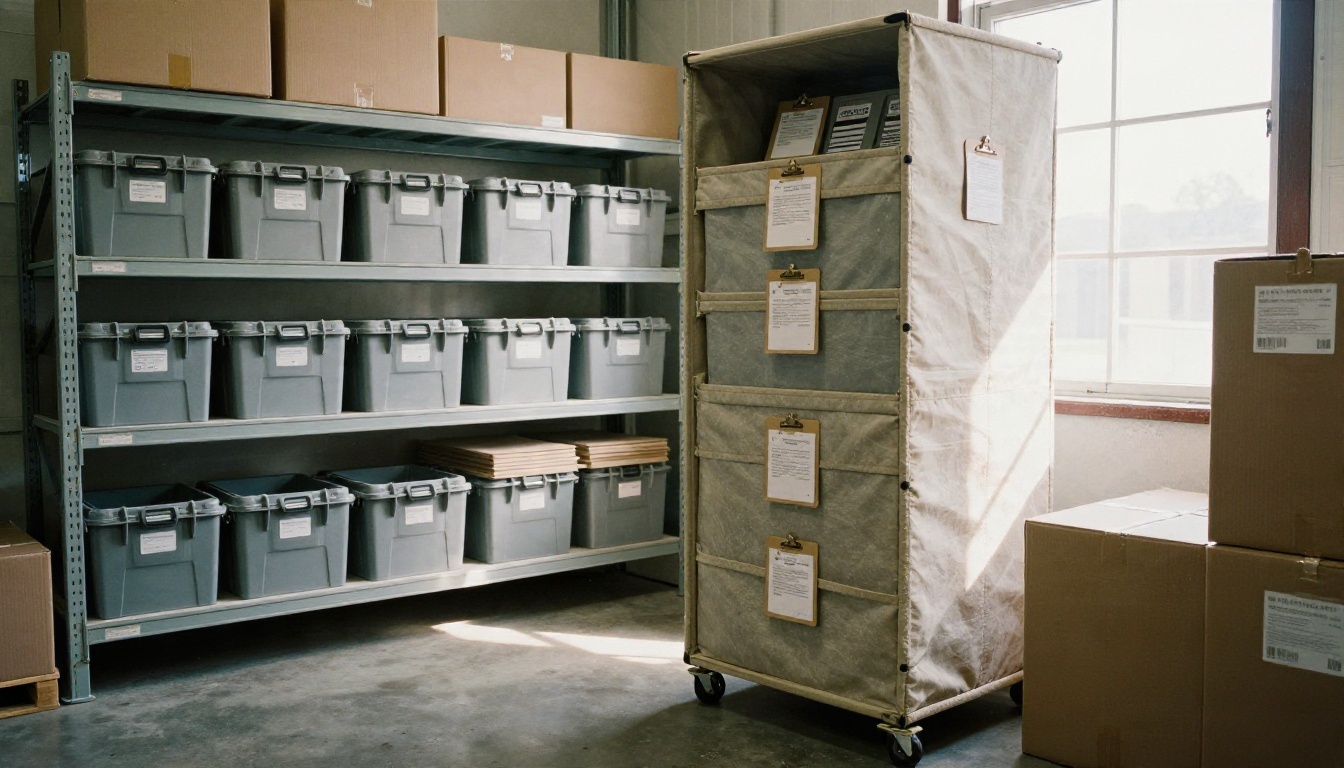
A display case spends far more time in storage than on a show floor. If the storage method is wrong, glass edges chip, hinges bend and light strips get yanked loose.
Padded Covers and Soft Bags
For floor standing cases, a padded canvas cover keeps off dust and light scratches in a warehouse or office. It adds almost no weight and costs a fraction of a rigid box. It does not protect against impact, so it is not a substitute for a shipping case.
Rigid Storage Cases
A rigid storage case is a molded or ply wood box, often with foam cut to the shape of your panels. It handles stacking and forklift movement. Many teams buy one rigid case and use it for both storage and shipping. That is fine if it has wheels, handles and latches rated for travel.
What to Store Inside
- Glass shelves, individually wrapped and separated by foam
- Light strips, with cords coiled loosely and labeled
- Keys for the locking cabinet, taped inside the lid of a separate box so they never travel in the case itself
- Spare bulbs, clips and a small cleaning kit
✅ Best practice: Print an inventory card and tape it inside the lid. List every panel, shelf and cable. Check it off on pack down so nothing is left behind in the hall.
Shipping Case Basics and Costs
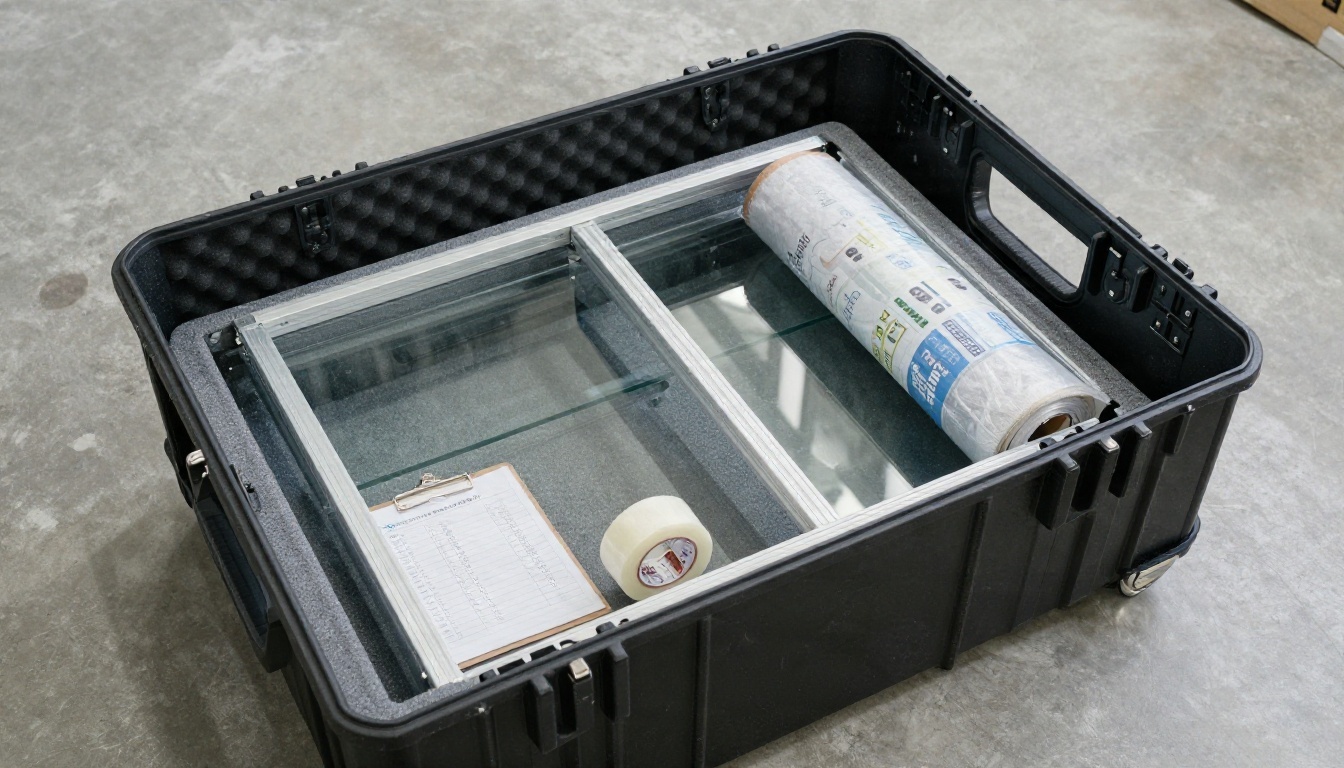
Shipping is where budgets break. A glass case that costs a few hundred dollars can add several hundred more in freight, handling and drayage fees at the venue.
Hard Case, Crate or Soft Bag
| Option | Protection | Weight | Typical use | Cost level |
|---|
| Hard shell case with wheels | High | Medium | Air or ground courier | Moderate |
| Ply wood crate | Very high | Heavy | Freight, large floor cases | Higher |
| Soft carry bag | Low | Light | Collapsible frames, hand carry | Low |
| Cardboard with foam inserts | Medium for one trip | Light | One time shipments | Lowest upfront |
Costs vary by region and supplier, so treat any figure as a starting point and ask for quotes. What matters is that the case fits the way you travel. A crate that suits freight is a nightmare for a team taking a flight.
Pack It Like It Will Be Dropped
- Wrap each glass piece in bubble wrap or foam sheeting, then place it in its own slot.
- Separate glass from metal. Aluminum frames can scratch tempered glass edges during transit.
- Fill empty space. Movement inside a case does more damage than a single bump.
- Label every side with your company name, booth number and show dates.
- Photograph the packed case before closing it, so you have evidence if a damage claim is needed.
- Add a tracking tag or small GPS tracker inside the lid.
Hidden Fees to Budget For
- Drayage and material handling: Venues often charge by weight to move your case from the dock to the booth.
- Oversize surcharges: Couriers add fees for length or weight above standard limits.
- Insurance: Declared value coverage is cheap compared to replacing a broken glass shelf mid show.
- Return shipping: Many teams forget to budget for the way home.
💡 Tip: Weigh your case fully packed before you book freight. A few pounds over a threshold can change the rate tier.
Alternatives to Glass Cases
A glass case is not always the best answer. If you sell something large, something digital or something that varies by customer, a case limits you. These are the main options.
Open Shelving and Pedestals
Open shelves, stands and pedestals show products with no barrier. They invite touching, which helps with textiles, tools and packaging. The downside is security and wear. Anything small or valuable should not sit on an open shelf overnight.
Acrylic Domes and Risers
A clear acrylic dome protects a single item and weighs very little. Risers add height variety to a table display without the weight of glass. Acrylic scratches, so keep a microfiber cloth and soft packing sleeves on hand.
Digital Catalogs and QR Codes
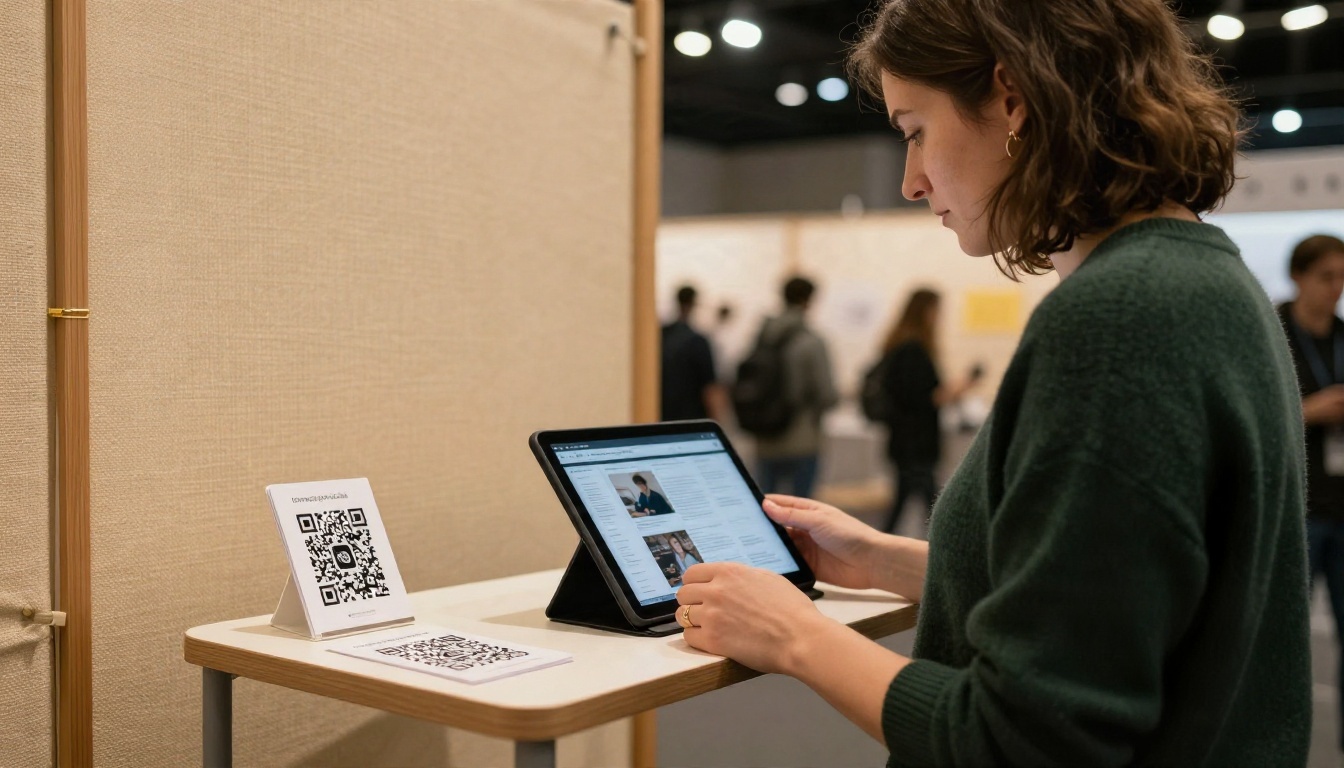
For many exhibitors the biggest shift is moving the catalog off the table. Instead of shipping heavy boxes of printed brochures, show a tablet or a screen, and give visitors a QR code that opens the same catalog on their phone. They keep it, share it with colleagues and come back to it after the show.
A digital flipbook has real advantages over a printed pile:
- No shipping weight and no leftover boxes to carry home
- Updates in minutes if a price or product changes mid show
- Trackable interest when you use analytics to see which pages visitors read
- Always on hand, because it lives on the visitor's phone
Comparing the Options
| Approach | Weight to ship | Security | Product visibility | Cost over several shows |
|---|
| Lighted glass case | High | High | High | Medium, with ongoing freight |
| Open shelving | Medium | Low | High | Low to medium |
| Acrylic dome | Low | Medium | Medium | Low |
| Digital catalog with QR code | None | Not applicable | Unlimited pages | Low |
| Hybrid: small case plus digital catalog | Low to medium | High for hero items | High | Low to medium |
💡 The hybrid approach works best for most teams. Put three or four hero products in a small lighted case, then let a digital catalog carry the rest of the range. You ship less, and the visitor still sees the full line.
Build a Digital Catalog with Flipbooks AI
If your catalog is already a PDF, you are about ten minutes from a version visitors can flip through on a phone or tablet. Here is how to do it with Flipbooks AI.
Step by Step
- Create your account. Go to Flipbooks AI and sign up.
- Upload your PDF. Use the PDF to Flipbook Converter to turn your catalog into a page turning flipbook. Text stays sharp and images keep their quality.
- Match your branding. Add your logo, pick your brand colors and choose a page effect. If you sell products, the Product Catalog Generator gives you a layout built for that purpose.
- Add multimedia. Embed a product video or audio clip on the pages where a demo sells better than a photo.
- Set your sharing options. Copy the direct link, grab an embed code, or restrict access with password protection for dealer only price lists.
- Print a QR code from your flipbook link and put it on a small stand next to your case, on your badge and on your business cards.
- Download for offline use. Exhibition halls often have poor Wi-Fi, so keep an offline version ready on your tablet.
Features That Help at a Show
| Feature | Why exhibitors care |
|---|
| No watermarks, ever | Your catalog looks like your brand, not ours |
| Mobile responsive layout | Reads well on any phone a visitor owns |
| Embedded video and audio | Demonstrate products you cannot fit in a case |
| Custom branding | Consistent with your booth graphics |
| Password protection | Keep wholesale prices private |
| Offline downloads | Works when the hall network does not |
| Analytics and lead generation | See what visitors read, and collect contact details (Professional plan) |
Unlimited flipbooks come with the Standard plan and above, and analytics and lead generation are part of the Professional plan. Compare options on the pricing page.
Practical Examples
- A skincare brand puts four bestsellers in a small lighted tabletop case and shares the full range as a flipbook, with a QR code on the counter.
- A furniture maker skips a glass case entirely and uses a Furniture Catalog on a tablet to show every finish and size.
- A distributor uses a password protected flipbook built with the Digital Price List Generator to share wholesale pricing only with qualified buyers.
- A show organizer or exhibitor publishes a schedule and floor plan with the Event Program Maker.
✅ Best practice: Put the QR code at eye level, next to the lighted case, with a short line such as "See the full range." Visitors scan what they can reach without stopping.
Choosing the Right Setup
Different exhibitors need different answers. Use these three scenarios as a starting point.
Scenario One: First Show, Small Budget
You have one table and a flight to catch. Choose a collapsible tabletop case with battery lights, a soft carry bag and a digital catalog. Skip the rigid crate. Total shipping weight stays low, and nothing needs a freight quote.
Scenario Two: Regular Exhibitor, Several Shows a Year
You attend several events and need consistency. Invest in a floor standing lighted showcase and a rigid wheeled shipping case sized to fit it. Keep a padded cover for storage. Move your catalog to a flipbook so you stop reprinting after every price change.
Scenario Three: Premium or High Value Products
Security comes first. Choose a locking cabinet case with tempered glass, buy declared value insurance and keep the most valuable items with you at pack down. Use a flipbook for the wider range so the case only holds a small selection.
Mistakes to Avoid
- Buying the biggest case you can afford. Space, weight and freight all scale with size.
- Ignoring venue rules. Some halls limit booth height or require fire rated materials.
- Leaving lights untested. A dead strip on show morning is easy to prevent.
- Printing the whole catalog. Print a short leave behind and send everything else digitally.
- Skipping the inventory card. Missing glass shelves are the most common loss on pack down.
Quick Pre Show Checklist
- Test the lights and cables at home.
- Confirm booth power with the organizer.
- Pack glass and metal separately.
- Print your QR code and test it on two phones.
- Photograph the packed case.
- Keep spare clips, a cleaning kit and tape in your carry on bag.
Next Steps for Your Booth
A good trade show display case earns its place by showing a few products very well. Add the right lighting, a storage case that protects it between events and a shipping case matched to your travel method, and the physical side is covered by a setup you can repeat show after show.
For everything that doesn't fit behind glass, let a digital catalog do the work. Create your account on Flipbooks AI, upload your PDF and have a shareable catalog ready before your next show. Browse all flipbook tools to find the format that suits your products, compare pricing plans when you are ready for analytics and lead generation, or see how to embed a flipbook on your website so visitors can keep browsing after they leave your booth.



