A Catholic wedding Mass runs about an hour, and half your guests will not know when to stand, sit, kneel or respond. A well-built wedding program fixes that in one page. This article gives you the full order of events, wording you can copy, three layout examples and a template, and shows how to publish the result as a digital booklet with Flipbooks AI so every guest can open it on a phone.
What a Catholic Wedding Program Does
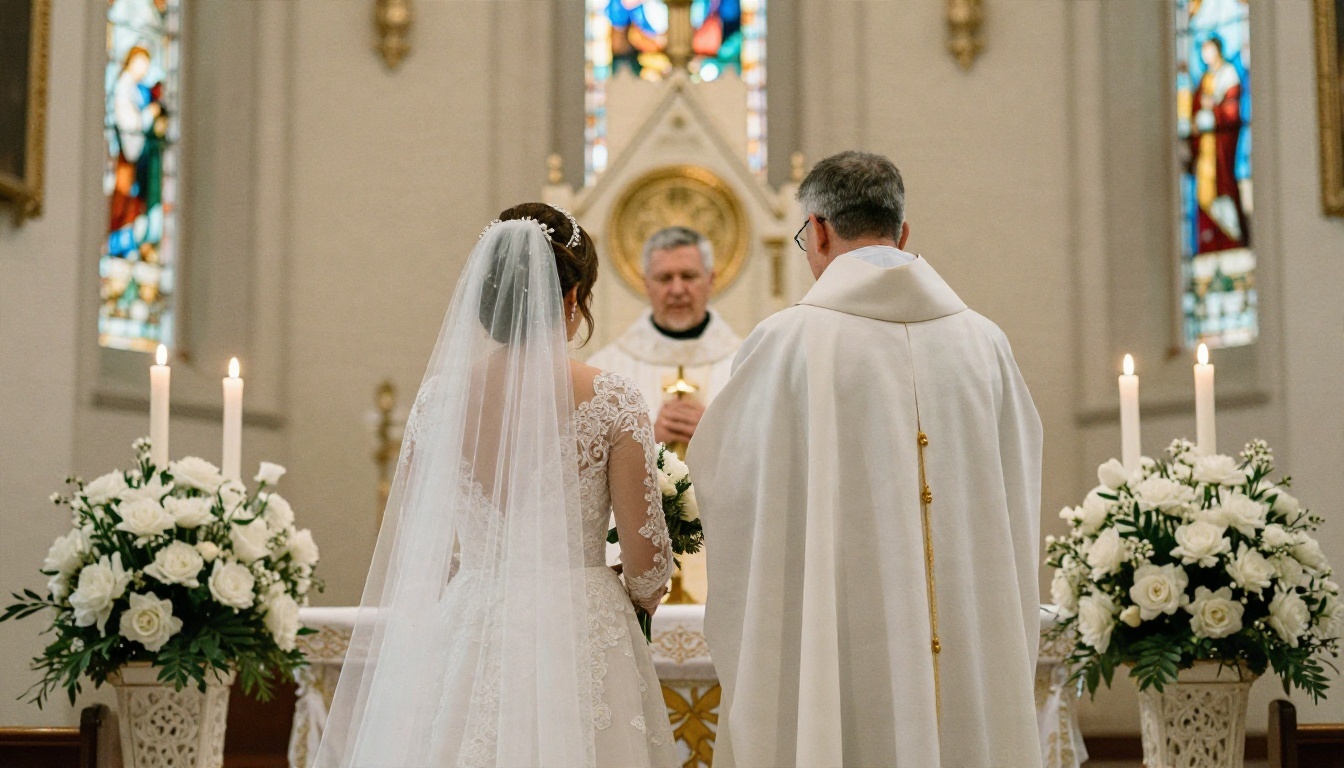
A program is not decoration. It is a map of the ceremony. In a Catholic wedding, many guests are not Catholic, some have not been inside a church in years, and a few will be wondering whether they are allowed to receive Communion. The program answers those questions before anyone has to ask.
A strong program does four jobs:
- Names the people: wedding party, parents, readers, musicians, celebrant.
- Lists the order: every part of the Mass, in sequence.
- Gives the words: responses, hymn lyrics and prayers guests say aloud.
- Sets the tone: a short welcome and a thank-you that sound like the couple.
Nuptial Mass vs. Ceremony Without Mass
Before you write a word, confirm with your priest which form you are using. The program changes a lot depending on the answer.
| Feature | Wedding Within Mass | Wedding Without Mass |
|---|
| Length | 50 to 70 minutes | 25 to 35 minutes |
| Liturgy of the Eucharist | Yes | No |
| Communion | Yes | No |
| Best when | Both spouses are Catholic | One spouse is not Catholic |
| Program pages | 4 to 8 | 2 to 4 |
💡 Pro tip: Ask your parish office for the approved readings list and any music restrictions first. Printing a reading or hymn the pastor will not allow means reprinting everything.
The Order of Events, Step by Step
This is the standard sequence of a wedding celebrated within Mass. Your parish may adjust small details, so treat it as a working outline and check it with your celebrant.
Introductory Rites
- Prelude music: instrumental pieces while guests are seated.
- Seating of grandparents and parents: often the mothers walk in last.
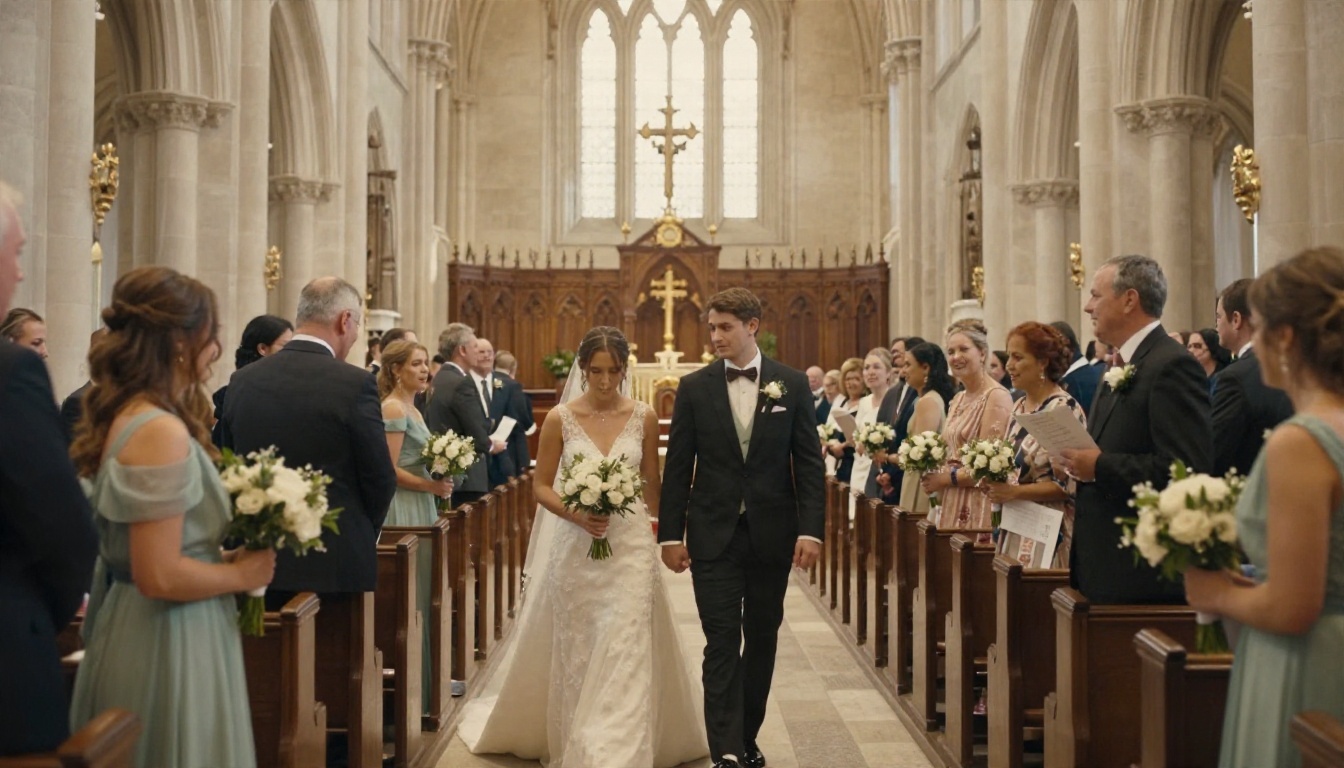
- Entrance procession: priest, servers, wedding party, then the bride, either with her father or with both parents.
- Greeting and Sign of the Cross: the priest welcomes everyone.
- Opening Prayer (the Collect).
Some couples keep a traditional order, with the groom and groomsmen entering from the side. Others have the groom walk in with his parents. Either is fine, and your program should simply list the order you choose.
Liturgy of the Word
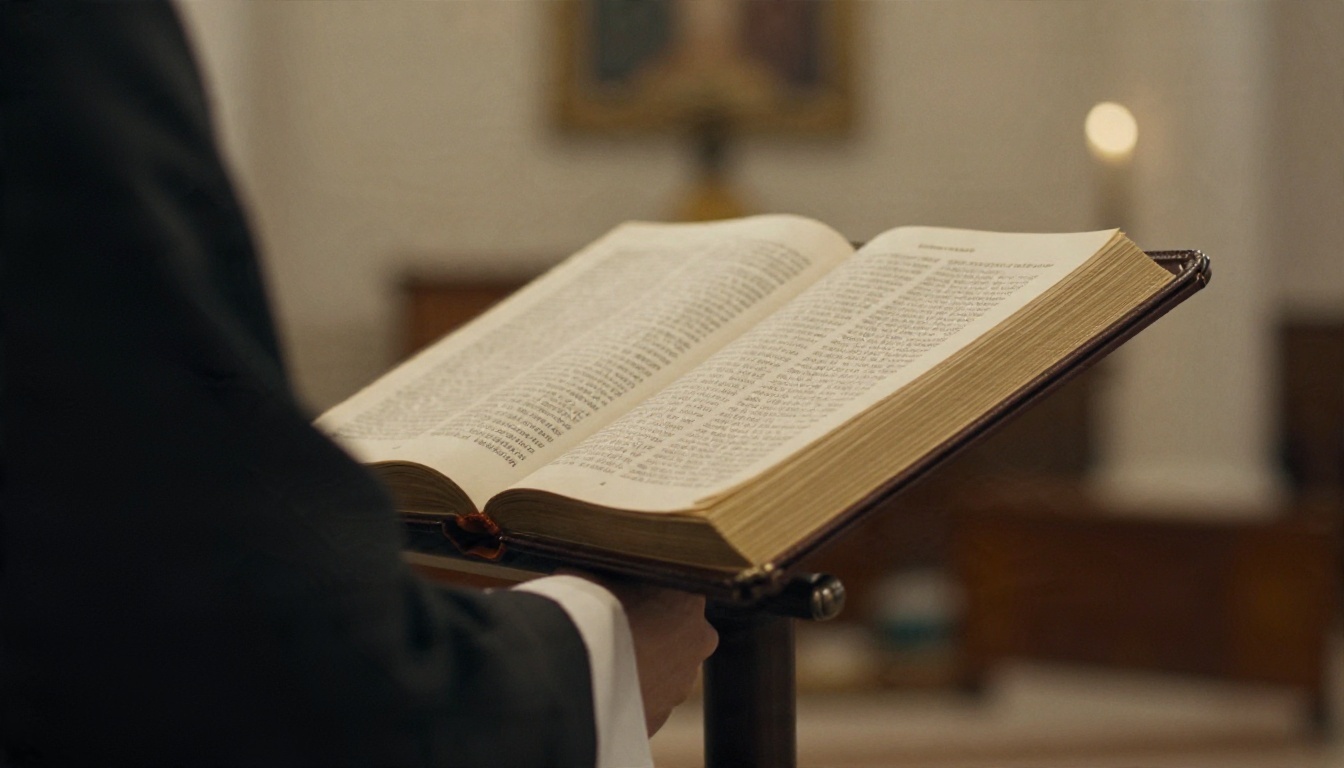
- First Reading: usually from the Old Testament, such as Genesis 1:26-28, 31 or Tobit 8:4-7.
- Responsorial Psalm: sung or spoken, with a response guests repeat.
- Second Reading: from the New Testament, for example 1 Corinthians 13:1-8 or Romans 12:1-2, 9-18.
- Gospel Acclamation: guests stand and sing the Alleluia.
- Gospel: read by the priest or deacon.
- Homily: a short reflection on marriage.
Rite of Marriage
This is the heart of the ceremony, and the part guests care most about.
- Questions before consent: the priest asks the couple about freedom, fidelity and openness to children.
- Exchange of Consent: the vows.
- Reception of Consent: the priest confirms the marriage.
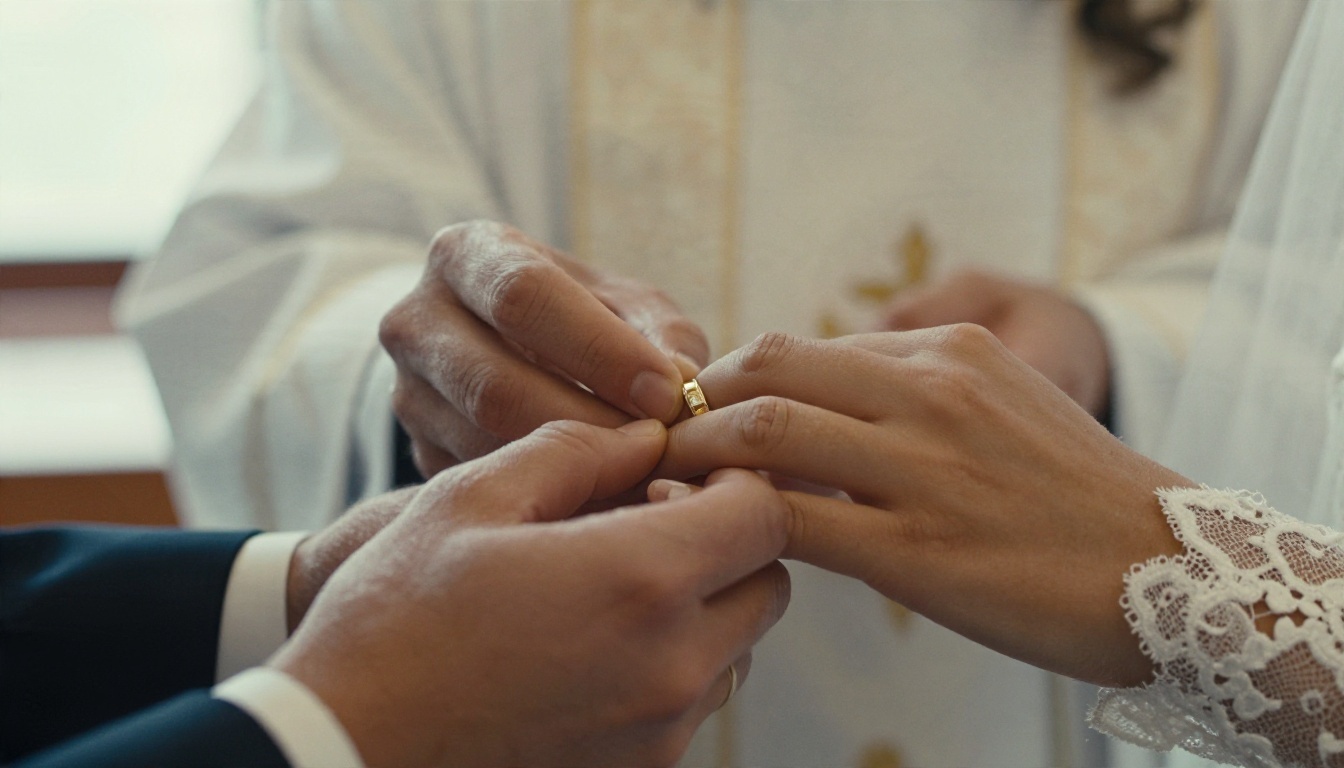
- Blessing and Exchange of Rings.
- Optional rituals: unity candle, presentation of flowers to Mary, the arras (thirteen coins), lazo and veil, common in Hispanic traditions.
- Prayer of the Faithful: petitions read by family or friends.
Liturgy of the Eucharist and Concluding Rites
- Presentation of the Gifts: the couple or their families bring the bread and wine forward.
- Eucharistic Prayer and the Holy, Holy, Holy.
- Lord's Prayer.
- Nuptial Blessing: a special prayer over the couple.
- Sign of Peace.
- Communion: with music.
- Final Blessing and Dismissal.
- Recessional: the newlyweds exit first.
The Whole Ceremony at a Glance
| Section | What Happens | Guest Action |
|---|
| Entrance | Procession and greeting | Stand |
| First Reading | Old Testament passage | Sit |
| Psalm | Sung response | Sit, then respond |
| Second Reading | Letter of St. Paul | Sit |
| Gospel | Words of Christ | Stand |
| Homily | Priest speaks | Sit |
| Vows and Rings | Consent and blessing | Stand or sit as directed |
| Prayer of the Faithful | Petitions | Respond aloud |
| Offertory | Gifts brought forward | Sit |
| Eucharistic Prayer | Consecration | Kneel or stand, per parish |
| Communion | Reception of the Eucharist | Process or remain seated |
| Final Blessing | Dismissal | Stand |
Wording You Can Copy
Good program wording is short, warm and clear. Here are samples you can adapt. Replace the brackets with your own details.
Welcome Message
Thank you for being here. Today, [Name] and [Name] receive the sacrament of Matrimony in the presence of the people they love most. We ask for your prayers, your voices and your joy as we celebrate together.
Note for Guests Who Are Not Catholic
All are welcome at our wedding Mass. If you are Catholic and in a state of grace, you are invited to receive Communion. Everyone else is welcome to remain in the pew in prayer or to come forward with arms crossed over the chest for a blessing.
This single note prevents most awkward moments. Keep the tone inviting, never instructional in a stern way.
Remembering Loved Ones
We hold in our hearts those who cannot be with us today, especially [Name] and [Name]. Their love is woven into this day.
Vows Wording
Many couples print the vows as a courtesy, though some prefer to keep them as a surprise. The traditional Catholic form reads:
I, [Name], take you, [Name], to be my [husband/wife]. I promise to be true to you in good times and in bad, in sickness and in health. I will love you and honor you all the days of my life.
⚠️ Heads up: Your priest may ask that vows follow an approved form. Personal vows are normally shared at the rehearsal dinner or reception rather than in place of the liturgical consent.
Thank You Note on the Back Page
To our parents, who taught us what love looks like. To our friends, who made us laugh through every planning meeting. To Fr. [Name] and the parish community, for preparing us for this day. Thank you.
Three Program Examples
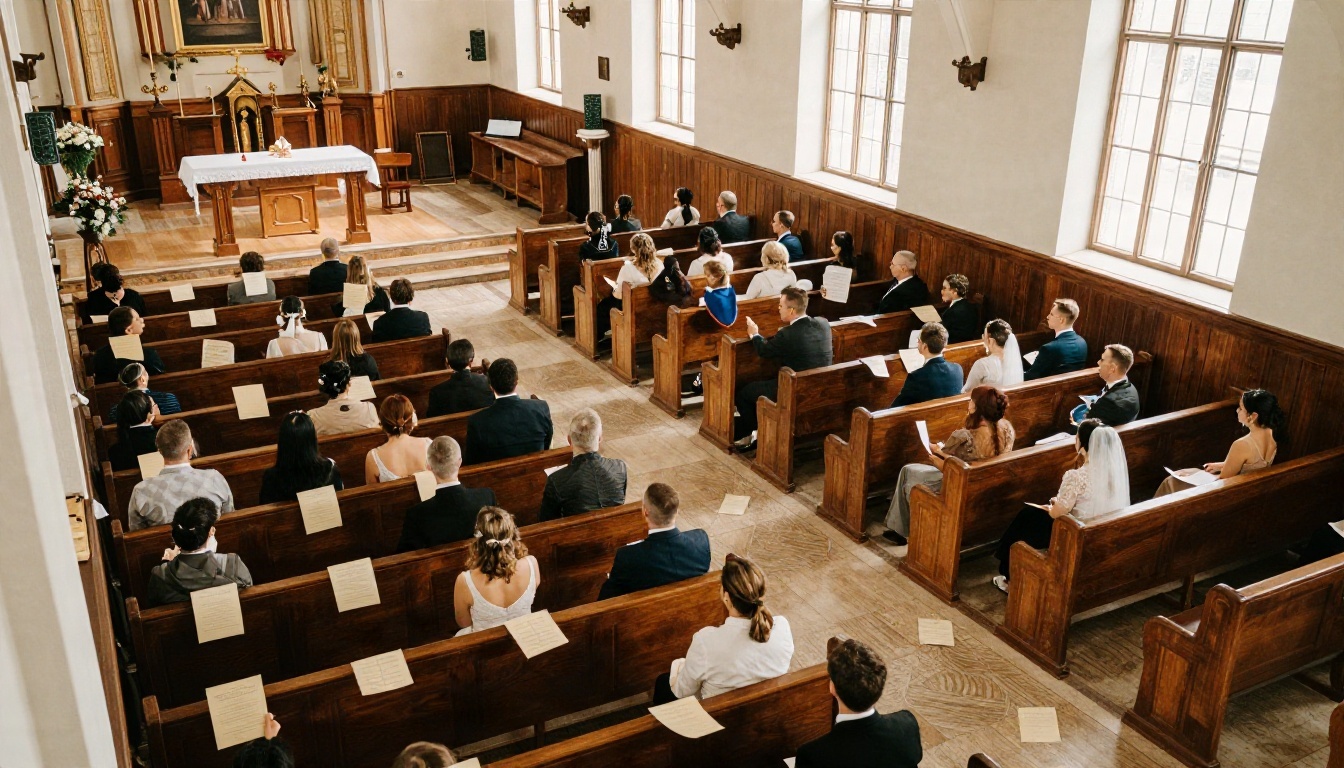
Different weddings need different formats. Here are three that work well.
| Format | Pages | Best For | Notes |
|---|
| Single card | 1 (front and back) | Small ceremonies, Mass-free weddings | Order of events and names only |
| Folded booklet | 4 | Most Catholic weddings | Welcome, order, party list, thank-you |
| Full booklet | 6 to 8 | Large weddings, bilingual ceremonies | Readings, hymn lyrics, responses, story |
Example 1: The Classic Four-Page Booklet
- Page 1: Names, date, parish and city.
- Page 2: Welcome message and order of the Mass.
- Page 3: Wedding party, readers, musicians.
- Page 4: Thank-you note and a short blessing.
Example 2: The Bilingual Booklet
For couples with Spanish, Polish, Italian, Filipino or Vietnamese families, set both languages side by side in two columns. Keep headings identical in both columns so guests can find their place quickly. Print responses in bold so the whole church can join in.
Example 3: The Hymn and Response Booklet
If you want the congregation to sing, include the full lyrics of each hymn and write bold cues next to every response: "Priest: The Lord be with you. All: And with your spirit." Include the page number of each hymn in the parish hymnal if one is used.
A Fill-In Template
Copy this structure into any design tool, then adjust to match your parish.
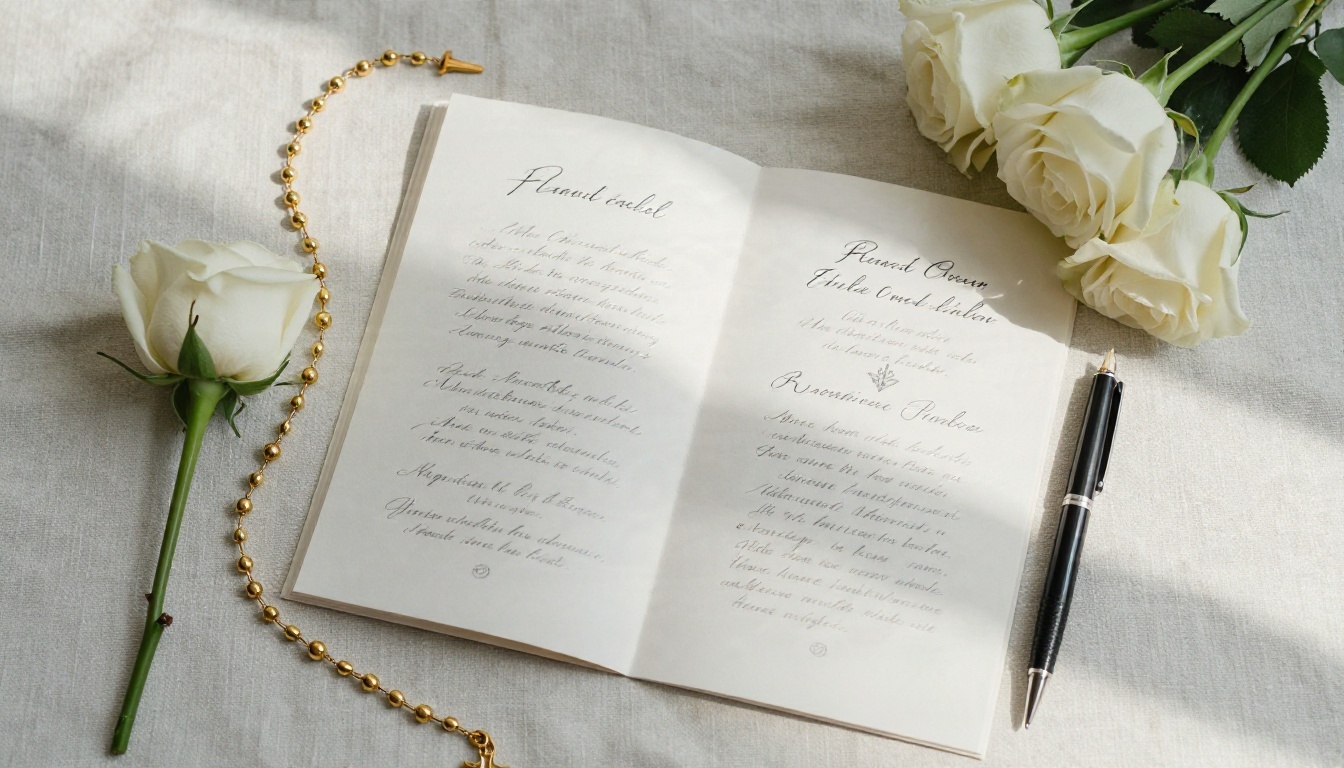
Front page
- [Name] and [Name]
- [Date]
- [Church name], [City]
Welcome
- Two to three sentences, written in your own voice.
Order of the Mass
- Prelude, Procession, Greeting
- Opening Prayer
- First Reading: [Reader] reads [Reference]
- Psalm: [Cantor]
- Second Reading: [Reader] reads [Reference]
- Gospel and Homily: [Celebrant]
- Rite of Marriage
- Prayer of the Faithful
- Offertory and Eucharistic Prayer
- Nuptial Blessing
- Communion
- Final Blessing and Recessional
The Wedding Party
- Parents, grandparents, maid or matron of honor, best man, bridesmaids, groomsmen, flower girl, ring bearer, ushers.
Closing page
- Thank-you note and a line about the reception.
Paper Program vs. Digital Program
You do not need to choose only one. Many couples print a short card and share the full booklet digitally.
| Factor | Printed Program | Digital Flipbook |
|---|
| Cost per guest | Printing and paper | None after creation |
| Last-minute edits | Not possible | Instant |
| Hymn lyrics and videos | Static text | Can include audio and video |
| Keepsake value | High | Shareable forever by link |
| Access for older guests | Easy | Needs a QR code and a phone |
| Languages | Extra pages | Easily duplicated |
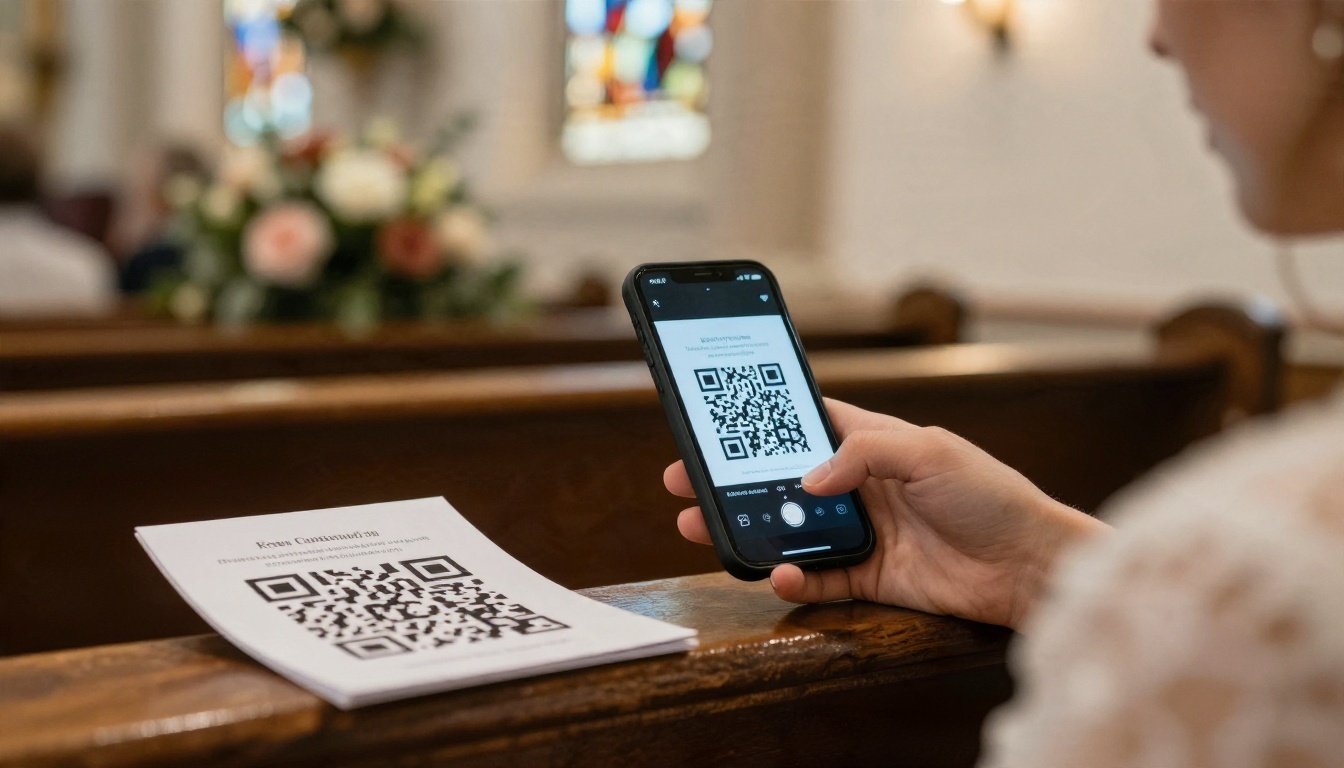
✅ Best practice: Print a small number of programs for older relatives and anyone without a phone, and put a QR code card in every pew for everyone else.
Make It with Flipbooks AI
If your design starts as a PDF, you are already most of the way there. Here is how to turn it into a digital Catholic wedding program that opens like a real booklet, with page-turn effects and no watermark.

How to Create Your Wedding Program
- Create your account. Go to Flipbooks AI and sign up.
- Export your design as a PDF. Canva, Word, Pages or InDesign all work. Keep the page size consistent.
- Upload the PDF. The PDF to Flipbook Converter turns every page into a flipping spread in seconds.
- Customize the look. Add your colors, a custom background in ivory or sage, page-turn effects and a cover thumbnail with your names.
- Add multimedia. Embed a recording of the hymn, a video message from the couple or a short audio clip of the processional music.
- Set privacy. Use password protection so only invited guests can open it.
- Share it. Copy the direct link, create a QR code for pew cards, or use the embed option to place it on your wedding website.
- Download for offline use. Handy in older churches where cell service is poor.
The dedicated Event Program Maker is built for exactly this kind of document, and after the wedding you can turn your photos into a keepsake with the Wedding Album Flipbook tool.
Features Worth Using
| Feature | Why It Helps a Wedding Program |
|---|
| No watermarks | Your program looks clean and personal |
| Mobile-responsive | Reads well on any phone screen |
| Password protection | Keeps family details private |
| Embedded audio and video | Hymns, blessings and messages |
| Custom branding | Match your wedding colors and monogram |
| Analytics (Professional plan) | See how many guests opened it |
Analytics and lead capture sit in the Professional tier, so check the pricing plans before you decide. A single wedding program works well on a basic plan. Wedding planners and parish offices handling many events benefit from unlimited flipbooks on the Standard plan and above.
Mistakes to Avoid
Even carefully planned programs trip on the same few details.
- Typos in names. Have two people proofread, including both sets of parents.
- Wrong readings. Confirm the references with your priest before printing.
- Tiny fonts. Grandparents need at least 11 or 12 point type.
- Too much text. If a page looks like a textbook, no one will read it.
- Missing music credits. List every hymn title and composer.
- Skipping the Communion note. It is the most common source of confusion.
- No proof copy. Print one page at actual size before ordering a full batch.
⚠️ Watch the timeline: Order printing three to four weeks before the wedding, and finalize the digital version at least one week before so you can share the QR code with the wedding party.
A Simple Timeline
| When | Task |
|---|
| 3 months before | Meet the priest and choose readings |
| 8 weeks before | Confirm music, readers and wedding party |
| 6 weeks before | Draft wording and layout |
| 4 weeks before | Proof, then send to print |
| 1 week before | Publish the digital version and make QR cards |
| Wedding day | Place programs and cards in pews |
Ready to Publish Yours?
A good Catholic wedding program is clear, warm and easy to follow. Write the welcome in your own voice, list the Mass in order, give guests the words to say, and thank the people who got you here. Then let everyone carry it in their pocket.
Ready to build yours? Create your free account on Flipbooks AI and upload your PDF today. Browse all flipbook tools for invitations, albums and more, or compare pricing plans to pick the one that fits your event.



