Selling sheet music online is one of the most sustainable income streams a composer or arranger can build. Unlike gigs, teaching slots, or session work, digital sheet music works for you around the clock. Someone in Tokyo can buy your piano arrangement at 3am while you sleep. But the difference between composers earning $50 a month and those earning $5,000 comes down to three things: where you sell, how you present your work, and whether buyers can actually find you. This article breaks all of that down.
The Digital Sheet Music Market Right Now
The global digital sheet music market has grown steadily as streaming reduced physical music retail. Buyers — students, hobbyists, church musicians, working performers — want immediate downloads. They want PDFs they can print or load on a tablet. And they are absolutely willing to pay for good arrangements of the music they love.
Who Is Actually Buying
Understanding your buyer matters more than most composers realize. Sheet music buyers fall into several distinct groups, each with different habits and price expectations:
- Students and hobbyists: Buy frequently, price-sensitive, love familiar popular repertoire
- Church and worship musicians: Need reliable arrangements, buy in bulk, value usability above all
- Music teachers: Buy for students, value progressive difficulty levels, become loyal repeat customers
- Working performers: Need specific arrangements, less price-sensitive, value notational accuracy
- Amateur ensembles: Choirs, bands, small orchestras — buy multiple parts at once
What Sells Best
The strongest-selling sheet music categories consistently include popular song piano arrangements from beginner to intermediate level, holiday and seasonal music, wedding ceremony arrangements, film and TV score transcriptions, educational method book supplements, and contemporary worship arrangements. If you can arrange recognizable songs at an approachable difficulty level, you have a product people are searching for right now.

Where to Sell Your Sheet Music Online
Choosing the right platform is the single biggest strategic decision you will make. Each option has different fee structures, audience sizes, and control levels. There is no single correct answer, but there is a correct approach: match platform choice to your current stage.
Dedicated Sheet Music Marketplaces
These platforms have built-in audiences already searching for music:
Sheet Music Plus / Hal Leonard Self-Publishing: The largest sheet music retailer online. Enormous traffic and established buyer trust, but lower royalties (typically 20-35%) and heavy competition from major publishers.
Musicnotes: Another major marketplace, strong for piano and vocal arrangements. Royalties around 20-40%. Good for discoverability but limited brand building.
MusicaNeo: More composer-friendly royalty structure (up to 80%), smaller audience. Good for niche or classical repertoire.
MuseScore.com: Massive community, free content dominates, but Pro subscriptions create some monetization. Better for audience building than direct income at first.
Your Own Website or Storefront
Selling direct through your own site gives you the full revenue from every sale. You keep the margin, control pricing, own the customer relationship, and can build an email list. Tools like Gumroad, Payhip, or WooCommerce let you sell PDFs directly with minimal setup. The challenge is traffic — you need to bring buyers to you rather than benefit from marketplace search.
Platform Comparison
| Platform | Royalty Rate | Audience Size | Brand Control | Monthly Fee |
|---|
| Sheet Music Plus | 20-35% | Very Large | Low | None |
| Musicnotes | 20-40% | Large | Low | None |
| MusicaNeo | Up to 80% | Medium | Medium | None |
| Gumroad (direct) | 90%+ | You build it | Full | Free / 10% fee |
| Payhip (direct) | 95%+ | You build it | Full | Free / 5% fee |
| Your own site | 100% | You build it | Full | Hosting costs |
💡 The smartest approach: list on one or two marketplaces for discovery traffic, and drive repeat buyers to your own store for higher margins.

Pricing Your Sheet Music Right
Most composers underprice their work, especially early on. Here is a realistic pricing framework based on what actually sells in the current market:
Pricing by Type and Complexity
| Type | Suggested Price Range |
|---|
| Single-page beginner arrangement | $2.99 - $4.99 |
| Standard solo piece (2-4 pages) | $4.99 - $7.99 |
| Extended solo or study piece | $6.99 - $12.99 |
| Full ensemble arrangement (4-8 parts) | $9.99 - $24.99 |
| Method book or collection (10+ pieces) | $14.99 - $39.99 |
| Bundle (5-10 pieces) | 25-30% discount from individual prices |
⚠️ Avoid this mistake: Don't price by the hour you spent writing it. Price by the value the buyer receives. A perfectly arranged wedding processional is worth $8.99 even if it took you 20 minutes to write.
Bundles and Collections
Bundles consistently outperform single-piece listings. A "10 Easy Disney Piano Arrangements" bundle at $19.99 converts better than 10 individual pieces at $2.99 each. Buyers feel they are getting a deal, and your average order value jumps dramatically. Start building themed collections from day one.

Making Your Sheet Music Look Professional
The biggest barrier between a browser and a buyer is trust. If your sheet music looks homemade, buyers worry the notation is full of errors. Professional presentation is non-negotiable, and it starts before anyone clicks buy.
Notation Software Matters
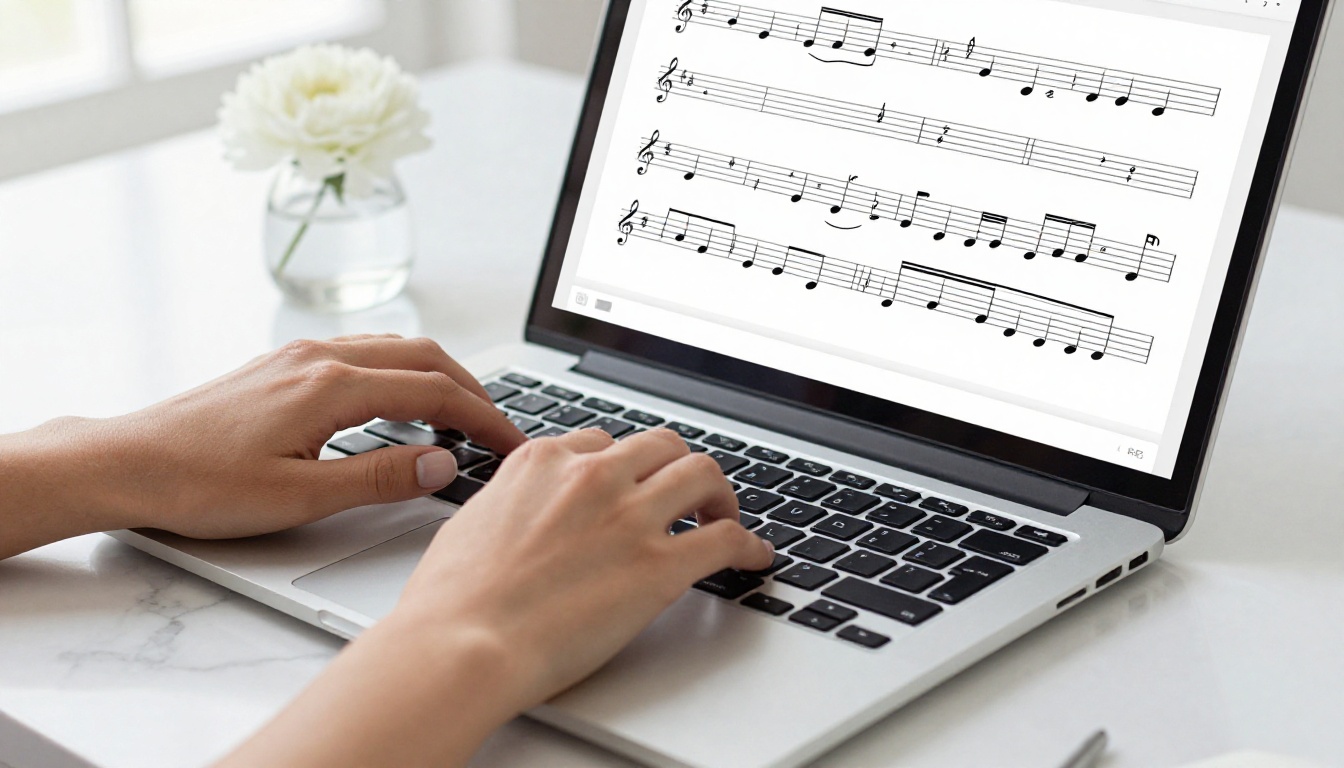
Use professional notation software to create your scores. Sibelius and Finale are the industry standard with consistently clean output. MuseScore (free) produces surprisingly professional results with proper settings. Dorico delivers exceptional engraving quality. Whatever you use, export PDFs with proper margins, clear stave spacing, and readable font sizes. Include your name, copyright notice, and a website or contact on every page.
Preview Pages
Every listing needs a preview. Show one or two pages of the actual notation so buyers can assess difficulty level and arrangement quality before purchasing. Hiding the content creates hesitation. Showing it builds confidence. Listings with visible previews consistently convert at a higher rate than those without.
Title Pages and Branding
A professional title page with the piece name, your name or composer brand, difficulty level, and instrumentation signals that you take your work seriously. It is the difference between "some PDF I found online" and "a published arrangement." Invest 30 minutes in creating a clean, reusable template you can apply to every piece.
Sell Your Sheet Music as a Digital Flipbook
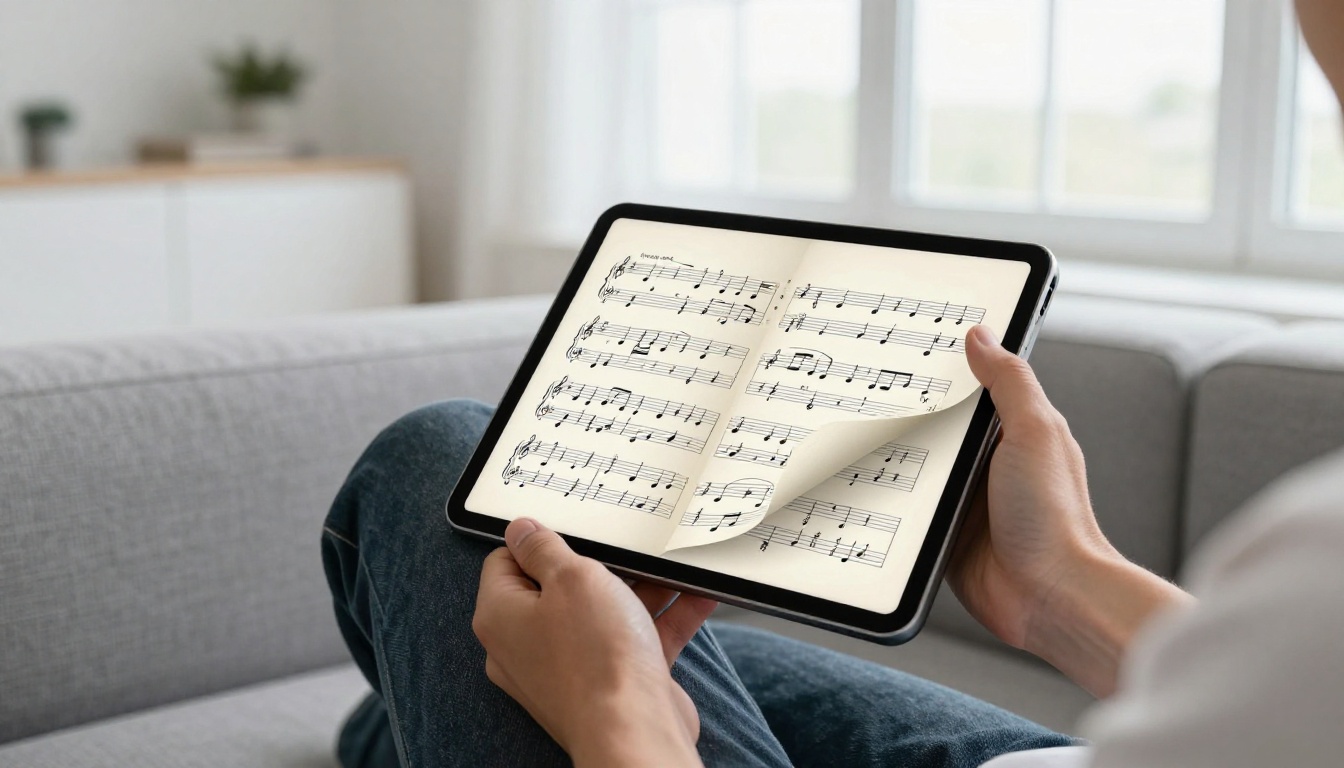
One of the most underused strategies for selling and showcasing sheet music online is converting your PDFs into interactive digital flipbooks. Instead of a static PDF preview, buyers can flip through your score page by page in any browser — experiencing the full layout and feel of the arrangement before they buy. It removes friction, builds trust, and makes your work look immediately more polished than everything else in the marketplace.
Flipbooks AI makes this straightforward. You upload your PDF, and within minutes you have a polished, page-turning digital publication ready to embed anywhere: your website, your Gumroad listing, your email newsletter, or your social media bio link.
How to Publish Sheet Music as a Flipbook
Here is exactly how to set it up:
-
Create your account: Visit Flipbooks AI and sign up. No credit card required to start.
-
Upload your PDF: Click "Create Flipbook" and upload your sheet music PDF. The platform accepts any page count, and conversion completes in under 60 seconds for most scores.
-
Customize the appearance: Add your composer name or brand logo, choose a background color that complements your score aesthetic (white or cream works beautifully for sheet music), and enable the page-flip sound for a tactile, realistic feel.
-
Set sharing preferences: Generate a shareable link for embedding in your sales page, or use the embed code to place the flipbook directly in your website or marketplace listing. For exclusive preview content, enable password protection so only paying customers access the full score.
-
Share across channels: Copy the direct link for social media, paste the embed code into your website or sales funnel, and include it in your email newsletter. A flipbook preview converts casual browsers into buyers far more effectively than a static image.
-
Track performance: On the Professional plan, you get detailed analytics showing how many people viewed your flipbook, how far they read, and lead generation tools to capture contact information from interested buyers.
✅ Best practice: Create one flipbook per collection or bundle. A 10-piece holiday bundle as a flipbook lets buyers flip through all 10 pieces before purchasing. You are giving them a free sample that sells the whole collection.
Key Flipbooks AI features for composers and music publishers:
- No watermarks, ever
- Unlimited flipbooks on Standard plan and above
- Password protection for exclusive buyer-only previews
- Embed video and audio directly (add your performance recording inside the flipbook)
- Mobile-responsive design, works perfectly on phones and tablets
- Offline downloads available
- Custom branding to match your composer identity
For publishing full method books and educational collections, the Interactive E-Book Publisher and E-Book Flipbook Generator are purpose-built. For showcasing a portfolio of original compositions, the Digital Portfolio Creator is the right tool. Browse all flipbook tools to find what fits your publishing workflow.

Building an Audience Before You Sell
The composers making consistent income from sheet music are not just listing and hoping. They have built audiences who trust them before they ever ask for money. This does not take years. It takes consistency.
YouTube Is Your Best Traffic Source
Record yourself performing each arrangement and upload it. YouTube videos rank in Google search. Someone who finds your "Easy Piano Version of X" video and loves it will click the link in your description to buy your arrangement. This pipeline from video to buyer is the most reliable free traffic source for sheet music sellers, and it compounds over time as your video library grows.
Social Media That Actually Converts
- Instagram and TikTok: Short performance clips, "how to play" snippets, behind-the-scenes arranging moments
- Facebook groups: Music teacher communities, piano parent groups, church musician networks are highly active buying communities
- Pinterest: Sheet music title pages and flipbook previews perform well on Pinterest's visual search engine
Email List Building
An email list of 500 engaged buyers beats 50,000 social media followers for actual sales. Offer one free arrangement in exchange for an email address. When you release new music, that list buys on day one, which triggers marketplace algorithms to show your listing to even more people.
SEO for Sheet Music Listings
Every platform listing and every page on your website is a potential search result. Optimized listings earn passive traffic indefinitely. This is one of the highest-leverage activities you can do because you do the work once and it pays for years.
Title Optimization
Include the song name, instrumentation, and difficulty in every title. The difference is significant:
| Weak Title | Strong Title |
|---|
| "Happy Birthday Arrangement" | "Happy Birthday Easy Piano Sheet Music Beginner PDF" |
| "Canon in D" | "Canon in D Simplified Piano Arrangement Beginner Sheet Music" |
| "Christmas Collection" | "10 Easy Christmas Piano Arrangements Beginner Bundle PDF" |
Description Writing
Your listing description should answer six questions: Who is this for? What is included? What format? How many pages? What difficulty? Can I see a preview? Answer all six and your conversion rate climbs significantly. Write in plain language, not marketing language. Buyers are scanning quickly.
💡 Use the actual phrases buyers type. "Easy piano sheet music PDF" and "printable piano arrangement" are search terms buyers use constantly. Include them naturally in titles and descriptions.
Licensing and Copyright: What You Need to Know
This is the part most composers skip until it becomes a problem.
Original Compositions
If you wrote the music entirely yourself, you own it, and you can sell it freely. Register your copyright for full legal protection, though copyright exists automatically upon creation in most countries.
Arrangements of Existing Songs
If you are arranging someone else's composition, you need a mechanical license if the song is under copyright. Contact the publisher directly or use services like Easy Song Licensing. Songs published before 1928 in the US are generally in the public domain and free to arrange and sell without licensing. Classical repertoire, including Bach, Beethoven, Chopin, and Schubert, is almost entirely public domain and represents enormous selling opportunity with a built-in audience of students and teachers.
⚠️ Do not sell unlicensed arrangements of copyrighted songs. Platforms actively remove these listings, and publishers send takedown notices. The risk to your account is not worth it.
3 Mistakes Most Composers Make
Understanding what not to do saves months of wasted effort.
1. Waiting Until the Catalog Is Large Enough
There is no magic catalog size that makes starting feel right. Begin listing with 5-10 pieces. You learn what sells faster by selling than by preparing. Your first 50 sales teach you more than any research.
2. Skipping the Performance Recording
A listing with a performance recording, even a simple phone recording of decent quality, consistently outsells identical listings without one. Buyers want to hear what they are buying. Always include audio or a video link.
3. Never Revisiting Old Listings
A listing you created two years ago with a weak title and no preview is quietly underperforming. Audit your catalog quarterly. Update titles, add previews, refresh descriptions. Old listings with better optimization start earning again.

Sheet Music as Passive Income: What It Actually Looks Like
The goal is a catalog that earns while you are doing other things. Here is what that looks like in practice.
The Volume and Quality Balance
A catalog of 10 well-optimized pieces might earn $200 to $400 per month. A catalog of 100 pieces, each properly presented with previews and recordings, can earn $2,000 to $5,000 per month. Volume compounds over time because each new piece adds search surface area and gives existing buyers more to purchase from you.
Seasonal Planning
Plan releases around seasonal demand. September and October bring back-to-school and recital season buying. November and December are the biggest buying season for sheet music by a wide margin — start preparing holiday arrangements months in advance. April and May see spring recital and graduation season. Releasing into high-demand windows accelerates early sales and signals to marketplace algorithms that your work is popular.
Recurring Revenue Options
Beyond one-time purchases, consider subscription models: a monthly new arrangement delivered to email subscribers, Patreon tiers granting access to your full catalog, or licensing your arrangements to music schools or publishers for ongoing royalties. These models smooth out the peaks and valleys of seasonal selling.
Where to Start Right Now
You do not need to be on every platform, have a polished website, or have a catalog of 100 pieces to begin. Here is the minimal viable starting point that actually works:
- Select or arrange 5-10 of your strongest pieces in a consistent style or difficulty level
- Export clean PDFs with proper formatting, margins, and a professional title page on each
- Create a Flipbooks AI account and convert each PDF into an interactive flipbook preview
- List on one marketplace (Gumroad for maximum royalties, Sheet Music Plus for traffic)
- Record a short performance video for each piece, even on your phone
- Post each video on YouTube with a description that links directly to your listing
That loop — arrange, convert, list, record, publish — is the repeatable system that builds a sheet music business. Every week you run it, the catalog grows and the passive income compounds.
The sheet music market rewards composers who show up consistently, present their work with care, and make buying easy. Every piece you publish is a small business working on your behalf, 24 hours a day, to anyone in the world with an internet connection.
Ready to present your music the way it deserves? Create your first flipbook on Flipbooks AI and see how professional your scores look with interactive page-turning previews. Check pricing plans to find the right fit, or browse all publishing tools built for digital content creators.



