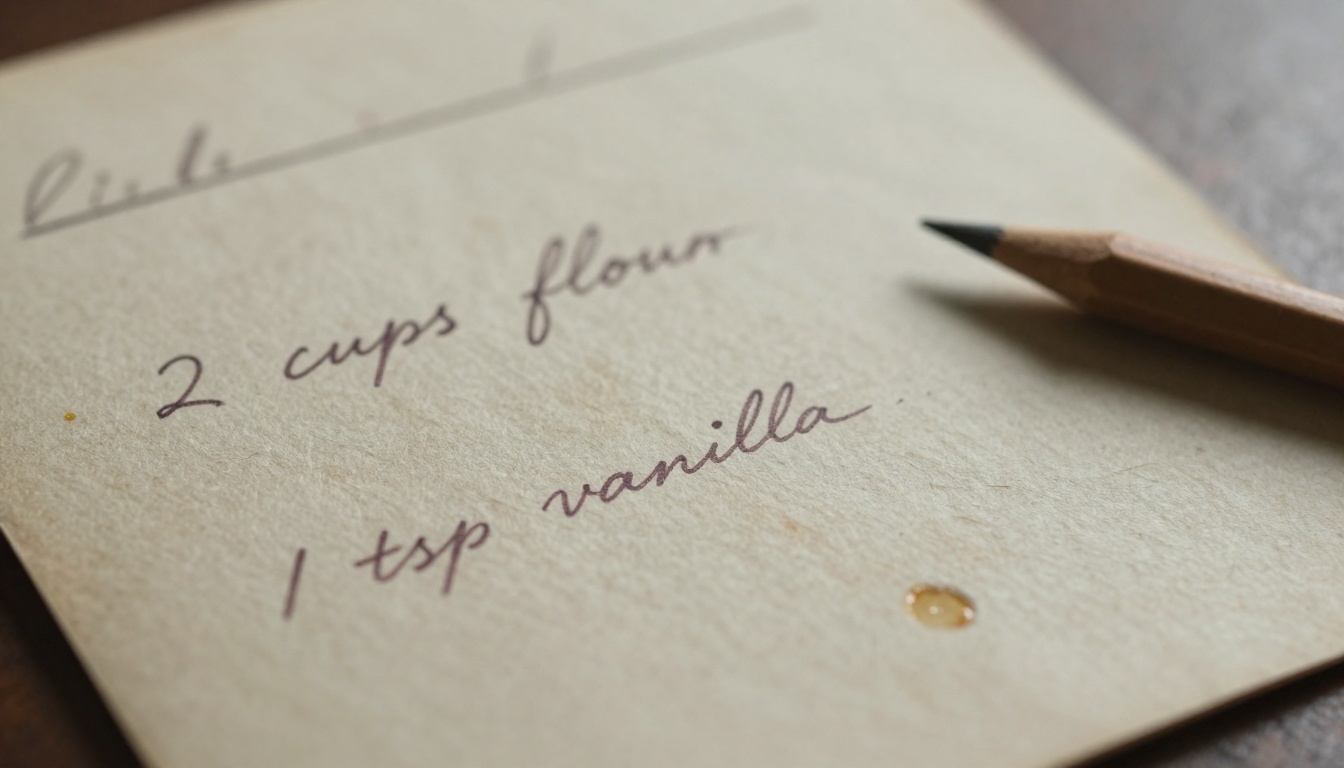
Those old recipe notes tucked in your grandmother's tin box carry more than measurements. They hold the smell of her kitchen, the handwriting that loops just so around "1 tsp vanilla," and the quiet authority of a cook who never needed to double-check anything. Turning those notes into a digital recipe flipbook is one of the most meaningful projects you can do for your family, and with Flipbooks AI, it takes far less effort than you'd expect.
Why Family Recipes Fade Faster Than You Think
The slow disappearance nobody notices
Recipe cards get water stained. Notebooks get lost in moves. The aunt who kept everything in her head passes away, and suddenly a dozen dishes nobody else can quite replicate are just gone. This isn't a rare story. Most families lose at least a generation of cooking knowledge simply because no one thought to preserve it in a durable format.
Paper degrades. Ink fades. Handwriting that was perfectly legible to the person who wrote it becomes a puzzle to everyone else twenty years later. A card stained with decades of cooking sessions may feel precious now, but the information on it is fragile.
What a digital flipbook actually saves
Digitizing your family recipes doesn't just create a backup copy. It creates something shareable, searchable, and beautiful. A recipe flipbook is a living document that can travel across the world instantly, be bookmarked, printed on demand, and passed down without any degradation in quality.
The difference between a scanned PDF and a proper flipbook is substantial. A flipbook format mimics the experience of flipping through a real book, page by page, with smooth animations and a tactile feel that a flat document simply cannot replicate. It also means your family can read it on any device without needing special software.
Gathering Everything Before You Digitize
Taking stock of what you have
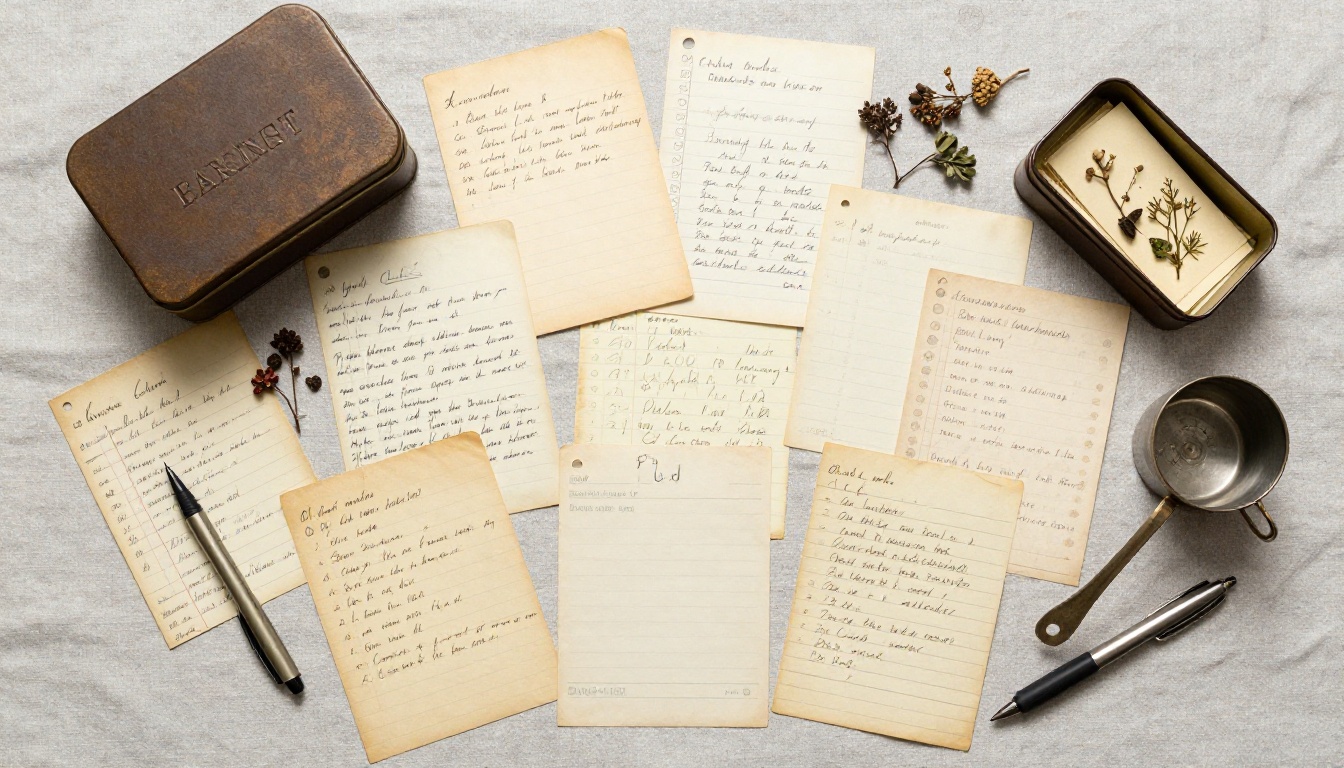
Before you open any app or scanner, spend time physically collecting everything. Old recipe notes tend to live in more places than you'd expect:
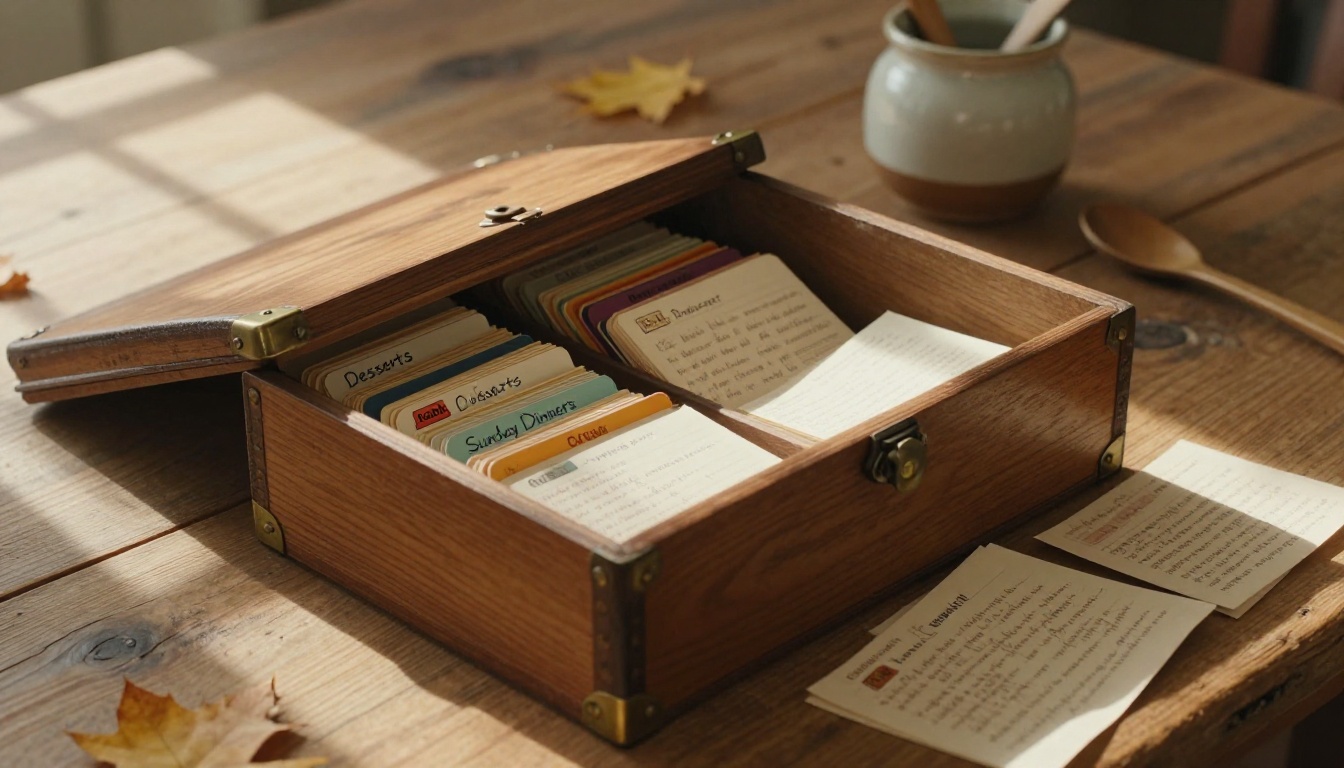
- Recipe card boxes with tabbed sections
- Handwritten notebooks from grandparents or great-grandparents
- Newspaper clippings tucked inside cookbooks
- Napkin notes and loose papers in kitchen drawers
- The backs of envelopes where someone jotted quantities mid-cook
- Old cookbooks with handwritten modifications in the margins
Don't underestimate the margins. Some of the best family recipe adaptations live in the margins of store-bought cookbooks, where someone adjusted the spice levels or crossed out an ingredient they never liked.
Sorting by category before you scan
Sorting before scanning saves a significant amount of time during layout. A simple sorting system that works well:
| Category | What Belongs Here | Typical Count |
|---|
| Breakfast | Pancakes, egg dishes, porridge, breads | 5-15 |
| Soups & Stews | Broths, chowders, slow-cooker recipes | 8-20 |
| Main Dishes | Meat, poultry, vegetarian mains | 15-30 |
| Side Dishes | Salads, vegetables, grains | 10-20 |
| Desserts | Cakes, cookies, pastries, puddings | 10-25 |
| Sauces & Preserves | Jams, pickles, condiments | 5-15 |
| Holiday Specials | Seasonal recipes tied to family traditions | 5-20 |
💡 If a recipe appears in multiple versions (your grandmother's version, your mother's adjusted version), keep both. Showing the evolution of a dish is one of the most interesting things a family recipe flipbook can do.
Scanning vs. Photography: Which Method Is Right
Two real approaches compared
Both scanning and photography work for digitizing handwritten recipes, but they produce different results and suit different situations.
| Method | Best For | Quality | Speed | Equipment Needed |
|---|
| Flatbed Scanner | Flat cards, uniform paper | Highest resolution | Slow (1 card at a time) | Flatbed scanner |
| Phone Camera App | Quick capture, travel | High (modern phones) | Fast | Smartphone |
| Document Scanner App | Bulk scanning, auto-crop | Very good | Medium | Smartphone |
| Professional Scanning Service | Large collections, rare documents | Archival quality | Fast (outsourced) | None |
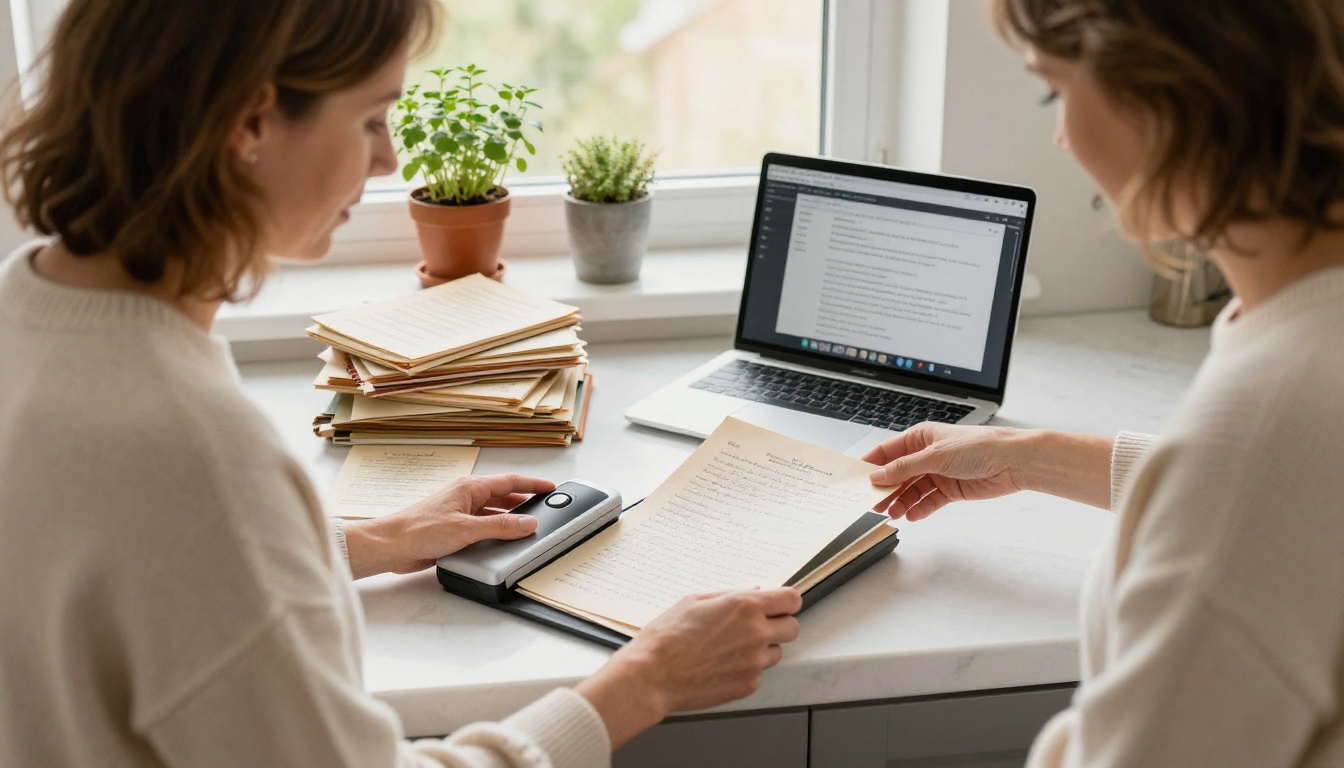
For most family collections under 100 cards, a flatbed scanner at 300-600 DPI gives you the cleanest results. Apps like Adobe Scan or Microsoft Lens can handle the job quickly if you have a modern smartphone and good lighting.
⚠️ Avoid scanning at less than 300 DPI. Low-resolution scans look fine on screen but print poorly, and you will almost certainly want to print at least a few copies.
When photography is the better call
Some documents are too fragile or too bulky to place on a scanner. Hardbound notebooks with thick pages can be damaged by the pressure of a flatbed lid. In these cases, a smartphone camera in good natural light, placed directly overhead on a flat surface, gives you excellent results with no physical risk to the original.
Building Your Recipe Flipbook Layout
Choosing a structure that works
There is no single right structure for a family recipe flipbook, but some patterns work consistently well:
- Chronological by generation: recipes attributed to great-grandparents first, then grandparents, then parents
- Categorical by meal type: the most practical for daily cooking use
- Seasonal: organized by the time of year each dish is made
- Hybrid: categorical within each generation's section
For most families, a hybrid approach feels most natural. It honors the people behind the recipes while keeping the collection usable as an actual cooking reference.
The pages your flipbook needs beyond recipes
A recipe flipbook becomes a proper family heirloom when it includes more than just recipes. Consider adding:
- A family food history introduction (one or two pages about where your culinary traditions come from)
- Brief notes about who contributed each recipe and when
- Old photos of family members cooking or of dishes at family gatherings
- A conversion table for measurements, especially if older recipes use non-standard quantities
- An index at the back, sorted alphabetically
✅ Write a short memory note beneath each recipe. Something like "This was Nana Rosa's Christmas morning specialty. She always doubled the cinnamon." These details are what transform a recipe collection into a memoir.
How to Create Your Recipe Flipbook on Flipbooks AI
Flipbooks AI offers a dedicated Recipe Book Flipbook tool built precisely for this kind of project. Here is the full process from start to finish:
1. Prepare your PDF
Before uploading, compile all your recipes into a single PDF document. Use any word processor or design app you prefer. Include your photos, sorted sections, and title pages, then export as a PDF file.
2. Sign up for your account
Go to flipbooksai.com/account and sign up. No credit card is required to start.
3. Upload your PDF
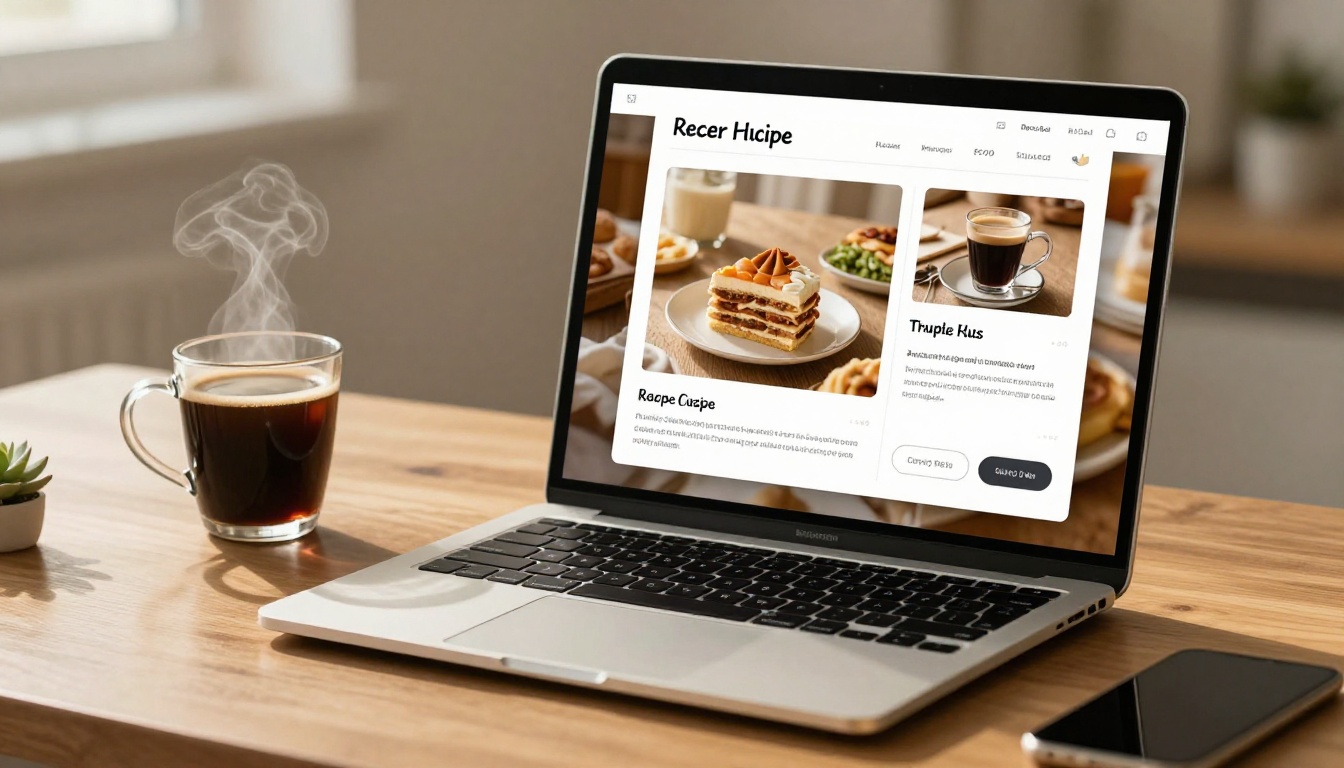
Click "New Flipbook" and upload your PDF. The platform converts it automatically into a page-turning flipbook within seconds. Page count can be anywhere from a few pages to hundreds.
4. Customize the look
This is where your flipbook stops looking like a generic document and starts looking like a real family heirloom:
- Set a header image (use one of your scanned recipe card photos, or a photo of the original tin box)
- Choose background colors that match your family's aesthetic (warm cream tones work beautifully for vintage recipe collections)
- Add a title page with the family name and the years the collection spans
- Enable page flip animations for the most authentic book-reading experience
5. Add multimedia (optional but powerful)
If you have any family cooking videos, short clips of someone demonstrating a folding technique or a special stirring method, these can be embedded directly into the flipbook pages. This is where a digital format genuinely surpasses print.
6. Set privacy settings
For a family recipe collection meant only for family members, use password protection to keep the flipbook private. Share the link and password in a family group chat or email thread.
7. Share the link
Your flipbook gets a permanent, shareable link. Send it to every family member. It works on phones, tablets, and desktop computers with no app required.
💡 Create the flipbook once and share it at a family reunion, holiday gathering, or as a birthday gift. The Recipe Book Flipbook tool makes it easy to update and re-share whenever you add new recipes.
Sharing Across Your Whole Family
Digital options that actually reach everyone
One of the biggest advantages of a flipbook over a PDF is how easily it travels. Here is a comparison of sharing methods:
| Sharing Method | Works On | Password Protected | Printable | Best For |
|---|
| Direct link (browser) | All devices | Optional | Yes (via browser) | Most family members |
| Embedded in website | Desktop browsers | Optional | Limited | Family websites or blogs |
| QR code | Smartphones | Optional | Yes (print the QR) | Physical events, weddings |
| Offline download | Any device, offline | No | Yes | Family members with limited internet |
Password protection is a feature worth using for a family recipe flipbook. It keeps the collection within your family circle and feels more special when recipients know they are receiving exclusive access.
Making it a gift that lands well
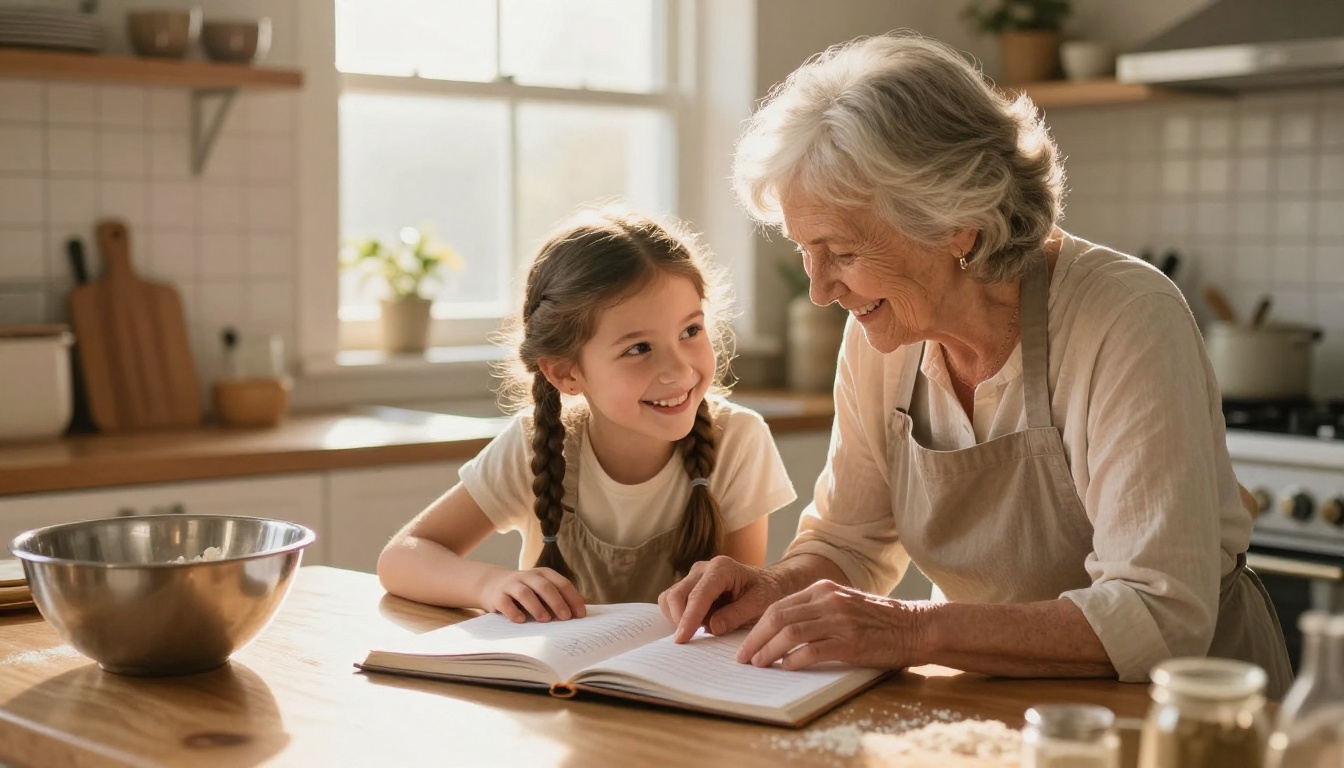
The most effective way to share a family recipe flipbook as a gift is to pair the digital link with a personal message. Write a short note explaining how you assembled the collection, who contributed recipes, and what the project meant to you. A flipbook link sent without context is just a link. The same link sent with a heartfelt note becomes something that gets saved and returned to for years.
For family members who are not comfortable with digital formats, Flipbooks AI supports offline downloads, so you can save and print the whole thing through any standard browser print function.
What Makes a Recipe Flipbook Actually Good
The details that separate ordinary from exceptional
A lot of family recipe collections get assembled and then sit unused. The ones that get opened regularly share a few traits:
- Readable formatting: Large enough text, clear ingredient lists separated from method steps
- Photos where possible: Even a simple photo of the finished dish makes a recipe feel more inviting
- Accurate attributions: Knowing that a cookie recipe comes from your great-grandmother makes you more likely to try it
- An honest index: A table of contents at the front is the single most practical addition you can make
Handling incomplete or unclear recipes
Old recipes often have gaps. "A handful of flour" is not a measurement. "Cook until done" is not a time. When you encounter incomplete instructions, you have two solid options:
- Test the recipe yourself and fill in the missing details from your own experience
- Leave the original language and add a note explaining that the quantities are approximate
Both are valid. The second option preserves more of the original voice, which has its own historical value. Include a small note like "original recipe uses approximate quantities" so cooks know what to expect.
Flipbooks AI Plans at a Glance
Depending on how widely you want to share your family recipe flipbook, different plans offer different capabilities. Here is what each tier includes:
| Feature | Free | Standard | Professional |
|---|
| Number of flipbooks | 1 | Unlimited | Unlimited |
| Watermark | Yes | No | No |
| Password protection | No | Yes | Yes |
| Custom branding | No | Yes | Yes |
| Analytics | No | No | Yes |
| Lead generation | No | No | Yes |
| Offline downloads | No | No | Yes |
| Embedded video/audio | No | Yes | Yes |
| Mobile-responsive | Yes | Yes | Yes |
For a personal family project, the Standard plan covers everything most people need. For a larger project, such as a family reunion cookbook being distributed to 200 relatives, the Professional plan's analytics and offline download features become genuinely useful. See full details on the pricing page.
💡 If you are creating a flipbook for a one-time event like a family reunion, the Standard plan gives you everything you need at a low monthly cost. You can always upgrade your plan if your needs grow.
Beyond Recipes: Other Things Worth Preserving
The same workflow that produces a recipe flipbook works just as well for other family documents. Once you have the process down, consider:
- Family memoir pages: Short written stories from older family members about significant meals or food memories
- Photo albums from family kitchens: Images of the original kitchen where the recipes were developed
- Letters and notes that reference food or family gatherings
- Handwritten menus from significant family events like weddings or holiday dinners
A recipe collection is often the most natural entry point into a broader family preservation project. Food is the memory people want to return to most, which is why it tends to pull the rest of the archive along with it.
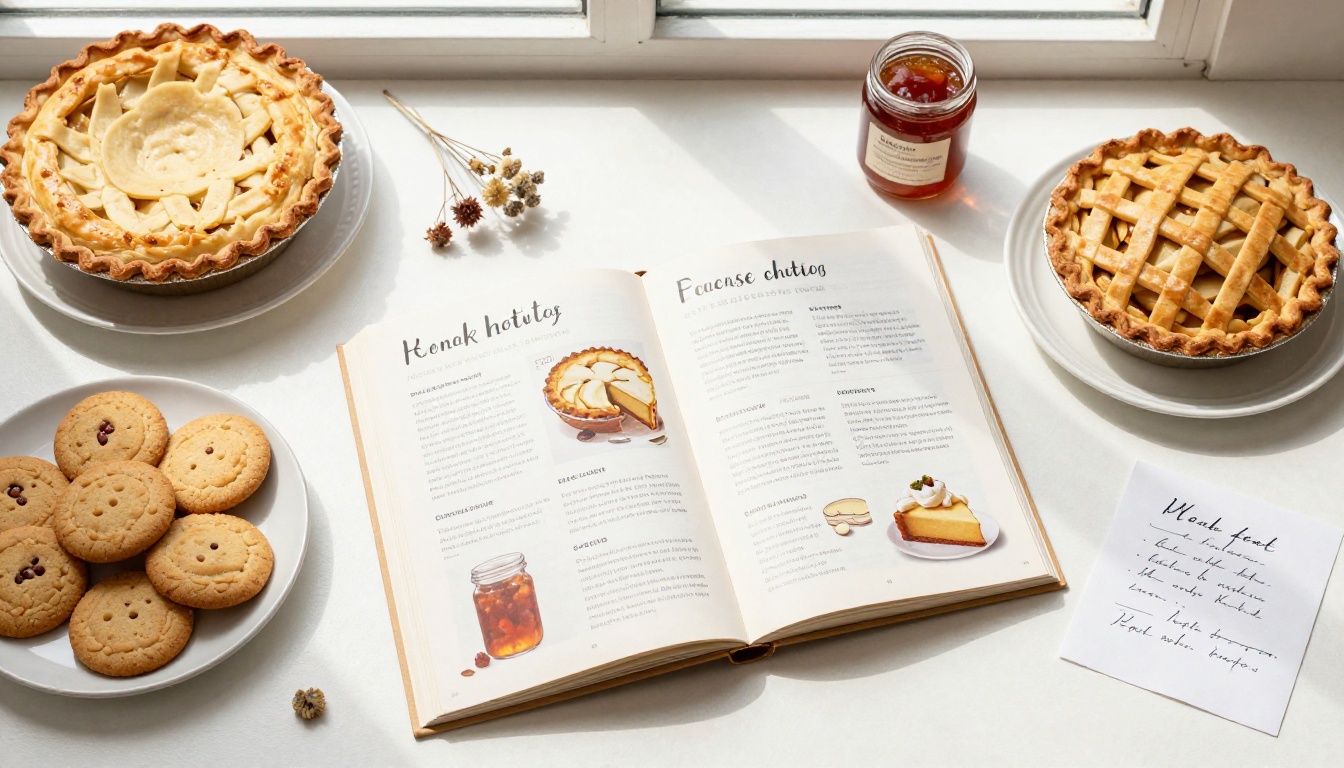
Start Before the Cards Fade Any Further
Every week those recipe cards spend in a tin box is another week the ink fades and the paper thins. The good news is that the process of turning them into a permanent, beautiful digital flipbook is not as time-consuming as it sounds. A single afternoon of scanning, an evening of layout work, and an hour on Flipbooks AI is all most family collections require.
Get started for free on Flipbooks AI today and see how quickly your family's recipes can become something worth keeping forever. Browse all available flipbook tools to find the right format for your project, or compare pricing plans to choose what fits your needs.



