Your stationery collection deserves more than a static PDF buried in a Google Drive folder. Flipbooks AI lets you turn your product catalog into an interactive, page-turning digital experience that buyers actually want to sit with. Whether you run a one-person paper goods studio or a growing stationery brand, the right digital presentation can be the difference between a boutique buyer placing an order and closing the tab.
Why Flipbooks Work for Stationery Brands
Stationery is one of the most visually driven product categories in small business. People buy notebooks, wax seals, and correspondence cards because they love the feel of them. That creates a specific challenge when you're selling online: how do you communicate texture, weight, and craftsmanship through a screen?
A digital flipbook does something a flat product page cannot. It mimics the physical act of browsing. When someone turns a page in your stationery catalog, they're spending time with your brand in a way that feels intentional, not passive. That dwell time matters.
The Problem with Static PDFs
A PDF download is a dead end. Once it's downloaded, you lose all visibility into how it's used. You can't track which pages get the most attention, you can't update it after sending, and you definitely can't embed it cleanly on your website without it opening a new tab and breaking the browsing experience.
A flipbook solves all three. It lives at a URL, updates in real time when you make changes, and embeds directly into any webpage with a single line of code.
What Stationery Buyers Actually Want
Buyers in the stationery space tend to be detail-oriented. They want to see the envelope lining. They want to know if the notebook cover is cloth or vegan leather. They want to compare your collection by color palette before they commit.
A well-built flipbook lets you present that information the way a boutique would: curated, sequential, intentional. Not a grid of product tiles. A story.

What Goes Inside a Stationery Flipbook
Before you build anything, you need to decide what the flipbook is for. The content strategy changes depending on the audience.
| Flipbook Type | Primary Audience | Core Content |
|---|
| Product Catalog | Retail customers | Full product range, pricing, variants |
| Wholesale Lookbook | Boutique buyers, retailers | MOQ info, wholesale pricing, seasonal collections |
| Gift Guide | Holiday shoppers | Curated sets, gift wrap options, price ranges |
| Brand Portfolio | Press, collaborators | Brand story, photography, past collections |
Product Pages That Convert
Each product spread should answer three questions before the reader has to ask: What is it? What does it feel like? Why do I need it?
That means pairing a clean product-on-white shot with a lifestyle image showing the item in context. A wax seal kit photographed against white marble, then again being pressed into an envelope by a hand wearing a linen blouse. The two-image spread communicates both the product detail and the aspiration.
💡 Pro tip: Leave generous white space on your product pages. Stationery buyers equate whitespace with premium positioning. A crowded page signals discount. A breathing layout signals craft.
Lifestyle Photography vs. Flat Lays
Both have a place in a stationery flipbook, but they serve different functions.

Flat lays are your workhorses. They show the full range of a collection in one frame, communicate your color palette clearly, and photograph consistently batch after batch. Shoot them overhead on a neutral surface, controlled window light from one side, minimal props.
Lifestyle shots are your emotional hooks. They show the product being used, in a home, at a desk, in someone's hands. These images do the brand identity work. They answer the question: who is this for?
Brand Story Pages
Don't skip the "about" spread. For stationery brands especially, the origin story matters. Buyers want to know if your notebooks are made with recycled paper, if your wax seals are hand-poured, if you're a one-person studio or a small team. That information builds trust, and trust converts.
Two pages maximum. One strong image. A short, honest paragraph. That's enough.

Shooting Photos That Work in a Flipbook
The biggest mistake stationery brands make when building their first flipbook: they use whatever photos they already have. If those photos were shot vertically for Instagram, they'll look awkward in a horizontal page spread.
Shoot for the Format
Flipbooks display in landscape orientation by default, which means your photography should think in terms of double-page spreads. That's either one wide 16:9 image or two complementary portrait images sitting side by side.
Before your next photoshoot, plan your compositions with the spread in mind. A flat lay that leaves open space on one side can have text overlaid on that space in your design file. A lifestyle shot with room to breathe on the left can pair with a product close-up on the right.
Lighting for Paper Goods
Paper is one of the most difficult materials to photograph well. It's highly reflective under harsh light, washes out easily, and doesn't hold color the same way fabric or ceramic does.
What works: Diffused north-facing window light, or a large softbox positioned at 45 degrees from the surface. The goal is even, directionless light that reveals texture without creating hotspots.
What doesn't: Direct sunlight creating specular highlights on glossy paper, overhead ceiling lights that flatten all texture, mixed color temperatures between window light and artificial light.
⚠️ Warning: Avoid shooting on colored surfaces. Even a slightly warm wooden table will cast a color onto white paper and throw off your whites across the entire flipbook. Use white foam board, marble tile, or grey seamless paper.

How to Create a Flipbook for Your Stationery Brand
This is where it all comes together. The process is straightforward, but the details matter.
Step 1: Build Your PDF in a Design Tool
Canva Pro, Adobe InDesign, or Affinity Publisher all work. Set your document to landscape (A4 or US Letter in landscape mode). Design your pages as you'd like them to appear in the flipbook: product spreads, collection overviews, brand pages, pricing tables.
When you're done, export as a high-resolution PDF (minimum 150 DPI for images, 300 DPI preferred).
✅ Best practice: Keep your file size under 100MB. Larger files upload fine, but they take longer to convert and may slow the viewing experience on mobile.
Step 2: Upload to Flipbooks AI
Go to Flipbooks AI and create your account. The upload process takes less than two minutes.
- Click "New Flipbook"
- Drag and drop your PDF or select it from your files
- Wait for conversion (typically 30 to 90 seconds depending on file size)
- Preview your flipbook in the built-in viewer
The page-turning animation is automatic. You don't need to configure anything to get the core experience working.
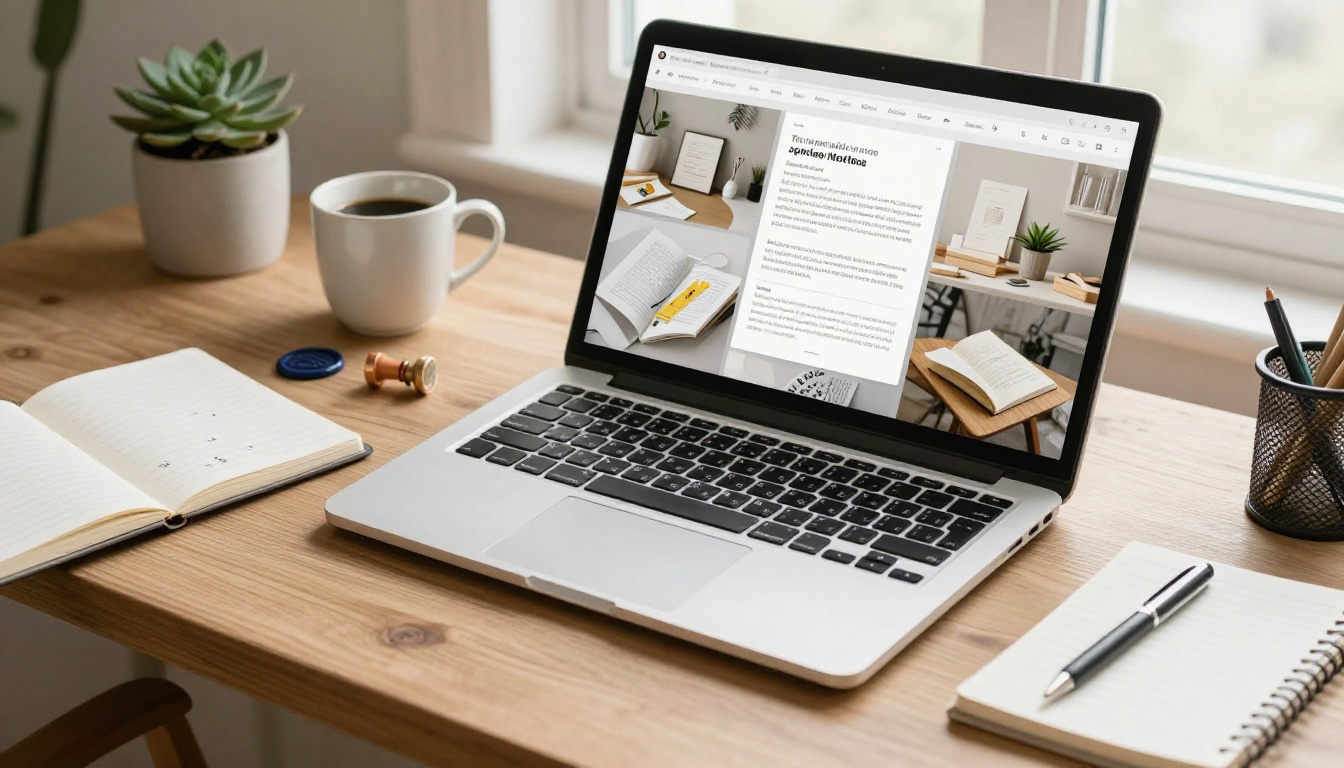
Step 3: Customize Your Brand Settings
This is where your flipbook goes from generic to professional. In the customization panel, you can:
- Set your brand colors for the interface chrome (the controls around the flipbook)
- Upload your logo to appear in the viewer header
- Choose your page flip sound (paper, silence, or subtle click)
- Configure the initial view (single page or double spread)
- Add a background color or texture behind the pages
For stationery brands, keep the interface color neutral. White or very light grey. Let your product photography do the work. A garish interface color competes with your palette.
Step 4: Set Up Sharing and Distribution
Every flipbook gets its own shareable link. From there, you have several options:
Direct link: Share via email, DMs, or a "View Catalog" button on your website. Simple and effective.
Embed code: Copy a single line of HTML and paste it into any webpage. Your flipbook loads inline, no new tab required. Use the Embed Flipbook on Website tool to generate your code.
Password protection: For wholesale lookbooks or private collections, add a password so only your buyers can access it. Available on Standard plan and above.
Analytics: On the Professional plan, you can see exactly how many people viewed your flipbook, which pages they spent time on, and where they dropped off. For stationery brands running seasonal releases, that data is worth its weight.

Flipbooks AI Plan Comparison
| Feature | Free | Standard | Professional |
|---|
| Flipbooks | 1 | Unlimited | Unlimited |
| Watermark | Yes | No | No |
| Custom Branding | No | Yes | Yes |
| Password Protection | No | Yes | Yes |
| Analytics | No | No | Yes |
| Lead Generation | No | No | Yes |
| Offline Downloads | No | No | Yes |
| Embed on Website | Yes | Yes | Yes |
| Mobile Responsive | Yes | Yes | Yes |
For most stationery brands starting out, the Standard plan covers everything you need: unlimited flipbooks, no watermarks, custom branding, and password protection for wholesale decks.
💡 Pro tip: If you sell wholesale and want to track which buyers are actually opening your lookbooks, the Professional plan's analytics pay for themselves in the first season. You'll know which retailer is engaged and which one needs a follow-up call.
Using Your Flipbook as a Lookbook
A stationery catalog and a lookbook are not the same thing. A catalog is transactional. A lookbook is aspirational. The best stationery brands publish both.
Seasonal Collections
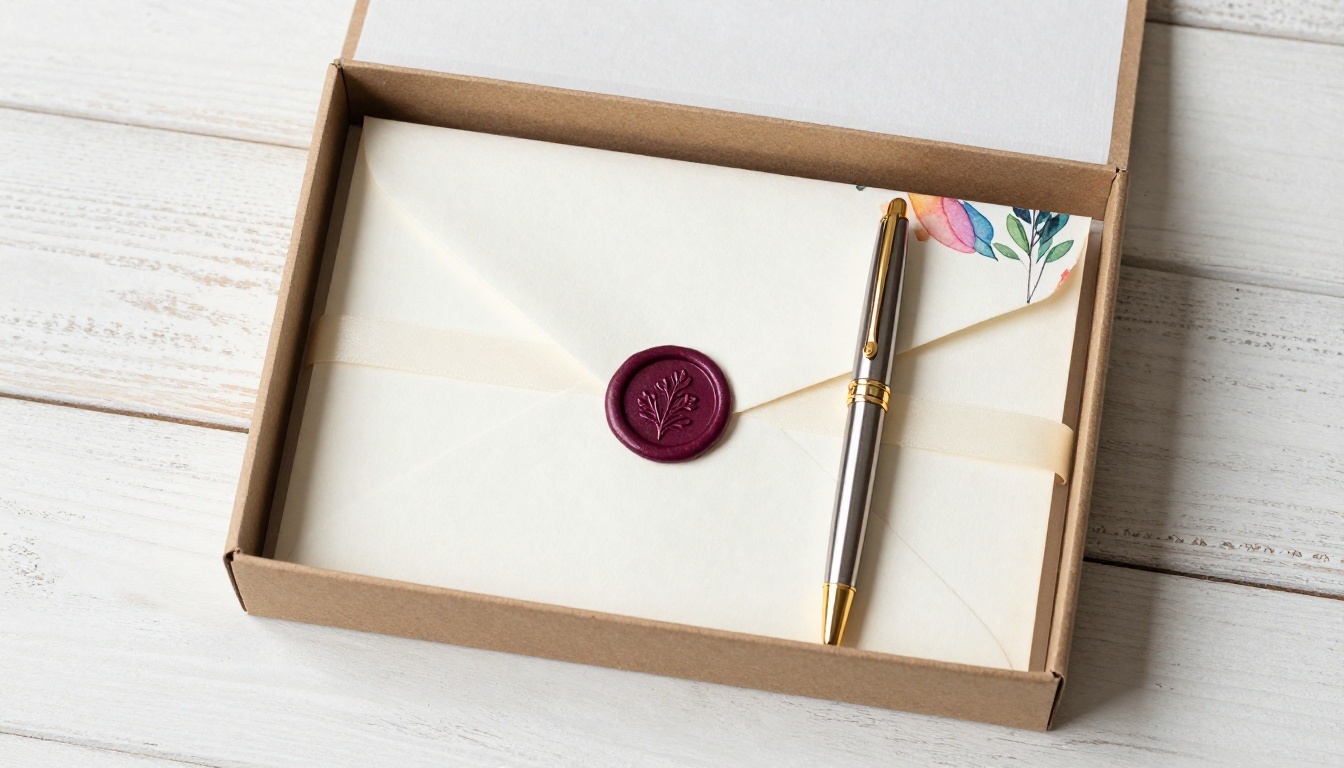
Most stationery brands operate on a seasonal rhythm: holiday collections, spring releases, back-to-school. A dedicated seasonal lookbook, separate from your main catalog, gives you a reason to reach out to your audience with something new every quarter.
Keep seasonal lookbooks tight: 8 to 12 pages maximum. Hero image, collection overview, 3 to 4 product spreads, and a CTA spread at the back with ordering info or a link to your shop. The Interactive Lookbook Designer is built specifically for this format.
Wholesale and B2B Presentations
If you sell to boutiques, gift shops, or hotels, your flipbook does the pitch for you when you're not in the room. A wholesale lookbook should include:
- Your brand overview (two pages, maximum)
- Full product range with SKU codes and available variants
- Wholesale pricing table (or a note directing them to request a price list)
- MOQ and lead time information
- Ordering and payment terms
- Contact information
Password-protect this one. Not all your retail pricing information should be public.
Gift Guides as Standalone Flipbooks
A curated gift guide flipbook is one of the highest-converting assets a stationery brand can publish. Group products by recipient ("For the Journaler", "For the Desk Aesthete", "For the Hostess") and by price point.

These work exceptionally well when embedded on a dedicated "Gifts" page on your website in November and December. The interactive format keeps people browsing longer than a static page would.
Stationery Flipbook Use Cases at a Glance
| Use Case | Flipbook Type | Key Content | Best Audience |
|---|
| Direct-to-Consumer Sales | Product Catalog | Full range, pricing, variants | Online shoppers |
| Wholesale Outreach | B2B Lookbook | MOQ, wholesale pricing, terms | Boutiques, retailers |
| Holiday Campaign | Gift Guide | Curated sets, price points | Gift buyers |
| Press and Media | Brand Portfolio | Story, photography, past work | Journalists, bloggers |
| Launch Announcement | Collection Lookbook | New products, behind the scenes | Email list, followers |
Sharing Your Flipbook Where It Counts
Generating the flipbook is step one. Getting people to see it is step two.
Your Website First
Embed your main catalog on a dedicated "Catalog" or "Collections" page. Add a prominent "View Catalog" button on your homepage. If you run an email list, send the catalog link as its own campaign with a simple subject line: "Our [Season] collection is here."
Social Media
A flipbook link doesn't perform well natively on social platforms because the preview image is usually generic. Fix this by creating a short screen recording of the flipbook turning pages and posting it as a Reel or TikTok with the link in your bio. The visual of pages turning is inherently compelling and stops the scroll.
✅ Best practice: Screenshot 2 to 3 of your most visually striking pages and post them as a carousel with "Full catalog linked in bio" as the caption. This works on Instagram and Pinterest especially well for stationery brands.
Email Marketing
Your email list is your warmest audience. When you release a new season or collection, send the flipbook link as the main CTA in your announcement email. "View the full lookbook" as a button is more compelling than "Shop now" because it feels like an invitation, not a transaction.
The Real Cost of Not Having One
Let's be direct: a stationery brand without a digital catalog in 2027 is leaving money on the table. Boutique buyers are increasingly sourcing new brands digitally, not at trade shows. Press contacts want a brand kit or lookbook they can flip through before deciding to feature you. Gift guides on major blogs almost always link to brands that have polished presentation materials.
The time investment to build your first stationery flipbook is roughly one afternoon, assuming your photography is already done. The PDF to Flipbook Converter handles the technical work. Your job is to curate the story.
Building a second one, for a new season or a wholesale pitch, takes less than an hour once your workflow is established.
Ready to Build Yours
Your stationery brand has a story worth telling in a format that does it justice. Start by designing your first 8 to 12 page PDF, upload it to Flipbooks AI, and have a shareable, embeddable flipbook ready before your next collection drops.
Browse the full list of flipbook tools to find the format that fits your brand best. If you're planning to scale your catalog or add a wholesale arm to your business, compare pricing plans to see which tier gives you the features you actually need.
The stationery market rewards brands that take their presentation seriously. A flipbook is one of the most efficient ways to do exactly that.



