Fashion brands that move product quickly share one thing in common: they show their collections in context before customers ever touch the fabric. A lookbook does exactly that. It places garments in a world the customer wants to inhabit, and that emotional pull is what converts browsers into buyers.
Flipbooks AI has helped hundreds of fashion brands take their lookbooks from static PDFs to interactive, shoppable digital experiences that work on any device. This article breaks down the specific strategies top brands use to build lookbooks that sell, and how you can replicate them for your own collection.
What a Lookbook Actually Does for Sales
Most brands treat lookbooks as a branding exercise. The smart ones treat them as a sales instrument. There is a significant difference.
The Psychology Behind Styled Imagery
When a customer sees a product on a white background, they evaluate it. When they see it styled on a confident model in a sun-lit Parisian apartment, they want it. This is not subtle. Research in consumer psychology consistently shows that context imagery increases purchase intent compared to isolated product shots.
The reason is simple: the brain processes images of people faster than text or object photography. A model wearing a blazer in a recognizable lifestyle scenario triggers a mental simulation. The customer imagines themselves in that scene. Once they are mentally inside the image, the product is already theirs in their mind. The transaction is almost a formality.
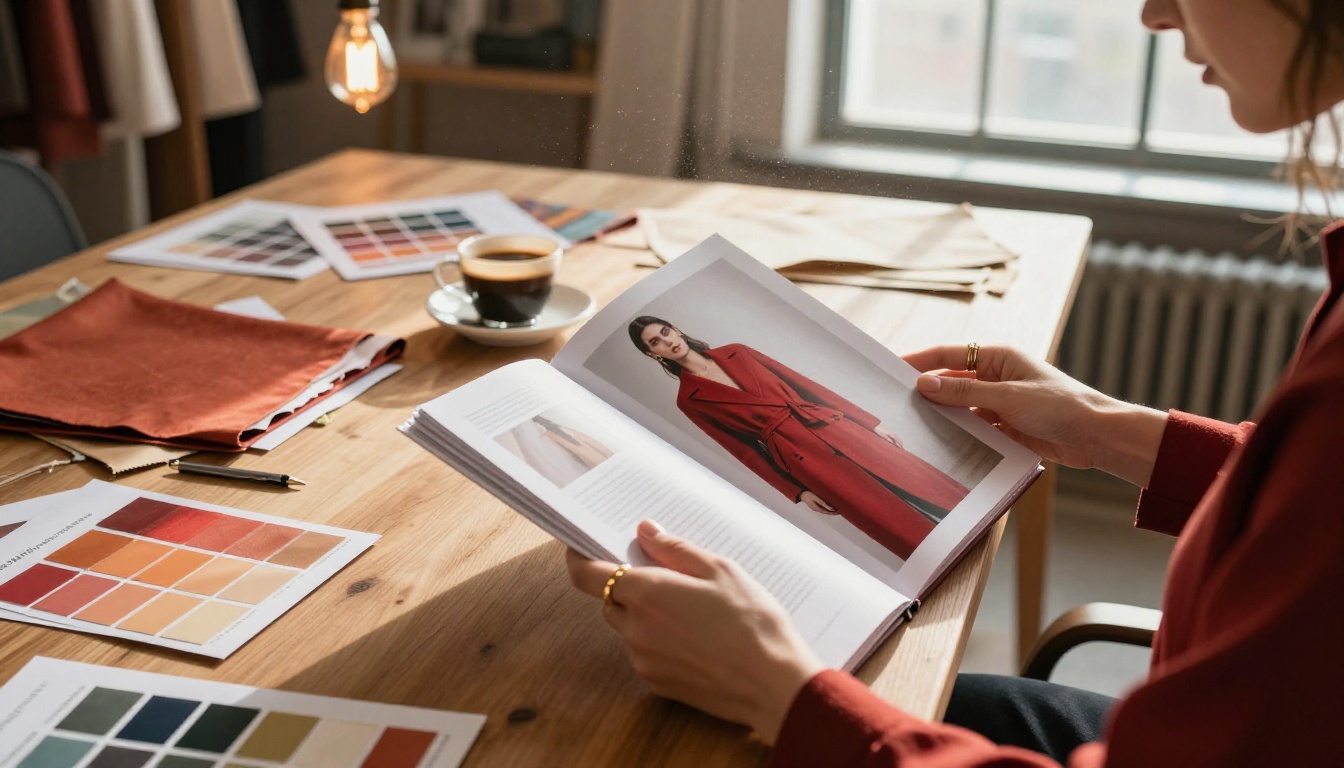
💡 Pro tip: The most effective lookbook images include environmental cues (coffee on a table, a magazine nearby, natural light through windows) that anchor the viewer in a specific moment. Vague studio shots underperform.
Lookbooks vs. Product Pages
Product detail pages answer the question "what is this?" Lookbooks answer "why do I need this?" Both are essential, but they do different jobs.
| Format | Primary Job | When It Works | Weakness |
|---|
| Product page | Inform and convert | When buyer is ready | Cold traffic ignores it |
| Lookbook | Create desire | Top and mid funnel | Hard to act immediately |
| Shoppable digital lookbook | Both simultaneously | Full funnel | Requires good execution |
| Print lookbook | Brand authority | Events, retail, VIP | No tracking, no links |
The shoppable digital lookbook sits at the intersection of editorial and commerce. It tells the story and closes the sale. This is why forward-looking brands are rapidly shifting budget from print production to digital-first lookbook creation.
How Top Brands Structure Their Lookbooks
The brands that consistently sell out their collections use a very deliberate structure inside their lookbooks. It is not random styling.
The Opening Spread
The first two pages set the entire emotional register for what follows. Luxury brands like to open with a strong environmental shot, often landscape or architecture, that establishes the world of the collection before a single garment appears. This is the mood primer. Customers who connect with the opening spread stay longer and scroll further.
The opening should communicate:
- Season and setting (where does this collection live?)
- Tone (serious, playful, romantic, sharp?)
- Customer identity (who is the aspirational version of the buyer?)
Collection Flow and Narrative
The middle section of a lookbook is where most brands underinvest. The best ones treat it like a short film: there is a beginning, a build, and a resolution.
A practical flow structure that works:
- Day looks first (accessible, easy to imagine wearing)
- Transitional pieces mid-book (the connective tissue of a collection)
- Statement pieces in the final third (the emotional peak)
- Occasion wear at the close (evening, formal, aspirational)
This flow mirrors how a customer's excitement builds over a shopping session. Starting with accessible pieces lowers the psychological barrier. By the time they reach the statement coat on page 14, they're already invested.
Calls to Action Inside the Book
Print lookbooks were always passive. Digital lookbooks should not be. Every 4-6 spreads, there should be a moment where the customer can act: a "shop this look" button, a collection page link, or a product code. Without these, you are essentially running a full-funnel ad with no conversion mechanism.
⚠️ Warning: A lookbook with beautiful photography but no calls to action is a missed opportunity. Even one embedded link per spread can increase sell-through rates measurably.

Seasonal Strategy: Timing Is Everything
The brands that extract the most value from lookbooks treat them as part of a seasonal calendar, not a one-off production.
Pre-Season Drops That Build Anticipation
The most effective lookbook drops happen before the collection is available to purchase. This is counterintuitive but extremely well documented in fashion marketing. Releasing a lookbook 2-4 weeks before items are live does several things:
- Builds a wish list effect (customers mentally commit before they can buy)
- Allows buyers to plan (they know what they want when it lands)
- Creates press and social coverage ahead of the launch, amplifying reach
Brands like Toteme, Sezane, and A.P.C. execute this consistently. Their lookbooks feel like editorial magazines, released with enough lead time to build desire before the "add to cart" button goes live.
Mid-Season Lookbooks for Slow Sellers
This is the underused tactic. When specific SKUs are not moving after the initial launch, a targeted "how to style" mid-season lookbook can revive interest. Rather than discounting, you show the product in new context: a different styling angle, a new occasion, a complementary pairing.
A wool coat that is not moving in October might sell aggressively in a November lookbook that styles it for a holiday dinner. The product has not changed. The context has.
Digital Lookbooks Are Outselling Print
The production economics of print lookbooks have never been favorable for independent and mid-size brands. A quality print run costs thousands before you account for distribution. And once it is out, you cannot change a single page.
Why Interactive Beats Static
Digital lookbooks solve every limitation of print while adding capabilities print could never have:
- Instant updates: Change pricing, add sold-out notices, update links
- Embedded video: Show fabric movement, styling tutorials, runway clips
- Analytics: See which pages viewers spend the most time on
- Password protection: Exclusive previews for wholesale buyers or VIP customers
- Global distribution: Zero shipping cost, zero print waste
✅ Best practice: Send your wholesale buyers a password-protected digital lookbook before your trade show. They arrive already knowing what they want to order.
Shoppable Lookbooks and Conversion Data
A shoppable digital lookbook is one where product images link directly to product pages. This sounds simple, but the implementation matters enormously. The links must feel natural inside the editorial flow, not forced.
The approach that works best: embedded product cards that appear when a viewer taps or hovers on a look, rather than visible buttons overlaid on the imagery. Keep the editorial experience intact; let the commerce layer be one interaction away, not on top of the art.
| Lookbook Type | Avg. Time on Page | Click-Through Rate | Best For |
|---|
| Static PDF | 1.2 min | N/A | Print-first brands |
| Digital flipbook (no links) | 2.8 min | N/A | Awareness only |
| Interactive digital lookbook | 4.1 min | 18-24% | DTC ecommerce |
| Shoppable lookbook with embeds | 5.3 min | 31-38% | Full-funnel conversion |
How to Create Your Fashion Lookbook with Flipbooks AI
Flipbooks AI is specifically built for exactly this use case. The Interactive Lookbook Designer and the Lookbook Flipbook Builder tools make it straightforward to go from a designed PDF to a fully published, shareable digital lookbook in minutes.
Here is how to do it:
Step 1: Design Your Lookbook as a PDF
Before anything goes digital, the editorial work has to be done. Use your design tool of choice (Adobe InDesign, Canva, Figma) to build your lookbook at full quality. Include:
- Full-bleed lifestyle and model photography
- Product detail insets
- Collection narrative text (short, punchy)
- Consistent typography and color palette
Export as a high-resolution PDF. This is the source file for everything that follows.
Step 2: Upload to Flipbooks AI
Create your account and navigate to the upload section. Drag and drop your PDF directly. Flipbooks AI converts each page automatically into a high-fidelity digital spread with a realistic page-turn effect.
The conversion takes seconds regardless of page count. Your fonts, colors, and image quality are preserved exactly.
Step 3: Customize Branding and Interactivity
Once converted, the real power of the platform becomes available:
- Apply your brand colors to the viewer interface (no Flipbooks AI watermarks ever)
- Add embedded links on specific product areas so viewers can click through to shop
- Embed video clips on relevant pages (runway footage, model movement)
- Set a custom domain for a fully branded URL
- Enable password protection for wholesale-only or pre-launch previews
💡 Pro tip: Use the analytics dashboard (available on the Professional plan) to see exactly which pages your viewers spend the most time on. This is invaluable data for planning future shoots.
Step 4: Share, Embed, and Distribute
Flipbooks AI gives you multiple distribution options that print simply cannot match:
- Direct link: Share via email, SMS, social bio links
- Embed code: Drop your lookbook directly on your website or campaign landing page
- QR code: Print on packaging, in-store signage, or event materials to bridge physical and digital
- Offline download: Allow VIP buyers to save a copy for reference
The Fashion Catalog Creator tool is also worth using if your lookbook doubles as a product catalog for wholesale buyers. It handles multi-product layouts with SKU references and order-friendly formatting.
What Separates a Lookbook That Sells from One That Sits
After all the planning and production, there are three specific mistakes that consistently prevent lookbooks from delivering sales results.
Inconsistent Styling Across the Book
The viewer needs to feel a single coherent vision throughout. When different looks have different lighting, different tones, or different model energy, the brain registers dissonance and trust in the brand drops. Every image should feel like it belongs in the same afternoon.
This is a pre-production problem, not a post-production one. It starts in the creative brief, before a single shutter clicks.
No Price or Product Reference
A lookbook that shows beautiful clothes but gives no indication of price or where to buy them is an art project. Even the most editorial brands include a small product index at the back. The viewer who falls in love with a coat needs to know what it costs and where to find it, or that desire evaporates within minutes.
Missing the Mobile Viewer
More than 60% of fashion content is now consumed on phones. A lookbook designed for a 14-inch screen and never tested on a 6-inch screen will frustrate the majority of its audience. Digital lookbooks built on Flipbooks AI are fully mobile-responsive by default, with touch-based page turns that feel native.
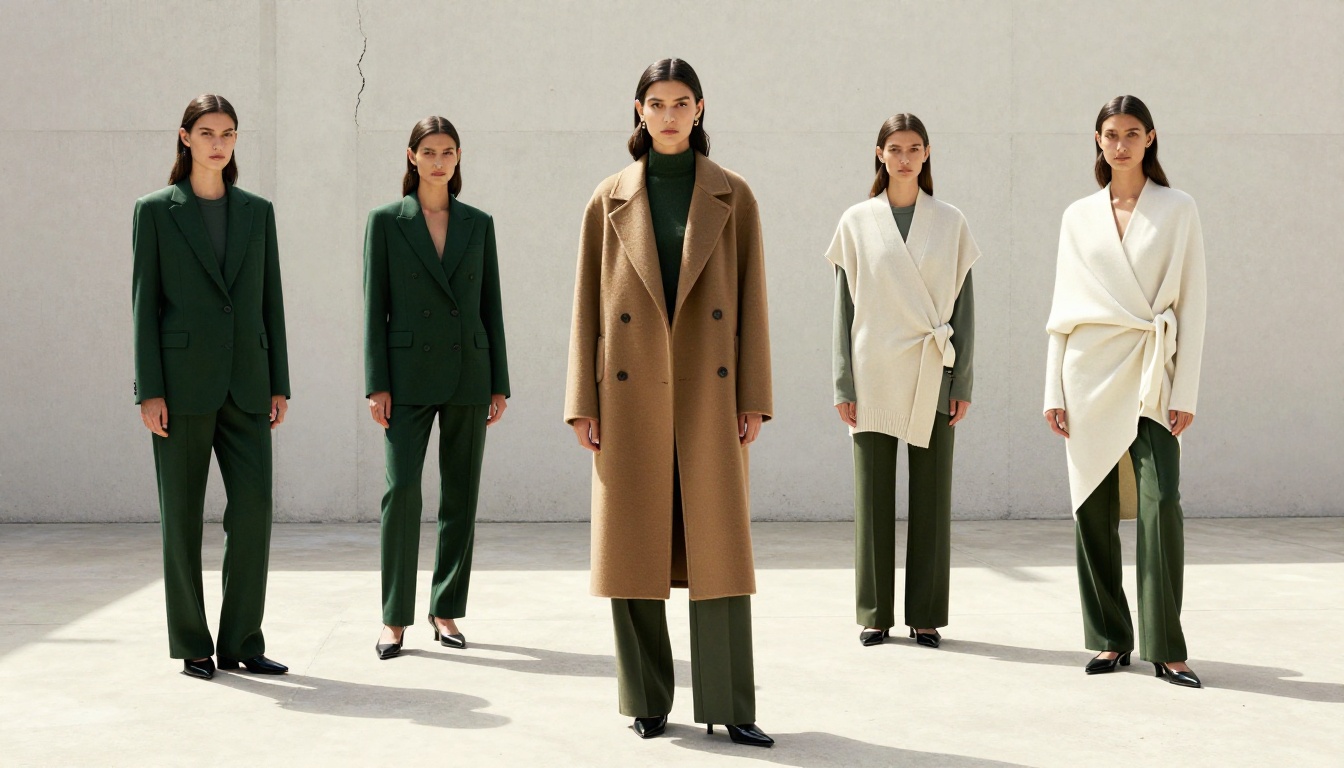
Not every brand needs the same lookbook format. The right choice depends on where you are in your growth stage and who you are selling to.
| Brand Stage | Recommended Format | Why | Flipbooks AI Tool |
|---|
| Early-stage DTC | Digital lookbook, no print | Low cost, trackable | Lookbook Flipbook Builder |
| Growing multi-channel | Digital primary, print for events | Works across retail and online | Interactive Lookbook Designer |
| Wholesale-focused | Password-protected digital B2B | Exclusive buyer previews | Fashion Catalog Creator |
| Established luxury | High-gloss print plus digital companion | Prestige plus accessibility | Both tools combined |
| Pop-up or event retail | QR-linked digital | Zero print cost at scale | PDF to Flipbook Converter |
The Analytics You Should Actually Track
One of the most overlooked benefits of a digital lookbook is the data it generates. Print is completely blind. Digital gives you clarity.
The metrics that matter for fashion brands:
- Page abandonment rate: Which spread do viewers leave on? That page needs work.
- Time per spread: High time usually means either strong interest or confusion. Know which.
- Link click-through: Which product links are getting clicked? These are your hot items.
- Device split: What percentage mobile vs. desktop? Informs your design decisions for the next season.
- Geographic distribution: Where are your viewers? Useful for targeting ad spend.
With Flipbooks AI's Professional plan, all of this data is available in a clean dashboard. Compare pricing plans to see what's included at each tier.
✅ Best practice: Review lookbook analytics within 72 hours of release, while you can still amplify pages that are performing well and fix distribution if interest is low.

Building the Habit: One Lookbook Per Drop
The brands that see the biggest compound returns from lookbooks treat them as a non-negotiable production item for every collection drop, not an occasional project. Even a 12-page mini lookbook for a capsule drop outperforms product-only marketing.
The operational shift is in how you plan shoots. When every shoot has lookbook pages as a primary deliverable alongside standard product photography, the incremental cost drops significantly. You are already paying for the model, the location, the photographer. Adding lookbook-specific compositions costs maybe 15% more in shoot time and returns far more than 15% in sales performance.
The brands that do this well produce 3-4 full seasonal lookbooks per year plus 6-8 smaller capsule drops. Each one feeds their digital lookbook archive, which continues to generate traffic and interest long after the initial launch.
Start Building Today
The gap between fashion brands that consistently sell out their collections and those that don't is rarely about product quality. It is about how well those products are presented, contextualized, and made available to the right people at the right moment.
A well-built lookbook closes that gap. A well-built digital lookbook closes it while generating data, driving direct traffic, and working at zero marginal distribution cost.
Get started for free on Flipbooks AI and build your first interactive lookbook today. The Interactive Lookbook Designer makes it straightforward even if you have never built a digital publication before.
Browse all flipbook tools to find the right format for your brand, or compare pricing plans to pick the tier that fits your current stage.
Your next collection deserves more than a product grid. Give it the presentation it was designed for.



