Every startup founder knows the feeling: you have 20 minutes, a room full of skeptical investors, and one shot to make them believe. The tool you walk in with matters more than most people admit. Flipbooks AI is changing how startups package and deliver pitch materials, and the results speak for themselves.
Investors sit through hundreds of pitches a year. They have seen every variation of a static PDF. They have had decks emailed to them that never got opened. They have watched founders fumble through screen-share presentations on shaky internet connections. What they have not seen enough of is a polished, interactive flipbook that loads instantly, looks professional from page one, and actually gets read all the way through.
This is how modern startups are showing up to fundraising meetings, and why it is working.
Why Static PDFs Are Killing Your Pitch

A static PDF is a dead document. It has no depth, no interactivity, and no way to tell you whether the investor who received it ever scrolled past page three. For something as high-stakes as a funding pitch, that is a serious problem.
The average investor receives 1,000 to 4,000 pitches a year. The ones that stand out are not necessarily the ones with the flashiest ideas. They are the ones that communicate clearly, quickly, and professionally. A flat PDF attachment does none of that particularly well.
The First 90 Seconds Problem
Research into investor behavior consistently shows that decisions about whether to keep reading happen within the first 90 seconds. If your pitch materials do not hook attention immediately, the rest of your content does not matter. A flipbook's visual page-turn effect, responsive layout, and clean formatting create an immediate impression of quality that a PDF simply cannot match.
What Investors Actually Want
Beyond the idea itself, investors are evaluating your execution ability. The way you present your deck signals how you run your company. A well-built flipbook communicates that you think carefully about presentation, user experience, and professionalism. Those are signals that carry weight.
What a Flipbook Pitch Looks Like
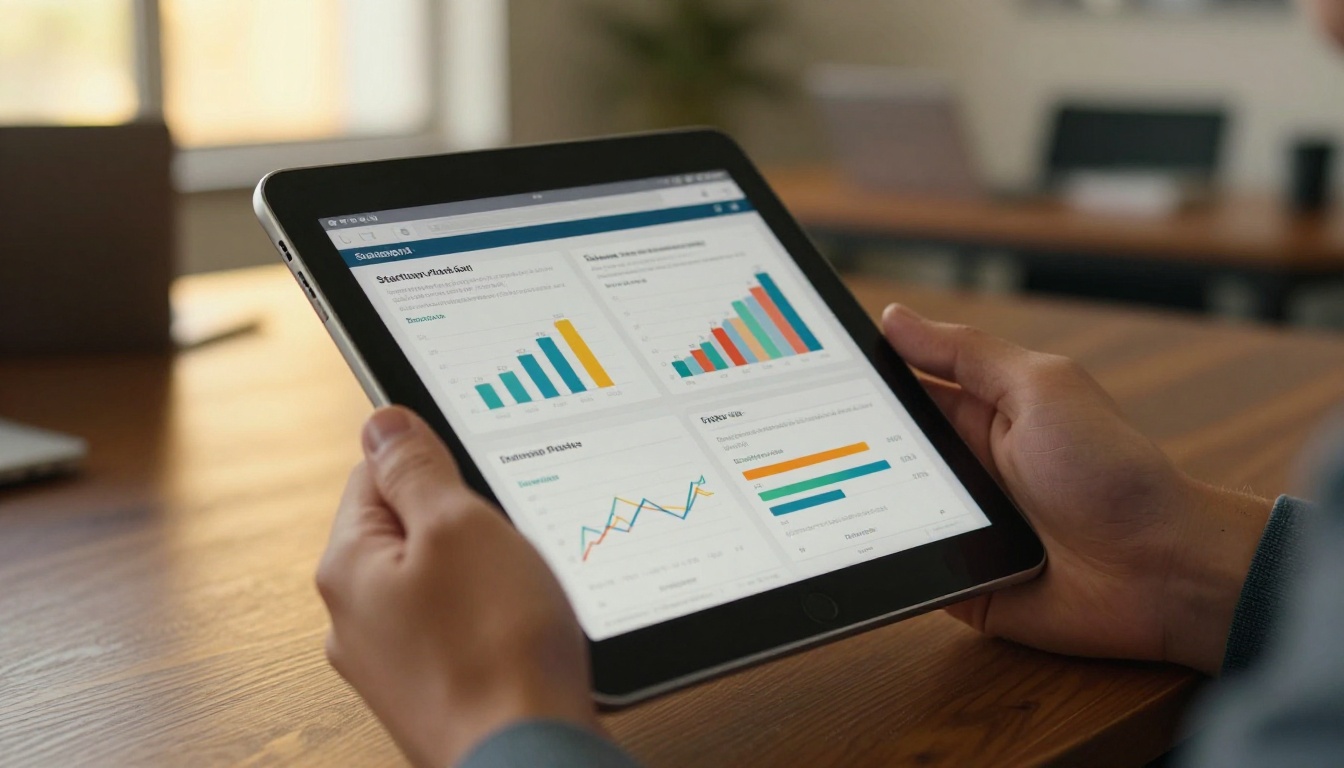
A flipbook pitch is not a redesign of your existing deck. It is the same content, converted into an interactive digital format that investors can browse on any device. Pages turn like a real book. Charts stay crisp. Videos can be embedded directly. And the whole thing can be accessed via a single link, no downloads required.
From PDF to Interactive Deck
The process is straightforward. You design your pitch deck in whatever tool you prefer (Figma, PowerPoint, Google Slides, Canva), export it as a PDF, then upload it to Flipbooks AI. Within minutes, the platform converts it into a fully interactive flipbook with a branded URL you can share with investors.
The Presentation Flipbook Designer and Sales Presentation tools are particularly useful here, letting you customize how your pitch renders and flows.
The Anatomy of a Strong Flipbook Pitch
What goes inside the flipbook matters just as much as the format. Most successful investor flipbooks follow a structure similar to this:
| Section | Purpose | Typical Slides |
|---|
| Opening Hook | Grab attention immediately | Problem statement, market size |
| Solution | What your product does | Product demo, screenshots |
| Traction | Proof it is working | MRR, growth charts, metrics |
| Team | Why you can win | Founder bios, relevant experience |
| Market Opportunity | Size of the prize | TAM/SAM/SOM breakdown |
| Business Model | How you make money | Revenue streams, pricing |
| Financials | Where the money goes | Runway, projections, use of funds |
| Ask | What you need | Funding amount, terms |
Investors can jump between sections non-linearly in a flipbook. That is a feature, not a problem. It means a partner who wants to skip straight to financials can do so without disrupting your narrative for everyone else.
5 Reasons Startups Win More Meetings With Flipbooks

The shift from static decks to flipbooks is not just aesthetic. There are concrete functional advantages that directly affect fundraising outcomes.
1. Real-Time Analytics on Readership
With the Professional plan on Flipbooks AI, you get analytics showing exactly which pages investors spent time on, when they accessed the deck, and how many times they returned to it. This is powerful data during a fundraising process.
If an investor opened your deck three times and spent six minutes on your financial projections, that tells you something. You can tailor your follow-up accordingly. No PDF in the world gives you that.
💡 Pro tip: Use read analytics to time your follow-up emails. If an investor just opened your deck again, that is the ideal moment to reach out.
2. Password Protection for Sensitive Materials
Investor decks often contain confidential financial data, unreleased product details, and proprietary market research. Sending a PDF by email means losing control of that document the moment you hit send. Flipbooks AI supports password protection, which means only the people you authorize can access your pitch.
3. Mobile-Optimized for On-the-Go Investors
VCs and angels read decks everywhere: airport lounges, Ubers, late nights after dinner. A flipbook renders perfectly on mobile devices. A PDF often does not. Tiny text, sideways charts, and broken layouts are the fastest way to lose a busy investor's attention on their phone.
4. Embed Videos and Audio
Some stories are better told in motion. With Flipbooks AI, you can embed product demo videos, founder intro clips, and customer testimonial audio directly inside the flipbook. Investors do not need to navigate away or open a separate window. Everything lives in one place.
5. One Link, Infinite Access
Instead of attaching a 12MB file to every email, you share a single link. The link always points to the latest version of your deck. If you update slide 7 after a meeting, every investor with that link automatically sees the updated version. No more "which version did I send to Sequoia?"
How to Build a Pitch Flipbook With Flipbooks AI

Building your investor flipbook on Flipbooks AI takes less time than most founders expect. Here is the step-by-step process:
Step 1: Finalize Your PDF Deck
Before uploading anything, make sure your pitch deck is investor-ready. Every slide should carry its weight. Remove placeholder text, confirm your data sources are cited, and make sure your visual hierarchy is clean. Investors notice when founders have not proofread their own materials.
Step 2: Upload to Flipbooks AI
Go to Flipbooks AI and create a free account. Use the PDF to Flipbook Converter to upload your deck. The platform converts it automatically and generates a preview within minutes.
Step 3: Customize Your Branding
Add your startup's logo, select brand colors for the flipbook interface, and set your custom URL if you want something clean like pitch.yourstartup.com. This level of polish signals to investors that you care about details.
Step 4: Set Sharing Preferences
Decide whether your flipbook is public, password-protected, or link-only. For early investor outreach, link-only is a solid choice. For due diligence materials, password protection adds an important layer of confidentiality.
Step 5: Embed or Share the Link
You can share the flipbook link directly in your email, add it to your AngelList profile, embed it on your startup's investor relations page using the Embed Flipbook on Website tool, or drop it in a follow-up Notion doc. One link works everywhere.
Step 6: Track Your Readership
Check your analytics dashboard after sharing. On the Professional plan, you can see exactly how investors interact with your deck. Use this data to improve your pitch and prioritize warm leads.
✅ Best practice: Update your flipbook after every major pitch meeting based on the questions investors ask. A living deck performs better than a static one.

Not all pitch formats are equal. Here is how flipbooks stack up against the alternatives most commonly used in startup fundraising:
| Format | Mobile Experience | Analytics | Version Control | Professional Look | Embeddable |
|---|
| PDF Email Attachment | Poor | None | Manual | Moderate | No |
| Google Slides Link | Decent | Basic | Auto | Low | Limited |
| PowerPoint File | Poor | None | Manual | Moderate | No |
| Notion Page | Good | None | Auto | Low | Yes |
| Flipbook (Flipbooks AI) | Excellent | Full | Auto | High | Yes |
The pattern is clear. A flipbook outperforms every alternative on the metrics that matter most during investor outreach.
⚠️ Warning: Sending a PDF attachment in 2025 sends an implicit signal to investors that you have not thought carefully about how they will experience your pitch. That impression is hard to reverse.
What to Include in Your Investor Flipbook

The format is only half the equation. What you put inside your flipbook determines whether you get a second meeting. Here are the slides that investors consistently want to see:
Slides That Never Miss
- The Problem Slide: One crisp sentence describing the pain point. If it takes three slides to explain the problem, it is probably not a fundable problem yet.
- The Solution Slide: How your product solves the problem. Specific. Visual. No jargon.
- Market Size: TAM, SAM, SOM with source citations. Investors who cannot see a path to a billion-dollar outcome often pass at this slide.
- Product Visuals: Screenshots, GIFs, or embedded video walkthroughs. Show, do not tell.
- Traction Metrics: Monthly recurring revenue, growth rate, user counts, retention numbers. Whatever your strongest numbers are, lead with them.
- Business Model: How you charge, what your unit economics look like, and what your gross margin is.
- The Team: Why your team is the right one to win this market. Relevant experience, past exits, and domain expertise all count here.
- Competitive Landscape: A simple 2x2 matrix showing where you sit relative to competitors. Be honest about this.
- The Ask: How much you are raising, what structure, and what you plan to spend it on over the next 18 months.
💡 Pro tip: Keep your investor flipbook to 12 to 15 slides. More is not better. Investors interpret a 40-slide deck as a sign that the founder cannot prioritize.
Startup Stage and Flipbook Strategy

The content of your flipbook should shift depending on your fundraising stage. What works for a pre-seed round looks very different from a Series A.
| Stage | Primary Focus | Investor Priority | Recommended Sections |
|---|
| Pre-Seed | Vision, team, market | Founder conviction | Problem, team, market size, MVP |
| Seed | Early traction, product | Proof of concept | Traction, product, business model |
| Series A | Growth metrics, unit economics | Scalability | Revenue, CAC/LTV, expansion plan |
| Series B+ | Revenue growth, profitability path | Return timeline | ARR, margins, market penetration |
A pre-seed flipbook leads with the team and the vision because there is little else to show. A Series A flipbook leads with numbers because that is what investors at that stage need to see before anything else.
Seed Round vs. Series A Approach
At the seed stage, your flipbook should spend more real estate on the problem and team sections. Investors writing $500K to $2M checks are betting on people as much as ideas. Show who you are, what you have done before, and why this problem consumes you.
At Series A, your flipbook should lead with metrics and dedicate significant space to your growth story. Investors writing $5M to $15M checks need to see evidence that the machine works before they scale it.
Real-World Use Cases

Theory is useful. Real examples are better. Here is how different types of startups use flipbooks in their fundraising process:
B2B SaaS Startup
A workflow automation startup raising a $3M seed round converted their 14-slide deck into a flipbook using the Presentation Flipbook Designer. They set up password protection for each investor contact, then used analytics to track who opened the deck and when. Their close rate on second meetings improved because they could follow up at exactly the right moment.
Consumer Brand
A direct-to-consumer skincare brand pitching a retail expansion round used a flipbook to embed before-and-after product video testimonials directly into their deck. Investors who received the link could watch the testimonials without leaving the pitch. The team reported that every investor who received the link commented on the video quality during the first meeting.
Climate Tech Company
A carbon credit marketplace startup used a flipbook for their Series A, embedding a 90-second explainer animation on slide three. They built a separate version of the flipbook for strategic investors versus financial investors, using different password-protected links. Both versions lived in the same Flipbooks AI account, making version management simple.
Common Mistakes to Avoid

Even with a great flipbook format, founders make predictable errors that cost them deals:
- Too many slides: If you cannot tell your story in 15 slides, cut more, not fewer.
- Poor typography: Small fonts, inconsistent sizing, and crowded layouts communicate carelessness.
- No clear ask: Investors who finish reading and do not know what you want will not reach out to find out.
- Outdated metrics: If you raised $50K in pre-sales six months ago but have not updated that number, investors will notice the staleness.
- No mobile test: Always view your flipbook on your phone before sending it. What looks fine on a desktop can be unreadable on a 6-inch screen.
- Ignoring analytics: If five investors opened your deck but only one read past page three, that is critical feedback. Use it.
⚠️ Warning: Do not use your pitch flipbook as the place to put your entire business plan. Keep it tight, keep it visual, and save the detail for the data room.
Sharing Your Flipbook at Scale
Once your flipbook is live, think strategically about how you distribute it:
Direct outreach: Include the flipbook link in your cold email. It is more compelling than "deck attached" and signals that you have put thought into the experience.
Warm introductions: When a mutual contact makes an introduction, have them share the flipbook link rather than forwarding a PDF. It makes a stronger impression.
AngelList and Crunchbase: Both platforms support external links on your profile. A flipbook link there means any investor who discovers you organically can read your pitch without requesting it.
Investor follow-ups: After a meeting, send a follow-up with the flipbook link pointing to the specific pages most relevant to the discussion. If they asked about your go-to-market strategy, send them straight to that slide.
Start Pitching Like It Matters
The startups winning funding in 2025 are not necessarily the ones with the best ideas. They are the ones who present those ideas with the most clarity, professionalism, and respect for the investor's time. A flipbook pitch does all three.
Create your free account on Flipbooks AI and convert your first pitch deck in minutes. If you are ready to activate analytics, password protection, and lead generation features, view the pricing plans to choose the right tier for your fundraising stage.
Browse all available flipbook tools to find formats for every stage of your startup journey, from initial pitch materials to annual reports and investor updates. The investors are waiting. Make sure what you send them is worth their time.



