Recipes don't disappear all at once. They fade one by one, in a box of index cards someone forgot to label, in a water-damaged spiral notebook, in a voicemail that was never saved. Most families realize too late that the dish everyone loved most was never actually written down. This article is about changing that: collecting what your family knows, organizing it with intention, and turning all of it into something that lasts for generations. A real family cookbook. And with tools like Flipbooks AI, you can make it beautiful, interactive, and easy to share without needing a design degree or a publishing budget.
Why Family Recipes Disappear
There is a particular kind of grief that comes with losing a family recipe. It is not dramatic. It arrives quietly, usually at a holiday table, when someone says "it's good, but it's not quite right." That moment happens because food knowledge is fragile. Most of it lives in hands, not in words.
The Scattered Recipe Problem
Ask anyone in your family where their favorite recipe is, and the answers will be all over the place. A handwritten card in a kitchen drawer. A note on the back of an envelope. A screenshot on someone's phone. A dish that was always made "by feel," with no measurements at all.
The problem is not that families do not care about their recipes. It is that everyday cooking rarely feels like something that needs to be preserved. That changes the moment someone is no longer around to make it.
What You Lose When You Lose a Recipe
A recipe is never just a list of ingredients. It carries context: why that dish was made on certain occasions, whose version of it was "the real one," what the kitchen smelled like when it was cooking. Losing a recipe means losing that entire context, not just the instructions.
💡 Pro tip: When collecting recipes from older relatives, always ask: "What does it smell like when it's right?" That sensory detail is often the key to replicating a dish correctly.
Before You Start Collecting
The most common mistake people make when starting a family cookbook project is jumping straight to design. Before you think about layout or format, you need raw material.
Where to Look for Hidden Recipes
You will be surprised where family recipes are hiding. Start a dedicated search before you organize anything.
- Kitchen drawers and recipe boxes: The obvious places, often yielding cards decades old
- Old diaries and journals: Grandparents sometimes recorded recipes alongside daily notes
- Handwritten letters: Recipes were frequently shared by mail between relatives
- Margins of cookbooks: Personal modifications written in pen on store-bought books
- Local church or community cookbooks: Many families contributed recipes to these
- Voice recordings: Ask elderly relatives to describe their process out loud and record it
- Social media memories: Older posts sometimes reference dishes that were made regularly
⚠️ Important: Do not wait for a "perfect" recipe. If an older family member can only describe a dish from memory, write down that description exactly as given. Incomplete information is better than none.
How to Organize What You Find
Once you have gathered everything, resist the urge to edit immediately. First sort by category, then by origin.
A simple sorting system that works well:
- Breakfasts and breads
- Soups and starters
- Main dishes by protein (chicken, beef, fish, vegetarian)
- Sides and salads
- Desserts and baked goods
- Drinks, preserves, and sauces
- Holiday and celebration specials
Within each category, note which family member the recipe came from. This attribution matters both for accuracy and for the stories you will add later.
The format you choose shapes how people interact with your cookbook. There are two main paths: printed and digital. Both have real value, and the right answer depends on your goals.
| Feature | Printed Cookbook | Digital Flipbook |
|---|
| Shareable with distant relatives | Limited (cost per copy) | Instant, unlimited sharing |
| Interactive page-turning | No | Yes |
| Easy to update | No (reprint required) | Yes, at any time |
| Works without internet | Yes | Offline downloads available |
| Password protection | No | Yes |
| Embedded videos and audio | No | Yes |
| Mobile-responsive | No | Yes |
| Cost to produce | Moderate to high | Low |
Print Cookbooks: What They're Good For
A printed family cookbook is a meaningful physical object. It sits on a shelf, gets used in the kitchen, and gets passed down. If your primary goal is a gift for a single occasion, such as a family reunion or a milestone anniversary, a printed version has real sentimental weight.
The limitation is logistics. Printing costs money per copy, updates require a reprint, and sharing with relatives in other cities or countries is expensive. A printed cookbook also cannot include video of grandma actually making the dish.
Digital Cookbooks: Why They Win
A digital family cookbook, especially one built as an interactive flipbook, solves almost every logistical problem that print creates. You can share it with a link. Anyone in the family, anywhere in the world, can open it on their phone. You can embed a video of how the dough should look. You can add audio of a story behind the recipe. And you can update it every year as the collection grows.
The best approach for most families is to do both: create a digital flipbook first, use it to share and collect feedback, then print a finalized version for special occasions.
How to Create a Family Cookbook with Flipbooks AI
Flipbooks AI is built precisely for this kind of project. The Recipe Book Flipbook tool gives you a direct starting point, and the platform handles all the technical side so you can focus on the content.
Step 1: Design Your PDF
Before uploading anything, you need your cookbook as a PDF. This is the one step that requires a design tool, but it does not have to be complicated.
Options for creating your PDF:
- Canva: Free, intuitive, has cookbook templates
- Google Docs: Simple but effective for text-heavy cookbooks
- Microsoft Word: Familiar and widely available
- Adobe InDesign: Professional results if you have design experience
Structure your PDF with these sections:
- A cover page with the family name and year
- A table of contents
- Section dividers for each category
- Individual recipe pages with photo space, ingredient list, and instructions
- A "family notes" section at the back for stories and memories

✅ Best practice: Add a short story under each recipe, even just one or two sentences. "Grandpa made this every Christmas Eve" is enough to give the recipe meaning beyond its ingredients.
Step 2: Upload to Flipbooks AI
Once your PDF is ready, create an account on Flipbooks AI and upload your file.
- Log in at flipbooksai.com
- Click Create New Flipbook and select your PDF file
- The platform converts it automatically into a page-turning digital book
- Preview the result to confirm all pages and images appear correctly
The conversion takes seconds. Your recipe pages, photos, and section dividers will all be preserved exactly as designed.
Step 3: Customize Your Cookbook
This is where your cookbook gets its personality. Flipbooks AI gives you full control over how it looks and feels.
Customization options include:
- Cover theme: Choose from soft, warm palettes that suit a family cookbook
- Page background: Opt for linen texture, aged paper, or clean white
- Brand colors: Match your family's aesthetic, or keep it classic
- Page flip effect: The satisfying turn of real pages, digitally
- Background music: Add a soft audio track that plays as readers browse
- Embedded video: Link to a video of the recipe being made
💡 Pro tip: Password-protect your family cookbook if you want to keep it private. Flipbooks AI makes this a one-click setting, so only people with the password can open it.
Step 4: Share With Every Branch of the Family
Once published, sharing is as simple as copying a link. No app to install, no file to download.
Sharing options available:
- Direct link: Send via text, email, or any messaging app
- Embed code: Add it to a family website or memorial page
- QR code: Print it on a card and hand it out at a gathering
- Password protection: Control who can access the cookbook
- Offline download: Available on Standard plan and above
If you want to track who is actually reading the cookbook, the Professional plan includes analytics showing page views and time spent on each recipe section.
What Makes a Great Family Cookbook
Most family cookbooks fall short for the same reason: they are just lists of recipes. A cookbook that people actually return to has three things beyond the food.
Sections That Tell a Story
The structure of your cookbook is a narrative choice, not just an organizational one. How you arrange recipes tells people something about how your family experiences food.
Consider organizing by occasion rather than by food category:
| Section Approach | Best For | Example Structure |
|---|
| By food category | Easy navigation for cooking | Breakfast / Mains / Desserts |
| By occasion | Emotional resonance | Holidays / Sundays / Celebrations |
| By family member | Heritage and attribution | Grandma Rosa's Dishes / Uncle Pete's Grilling |
| By country of origin | Multicultural families | Italian Recipes / Filipino Dishes |
| Chronological | Documenting family history | 1950s Kitchen / 1980s Favorites |
There is no wrong answer here. Many families combine two approaches: primary organization by occasion, with each recipe attributed to the person who brought it into the family.
Adding Stories, Not Just Recipes
The difference between a recipe collection and a family cookbook is prose. Every recipe deserves at least one sentence of context.
Good things to include alongside each recipe:
- Who it came from: Name the person, and if possible, where they learned it
- When it was made: Seasonal, celebratory, or everyday?
- What makes it different: What is the family's specific variation on a classic?
- A memory: One specific story connected to eating this dish
These additions take ten minutes per recipe and make the book irreplaceable. A list of ingredients for apple pie is useful. A note that says "this is what Aunt Helen brought every Thanksgiving, and she always pretended the secret was the nutmeg, but we think it was the extra butter" is something entirely different.
Flipbooks AI offers several tiers depending on how many cookbooks you want to create and what features you need.
| Plan Feature | Free | Standard | Professional |
|---|
| Number of flipbooks | 1 | Unlimited | Unlimited |
| Watermark-free | No | Yes | Yes |
| Password protection | No | Yes | Yes |
| Custom branding | No | Yes | Yes |
| Embed on website | Yes | Yes | Yes |
| Offline downloads | No | Yes | Yes |
| Embedded video and audio | No | Yes | Yes |
| Analytics | No | No | Yes |
| Lead generation forms | No | No | Yes |
For a single family cookbook project, the Standard plan gives you everything you need: unlimited flipbooks, no watermarks, password protection, and offline access. Families who want to create new annual editions or track engagement will find real value in the Professional tier.
Gifting Your Cookbook
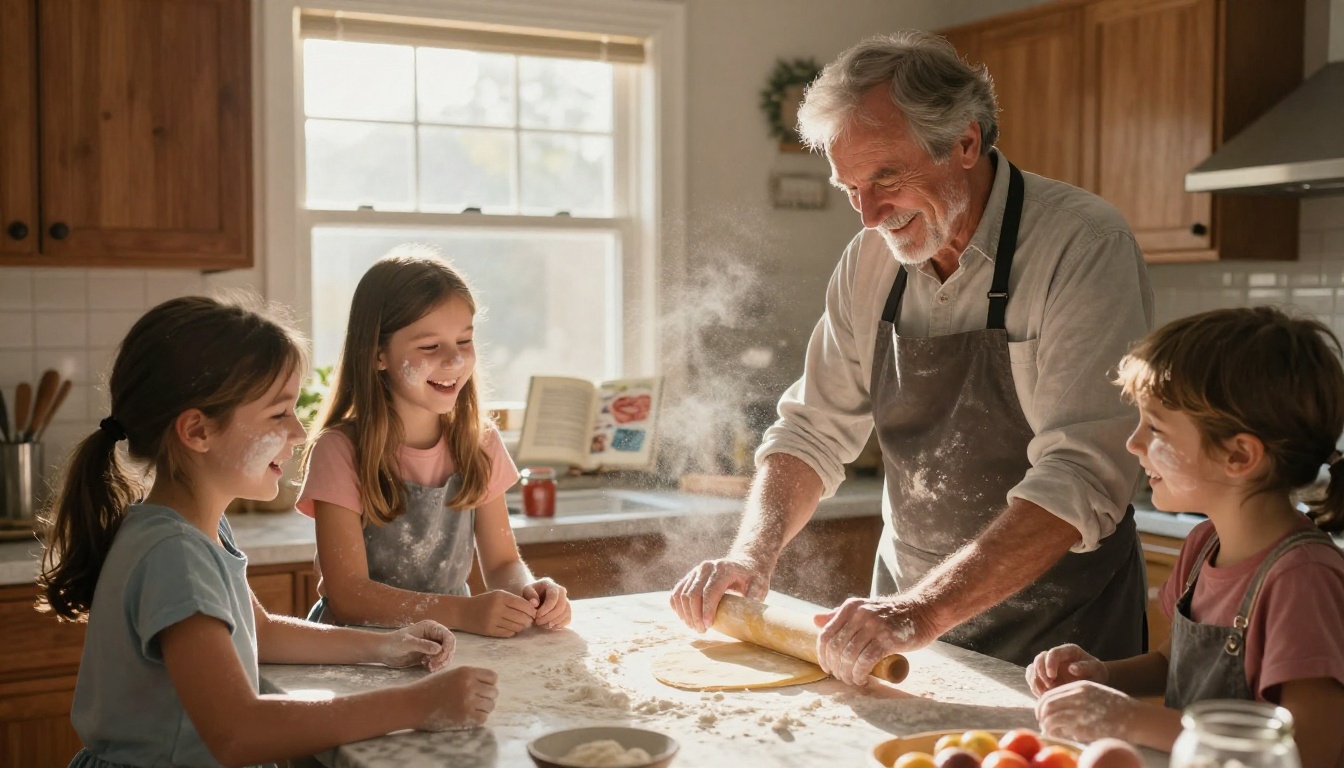
A family cookbook is one of the most personal gifts you can give, and it works for almost any occasion.
When to Share It
- Family reunions: Share a QR code so every attendee can access it on their phone
- Milestone birthdays: A cookbook organized around a grandparent's recipes is a deeply personal 80th birthday gift
- Weddings: A digital cookbook from both families is a meaningful addition to any wedding celebration
- Holidays: Send the link as a holiday card attachment
- Memorial occasions: Collecting and sharing recipes is a meaningful way to honor someone who has passed
Protecting Private Recipes
Some families have recipes they do not want shared outside the family circle. Flipbooks AI handles this cleanly with password protection. One password covers the entire cookbook, so you share the link publicly and the password privately.
If you want more control, you can create two separate flipbooks: one for general recipes anyone can access, and a private edition with the closely guarded ones reserved for family members only.
⚠️ Note: Once a recipe is shared digitally, assume it can be copied. Password protection limits casual access, but motivated people can screenshot content. For truly irreplaceable recipes, consider printing a single physical copy in addition to the digital version.
Making It a Living Document
The best family cookbooks are not finished. They grow. New family members bring new dishes. Old recipes get recovered. Kids grow up and start contributing their own specialties.
Set a rhythm for updating your cookbook. Some families do it annually, adding the year's new recipes and family notes at the same time each year. Others update it whenever something significant happens: a new family member joins, a beloved relative passes, or a new recipe becomes a household staple.
Because Flipbooks AI is digital, updating is straightforward. Edit your PDF, re-upload, and the link stays the same. Everyone who already has the link automatically sees the updated version.
✅ Best practice: Keep a running "new recipes" document on your phone or in a shared cloud folder throughout the year. When it is time to update the cookbook, you already have everything gathered in one place.
The recipes that matter most in your family are probably not written down yet. They exist in someone's hands, in someone's kitchen, in the muscle memory of a person who has made the same dish so many times they stopped thinking about it. Now is the time to capture them.
Start collecting this week. Even if you only gather three recipes and one story, that is three recipes and one story your family will have forever. When you are ready to put it all together, create your family cookbook on Flipbooks AI and turn that collection into something everyone can hold onto.
Browse all available cookbook tools and templates to find the right starting point. Compare pricing plans to find what fits your project. And if you have been putting this off for years, let this be the week you finally start.



