You send the PDF. You wait. Nothing happens, no reply, no click, sometimes not even a delivery confirmation. This scenario plays out thousands of times every day, and the root cause has nothing to do with your content or your subject line. Flipbooks AI was built specifically to fix this problem, but first, it helps to know exactly why email and PDFs make such a poor combination.
The PDF Problem Nobody Talks About
PDFs were designed for printing, not for sharing through digital channels. When you attach one to an email, you force a print-formatted file through a communication system built for lightweight text and links. That friction creates measurable problems at every stage of delivery.
Spam Filters Flag Attachments First
Modern spam filters do not just scan for suspicious words. They analyze behavioral signals, sender reputation, and attachments. PDFs are a common delivery vehicle for malware and phishing attacks. Security systems at major email providers treat PDF attachments with heightened suspicion, especially when:
- The sender is not in the recipient's contact list
- The email has a high image-to-text ratio
- The PDF contains embedded links or JavaScript
- The file was recently created, a pattern common in phishing campaigns
- The sender domain lacks proper SPF, DKIM, or DMARC authentication
Your perfectly formatted annual report gets caught in the same filter that catches infected documents. The spam filter does not know the difference.
File Size Limits Cut You Off
Every major email provider enforces strict attachment size limits:
| Email Provider | Max Attachment Size |
|---|
| Gmail | 25 MB |
| Outlook / Hotmail | 20 MB |
| Yahoo Mail | 25 MB |
| Apple Mail (iCloud) | 20 MB |
| Corporate Exchange Servers | 5-15 MB (varies) |
A well-designed PDF brochure with images, embedded fonts, and proper resolution easily hits 10-20 MB. A full product catalog often reaches 30-50 MB. Corporate mail servers frequently have limits well below the consumer email providers. Your beautifully designed document never even attempts delivery.
Mobile Rendering Breaks Everything
Over 60% of emails are opened on mobile devices first. PDF rendering on mobile is inconsistent at best. On iOS, the Mail app renders PDFs reasonably well, but on Android, behavior depends entirely on which app handles the file. Many users face a download prompt, are forced to switch apps, or see a tiny text document that requires constant zooming.
That friction kills readership.
Why Email Clients Hate PDFs
The technical friction is only half the story. Email clients themselves actively create barriers between your PDF and your recipient.
How Gmail Handles Attachments
Gmail scans every attachment before delivery using Google's malware detection. PDFs are extracted, analyzed, and sometimes quarantined without any notification to the sender. When a PDF does arrive, Gmail displays a small attachment chip at the bottom of the email. That chip competes with every other visual element for the reader's attention. Most people never click it.
Gmail also throttles emails with large attachments, meaning your message may arrive hours after you sent it, long after the moment of relevance has passed.
Outlook's PDF Quirks
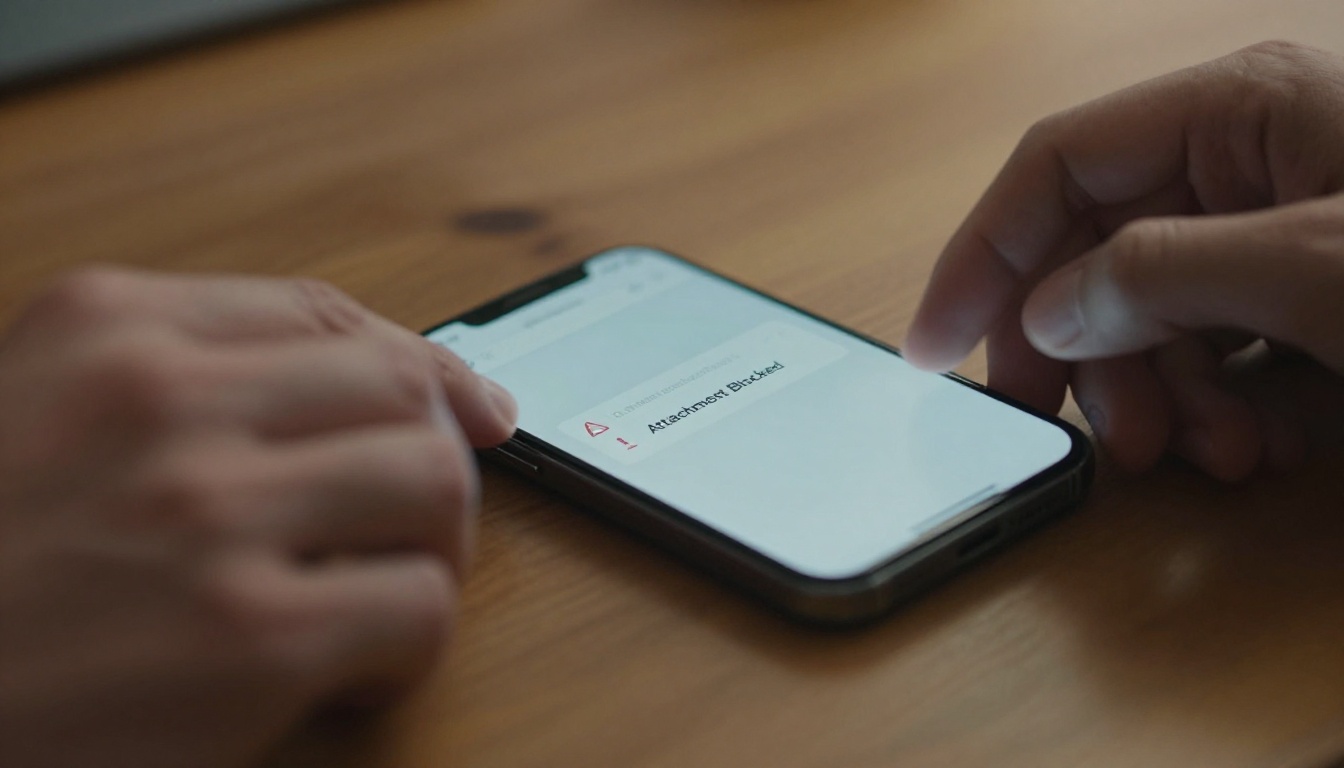
Microsoft Outlook has a complicated relationship with PDFs. In corporate environments, Outlook often flags PDFs from external senders as potentially unsafe and displays a yellow warning bar above the attachment. Recipients must click through a security warning before they can view your document.
In some enterprise configurations, PDFs are blocked entirely by IT policy. The recipient never sees the file. No bounce message, no notification, just silence.
Corporate Firewalls Block Them
Large companies run email security gateways like Proofpoint, Mimecast, or Barracuda. These systems apply their own scanning rules on top of whatever the email client does. A PDF that passes Gmail's scan might still be quarantined by Proofpoint at the recipient's company. Security-conscious industries like finance, healthcare, and legal often have zero-tolerance policies for complex file formats.

The Numbers Behind PDF Email Failure
The data on PDF email performance is sobering. These metrics show the full picture.
Deliverability and Interaction Rates
| Metric | Email with PDF Attachment | Email with Flipbook Link |
|---|
| Average deliverability rate | 72-80% | 95-99% |
| Spam folder placement | 20-28% of sends | Under 2% |
| Mobile open-to-read rate | 35-45% | 78-85% |
| Average time spent on content | 12-18 seconds | 2.5-4 minutes |
| Click-through rate | 1.2-2.5% | 8-14% |
| Trackable reads | None | Full analytics |
The gap is significant at every stage of the funnel. From the moment you hit send to the moment someone actually reads your content, PDF attachments create friction that a simple link eliminates entirely.
What You Actually Lose
Beyond deliverability, PDF attachments give you no information. You cannot know:
- Who opened the file (only who opened the email)
- How long they read it
- Which pages they spent the most time on
- Whether they shared it with a colleague
- Which call-to-action they clicked
This data gap makes intelligent follow-up impossible and prevents you from refining content based on real behavior.

What Happens Inside a Spam Filter
The mechanics of spam filtering help explain why PDFs are such a liability.
The Attachment Scanning Process
When an email with a PDF attachment hits a spam filter, it goes through a multi-stage analysis:
- Header analysis: The filter checks the sending domain, IP reputation, and SPF/DKIM/DMARC records
- Content scan: The body text is analyzed for suspicious patterns and phishing indicators
- Attachment extraction: The PDF is opened and its contents are read, including embedded URLs, metadata, and any JavaScript
- Sandbox execution: Sophisticated filters run the PDF in a virtual environment to detect malicious behavior
- Reputation scoring: The combined score determines inbox placement
This entire process adds latency to delivery. More importantly, each stage is an opportunity for your legitimate document to be misclassified.
Common Triggers That Kill Deliverability
Several common PDF characteristics reliably trigger spam filters:
- Embedded URLs: Every link inside your PDF is scanned against blacklists
- Missing embedded fonts: Font errors trigger parsing failures that some filters read as obfuscation attempts
- Metadata with mismatched dates: PDFs showing a creation date different from the send date raise flags
- High compression ratios: Heavily compressed PDFs can resemble known malware packing patterns
- Password protection: While useful for privacy, password-protected PDFs are often blocked outright by corporate filters

Better Alternatives to PDF Attachments
The shift that high-performing marketing and sales teams have made over the past several years is simple: stop attaching, start linking.
Flipbooks as Email-Friendly Documents
A flipbook is an interactive, web-based version of your document. Instead of attaching a file, you share a link. The recipient clicks it, the document opens instantly in their browser, and they get a richer experience at every level.
Flipbooks AI converts your existing PDF into a fully interactive flipbook in seconds. No redesign, no reformatting. Your document becomes:
- Fully responsive on every device, from desktop to mobile
- Instantly accessible with no download required
- Tracked in real time, showing you who read what and for how long
- Embeddable anywhere, not just in email
- Shareable via a single clean URL
The link you share in your email is just a URL. Email filters love URLs from reputable domains. Deliverability improves immediately.
How to Share a Flipbook in Email
The workflow is simple:
- Upload your PDF to Flipbooks AI
- Customize branding, colors, and page effects
- Publish and copy the shareable URL
- Paste the link into your email, no attachment needed
Your email becomes lighter, cleaner, and far more likely to reach the inbox.

How to Use Flipbooks AI for Email Documents
Converting a PDF into an email-ready flipbook takes minutes. Here is the full process:
Step 1: Create Your Account
Go to Flipbooks AI and sign up. The platform lets you test the conversion before committing to a plan.
Step 2: Upload Your PDF
From the dashboard, click "New Flipbook" and drag your PDF into the upload area. The platform accepts large files and handles complex layouts including multi-column designs, embedded images, and custom fonts. Processing typically finishes in under 30 seconds.
Step 3: Customize the Appearance
Once uploaded, you can personalize:
- Brand colors: Match your logo and visual identity
- Opening page: Add a custom first-page image or use the default first slide
- Page effects: Realistic page-turn animations
- Background: Solid color or gradient backgrounds behind the pages
For sales presentations and proposals, the Sales Presentation tool offers pre-built layouts optimized for conversion.
Step 4: Set Sharing Options
Choose how you want to distribute the flipbook:
- Public link: Anyone with the URL can view it
- Password protection: Require a password before viewing, ideal for sensitive proposals
- Embed code: Drop the flipbook directly onto your website or landing page using the Embed Flipbook on Website tool
- Direct link for email: A clean URL to paste into your email
Step 5: Track Performance
With the Professional plan, every view is tracked. You can see which contacts opened your flipbook, how many pages they read, and how long they spent on each section. This data changes how you approach follow-up conversations. See what each plan includes at Flipbooks AI pricing.

PDF Attachment vs. Flipbook Link: A Direct Comparison
| Feature | PDF Attachment | Flipbook Link |
|---|
| Email deliverability | Low (20-28% spam rate) | High (under 2% spam rate) |
| File size concerns | Yes (5-25 MB limits) | None (it's a URL) |
| Mobile experience | Poor (requires download/app) | Excellent (browser-native) |
| Interaction tracking | None | Full page-level analytics |
| Spam filter risk | High | Minimal |
| Password protection | Blocked by most filters | Available and works |
| Embedding in email | Not possible | Simple URL |
| Update after sending | Not possible | Real-time (edit the source) |
| Sharing by recipient | Creates untracked copies | Trackable with same link |
| Professional appearance | Standard | Branded, interactive |
| Cost | Free to send | Free to start on Flipbooks AI |
Every single metric favors the flipbook approach. The only scenario where a PDF attachment makes sense is when the recipient specifically requests an offline file for archiving or printing.
💡 Pro tip: Even when someone asks for a PDF, share a flipbook first. Most recipients prefer the interactive format once they see it. You can still offer a PDF download from within the flipbook itself.
Real-World Use Cases
Sales Teams
A sales rep sends a 25-slide proposal to a CFO. The PDF is 18 MB. It lands in the spam folder of the company's Proofpoint gateway. The deal stalls, not because the proposal was weak, but because the CFO never saw it.
With a flipbook link, the same proposal arrives instantly. The rep gets notified the moment the CFO opens it and can see which pricing page received the most attention before making the follow-up call. The Sales Presentation tool creates proposals built exactly for this workflow.
Marketing Agencies
An agency sends a quarterly content report to 200 clients as a PDF attachment. A third of those emails never reach the inbox. Of those that do, most clients open the email but never click the attachment.
Switching to flipbook links turns the same report into a trackable reading experience. The agency can see which clients read deeply and follow up with relevant conversations.
Real Estate Professionals
Real estate agents send property brochures constantly. A PDF brochure with high-resolution photos can hit 40-50 MB, well above any email limit. Agents work around this by compressing images until the quality drops, defeating the purpose.
The Real Estate Brochure tool on Flipbooks AI produces a full-quality interactive brochure shared as a simple URL. The photos look better, delivery is reliable, and the agent knows exactly when the buyer opened the listing.
Flipbooks AI Plans: Picking the Right One
| Plan | Flipbooks | Watermarks | Analytics | Password Protection |
|---|
| Starter | Limited | Yes | Basic | No |
| Standard | Unlimited | No | Basic | Yes |
| Professional | Unlimited | No | Full page-level | Yes |
For teams sharing documents with clients or prospects, the Professional plan's analytics alone justify the cost. Knowing exactly who read your document and how long they spent on it changes how you follow up. See the full breakdown at flipbooksai.com/pricing.
⚠️ Important: Many platforms add visible watermarks on free plans, which undermines the professional impression you're trying to make. Flipbooks AI's Standard plan removes all watermarks.
✅ Best practice: For sensitive documents like pricing proposals or legal briefs, always use password protection. Unlike password-protected PDFs which email filters block, flipbook passwords work seamlessly because the file never passes through email at all.

Other Document Types That Work as Flipbooks
The flipbook format works for virtually every document type your team produces:
See all available templates at flipbooksai.com/tools.
Stop Sending PDFs. Start Getting Read.
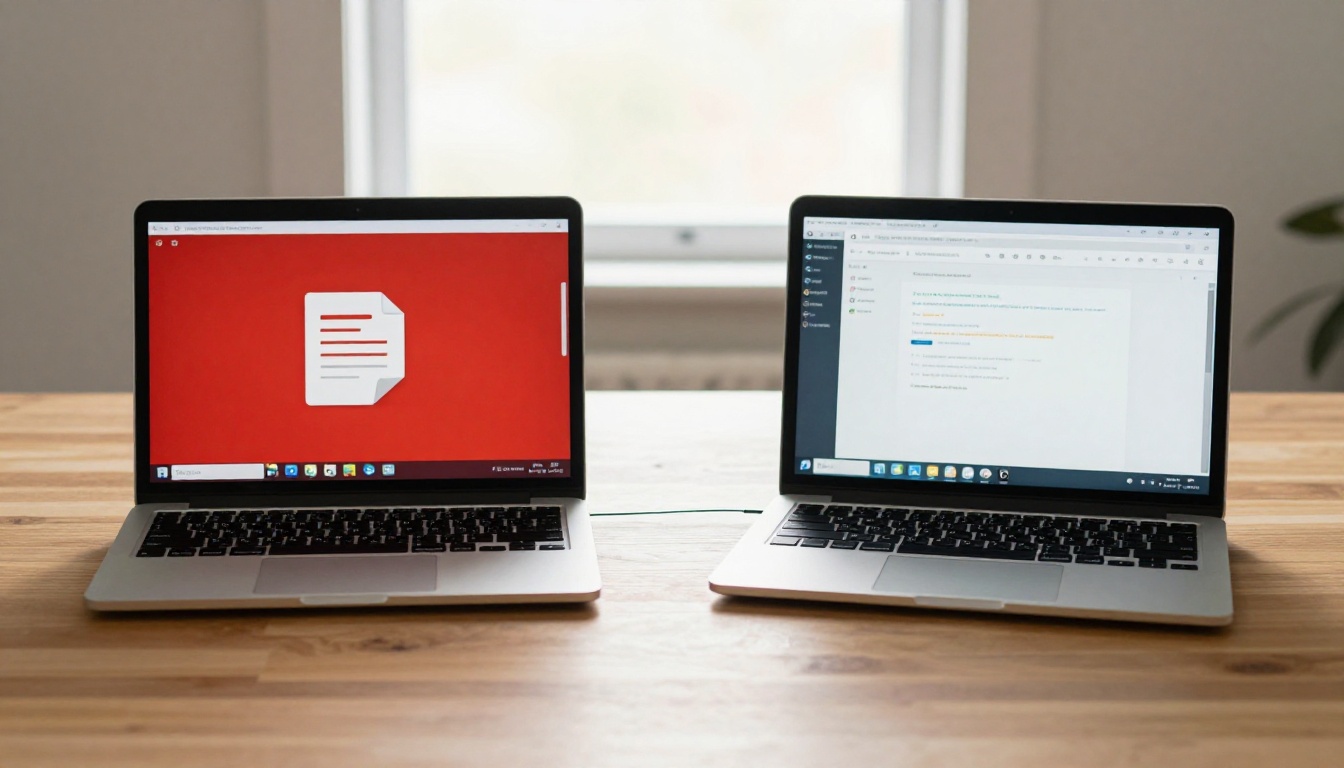
The next proposal you send, the next catalog, the next report: before you attach that PDF, ask honestly whether your recipient is going to see it. Given the deliverability rates, the mobile rendering issues, the spam filter gauntlet, and the corporate firewalls, the answer is often no.
The fix is not complicated. Convert your PDF to a flipbook once, share a link, and get full visibility into how your audience reads it. No file size limits, no spam filter risk, no broken mobile experience.
Ready to start? Create your free account on Flipbooks AI and convert your first PDF in under a minute. Compare pricing plans to find the right fit for your team. See all available tools at flipbooksai.com/tools to find the right format for your specific use case.
Your documents deserve to be seen. Make sure they actually arrive.



