The last time you actually used a print catalog to make a purchasing decision, how long ago was that? For most people, that memory is hazy at best. And yet, businesses spent billions printing them well into the 2020s, shipping glossy booklets to households that went straight from the mailbox into the recycling bin. That era is closing fast. The shift is not subtle or gradual anymore. Why print catalogs are dying and flipbooks are winning is no longer a prediction; it is the lived reality of every marketing team that has run the numbers. Flipbooks AI sits at the center of this shift, offering businesses a direct path from outdated paper to interactive digital catalogs that actually perform.
The Numbers Behind the Decline
The data on print marketing has been pointing in one direction for years. Direct mail volumes in the United States dropped by over 30% between 2006 and 2023. Catalog circulation among major retailers fell sharply after 2020. Sears, JCPenney, and countless other brands that built their identities around thick seasonal catalogs either downsized dramatically or vanished entirely. What drove those decisions? The math became impossible to ignore.
| Metric | Print Catalog | Digital Flipbook |
|---|
| Cost per unit | $3 to $15 | Near zero after creation |
| Distribution time | 2 to 4 weeks | Instant |
| Update cost | Full reprint required | Free, real-time edits |
| Reach | Geographic limit | Global |
| Tracking ability | None | Full analytics |
| Environmental impact | High (paper, ink, transport) | Minimal |
When every column in that table points the same direction, the conversation stops being about preference and starts being about survival.
What's Actually Killing Print Catalogs
Saying "print is dying" oversimplifies what is really happening. Print is not dying because of one problem. It is collapsing under the weight of several simultaneous disadvantages that have each gotten worse over time.
The Cost Has Become Unsustainable
Printing a 48-page catalog for 100,000 households involves design fees, prepress preparation, print runs, paper stock, binding, addressing, postage, and handling. That is easily $150,000 to $400,000 for a single mailing. A mid-sized brand running four seasonal mailings per year burns over a million dollars before a single customer clicks, calls, or buys anything.

And the return on that investment has become nearly impossible to attribute. When someone buys online after receiving a print catalog, what drove that purchase? The catalog? The Instagram ad? The email? Print offers no answer.
⚠️ The attribution problem: Without knowing which touchpoints drove conversions, brands cannot justify print spend in a performance marketing environment. Digital catalogs solve this with embedded tracking links and click analytics.
The Speed Problem Is Real
Modern commerce moves fast. Prices change. Products sell out. New lines launch. Promotions run for 48 hours. A print catalog captures a single frozen moment in time, and the moment it ships, it is already obsolete.
A fashion retailer running a flash sale cannot reprint 80,000 catalogs overnight. A furniture brand launching a new collection cannot wait six weeks for the print run to complete and distribute. The operational rhythm of print publishing does not match the operational rhythm of modern retail.
Audiences Have Simply Moved On
The demographic that actively shopped from print catalogs was older, and that base has shrunk. Millennial and Gen Z consumers are mobile-first by default. They browse products on phones during commutes, share shopping finds in group chats, and expect every product page to link directly to a checkout cart. A print catalog with no clickable links, no embedded video, and no way to instantly share a product with a friend is not just inconvenient to these buyers. It reads as a signal that a brand does not understand them.
What Makes Flipbooks Fundamentally Different
The term "digital catalog" can mean a lot of things, ranging from a basic PDF download to a fully interactive publication with embedded video, analytics, and lead capture. Flipbooks sit at the high end of that spectrum.
Interactive from Page One
A digital flipbook created with Flipbooks AI is not a static PDF. Pages turn with smooth animation. Products link directly to purchase pages. Embedded video plays inline. Readers can zoom into detail shots, share specific pages on social media, and follow calls to action without ever leaving the publication.

The difference in experience is substantial. A reader engaging with an interactive catalog spends more time on it, clicks through more products, and converts at higher rates than someone flipping through physical pages.
Instant Updates With No Reprints
This is where the economics of digital publishing flip completely. When a price changes, when a product goes out of stock, when a promotion starts or ends, the catalog update takes minutes. No designer fees, no print run costs, no distribution delay. The change goes live immediately across every device accessing that flipbook. For seasonal retailers, this means a single catalog template can serve an entire year with rolling updates rather than four expensive seasonal reprints.
Data You Can Actually Use
Every interaction inside a digital flipbook generates data. Which pages get the most time? Which products get the most clicks? Where do readers drop off? This information flows into analytics dashboards that let marketing teams optimize their catalogs the same way they optimize landing pages and email campaigns.

The Professional plan on Flipbooks AI adds lead generation features, allowing brands to gate content, capture email addresses directly inside the flipbook, and connect those leads to their CRM.
💡 Pro tip: Track which catalog pages drive the most product clicks, then use that data to prioritize inventory, promotions, and ad spend.
Print vs. Digital Catalogs: Full Comparison
Here is a full breakdown for anyone still weighing whether the switch makes sense.
| Feature | Print Catalog | Flipbooks AI Digital |
|---|
| Creation cost | High (design + print + mail) | Low (design + upload) |
| Per-unit distribution | $1 to $5 per recipient | Free to share |
| Update frequency | Quarterly at best | Anytime, no cost |
| Mobile experience | None | Fully responsive |
| Embedded video | Not possible | Supported |
| Links to buy | Not possible | Unlimited |
| Audience reach | Geographic delivery area | Anywhere with a link |
| Performance tracking | None | Full page-level analytics |
| Lead generation | Not possible | Built-in (Professional plan) |
| Environmental footprint | Paper, ink, transport | Negligible |
| Password protection | Not possible | Supported |
| Offline access | Physical only | Downloadable |
The digital column wins on nearly every practical dimension. The only advantage print holds is tactile feel. Some luxury brands argue the physical object carries prestige value, and that is valid in narrow contexts. But for the vast majority of businesses selling to a mobile-first audience, that argument does not hold against the operational and cost advantages of going digital.
Who Is Already Making the Switch
The migration from print to digital catalogs is not hypothetical. Across industries, businesses have already moved or are actively moving.
Retail and Fashion Brands
Fashion catalogs were among the first to collapse under print economics. Brands that once mailed seasonal lookbooks now publish them as interactive digital flipbooks. Readers swipe through collections, click product thumbnails that link directly to product pages, and share individual looks on social media without leaving the publication. The Interactive Lookbook Designer on Flipbooks AI was built specifically for this use case.
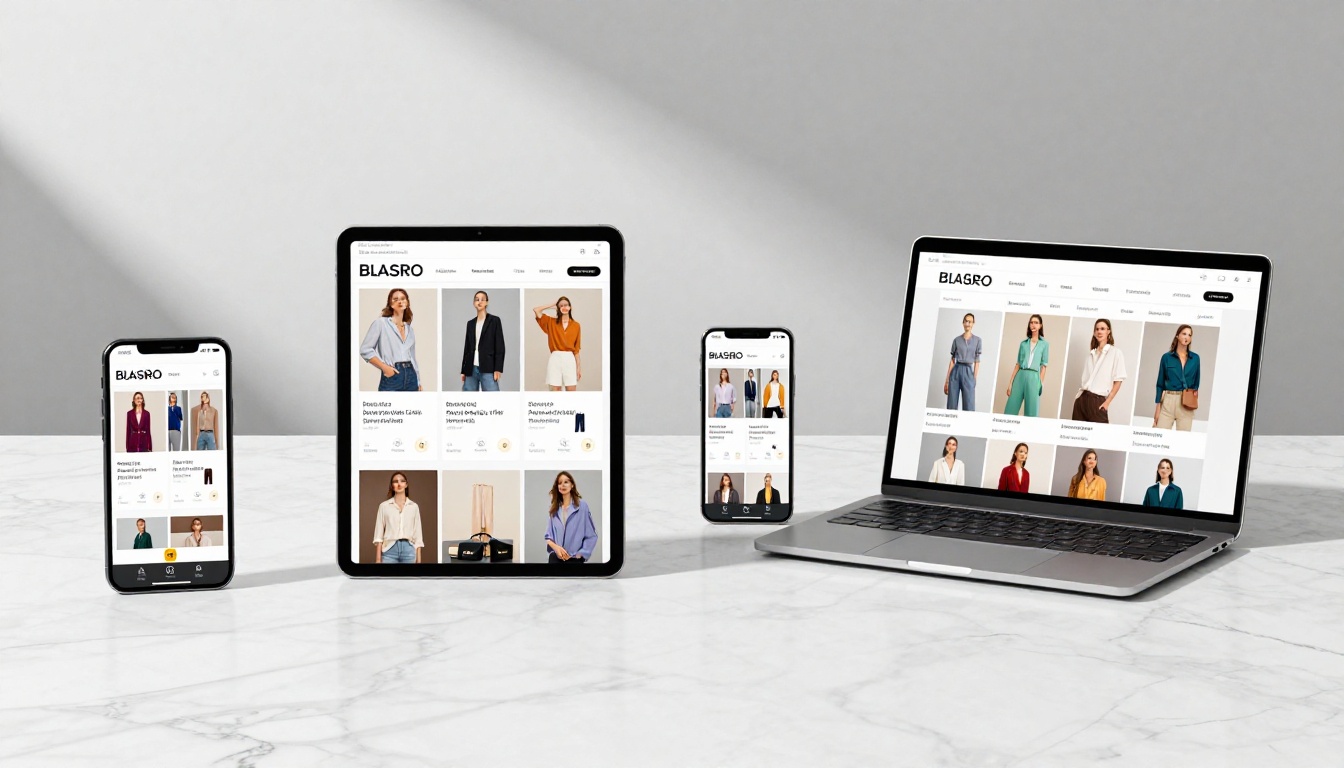
For product-heavy retailers, the Digital Catalog Maker and Catalog Flipbook Creator tools handle everything from fashion and furniture to home goods and consumer electronics.
Real Estate Agencies
Property brochures were expensive to produce and nearly impossible to update once printed. An agent who sold a listed property still had 500 brochures in the trunk. Digital property brochures published through the Real Estate Brochure Creator are shared as links, updated instantly when listings change, and tracked to see which properties generate the most interest from prospects.
Restaurants
Print menus are a liability. Prices change. Items run out. Seasonal specials come and go. A restaurant publishing its menu as an interactive flipbook through the Restaurant Menu Creator can update pricing or remove a sold-out item before the dinner rush without printing a single page.
✅ Best practice: Embed your digital menu as a QR code on table cards. Customers scan and view the latest version every time, even if it was updated an hour ago.
Corporate Publishing
Annual reports, investor presentations, and sustainability reports all involve expensive print runs sent to audiences who increasingly prefer reading on screens. The Annual Report Creator and Corporate Report Maker tools let companies publish polished, branded reports with zero paper cost.
How to Create Your First Digital Catalog
Converting a print catalog to an interactive flipbook takes less time than most people expect. Here is the full process on Flipbooks AI.

Step 1: Create Your Account
Visit flipbooksai.com/account and sign up. No credit card required to start.
Step 2: Upload Your PDF
Use the PDF to Flipbook Converter to upload your existing catalog. The platform handles the conversion automatically, preserving all layout, images, and text from the original file.
Step 3: Customize Your Branding
Set your brand colors, upload a logo, and configure the viewer interface. The Standard plan and above include full custom branding with no watermarks ever added to your publication.
Step 4: Add Interactive Elements
Embed clickable links on product images, insert video clips, and add page-level calls to action. This is where the flipbook becomes functionally superior to its print equivalent. Readers can click a product and land directly on the purchase page.
Step 5: Configure Sharing and Distribution
Publish your flipbook and choose how to share it: a direct link, an embed code for your website, a QR code for print materials, or password protection for private distribution. The Embed Flipbook on Website tool makes website integration straightforward. Password-protected flipbooks are useful for wholesale buyers, press kits, or internal documentation.
Step 6: Track Performance
Once live, monitor your analytics dashboard to see time-on-page, click-through rates by product, and total views. Professional plan users also access lead generation features and offline download options for readers who want to save the catalog locally.

Flipbooks AI Plans at a Glance
Not every business has the same needs. Flipbooks AI offers tiered plans to match different scales and budgets.
| Plan | Flipbooks | Watermark | Analytics | Lead Generation | Offline Downloads |
|---|
| Free | Limited | Yes | Basic | No | No |
| Standard | Unlimited | No | Standard | No | No |
| Professional | Unlimited | No | Advanced | Yes | Yes |
💡 The Professional plan is worth considering for any team using the catalog as an active sales tool. Lead capture inside the publication removes friction and collects prospect data without redirecting readers away from the content.
See the full pricing breakdown here to compare what each plan includes and which fits your catalog volume and feature requirements.
The Real Cost of Staying on Paper
There is a version of this conversation that focuses purely on savings. Switching from print to digital catalogs saves money on printing, shipping, and redesign cycles. That is true and important.
But the more significant cost of staying on paper is the opportunity cost. Every customer who received a print catalog but could not click through to buy. Every product that sold out while the catalog still showed it as available. Every lead that was interested but had no low-friction way to convert. Every analytics dataset that never existed because there was nothing to track.

Digital catalogs built on Flipbooks AI close all of those gaps simultaneously. For businesses still on the fence, the question is not really about print versus digital. It is about whether the marketing budget should fund a static, untrackable artifact that reaches a shrinking audience, or a dynamic, interactive, measurable publication that reaches buyers wherever they are.
The answer has been clear for a while. The businesses catching up now are the ones that delayed longest.
Ready to make the switch? Create your account on Flipbooks AI and convert your first catalog today. Browse all available tools to find the right template for your industry. Or compare pricing plans to choose the features that match your scale.



