By the time a B2B buyer fills in your contact form, the decision is often more than half made. They have read your pricing page, skimmed a competitor's brochure, forwarded a PDF to a colleague, and formed an opinion about you without a single conversation. If you sell to businesses, the numbers on this behavior should change how you build and share content. Tools like Flipbooks AI exist for exactly this moment: turning static documents into something buyers actually open, read, and pass along.
This article pulls together the most cited B2B buyer journey statistics, explains what they mean for sales and marketing teams, and shows where reading time really goes before the first call.

The Core Numbers at a Glance
Different research firms measure the journey differently, so the exact percentages vary. The direction, however, is consistent across Gartner, Forrester, 6sense, and similar studies: buyers are doing more work without you, and they are doing it earlier.
| Statistic | Approximate figure | Why it matters |
|---|
| Share of the journey done before contacting sales | 70% to 80% | Your content is the first salesperson |
| Share of buying time spent with any one supplier | About 5% to 6% | Few chances to persuade live |
| Average people involved in a purchase | 6 to 13, depending on deal size | Content must work for many readers |
| Buyers who prefer a rep-free experience | Roughly 6 in 10 | Self-serve material wins early rounds |
| Buyers who pick a favorite before first contact | Around 80% | The shortlist is set silently |
💡 Treat these as ranges, not laws. Your own sales cycle, price point, and industry shift them. Check your CRM and document analytics to find your real numbers.
Why the Anonymous Phase Is So Long
Buyers research anonymously because contacting a salesperson means being sold to. They would rather read, compare, and build an internal case first. This anonymous phase is where deals are won or lost, and most teams cannot see it at all.
What "Before Calling Sales" Really Means
It rarely means "before any contact." It means before a named, tracked conversation. Buyers have usually visited your site many times, opened several documents, and talked about you internally before the first email lands in your inbox.
How Much Do Buyers Actually Read?
Reading depth is the question behind the headline statistic. A buyer who skims one page behaves very differently from one who reads a forty page report line by line.

Typical Reading Patterns
Studies of document and content behavior tend to show the same shape:
- Most readers drop off early. The first few pages get the majority of attention, and attention falls sharply after that.
- Scanning beats reading. Headings, tables, and pull quotes get read; long blocks of text get skipped.
- Return visits signal intent. A buyer who opens the same document three times is usually preparing to share it.
- Mobile is common. Many first reads happen on a phone between meetings.
Time Spent per Content Type
The table below shows realistic ranges seen across B2B content. Treat the numbers as planning benchmarks and replace them with your own data once you have it.
| Content type | Typical read time | Likelihood it gets forwarded |
|---|
| Pricing page | 1 to 3 minutes | Medium |
| Product brochure | 2 to 5 minutes | High |
| Case study | 3 to 6 minutes | High |
| White paper or e-book | 4 to 10 minutes | Medium |
| Sales deck as a PDF | 2 to 4 minutes | Very high |
| Long technical manual | 5 to 15 minutes | Low |
Where Attention Goes First
Buyers look for proof before they look for features. Pricing, customer results, and implementation effort come up first. Product specifications come later, usually once the shortlist is nearly formed.
What Buyers Read Before They Reach Out
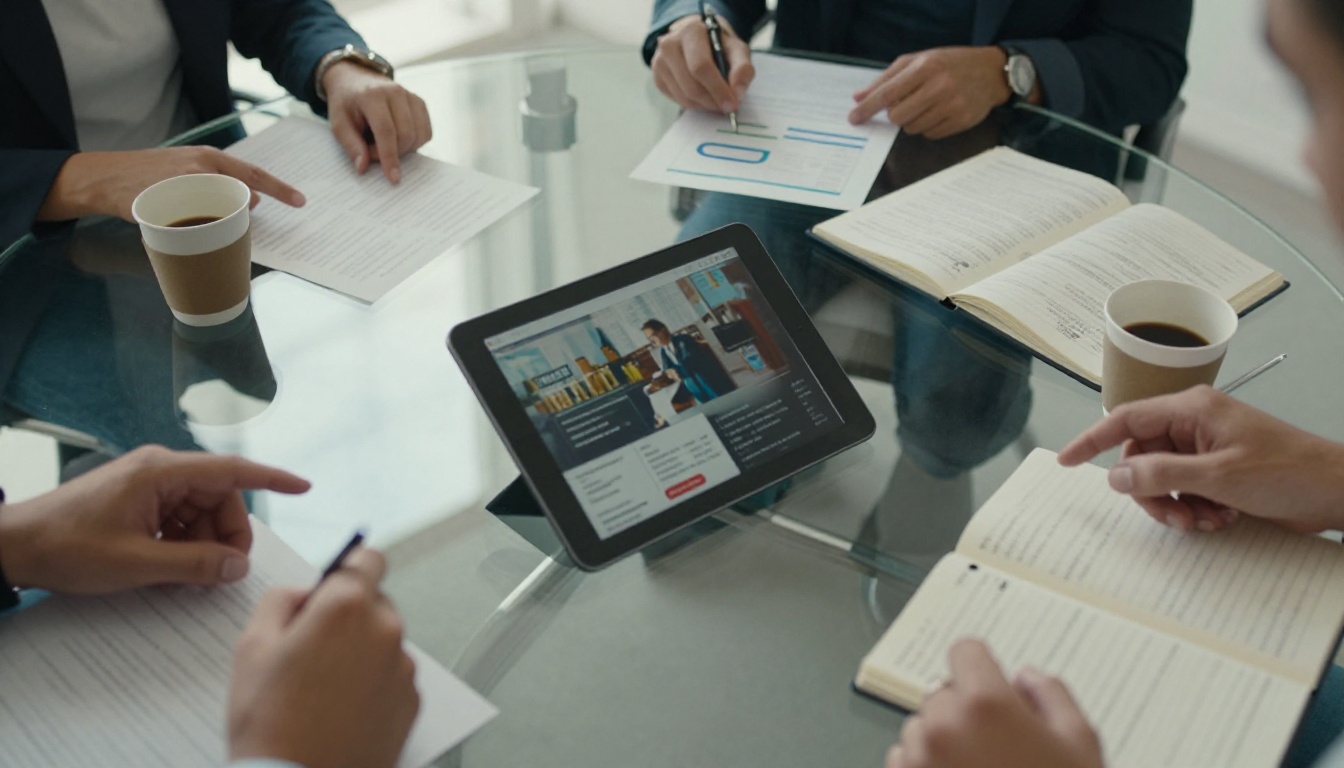
Think of the pre-sales reading list as a funnel of documents. Each one answers a different question, and each one is a chance to be remembered or dismissed.
The Usual Reading Sequence
- Homepage and pricing. Is this vendor in my range?
- Case studies. Did this work for someone like me?
- Product brochure or catalog. What exactly do I get?
- Comparison material. How does this stack up against two alternatives?
- Proposal or deck. Can I defend this choice to my boss?
The Hidden Reader Problem
The person who finds you is rarely the person who signs. A researcher forwards your PDF to a finance lead and a department head. Those secondary readers never talk to your team, yet they hold veto power. If your document is a heavy attachment that loads badly on a phone, they simply close it.
⚠️ A document that is hard to open is a document that gets ignored. Every extra click between a forwarded link and the first page costs you readers.
The Buying Committee Changes the Math
Larger buying groups mean more reading happening in parallel, by people with different goals. A technical evaluator wants specifications. A finance reader wants total cost. An executive wants a short story with proof.
Who Reads What
| Role | Main question | Best format |
|---|
| Researcher | Does this solve the problem? | Brochure, case study |
| Technical evaluator | Will it integrate? | Detailed catalog or manual |
| Finance | What is the real cost? | Pricing sheet, proposal |
| Executive sponsor | Is this safe to approve? | Short deck, customer proof |
| End user | Will this be easy to use? | Walkthrough pages |
Building One Document for Many Readers
You do not need five separate files. A single well structured flipbook with a clear table of contents lets each reader jump to the part they care about. A Sales Presentation flipbook works well for the executive reader, while a Digital Catalog Maker output serves the technical one.

What This Means for Sales Teams
If most of the decision happens off the record, sales has to adapt. Waiting for the inbound call is no longer enough, and showing up with a generic pitch is worse.
Change the First Call
By the time a buyer calls, they have opinions. Open by asking what they have already read, not by repeating your brochure. That one question shortens the call and builds trust.
Send Fewer, Better Documents
Attaching six PDFs to an email invites none of them to be read. Send one polished link that holds everything, with a clear order. Then check who opened it and which pages held attention.

Follow Reading Signals
When a prospect revisits a proposal or spends several minutes on the pricing page, that is the moment to reach out. Reading behavior is a better signal than a form fill because it shows real interest rather than curiosity.
How Marketing Should Respond
Marketing owns the anonymous phase, which means it owns most of the journey. The goal is not to gate everything. The goal is to make the right material easy to find, easy to read, and easy to share.
Put Proof Near the Top
Because readers drop off early, lead with results. Customer numbers, short quotes, and a clear outcome belong on page one, not page fifteen.
Stop Locking Every Asset
Forms are friction. Buyers who prefer a rep-free experience will leave rather than fill in a form for a brochure. Gate only your most valuable research, and let the rest circulate freely.
Make Documents Shareable by Design
A shareable document has a clean link, loads fast on mobile, and looks the same everywhere. You can embed a flipbook on your website so buyers read inside your page, or send a direct link they can forward without downloading anything.

How to Turn a PDF Into a Trackable Flipbook
If your sales material lives in static PDFs, you cannot see how it is read. A flipbook changes that. Here is a simple workflow you can finish in an afternoon.
Step by Step Setup
- Start your account. Create a free account on Flipbooks AI.
- Upload your PDF. Drop in your brochure, proposal, or deck. The PDF to Flipbook Converter turns it into a page turning flipbook with no watermarks.
- Customize the look. Add your logo, brand colors, and page effects. Embed a product video or audio clip if it helps the story.
- Choose how to share. Copy a direct link, grab an embed code for your site, or add password protection for private proposals.
- Watch the results. On the Professional plan, analytics and lead generation show who opened the document and how far they read. See the pricing plans for details.

Which Format Fits Which Stage
✅ Best practice: use password protection for proposals with pricing, and a public link for brochures and case studies. Mixing the two keeps top of funnel material easy to share and sensitive material controlled.
A Realistic Example
Picture a company selling industrial equipment. Their old process sent a 40 page PDF by email. Buyers rarely replied, and the team had no idea who had read it.
They rebuilt the PDF as a flipbook with a short summary on page one, a table of contents, and customer results near the front. Each rep sent a single link. Within weeks, the team could see that most readers stopped around page eight, and that finance contacts spent the longest on the pricing section.

With that information, they moved pricing earlier, trimmed the technical appendix, and added a short comparison table. Calls became shorter and more focused because buyers arrived informed.
Metrics Worth Tracking
- Open rate of each shared link
- Average pages read per visit
- Return visits by the same reader
- Forwards, shown as new viewers from one link
- Time on pricing and proof pages

Common Mistakes to Avoid
Even teams who accept the statistics repeat the same errors.
Three Costly Habits
- Burying the proof. Results on page twelve never get read.
- Sending attachments. Large files bounce, load slowly, and cannot be tracked.
- Treating one reader as the buyer. The forwarded reader decides as often as the first one.
Measuring Only Form Fills
If your only success signal is a submitted form, you are blind to the 70% to 80% of the journey that happens before it. Add document level tracking so you can see intent that never reaches a form.
Your Next Move
The statistics point in one direction: buyers read first and talk later. The teams that win are the ones whose documents are good enough to do the early selling.
Ready to see how your buyers read? Get started for free on Flipbooks AI and turn your next PDF into a trackable flipbook. Browse all flipbook tools to find the right template for your sales material, and compare pricing plans when you are ready for analytics and lead generation. When you want to upgrade, you can go straight to pricing.