You finished the manuscript. Now comes the question that stalls more authors than writer's block ever did: where do you actually publish it? Three names dominate the conversation, Amazon KDP, IngramSpark and Lulu, and each one rewards a different kind of author. Pick well and you keep more of every sale. Pick badly and you spend months fighting formatting rules, shipping fees or a distribution gap.
This comparison puts all three side by side on the things that matter: royalties, print quality, bookstore reach, upfront cost and control. Along the way you will see how a digital preview built with Flipbooks AI can help you sell the book before a single copy is printed.
💡 Quick answer: KDP wins on simplicity and Amazon reach, IngramSpark wins on bookstore and library distribution, and Lulu wins on flexibility and direct sales. Many serious authors use two of them together.
Before the details, here is the shape of each service.

Amazon KDP (Kindle Direct Publishing) is the self-publishing arm of the largest book retailer on earth. Upload a file, set a price, and your book appears on Amazon in a day or two. Print copies are made on demand, so there is no inventory to store.
IngramSpark belongs to Ingram Content Group, the wholesaler that supplies most bookstores and libraries in the English-speaking world. It is built for authors who want to appear in a catalog that booksellers actually order from.
Lulu is the most flexible of the three. It prints almost any format, sells directly from its own storefront and connects to e-commerce tools, which makes it popular with authors who sell to their own audience.
| Feature | Amazon KDP | IngramSpark | Lulu |
|---|
| Best for | Amazon sales, beginners | Bookstores and libraries | Direct sales, special formats |
| Upfront fee | Free | Free to low (check current terms) | Free |
| Print on demand | Yes | Yes | Yes |
| Ebook support | Kindle | Multiple retailers | Multiple retailers |
| Bookstore reach | Limited | Excellent | Moderate |
| Format variety | Moderate | Moderate | Wide |
How Royalties Really Work
Royalty rates look generous in marketing pages. The number that matters is what lands in your account after printing costs and retailer cuts.
KDP Royalty Structure
For paperbacks on Amazon, KDP pays roughly 60% of the list price minus printing costs. For ebooks, the rate is 70% when the price sits in the qualifying band (commonly $2.99 to $9.99) and 35% outside it. Printing cost depends on page count, trim size and ink type, so a 300-page black and white paperback costs far less to produce than a color photo book.
IngramSpark Royalty Structure
IngramSpark works on a wholesale model. You set the list price and also choose a wholesale discount, typically between 40% and 55%. Bookstores expect a discount near 55% to make stocking you worthwhile. Your royalty is the list price minus the discount minus the printing cost, which means margins are thinner on each copy but the audience is wider.
Lulu Royalty Structure
Lulu lets you set your own profit on top of the printing cost for direct sales through its storefront, and it takes a percentage when sales happen through its retail marketplace. Because you control the markup, a book sold straight to your own followers can earn a much better margin than the same title through a wholesaler.
| Example: $14.99 paperback, 250 pages | KDP | IngramSpark (55% discount) | Lulu (direct sale) |
|---|
| List price | $14.99 | $14.99 | $14.99 |
| Retailer or wholesale cut | About 40% | About 55% | Varies |
| Approx. printing cost | About $4 | About $4 | About $5 |
| Approx. author earnings | About $2 | Near $0 to $3 | About $10 |
⚠️ These figures are illustrations, not quotes. Printing costs and royalty rules change, so always run each platform's own calculator before you set a price.
The takeaway: wholesale distribution costs margin. If bookstores matter to you, accept it. If your readers come from your own channels, direct sales beat everything else.
Print Quality and Paper Options
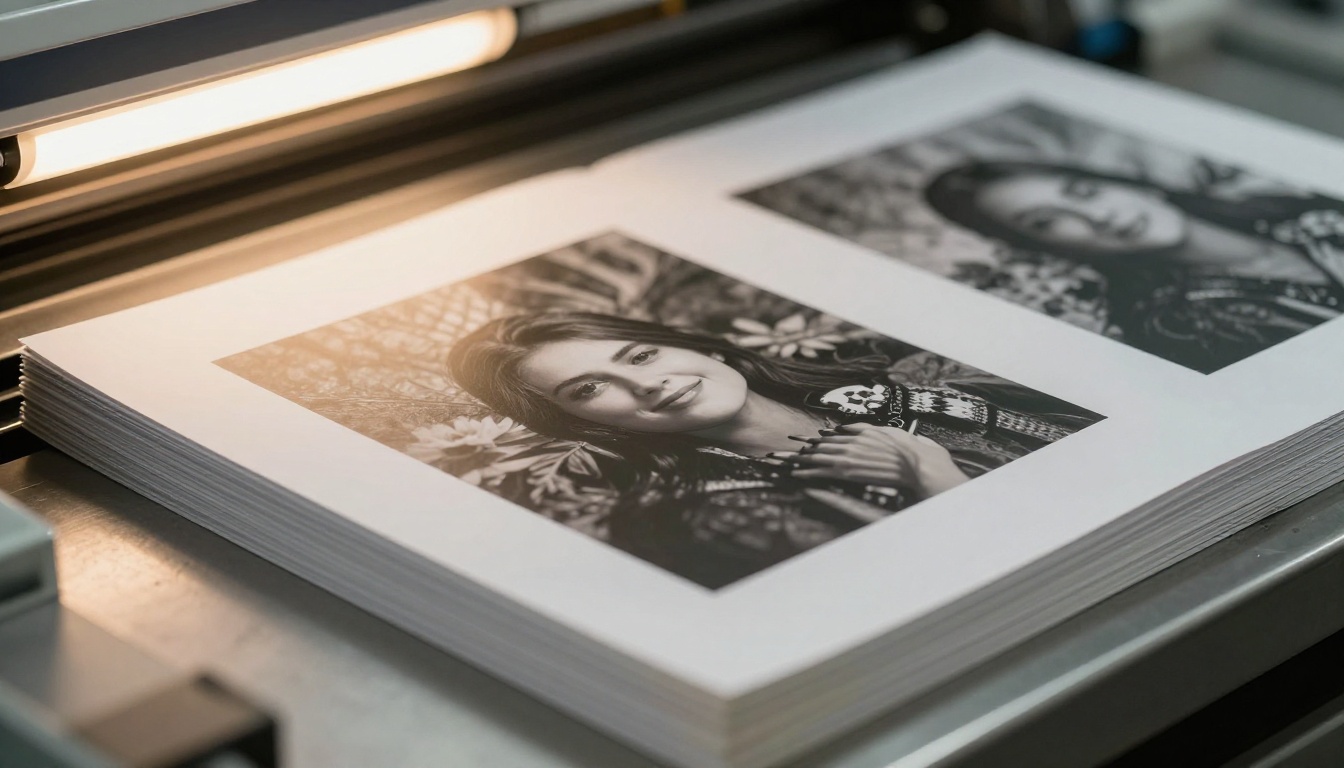
Readers judge a book in their hands within seconds. Paper stock, binding and ink density shape that first impression.
What KDP Offers
KDP supports paperbacks and hardcovers in common trim sizes, with white or cream interior paper and matte or glossy finishes for the outer jacket. Print quality is consistent and perfectly acceptable for novels and nonfiction. Color interiors are available but expensive per copy.
What IngramSpark Offers
IngramSpark provides the widest paper and binding menu among mainstream wholesalers, including cloth hardcovers, dust jackets and premium color options. Quality tends to be favored by authors who want a book that looks like a traditional publisher's product on a shelf.
What Lulu Offers
Lulu handles the unusual: coil-bound workbooks, photo books, square formats, calendars and large-format prints. If your project is not a standard novel, Lulu is often the only one of the three that can produce it.
| Format need | Best fit |
|---|
| Standard novel paperback | KDP or IngramSpark |
| Premium hardcover with dust jacket | IngramSpark |
| Photo book or color interior | Lulu or IngramSpark |
| Coil-bound workbook | Lulu |
| Calendar or unusual trim | Lulu |
Distribution and Bookstore Reach
This is where the three platforms separate most clearly.

Amazon Reach With KDP
KDP puts you in front of the biggest single audience of book buyers. It also offers an expanded distribution option, but bookstores rarely order through it, because they distrust any supply line tied to a competitor.
Wholesale Reach With IngramSpark
IngramSpark places your title in the Ingram catalog, which libraries, schools and independent bookstores use for ordering. It can also list your book on Amazon and other online retailers. Returns are an important detail: bookstores prefer titles they can send back, so you decide whether to allow returns, and that choice affects your risk.
Flexible Reach With Lulu
Lulu sells through its own marketplace and offers connections to online store builders so orders print and ship automatically. It also supports global distribution, but bookstore penetration is lower than IngramSpark.
✅ Best practice: Authors chasing both Amazon sales and bookstore shelves often publish the ebook and print edition on KDP, then list the print edition on IngramSpark with its own ISBN setup.
Ebook Publishing Compared
Print is only half of the story. Ebook buyers behave differently, and the rules differ too.

KDP offers the Kindle store and an optional program called KDP Select, which requires a period of exclusivity in exchange for promotional tools and subscription reads. Going exclusive can boost visibility, but you give up selling the ebook elsewhere during that window.
IngramSpark distributes ebooks to a broad group of retailers and library platforms. It does not give you the Amazon-native promotional tools.
Lulu sells ebooks directly and distributes them to major stores, giving you the freedom to stay non-exclusive while keeping a direct channel.
| Ebook question | KDP | IngramSpark | Lulu |
|---|
| Own storefront | No | No | Yes |
| Exclusivity option | Yes (Select) | No | No |
| Library reach | Limited | Strong | Moderate |
| Promotional tools | Strong on Amazon | Basic | Basic |
If you want an ebook that readers can flip through on any device without waiting for a store listing, a PDF to flipbook converter gives you a shareable preview link in minutes.
Cost, Control and Ownership
Setup Costs
KDP and Lulu do not charge to publish. IngramSpark has changed its fee structure over the years, so check its present terms before you upload. Budget separately for the things no platform includes: editing, jacket design and proofreading.

ISBN Ownership
An ISBN identifies your book to the trade. KDP offers a free ISBN, but it ties the imprint to Amazon. IngramSpark requires you to supply your own. Buying your own ISBN means you are the publisher of record and can move the same book between platforms. That is why serious authors usually purchase their own block.
Rights and Exit Terms
None of the three takes ownership of your manuscript. You can unpublish and move elsewhere, though reviews, rankings and sales history do not always travel with you.
| Control factor | KDP | IngramSpark | Lulu |
|---|
| Free ISBN offered | Yes | No | Yes |
| Own ISBN allowed | Yes | Required | Yes |
| Price flexibility | High | High | Very high |
| Quality of support | Mixed | Professional | Responsive |
Shipping, Fulfillment and Proof Copies
Because every order is printed on demand, shipping speed varies by region.

KDP ships fast inside Amazon's network and gives authors cheap author copies. IngramSpark ships globally from several print locations, which helps reach international readers. Lulu produces and ships from multiple regions too, though delivery for direct orders can run longer than Amazon Prime.
💡 Always order a proof copy. Colors print darker than they look on a screen, margins can shift, and a typo on page 12 looks far worse on paper than in a document.

Match the platform to your goal rather than chasing the biggest name.
- First-time novelist who wants to sell on Amazon: start with KDP.
- Nonfiction author who wants speaking events and bookstore placement: add IngramSpark.
- Creator with an existing audience or an unusual format: use Lulu for direct sales.
- Author who wants maximum reach: publish the ebook through KDP and distribute print through IngramSpark with your own ISBN.
Three Real-World Scenarios
A cookbook author with a color interior might choose Lulu for the print run sold at events, then publish an ebook edition on KDP. A recipe book flipbook can serve as the online preview.
A business coach selling workbooks to clients should favor Lulu's coil binding and direct shop, with a digital edition delivered through a password-protected link.
A fantasy novelist chasing readers will probably do best on KDP first, because Amazon is where fantasy readers shop, then widen with IngramSpark once sales justify it.
Sell the Book Before You Print It
A book listing with only a jacket image and a blurb asks readers to take a leap. A flipbook preview lets them turn actual pages first, and that is a strong persuasion tool.

How to Build a Book Preview With Flipbooks AI
- Create your account. Go to Flipbooks AI and sign in.
- Upload your PDF. Export the first chapter or the whole interior as a PDF and upload it. The E-Book Flipbook Generator converts it into a page-turning flipbook.
- Customize the look. Add your branding, colors and page-turn effects so the preview feels like your book.
- Add multimedia. Embed an author video or audio sample for extra context.
- Share it. Copy the direct link, paste the embed code onto your site, or lock a private edition with a password for advance readers. See how to embed a flipbook on your website.
- Track results. On the Professional plan, analytics and lead generation show who reads your sample and collect emails for your launch list.
Flipbooks AI never adds watermarks, works on mobile screens, and lets readers download offline copies. The Interactive E-Book Publisher is worth a look if you want a richer reading experience than a plain PDF. You can compare pricing plans to see which tier fits.
| Tool | Best use for authors |
|---|
| Free sample flipbook | Share chapter one on social media |
| Password-protected edition | Send advance copies to reviewers |
| Embedded flipbook | Show a preview on your author site |
| Lead capture (Professional) | Build a launch mailing list |
Common Mistakes to Avoid
- Skipping your own ISBN. It limits where you can move the book later.
- Setting the wholesale discount too low. Bookstores will not stock the title.
- Ignoring trim size. Changing it later means reformatting the whole file.
- Pricing without a calculator. Always check actual printing costs first.
- Publishing without a proof copy. Errors are cheapest to fix before launch.
- Going exclusive by default. Exclusivity helps some books and hurts others.
If you only remember one thing, remember this: there is no single winner, only the best fit for your goal. KDP gives you speed and Amazon's audience. IngramSpark gives you the trade. Lulu gives you freedom and direct margins.
Draft your plan, order a proof, and build a preview your readers can flip through today. Start for free on Flipbooks AI, browse all flipbook tools, or compare pricing plans to choose what works for you. When you are ready to upgrade, you can go straight to account and pricing.



