A gift shop buyer spends maybe ninety seconds on your line sheet before deciding whether to email you or close the tab. If your candles look gorgeous but the wholesale price is buried, or your soaps are missing case packs, the order goes to someone else. This article breaks down what candle and soap wholesale line sheets that gift shops order from actually contain, how to lay them out, and how to publish them as a clean digital catalog with Flipbooks AI.
Most makers treat the line sheet as an afterthought: a few product photos pasted into a document at midnight. Buyers treat it as your entire business card. It tells them whether you ship on time, whether your margins work for their shelf, and whether you will still be around next season.

What Buyers Look For First
Gift shop owners buy in a hurry and in volume. They are scanning for four things, in roughly this order:
- Does it fit my store? Style, scent family, price range.
- Do the numbers work? Wholesale price, suggested retail, and minimums.
- Can I trust this vendor? Clear terms, lead times, and a professional look.
- How easy is it to order? One obvious contact or order link.
If any of those is hard to find, the buyer moves on. A good line sheet answers all four on the first two pages.
💡 Pro tip: Put your wholesale price and suggested retail price side by side. Buyers do the keystone math in their head (retail should be roughly 2x wholesale), and showing it removes a step.
Think Like the Shop Owner
A boutique buyer is not just buying a candle. They are buying shelf space, gift-ready packaging, and a reorder they will not regret. Soaps that crumble in transit or candles that arrive with frosted tops cost them real money and customer goodwill.
Impulse Items Versus Anchor Items
Every shop wants a mix. Anchor items such as 8 oz jar candles carry the revenue. Impulse items such as mini soaps and travel tins sit near the register. Show both clearly and label which is which.
The Anatomy of a Winning Line Sheet
The best sheets share a predictable structure. Predictable is good: buyers have seen hundreds, and they want to find things fast.
| Section | What to Include | Why It Matters |
|---|
| Cover page | Logo, brand tagline, season or year, one hero photo | Sets the tone in two seconds |
| Brand story | 3 to 4 sentences, how it is made | Gives the buyer a story to retell |
| Product pages | Photo, name, scent notes, size, SKU | Lets buyers pick without emailing |
| Pricing | Wholesale and suggested retail | Confirms margins immediately |
| Terms | Minimums, case packs, lead time, shipping | Removes order friction |
| Contact | Email, phone, order link | Makes the next step obvious |
Keep Pages Scannable
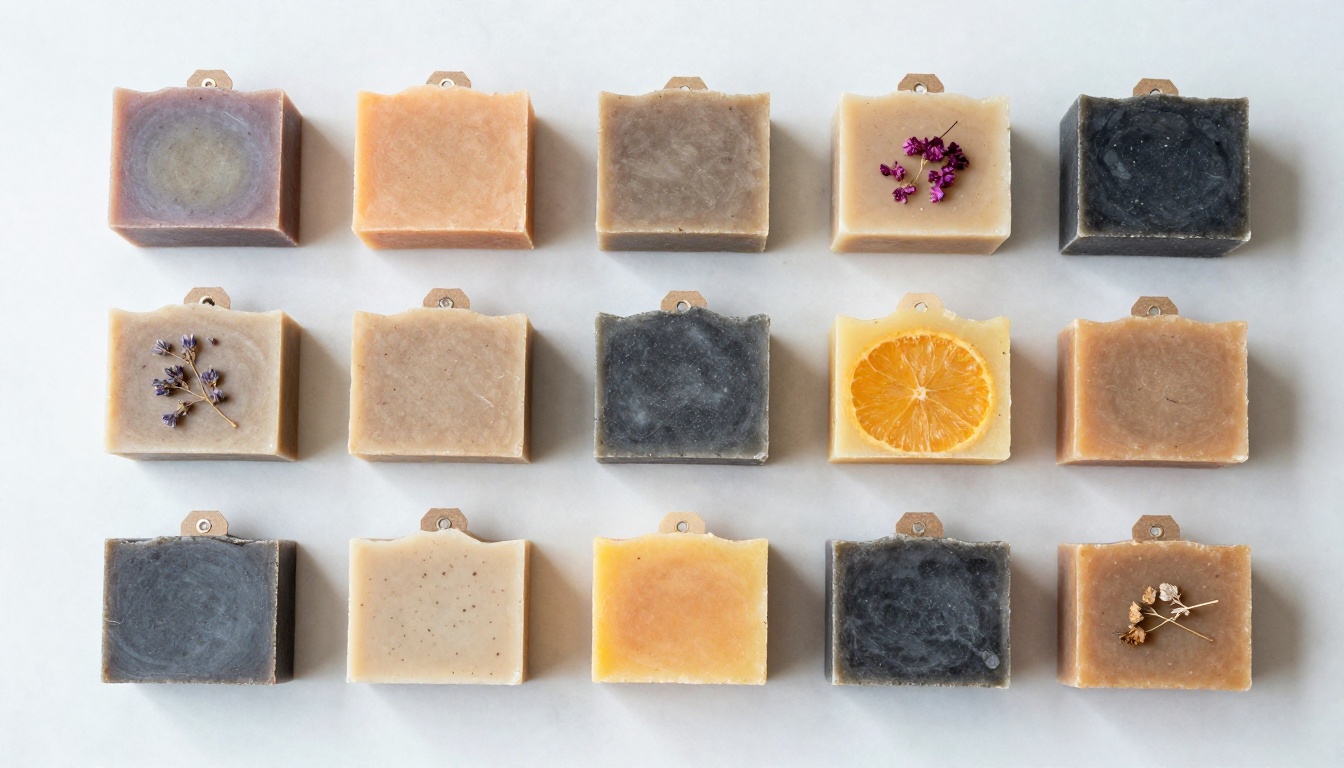
Four to six products per page is the sweet spot. Any more and photos shrink. Any fewer and the buyer flips endlessly. Use consistent photo sizes so the grid looks intentional.
Name Scents Like a Human
"Fresh Linen" tells the buyer nothing. "Fresh Linen: clean cotton, white musk, a little lemon" tells them what the shelf will smell like. Short scent notes help shop staff sell your product without needing to open every jar.
Pricing and Terms That Close Orders
Terms are where many small makers lose orders. Buyers want clear, boring, predictable numbers.
Set Minimums That Feel Fair
Most gift shops are small. A $500 opening minimum scares off half of them. Many candle and soap brands settle on something like this:
| Term | Common Range for Small Brands | Notes |
|---|
| First order minimum | $150 to $300 | Lower for new accounts, higher for exclusive lines |
| Reorder minimum | $100 to $200 | Encourages repeat buying |
| Case pack (candles) | 6 or 12 units | Matches shipping boxes |
| Case pack (soap) | 12 to 24 bars | Often sold by the dozen |
| Lead time | 5 to 14 business days | Longer for custom scents |
| Payment | Net 30 for approved accounts, prepay for new | Protects cash flow |
⚠️ Warning: Never leave shipping costs as a surprise. State whether you charge flat rates, actual freight, or offer free shipping above a threshold. Hidden shipping is the number one reason an order stalls at checkout.
Show the Margin
If a candle wholesales for $11 and retails for $22, say so. Buyers who see a 50 percent margin are far more comfortable than those who have to calculate it. For soaps, show the per-bar wholesale and the dozen price, because shops like to know both.
Photos That Sell Candles and Soaps
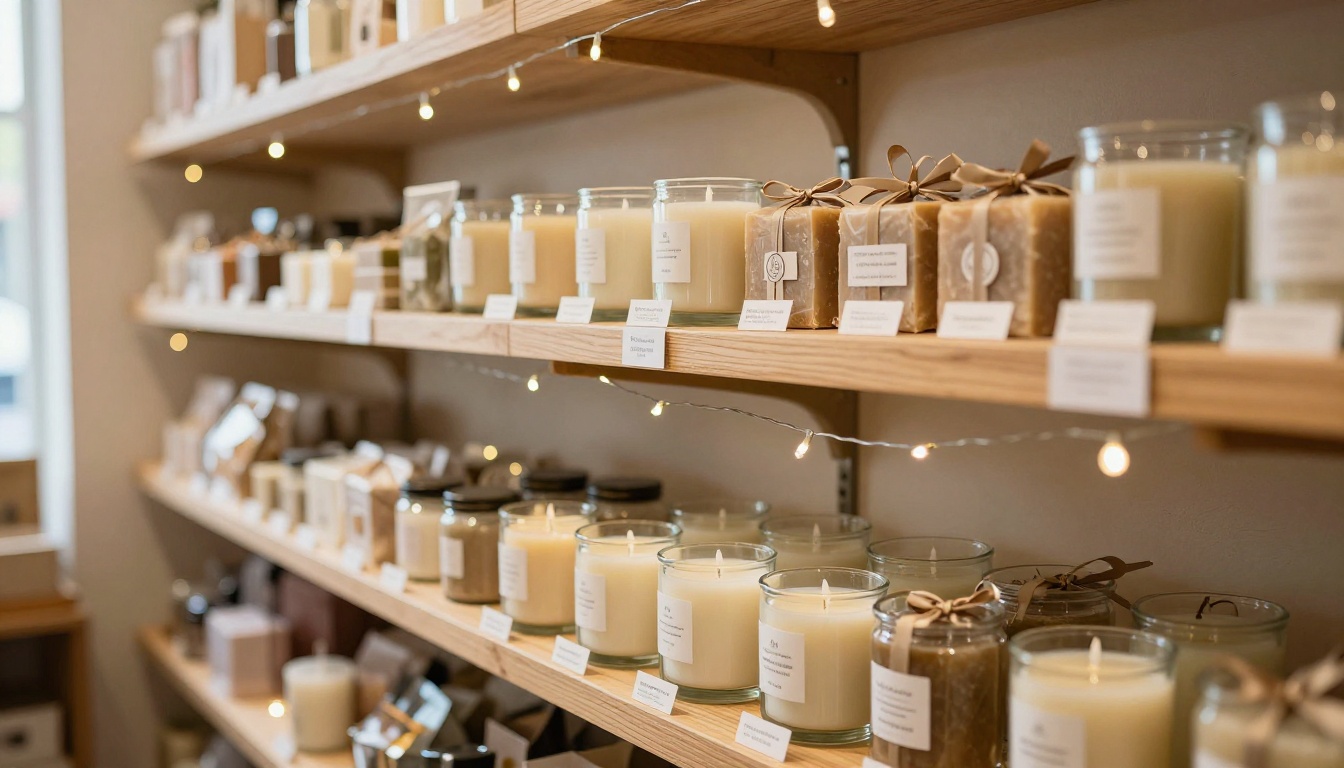
Candles and soaps are sensory products, and a photo has to do the work of smell and touch. Poor lighting makes wax look flat and soap look like a gray brick.
Lighting and Backgrounds
Use soft window light from the side. It brings out the glossy surface of wax and the texture of a handmade bar. Place products on neutral surfaces such as linen, light wood, or marble so the colors read accurately.
Mix Product Shots With Context
Every product should have a clean isolated shot, but pair a few with styled scenes: a candle beside a book, soaps in a ceramic dish. Buyers can picture those on their own shelves.
| Photo Type | Best Use | Tip |
|---|
| Isolated product | Product grid pages | White or light neutral background, consistent angle |
| Lifestyle scene | Cover and brand story | Show scale and mood |
| Close-up texture | Feature callouts | Highlight wick, wax finish, soap swirl |
| Group shot | Collection overview | Show how scents and colors coordinate |
| Packaging shot | Terms or gift page | Proves it arrives gift-ready |

✅ Best practice: Photograph every product at the same angle and distance. Consistency makes a line look established, even if you are a one-person studio.
Skip Heavy Filters
Over-edited photos backfire. If the lavender soap looks purple online and cream in person, the shop's customers will be disappointed and the buyer will not reorder.
From Workshop Reality to Page Details
Buyers ask practical questions. Answer them in the sheet so they do not need to email.

Candle Details Worth Listing
- Wax type (soy, coconut blend, beeswax)
- Weight and burn time
- Wick type and vessel material
- Fragrance load and whether it is phthalate free
- Warning labels included on the jar
Soap Details Worth Listing
- Process (cold process, melt and pour)
- Bar weight and dimensions
- Key ingredients in plain language, such as shea butter and oat
- Skin type notes (sensitive, dry, oily)
- Shelf life and cure time
Seasonal and Evergreen Lines
Mark which items are year-round and which are seasonal. Shops plan holiday orders months early, so put your seasonal order deadline in bold. A short table works well:
| Collection | Type | Order By |
|---|
| Core scents | Year-round | Anytime |
| Spring florals | Seasonal | February |
| Fall and harvest | Seasonal | July |
| Holiday gift sets | Seasonal | August |
Why a Digital Flipbook Beats a Plain PDF
A PDF attached to an email is fine. But it opens slowly on a phone, the file is heavy, and you have no idea whether anyone read it. A flipbook solves each of those.

| Feature | Plain PDF | Flipbook |
|---|
| Loads on mobile | Slow, pinch and zoom | Fast, responsive pages |
| Page turning feel | None | Realistic page effect |
| Shareable link | Attachment only | One clean link or embed |
| Update after sending | No, resend the file | Yes, same link stays current |
| Know who opened it | No | Yes, with analytics |
| Protect pricing | Hard | Password protection |
Wholesale pricing is sensitive. A password-protected flipbook lets you share trade pricing only with approved buyers, while your public site shows retail.
Real-World Example
Imagine a soap maker who attends two craft shows a year. At the booth, she hands out a card with a short link. Buyers scan it, flip through the line sheet on their phones, and email an order that evening. Because analytics show which pages get opened, she notices her mini soap set gets the most attention, so she moves it to page two.

How to Create Your Line Sheet Flipbook
You can turn a finished PDF into an interactive catalog in a few minutes. Here is the process using Flipbooks AI.
- Create your account. Create a free account on Flipbooks AI to get started.
- Design the PDF. Build your line sheet in any design tool, then export it as a PDF. Keep pages in a consistent size.
- Upload and convert. Use the PDF to Flipbook Converter to upload the file. Pages convert automatically into a flipbook with realistic page turns.
- Customize the look. Add your logo, pick brand colors, and choose the page effects. For product-heavy sheets the Product Catalog tool is a natural fit, and the Digital Catalog Maker works well for larger ranges.
- Add multimedia. Embed a short video of a candle being poured or a soap cutting, or add audio. It makes your brand feel real.
- Set sharing options. Copy a direct link, grab an embed code to embed the flipbook on your website, or turn on password protection for trade pricing.
- Track and improve. With the Professional plan, use analytics and lead generation to see who is reading and capture buyer emails. Check the pricing plans to compare options.
Offline downloads let buyers keep a copy for later, which helps when they are reviewing at a trade show with poor wifi. There are no watermarks, and the design is mobile-responsive, so your sheet looks professional on every screen. If your price list changes often, the Digital Price List Generator can keep that part tidy.
💡 Pro tip: Make two versions: a public lookbook with retail prices and a password-protected wholesale flipbook. Same photos, different pricing pages.
Common Mistakes to Avoid
Even attractive sheets lose orders. Watch for these:
- No clear minimums. Buyers will not ask. They will leave.
- Missing SKUs. Without codes, order emails turn into confusing back-and-forth.
- Outdated pricing. A flipbook with a live link fixes this, a PDF does not.
- Too many scents on one page. Group by collection instead.
- No contact path on every page. Put your email in the footer.

A Quick Self-Check
Before you send your sheet to a buyer, ask yourself:
- Can someone find the wholesale price in five seconds?
- Are the minimum and lead time on the first or last page?
- Do all photos share the same lighting and angle?
- Does the link or file open fast on a phone?
- Is there one obvious way to place an order?
If you answer yes to all five, you are ahead of most small brands.
Follow Up Like a Pro
A great line sheet gets you the first look. The follow-up wins the account. Send the link with a short note that mentions the shop by name and suggests two or three products that fit their customers. Offer a small sample set for qualified accounts, and set a reminder to check in after two weeks.
When a shop does place a first order, include a thank-you card and a reorder link. The easiest reorder is one where the buyer opens the same flipbook, taps your contact, and repeats last month's order.

Ready to Build Yours?
A strong line sheet is simple: clear photos, honest numbers, easy terms, and a link that works everywhere. The format you choose matters as much as the content, because buyers will judge your brand by how smoothly they can browse it.
Ready to publish your first catalog? Get started for free on Flipbooks AI, browse all flipbook tools to find the right template, and compare pricing plans when you want analytics and lead capture for your wholesale accounts.



