Your teacher just announced a comic book assignment, and your mind went blank. That is completely normal. The hardest part of any comic is not drawing, it is picking an idea small enough to finish and interesting enough to care about. This article gives you dozens of comic book ideas for school projects and first-time creators, plus a plan for turning one of them into a polished booklet you can share online with a tool like Flipbooks AI.
You do not need to be a great artist. Stick figures have carried entire webcomics. What matters is a clear story, readable panels and a finished product you are proud to hand in.
Why Comics Work So Well in Class
Teachers love comic assignments because they force you to condense. A book report has pages of room to ramble. A comic gives you maybe 8 to 12 pages, so every panel has to earn its place.
Comics also combine skills that usually live in separate subjects:
- Writing: dialogue, pacing and a beginning, middle and end
- Art and design: layout, color and visual hierarchy
- Research: facts for history, science or literature projects
- Presentation: deciding what the reader sees first
💡 Pro tip: Graders reward clarity over polish. A simple comic with a strong story and consistent characters beats a gorgeous one that nobody can follow.
Pick an Idea That Fits Your Subject
Start from the assignment, not from your imagination. If the project is for history class, a time-travel premise is more useful than a superhero origin. Here is a quick map of ideas by subject.
| Subject | Comic idea | Why it works |
|---|
| History | A day in the life of a soldier, farmer or inventor | Shows real events through one person's eyes |
| Science | A water droplet travels through the water cycle | Gives a process a simple character arc |
| Literature | Retell a chapter from a different character's view | Proves you understood motives and themes |
| Math | A detective solves a case using fractions | Turns steps into clues |
| Health | A sandwich argues with a bag of chips | Funny and memorable |
| Languages | Two pen pals mix up idioms | Practices vocabulary in context |
History and Social Studies
History comics are the easiest to structure because the timeline is already written. Choose one moment, not an entire war or century. A single afternoon at a market in ancient Rome gives you more story than a summary of the whole empire.
- A messenger carrying news before the invention of the telephone
- A child watching a historic speech from the back of the crowd
- An archaeologist who finds a mysterious object and traces its origin
- Two inventors racing to finish a patent first
Science and Nature
Science comics shine when you give an invisible process a face. Cells, planets and molecules can all be characters with goals and problems.
- A seed fighting to become a tree
- The life of a raindrop from ocean to cloud to river
- A tiny white blood cell defending the body against a cold
- A rover on Mars sending postcards home
Literature and Language
Rewriting a scene from a different viewpoint is a smart way to show deep reading. Tell the story of a famous novel from the side character who barely speaks. You can also adapt a short poem into panels, using each stanza as a page.
Story Ideas for First-Time Creators
If the assignment is open, pick a premise that is short, funny or personal. These ideas work because they need very few characters and settings.
- The worst day ever, told in six panels. Each panel gets slightly worse, ending with a twist.
- An object's secret life. What does your school locker do after the bell rings?
- Two rivals forced to share a project. Conflict plus a reluctant friendship is hard to resist.
- A new kid at school. Draw from real feelings, and the emotion carries the weak art.
- A tiny rule that spirals. A teacher says "no running" and things escalate absurdly.
- A pet's point of view. Dogs and cats have strong opinions about homework.
- A superpower with a ridiculous downside. You can fly, but only three inches off the ground.
- A mystery in the cafeteria. Who stole the last slice of pizza?
✅ Best practice: Write your idea in one sentence: "A [character] wants [goal], but [obstacle]." If you cannot fill in the blanks, the idea is not ready.
Plan Before You Draw
Beginners often start drawing page one and run out of steam on page four. Planning takes twenty minutes and saves hours.
Build a Thumbnail Storyboard
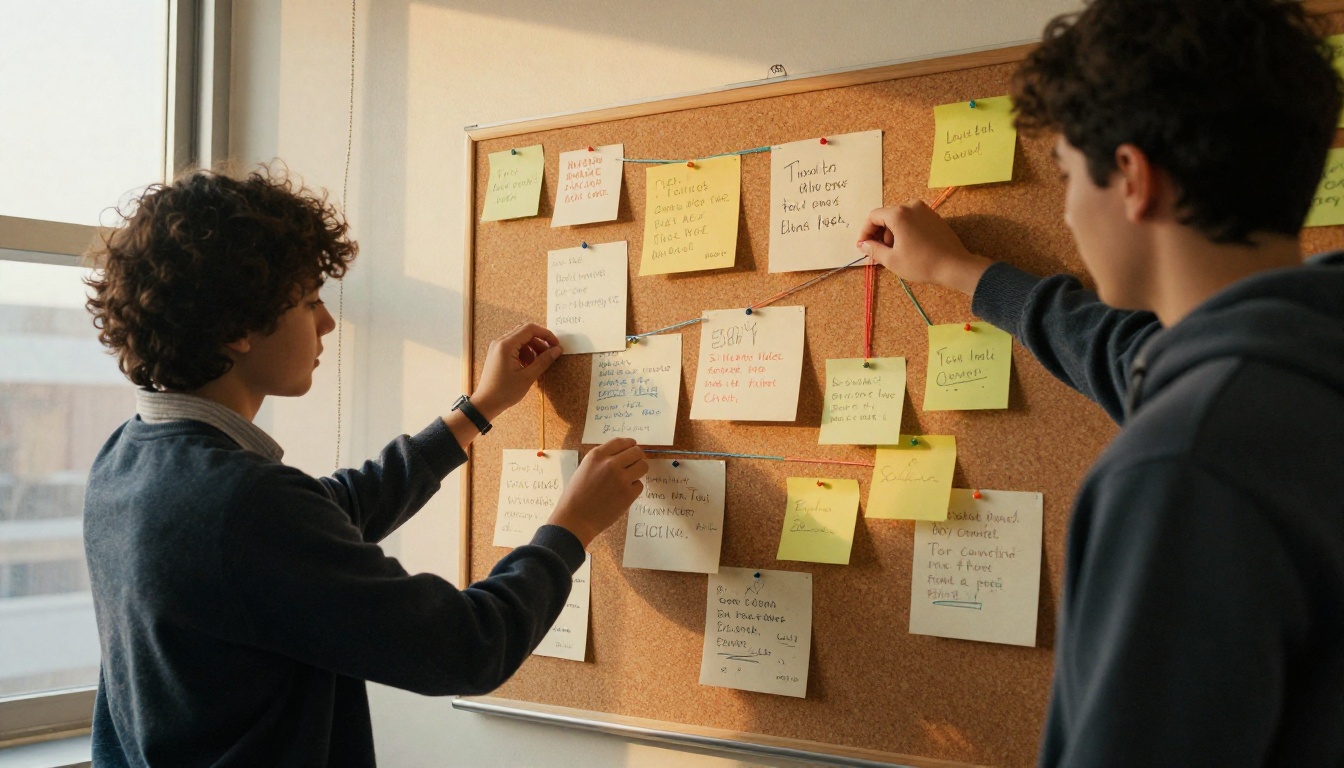
Take a sheet of paper and divide it into small boxes, one for each page. In each box, scribble the main action with stick figures. No details. You are testing whether the story works, not making art.
Choose a Page Count
Smaller is better. A finished 8-page comic is more impressive than an unfinished 30-page epic. Use this table to match length to deadline.
| Time available | Pages | Panels per page | Realistic goal |
|---|
| One weekend | 4 to 6 | 4 to 6 | Single short gag or scene |
| One week | 8 to 10 | 4 to 6 | Complete mini story with a twist |
| Two to three weeks | 12 to 16 | 3 to 6 | Short story with a subplot |
| A full term | 20 or more | 3 to 6 | Chapter of a longer series |
Keep the Cast Small
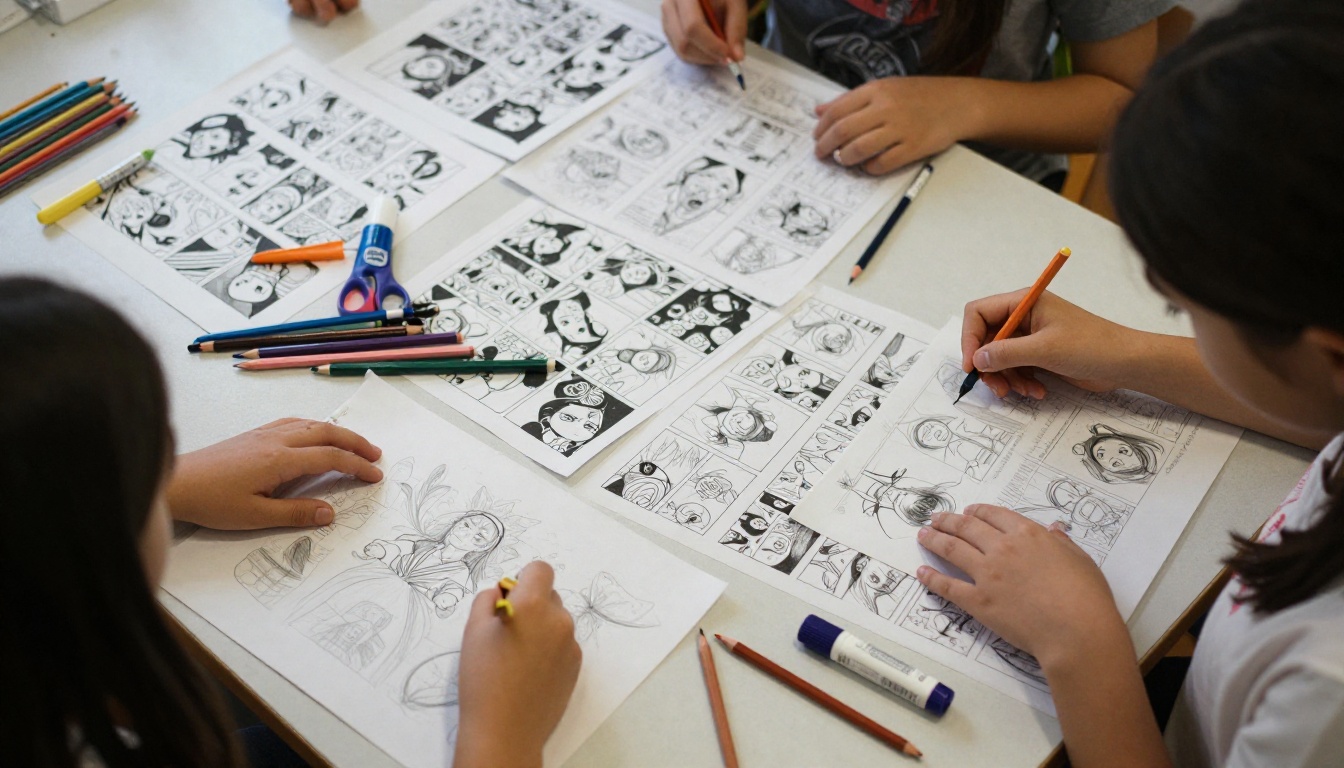
Every extra character is one more face to draw on every page. Aim for two main characters and, at most, one or two background ones. Give each a simple signature feature: a hat, glasses, a striped shirt. When readers can identify a character by silhouette, your art looks consistent even when it is not.
Panel Layout Basics
Panels guide the reader's eye, and a few simple habits will make your comic feel professional.
- Read order: Left to right, top to bottom. Never make readers guess.
- Panel size signals importance: A big panel slows time down. A narrow one speeds it up.
- Gutters: Leave a consistent gap between panels, about the width of a pencil.
- Speech bubbles first: Letter the text before drawing the final art, so the words never get squeezed.
- Limit words: Two short sentences per bubble is plenty.
Common Layout Choices
| Layout | Best for | Difficulty |
|---|
| Uniform 2x3 grid | Beginners, steady pacing | Easy |
| Mixed sizes | Action scenes and emphasis | Medium |
| Full-page splash | One dramatic reveal | Medium |
| Vertical scroll strips | Web publishing | Easy |
⚠️ Warning: Do not put your most important speech bubble in the bottom right corner of a page without a clear path to it. Readers tend to skip it.

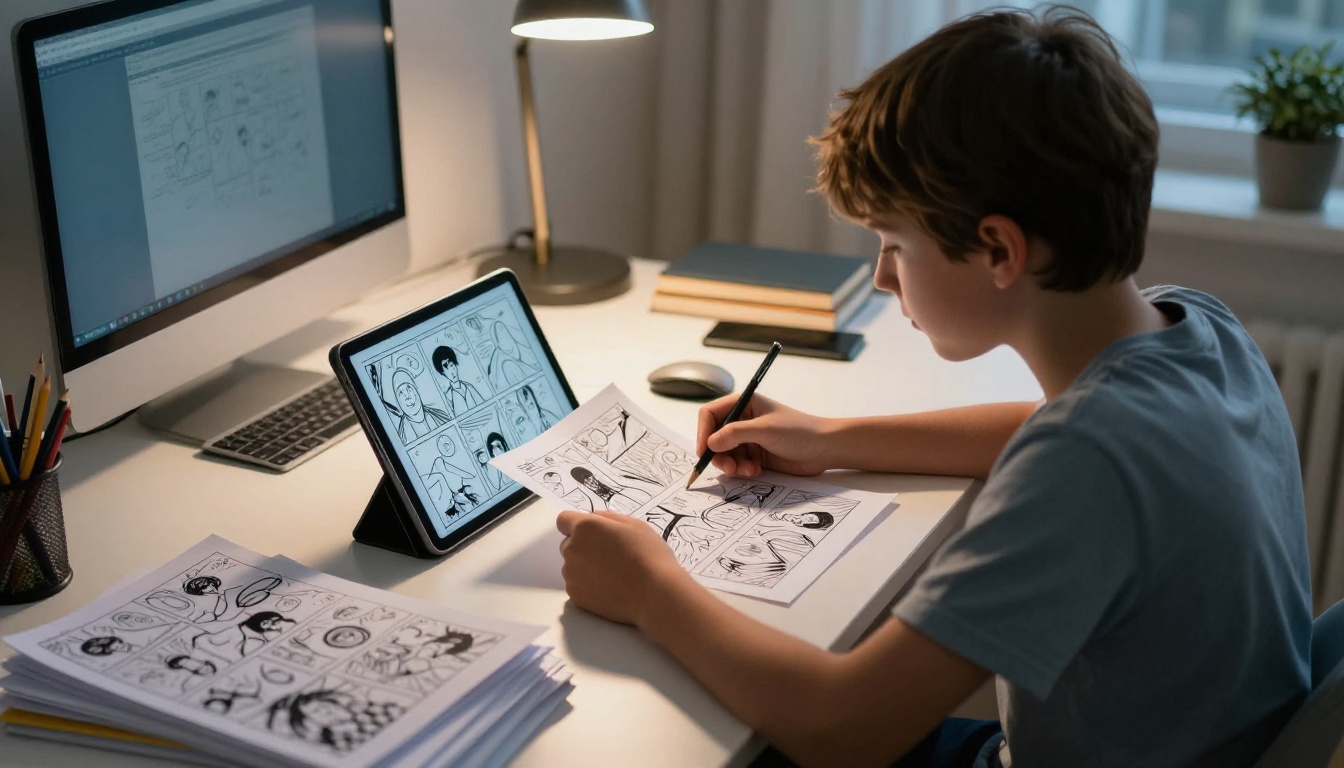
You can make a great comic with a pencil, a black pen and printer paper. Digital tools help with fixes, but they are optional.
| Approach | Cost | Pros | Cons |
|---|
| Pencil and paper | Very low | Fast, no setup, great texture | Hard to fix mistakes |
| Tablet and stylus | Medium | Undo button, layers | Takes time to get comfortable |
| Free browser drawing apps | Free | Works on school laptops | Fewer brushes |
| Photo comics | Free | Use your own photos, no drawing needed | Needs good lighting and planning |
If drawing makes you nervous, the photo comic is a legitimate style. Stage scenes with friends or toys, take pictures, and add speech bubbles afterward.
Three Quick Art Habits
- Draw lightly in pencil first, then ink only what you are sure about.
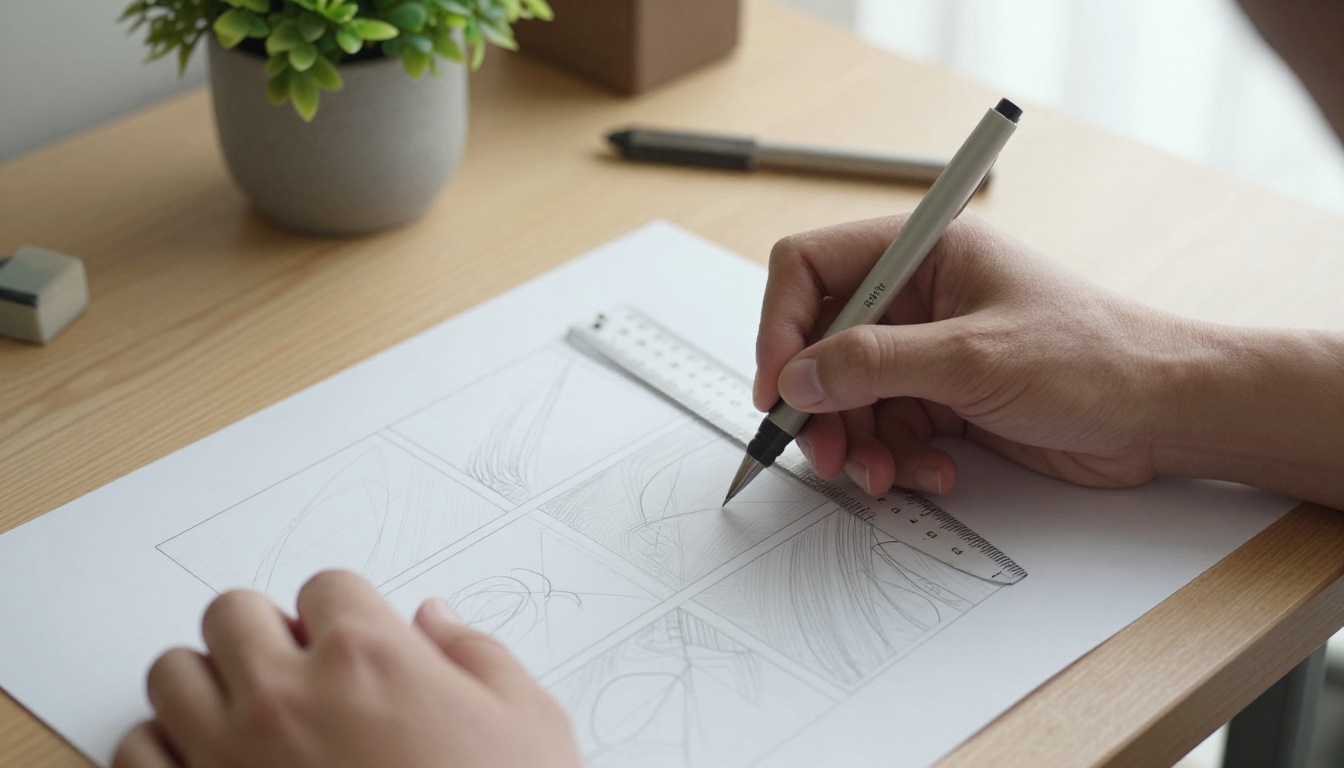
- Use a ruler for panel borders. Straight lines make hand-drawn art look intentional.
- Limit your colors. Two or three colors, used consistently, look better than a rainbow.
How to Publish Your Comic as a Flipbook
Handing in loose pages or a flat PDF works, but a flipbook feels like a real comic. Readers turn pages with a realistic effect, and you can share one link with your teacher, family and classmates. Here is how to do it with Flipbooks AI.
- Scan or export your pages. Use a phone scanner app or your tablet's export option. Save every page in the same order and orientation.
- Combine them into one PDF. Most scanner apps do this automatically. Check that the page order is right.
- Open the platform. Create a free account and choose the PDF to Flipbook Converter.
- Upload your PDF. The conversion takes a short moment, and each page becomes a flippable spread.
- Customize the look. Pick a background color that matches your story, adjust page effects and add your name or class branding.
- Add multimedia if it suits you. You can embed audio or video, such as a short narration of the opening scene.
- Share it. Copy the direct link, or use the embed option to place it on a class website. You can also add password protection if the project should stay private.
For a longer story, the Interactive E-Book Publisher is a good fit. If you plan to bind several students' comics into one class anthology, try the Course Material Publisher or the Yearbook Flipbook Maker.
💡 Pro tip: Mobile-responsive viewing means your teacher can read it on a phone, with no watermarks distracting from your art.
Which Format Should You Pick?
| Format | Looks like a real comic | Easy to share | Interactive extras |
|---|
| Printed stapled booklet | Yes | Hand it over | No |
| Plain PDF | Somewhat | Email attachment | No |
| Image gallery | No | Link | No |
| Flipbook | Yes, with page turning | One link or embed | Audio, video, links |
Professional plan features, such as analytics, tell you how many people opened your comic and how long they stayed. Check the pricing plans if you want those extras for a bigger project, like a class fundraiser or a portfolio piece.

Checklist Before You Hand It In
Run through this list before submitting. Teachers usually grade on a handful of the same points.
| Grading area | Question to ask yourself | Done? |
|---|
| Story | Does it have a clear beginning, middle and end? | ☐ |
| Characters | Can I tell them apart at a glance? | ☐ |
| Layout | Is the reading order obvious on every page? | ☐ |
| Text | Is the lettering readable and free of typos? | ☐ |
| Subject content | Are the facts accurate and clearly shown? | ☐ |
| Presentation | Are the pages in order, with a title page and credits? | ☐ |
Five Mistakes to Avoid
- Too many words. If a bubble needs four lines, trim it.
- Inconsistent characters. Draw a reference sheet and keep it beside you.
- No ending. A rushed last page is better than none, but plan a real one.
- Tiny lettering. It must stay readable on a phone screen.
- Leaving it to the last night. Set mini deadlines: storyboard, pencils, inks, lettering.

Ways to Present and Share Your Work
A comic is meant to be read, so show it off. Teachers often schedule a short presentation, and a few small choices make it memorable.
- Read the opening page aloud and let the class turn to the rest.
- Hang printed pages in the hallway next to a QR code that links to your online version.
- Build a class anthology where every student contributes one short story.
- Enter a school contest. Many libraries and districts run comic or zine events.
- Add it to a portfolio. The Digital Portfolio Creator is handy for art or design applications.
Example: A Two-Week Plan
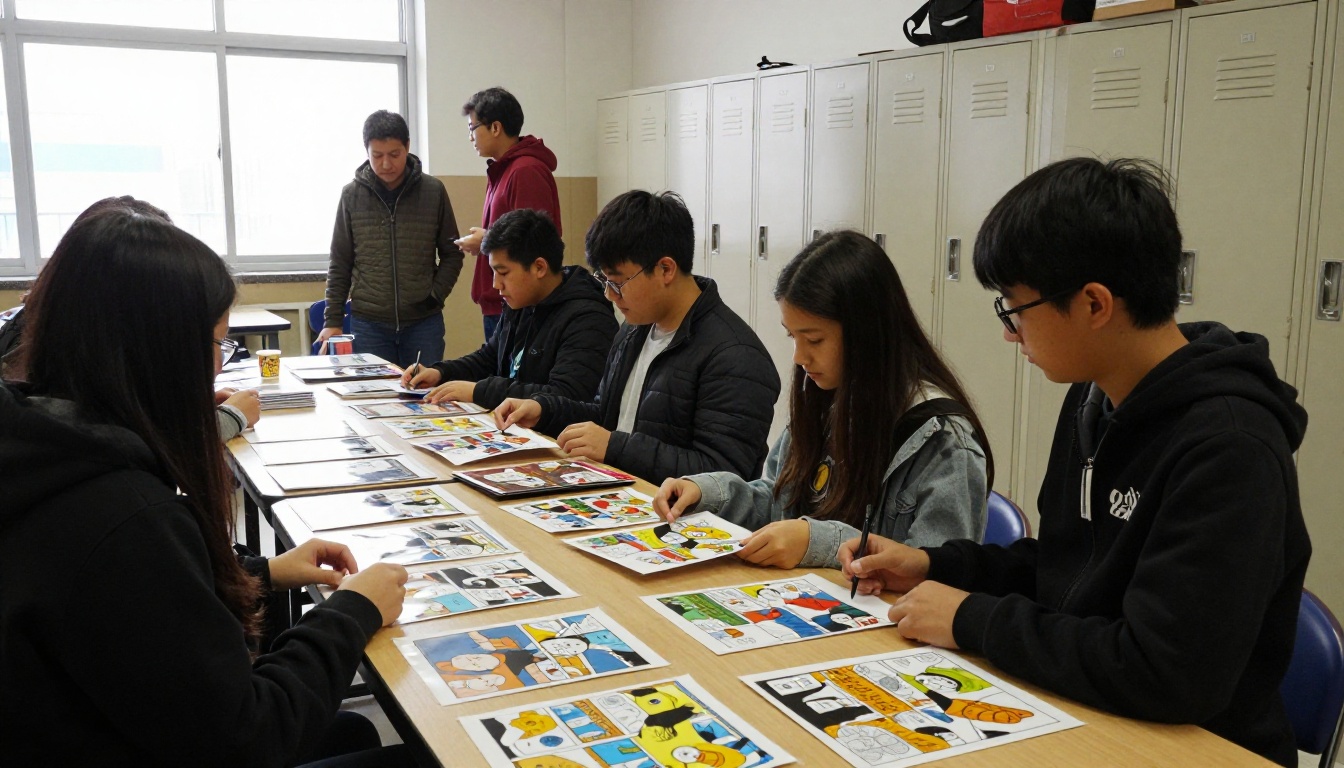
Here is how a first-time creator might schedule an 8-page comic about the water cycle.
| Day | Task |
|---|
| 1 | Pick the idea, write the one-sentence pitch |
| 2 | Thumbnail storyboard of all 8 pages |
| 3 to 4 | Character sheet and rough pencils for pages 1 to 4 |
| 5 to 6 | Rough pencils for pages 5 to 8 |
| 7 to 9 | Inking and erasing |
| 10 to 11 | Color and lettering |
| 12 | Scan, build the PDF and convert it to a flipbook |
| 13 | Proofread with a friend |
| 14 | Submit and share the link |
Start Your First Comic Today
Pick one idea from the lists above, write your one-sentence pitch and sketch six tiny boxes. That is all it takes to begin. Once your pages are done, get started for free on Flipbooks AI and turn them into a flipbook people can actually flip through.
Browse all the flipbook tools to see what else you can publish, or compare pricing plans when your projects grow. Your story is already in your head. Now give it panels.