Eid is the one day of the year when a child's handwriting on a card can make a grandmother cry happy tears, even if she lives three countries away. The trouble is that postal mail is slow, and relatives often receive cards after the celebration is over. The fix is simple: let kids make the card by hand, then send it digitally. In this article you will find Eid card ideas kids can make and send digitally, with supply lists, age-based projects and sharing options, including a page-turning greeting you can build with Flipbooks AI.
Why Digital Eid Cards Work
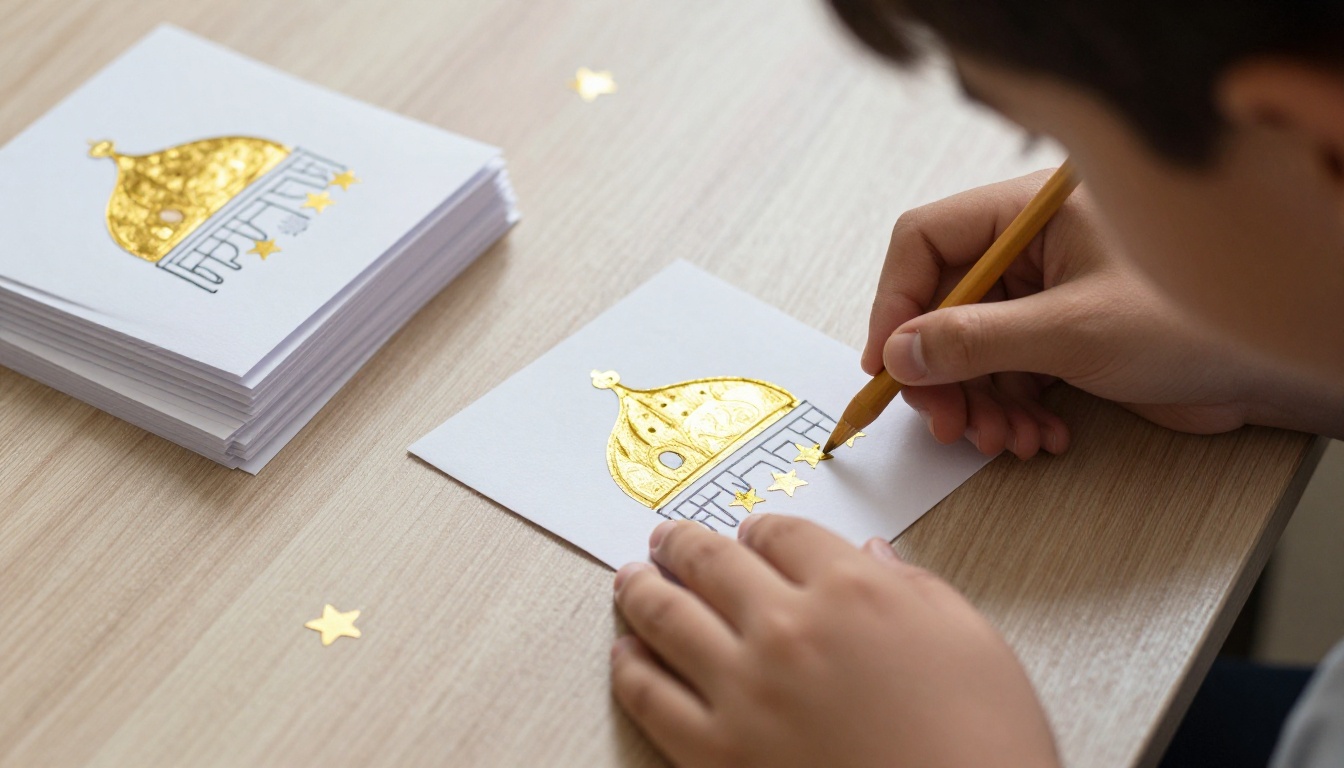
A handmade card carries something a store-bought e-card never will: the wobbly crescent moon, the glitter smudge, the misspelled "Mubarak" that nobody dares to correct. Digital delivery keeps all of that and adds speed.
Here is what you gain when kids make the card on paper and share it on a screen:
- Nothing arrives late. The card lands in a phone the moment it is finished.
- Everyone gets one. Making 15 copies by hand is exhausting. Sending one file to 15 people takes seconds.
- The original stays safe. You can keep the paper card in a memory box and still share it.
- Distance disappears. Cousins abroad open it on Eid morning along with everyone else.
💡 Pro tip: Let your child choose who gets the card before they start. A card made for "Nana" looks different from one made for "everyone," and kids put more care into a card with a real face attached to it.
Supplies You Probably Already Own
You do not need a craft store trip. Most of these items are already in a school bag or kitchen drawer.
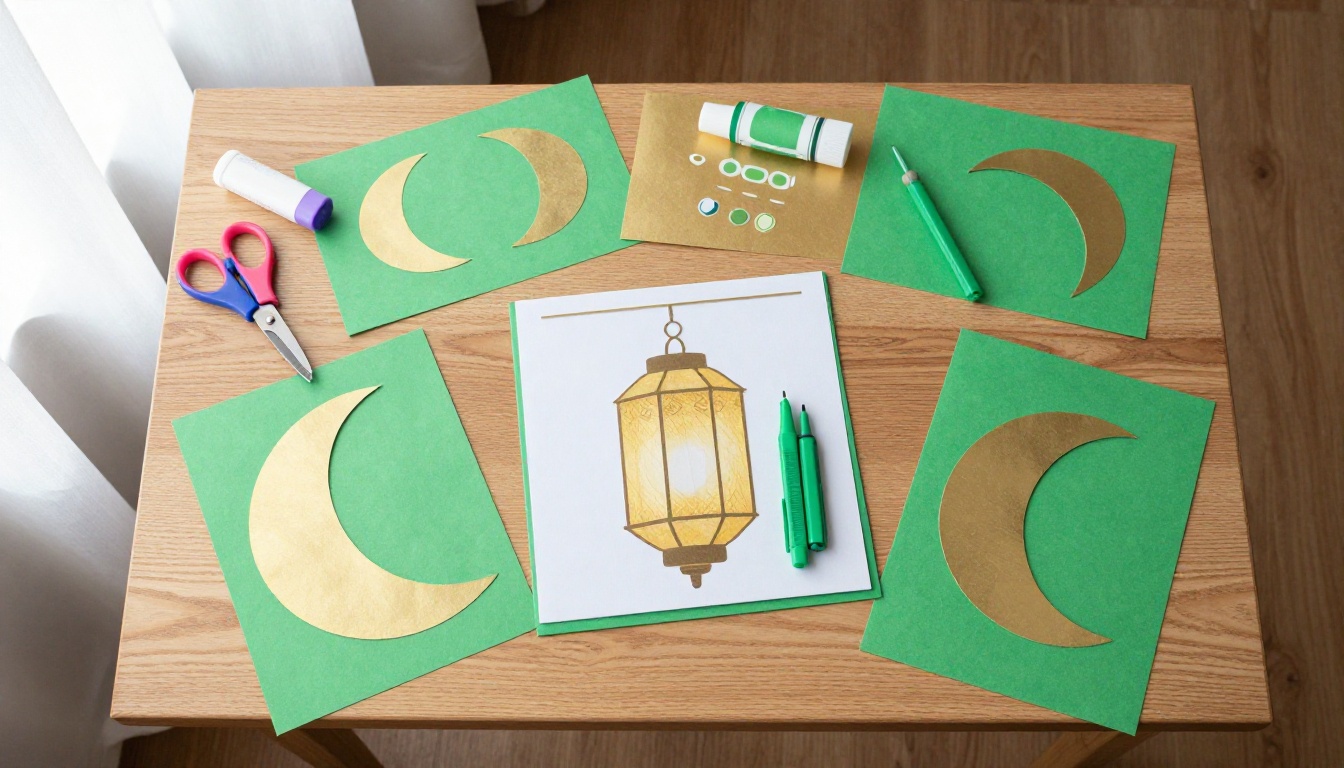
The Basic Kit
- White or cream card stock (thicker paper holds paint better)
- Green, gold, blue and white construction paper
- Child-safe scissors and a glue stick
- Colored pencils, markers or crayons
- Star and crescent stickers
- A ruler for straight edges and folded creases
Nice Extras
- Watercolor set and a brush
- Glitter glue (it photographs beautifully)
- Metallic gel pens for writing greetings
- Cotton balls, buttons or yarn for texture
- A small tabletop stand or stack of books to prop the card up for photos
Eid Card Ideas by Age Group
Not every child can cut a perfect lantern. The best card is the one a kid can finish without a parent taking over. This table matches ideas to ability.
| Age | Best card idea | Skills used | Time needed |
|---|
| 3 to 5 | Handprint crescent and star stickers | Stamping, sticking | 15 minutes |
| 6 to 8 | Watercolor crescent moon with a written wish | Painting, early writing | 30 minutes |
| 9 to 11 | Pop-up mosque or lantern card | Folding, cutting, layering | 45 minutes |
| 12 and up | Illustrated story card or mini flipbook | Drawing, sequencing, layout | 60 minutes or more |
Ages 3 to 5: Handprint Crescent
Dip a small hand in green or gold washable paint, press it on the card in an arc, and add star stickers around it. A grown-up writes "Eid Mubarak" underneath. Toddlers love this one because the result looks impressive with almost no skill.
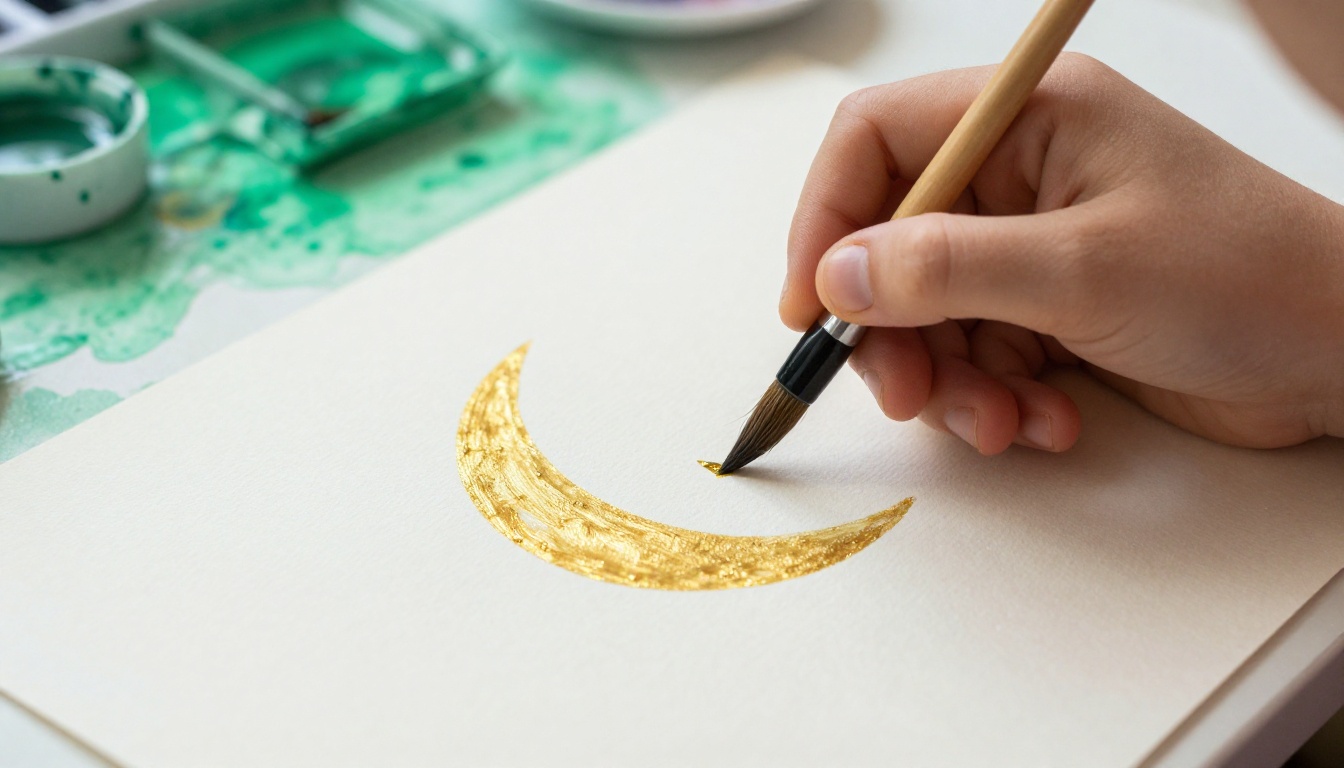
Ages 6 to 8: Watercolor Moon
Paint a pale emerald wash across the card, let it dry for a few minutes, then paint a golden crescent on top. Younger kids can use a cotton swab instead of a brush.
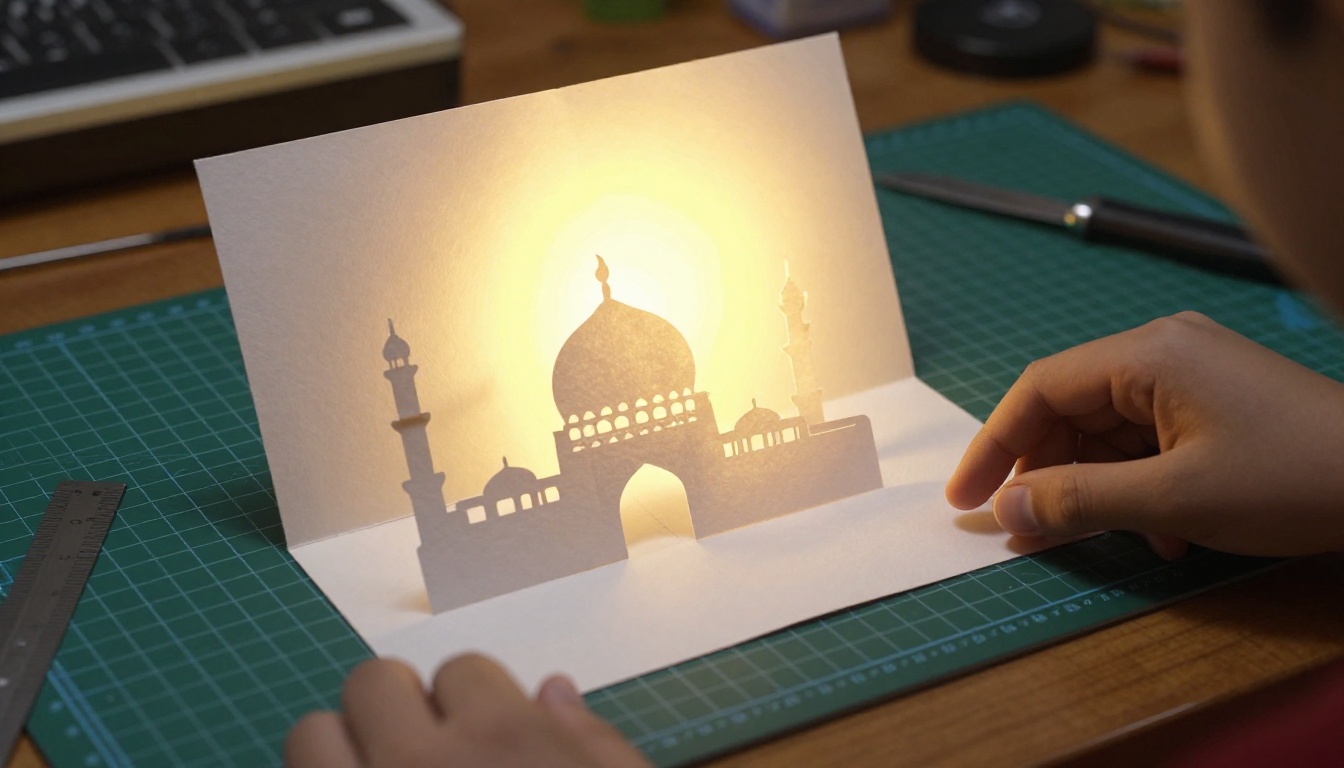
Ages 9 to 11: Pop-Up Mosque
Fold a sheet of card stock in half. Cut two parallel slits from the fold, push the strip forward to form a step, then glue a paper mosque silhouette on the step. When the card opens, the mosque stands up. It is simpler than it sounds, and it makes a great photo from an angle.
Teens: Story Cards
Older kids often feel cards are for little children. Give them a different challenge: draw a four-panel story about Eid morning, from putting on new clothes to the first plate of sweets. This is also the perfect project for a flipbook, which we cover below.
Ten Greeting Ideas Kids Can Write
Blank space on a card can freeze a child. These short lines help:
- "Eid Mubarak! I saved you the biggest date."
- "Happy Eid, Grandma. I wish I could hug you today."
- "Eid Mubarak to the best cousin in the world."
- "May your Eid be as sweet as baklava."
- "I made this card with my own hands, just for you."
- "Wishing you laughter, new clothes and lots of sweets."
- "Eid Mubarak, teacher. Thank you for helping me read."
- "Dear friend, I hope your Eid is full of joy."
- "Taqabbal Allahu minna wa minkum."
- "Eid Saeed! Here is my drawing of our family."
✅ Best practice: Keep the message to one or two lines. Short text stays readable when the card is viewed on a small phone screen.
Craft Together, Then Share
Cards made side by side tend to get more detail. Siblings borrow ideas, cousins compare lanterns, and the table fills with a happy mess. If the family is large, assign roles: one child draws, one cuts, one writes the greeting, and everyone signs at the end.
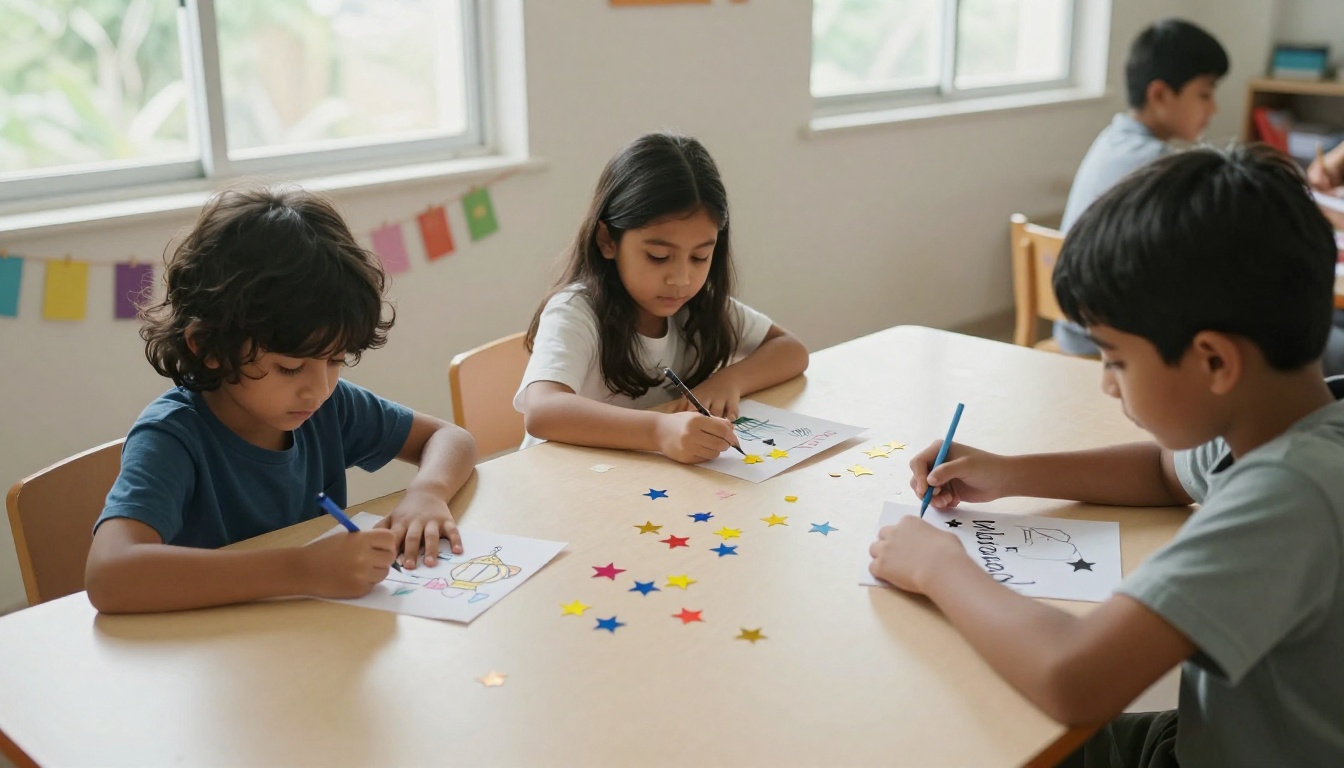
Stickers are a good equalizer for mixed ages. A small child can place gold stars on a card that an older sibling has drawn, and both feel proud of the final piece.
How to Digitize a Paper Card
Once the glue is dry, you have two easy options: photograph the card or scan it. Both work. A scan is flatter and cleaner, while a photo shows the pop-up depth and texture.
Photographing the Card
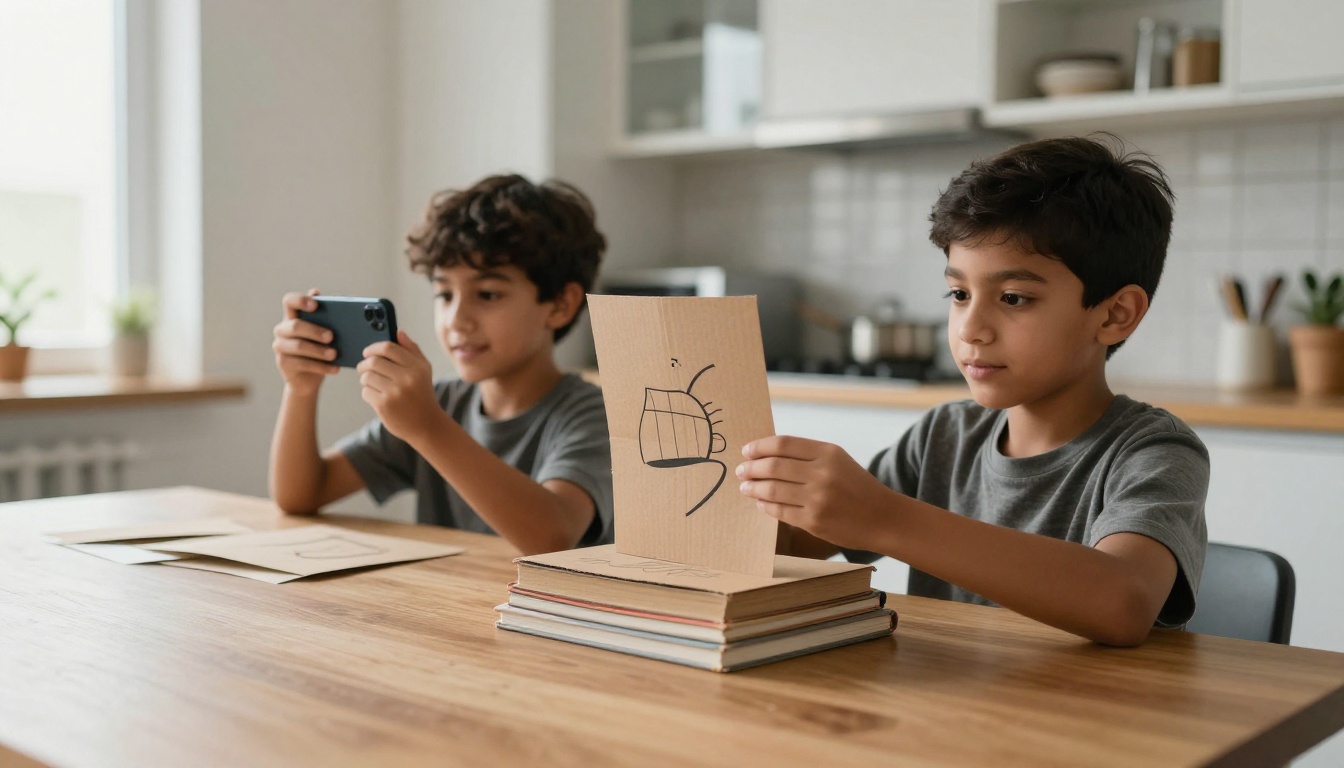
- Place the card on a plain table near a window. Daylight is better than a lamp.
- Stand it upright against a stack of books for pop-up cards, or lay it flat for drawings.
- Hold the phone parallel to the card so the edges do not look slanted.
- Tap the screen to focus on the card, then take three or four shots.
- Pick the sharpest one and crop out the clutter.
Scanning the Card
Most phones include a document scanner inside the camera or notes app. It corrects perspective automatically and brightens the paper. For a flat drawing, a scan usually gives the most faithful colors.
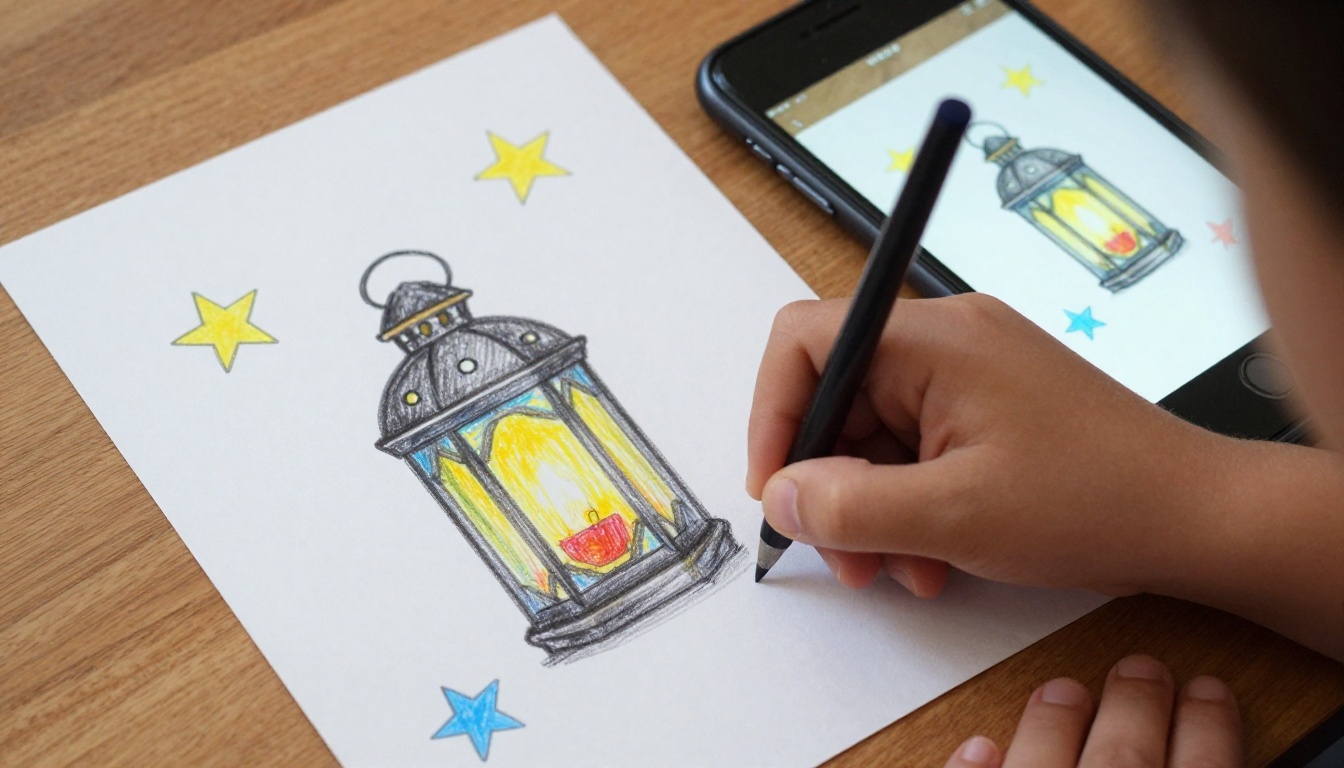
⚠️ Watch out: Glitter and metallic ink create glare. Tilt the card slightly or shoot from a small angle so the sparkle shows without washing out the drawing.
Ways to Send the Finished Card
Picking the right sharing method depends on who is receiving it. A grandparent may prefer a simple message, while a school class might need a link.
| Method | Best for | Pros | Cons |
|---|
| Messaging app photo | Close family | Instant, familiar | Gets lost in chat history |
| Email attachment | Older relatives | Easy to keep and print | Large files can bounce |
| Shared album link | Many cousins | One place for all cards | Needs an account for some apps |
| Flipbook link | Multi-page cards, stories | Page-turn effect, no downloads | Needs a few minutes to set up |
For a single image, a messaging app is fine. For anything with more than one page, a link is cleaner than ten separate attachments that arrive out of order.
Build an Eid Flipbook Greeting
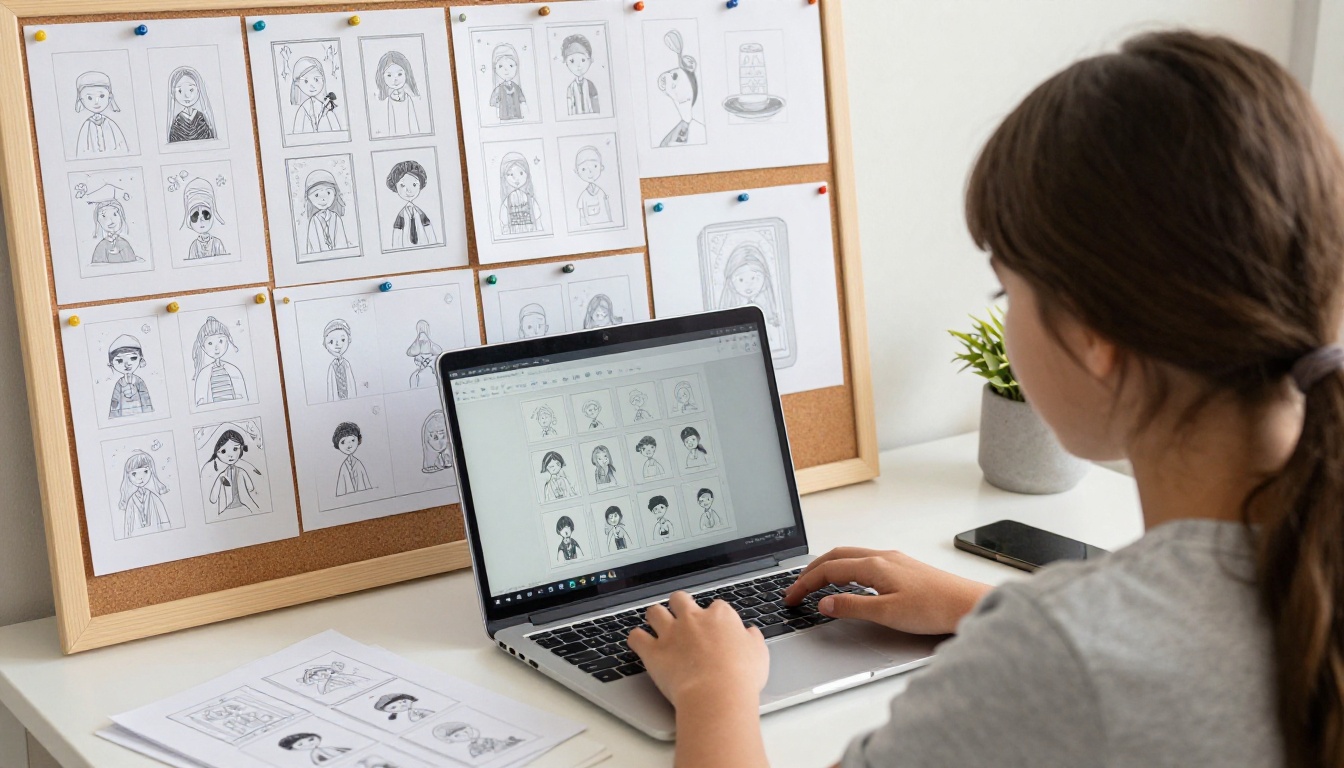
This is where a simple card becomes something memorable. Imagine a child drawing six pages: the crescent appearing in the sky, the family dressing up, the visit to grandparents, the table of food, a hug, and a final "Eid Mubarak." Turned into a flipbook, it looks like a tiny storybook that relatives can flip through on any phone.
How to Create an Eid Flipbook with Flipbooks AI
- Collect the pages. Scan or photograph each drawing and combine them into a single PDF. Most phone scanners can export multiple pages at once.
- Open the platform. Go to Flipbooks AI and create an account. A parent should handle this step.
- Upload the PDF. The PDF to Flipbook Converter turns your file into a page-turning book in moments.
- Customize the look. Choose a background color that matches the card, such as deep green or soft cream, and keep the page-turn effect on.
- Add extras. You can embed a short audio message, such as the child saying "Eid Mubarak," so the greeting has a voice.
- Choose how to share. Copy the direct link, or use the embed option if a family website needs it. Password protection is available for private family greetings.
- Send the link. Paste it into a group chat or an email and watch the replies arrive.
💡 Pro tip: Make the first page a cover with the child's name and the year. The flipbook then feels like a keepsake, and family members will want to reopen it every Eid.
Every flipbook on the platform is free of watermarks, and it works on phones without any app install. If you want analytics, such as seeing how many relatives opened the card, check the pricing plans for the Professional tier. Browse all flipbook tools if you want to try other formats, such as a digital portfolio for a child's art collection or a wedding album style layout for Eid family photos.
Comparing Card Formats
| Format | Effort | Wow factor | Works offline |
|---|
| Single photo | Low | Medium | Yes |
| Multi-page PDF | Medium | Medium | Yes |
| Flipbook link | Medium | High | Needs internet, offline download available on some plans |
| Video slideshow | High | High | Yes |
Real Family Scenarios
Seeing how other households do it makes the idea easier to copy.
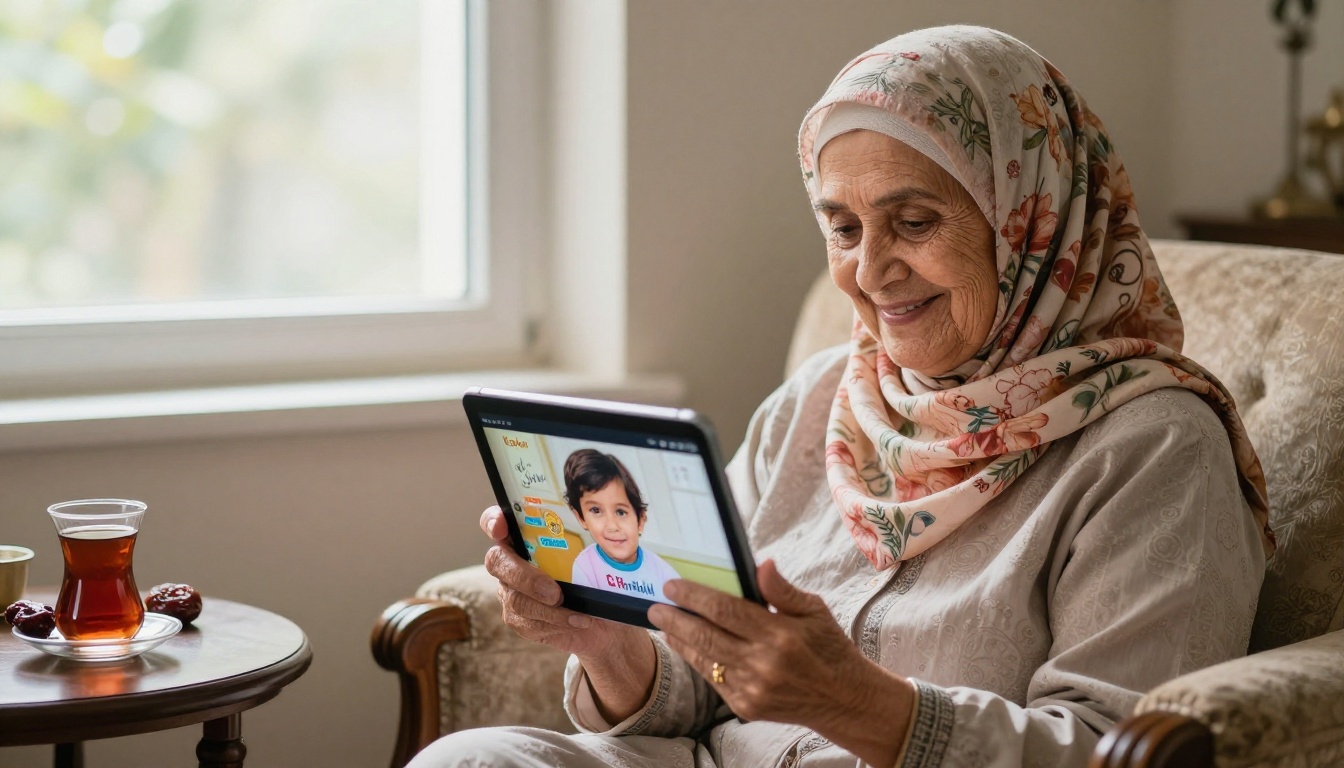
- The long-distance grandparent. Two siblings in Canada paint moons for their grandmother in Cairo. The parent photographs both cards, and the grandmother opens them on a tablet while having tea.
- The big cousin group. Eight cousins each draw one page of a shared story. An older cousin assembles the pages into one PDF, uploads it, and sends a single link to all the aunts and uncles.
- The classroom. A teacher asks every student to design a card for a local nursing home. The photos are combined into one flipbook and shared with the home's staff.
For a school project, the School Newsletter Creator is also a handy way to gather several class cards into one shareable issue.
Safety and Privacy Tips
Kids' artwork is precious, and so is their privacy. A few small habits keep sharing safe.
- Send cards to people you know, through private chats rather than public posts.
- Avoid writing a child's full name, school or address on the card.
- If you post to a family group, check who is in the group first.
- Use password protection on any link that includes photos of children.
- Ask your child before sharing. Most are proud to say yes, and the question teaches them that their work belongs to them.
Make It a New Tradition
The best part of this project is not the technology. It is the hour your family spends at one table with paper, paint and a plate of dates, before the guests arrive. The digital step simply makes sure the card reaches everyone it was made for.
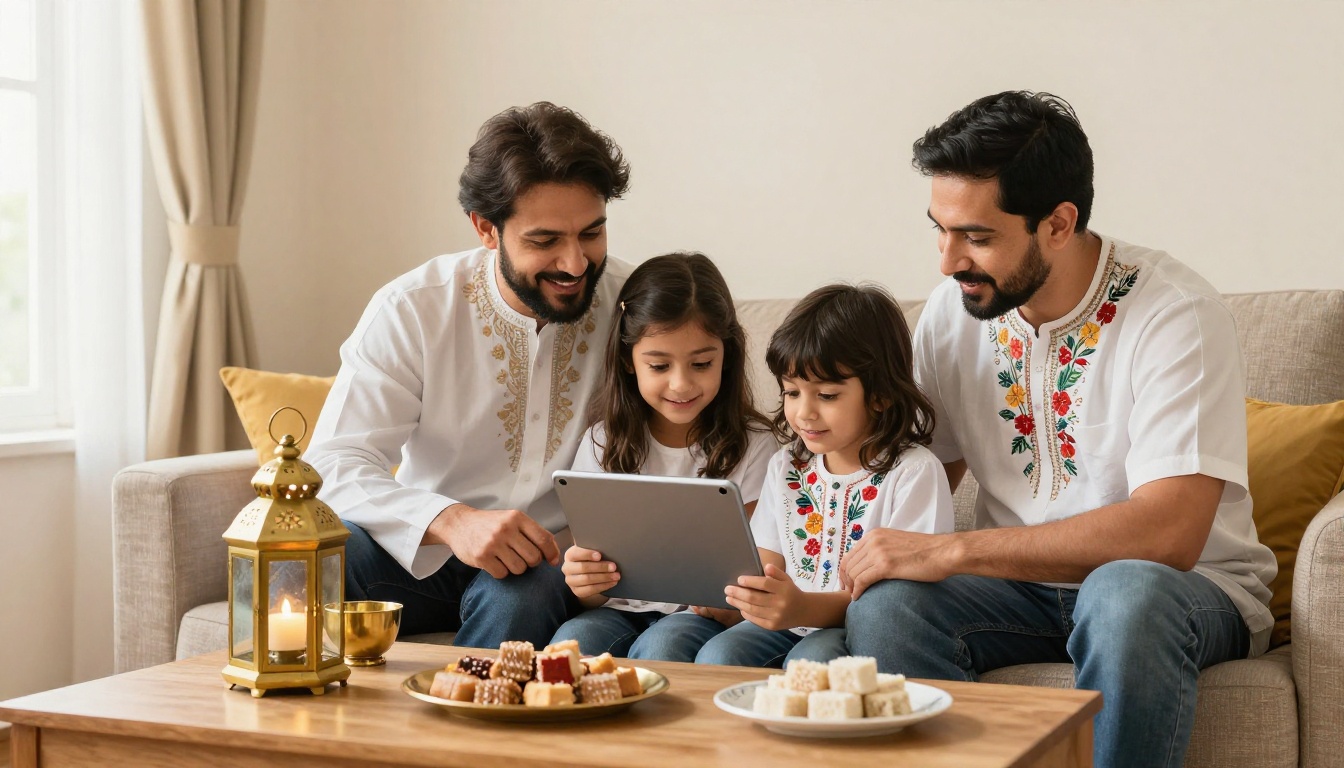
Start a simple routine this year. Pick a card idea from the age table, set out the supplies the day before, and let the kids take over. Then photograph the results and send them off. Next Eid, you can pull last year's flipbook from your chat history and see how much their drawing has changed.
Ready to turn drawings into a flipbook the whole family can open? Get started for free on Flipbooks AI, browse the tools and templates to find the right fit, or compare pricing plans to choose what works for your household. Eid Mubarak to you and everyone who opens your cards.



