The email lands on a Tuesday morning: a boutique owner loves your work and wants to stock it. Your stomach drops and your heart races at the same time. A first wholesale order checklist for handmade brands is exactly what turns that panic into a plan. Wholesale is a different game from selling at markets or on your own shop, and the details you miss early can cost you money, time and a buyer's trust. If you already have a product catalog ready, great. If not, you can build a shareable one with Flipbooks AI in an afternoon, and we will show you how further down.
Below you will find every step, in the order it actually happens, from checking your margins to following up after delivery.

Why Your First Order Matters
A first wholesale order is more than a sale. It is a trial. The retailer is testing whether you ship on time, whether your products match the photos, and whether you are easy to work with. Boutiques place repeat orders with makers who make their life simple, and they quietly drop the ones who do not.
For you, the stakes are just as real. Wholesale means selling at roughly half your retail price, in larger quantities, with deadlines. One bad surprise, like running out of a key material or underpricing a product, can wipe out your profit on the whole order.
💡 Pro tip: Treat your first order as a pilot. Be a little conservative on what you promise, and then deliver early.
What Buyers Actually Look For
Retail buyers scan dozens of makers a week. They notice a few things fast:
- Consistent quality across every unit, not just the sample
- Clear pricing with a stated minimum order
- Professional presentation of your line sheet or catalog
- Reliable lead times that fit their buying calendar
- Easy reordering without a pile of back-and-forth emails
Wholesale vs Retail at a Glance
| Factor | Retail Selling | Wholesale Selling |
|---|
| Price per unit | Full retail price | Typically 50% of retail |
| Order size | 1 to 3 items | 12 to 200+ items |
| Payment | At checkout | Prepaid or net terms |
| Customer relationship | One-time buyers | Repeat accounts |
| Shipping | Parcel per customer | Bulk cartons or pallets |
| Paperwork | Receipt | Invoice, resale certificate, terms |
Check Your Numbers First
Before you say yes to anything, run the math. Many makers discover too late that a wholesale price leaves nothing for their own labor.

Calculate Your True Cost
Add up every cost for one unit:
- Materials including waste and shipping to you
- Labor at a fair hourly rate for yourself
- Packaging such as boxes, tags, tissue and labels
- Overhead like studio rent, tools, software and fees
A common rule: your wholesale price should be at least 2 times your total cost, and your retail price at least 2 times your wholesale price. This is often called the keystone model. If your costs are too high for that, you may need to simplify the product, buy materials in bulk or raise your retail price.
A Simple Pricing Example
A candle maker spends $4.50 on materials, $2.00 on labor, $1.25 on packaging and $0.75 on overhead.
| Line Item | Amount |
|---|
| Materials | $4.50 |
| Labor | $2.00 |
| Packaging | $1.25 |
| Overhead | $0.75 |
| Total cost | $8.50 |
| Wholesale price (2x) | $17.00 |
| Retail price (2x wholesale) | $34.00 |
At $17 wholesale, the maker keeps $8.50 per candle. On a 48 unit order, that is $408 in gross profit. Not bad, but only if the costs above are accurate.
⚠️ Warning: Do not give a discount on top of wholesale pricing just to win the first order. It is very hard to raise prices later.
Set Your Terms in Writing
Verbal agreements fall apart. Put your terms on one page and send it with every quote.
Minimums and Order Limits
A minimum order protects your time. Most handmade brands choose one of two types:
- Dollar minimum: for example, $250 for a first order
- Unit minimum: for example, 12 pieces total, in sets of 6 per style
Many makers set a lower minimum for first-time accounts and a higher one for reorders. Pick a number that makes small orders worth your effort.
Payment Terms
| Option | How It Works | Best For |
|---|
| Prepaid | Full payment before production | New or unknown buyers |
| 50% deposit | Half upfront, half before shipping | Custom or large orders |
| Net 30 | Payment due 30 days after invoice | Established accounts |
| Credit card | Paid on invoice, small fee | Quick, low-risk orders |
For a first order, prepaid or a 50% deposit is perfectly normal. Offer net 30 after the buyer has paid on time once or twice.
The Terms Sheet Checklist
Your one-page terms should state:
- Minimum order and reorder minimum
- Payment methods and due dates
- Production lead time
- Shipping method, who pays and estimated delivery
- Return and damage policy
- Whether you offer exclusivity within a territory
Build a Line Sheet Buyers Will Use
A line sheet is a simple document that lists your products, wholesale prices, SKUs, sizes and photos. It is the first thing a buyer asks for.

What to Include
- Product name and SKU that match your invoices
- Wholesale and suggested retail price
- Dimensions, weight and materials
- Colors and variants with their own codes
- Case pack or set quantity
- Lead time for each item
- Clean photos on a plain background
Photography That Sells
Buyers decide quickly, and sharp, consistent photos build confidence. Shoot every product on the same background with the same light. Add one lifestyle shot per item so a buyer can picture it on a shelf.
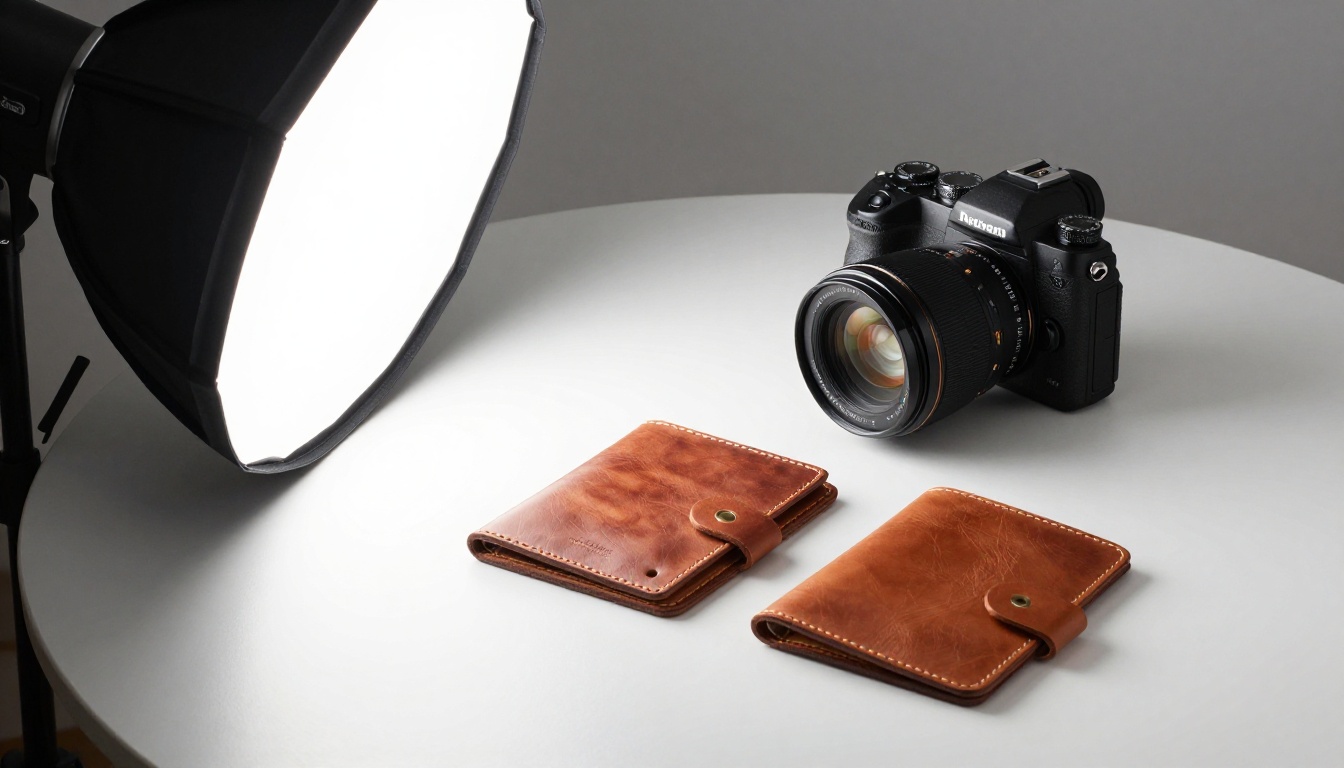
✅ Best practice: Use natural light from a window, a white sheet of foam board as a reflector, and keep the same camera angle for every product.
PDF vs Digital Catalog
| Format | Pros | Cons |
|---|
| Static PDF | Easy to make, universal | Heavy file, hard to update, no tracking |
| Spreadsheet | Good for reorders | Looks plain, no images |
| Flipbook catalog | Looks polished, link-friendly, can be updated | Needs a quick setup |
How to Create a Wholesale Catalog with Flipbooks AI
A flipbook catalog gives buyers a page-turning experience on any phone or laptop, and you can send them a single link instead of a heavy attachment. Here is the process.
- Create your account. Head to Flipbooks AI and sign up.
- Prepare your PDF. Export your line sheet from Canva, Word or Google Docs as a PDF with one product group per page.
- Upload and convert. Use the PDF to Flipbook Converter to turn the file into an interactive flipbook in seconds.
- Customize the look. Add your logo, brand colors and page-turn effects so the catalog feels like your brand. For ideas, try the Product Catalog tool or the Digital Catalog Maker.
- Add multimedia. Embed a short video of your studio or a process clip so buyers see how your pieces are made.
- Protect the pricing. Turn on password protection so only approved retailers can see wholesale prices.
- Share it. Send a direct link in your email, or embed the flipbook on your website in a wholesale login page.
- Track interest. On the Professional plan, analytics and lead generation show which pages buyers view and capture their contact details. See the pricing plans for details.
A few features worth knowing about: no watermarks, ever, mobile-responsive pages, custom branding and offline downloads for buyers who want to review the catalog on the road. You can also use the Digital Price List Generator for a simple price sheet that sits next to your catalog.
💡 Pro tip: Keep two versions: a public lookbook without prices and a password-protected wholesale catalog. Update the second one whenever prices change, and the link stays the same.
Send Samples the Smart Way
Most retailers want to feel the product before they commit. Samples are an investment, so be deliberate.
Sample Strategy
- Send a small, curated set of 3 to 5 best sellers, not your whole range
- Charge for samples or credit the cost against the first order
- Include the line sheet and a handwritten note
- Label each item with its SKU so the buyer can order from the card
Sample Policy Options
| Policy | Cost to You | Buyer Commitment |
|---|
| Free samples | High | None |
| Paid samples, credited on order | Low | Moderate |
| Paid samples, non-refundable | None | Serious buyers only |
| Digital samples only | Very low | Light |
The second option is the usual favorite. It filters casual browsers without scaring away real buyers.
Check Your Capacity Before Saying Yes
This is the step that makes or breaks a first order. Can you really make it on time?

Run a Production Check
- Count how many units you can make in a week, working normally.
- Subtract time for your existing retail orders.
- Add time for packing, quality checks and shipping.
- Add a buffer of 20% for surprises.
- Quote a delivery date based on that number.
Materials and Supplier Lead Times
Check that your suppliers can deliver enough fabric, clay, wax, leather or findings for the whole order. Some materials take two to three weeks to arrive. If a supplier is slow, tell the buyer upfront instead of apologizing later.
Example Timeline
| Week | Task |
|---|
| 1 | Confirm order, receive deposit, order materials |
| 2 | Production begins |
| 3 | Production and quality checks |
| 4 | Packing, labeling and invoicing |
| 5 | Ship and send tracking |
⚠️ Warning: Never promise a date you cannot hit. A buyer who plans a window display around your delivery will not forgive a missed deadline.
Pack and Ship Like a Pro
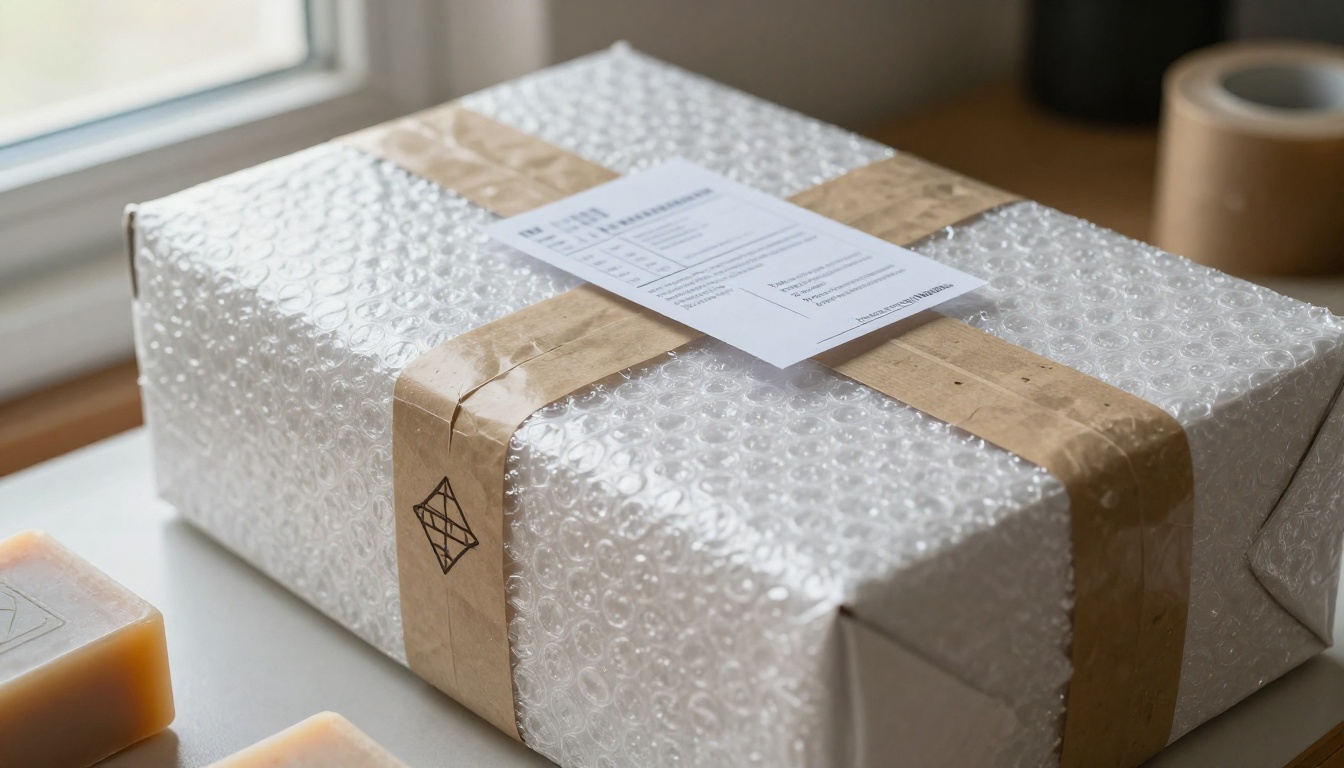
Presentation does not stop at the product. Wholesale packaging shows a retailer how you run your business.
Packing Checklist
- Wrap fragile items individually
- Use recyclable paper cushioning instead of loose fill
- Group items by SKU in labeled bags or boxes
- Include a packing slip with SKUs, quantities and your contact details
- Add a thank-you note and a few brand cards
- Photograph the packed box before you tape it
Shipping Options Compared
| Method | Speed | Cost | Best For |
|---|
| Parcel (USPS, UPS, FedEx) | 2 to 7 days | Medium | Small and mid-size orders |
| Freight (LTL) | 5 to 10 days | Lower per unit | Large, heavy orders |
| Local delivery | Same day | Low | Nearby shops |
| Buyer-arranged pickup | Flexible | None to you | Local relationships |
Always insure the shipment and send the tracking number the day it leaves. Many boutiques list a receiving window, so ask about it.
Invoice, Label and Stay Organized
Paperwork is boring, but a clean invoice speeds up payment and shows you are serious.
What Goes on the Invoice
- Your business name, address and contact
- Buyer name and shipping address
- Invoice number and date
- Item list with SKU, quantity, unit price and total
- Shipping cost and any taxes
- Payment terms and due date
- Accepted payment methods
If your retailer is tax exempt, ask for their resale certificate and keep a copy on file. Rules vary by region, so check with a local accountant or your tax authority.
Keep a Simple Order Tracker
| Order # | Buyer | Date | Total | Deposit | Ship Date | Status |
|---|
| 001 | Sage and Stone | Oct 4 | $612 | Paid | Nov 8 | In production |
| 002 | Maple Row | Oct 11 | $340 | Pending | TBD | Quote sent |
A spreadsheet is enough at this stage. The goal is that you never lose track of who owes what.
Meet Buyers Where They Are
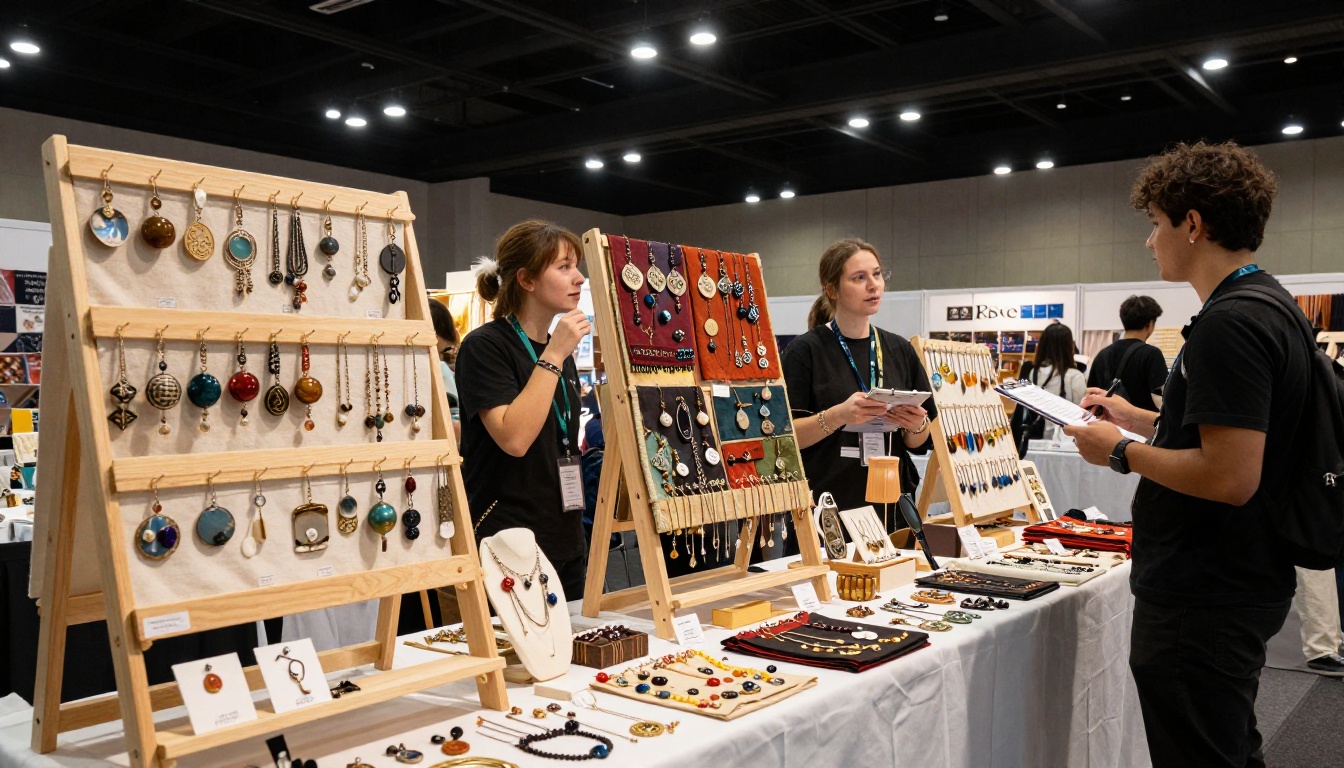
Many first wholesale orders come from places you may not expect: trade shows, local markets, social media direct messages and cold emails.
Where to Find Retailers
- Trade shows and wholesale markets for in-person introductions
- Local boutiques you already shop at or admire
- Online wholesale platforms that connect makers and stores
- Instagram and email outreach to shops with a similar style
A Short Outreach Email
Keep it brief: who you are, what you make, why it fits their shop, and a link to your catalog. Something like:
"Hi Maria, I am a ceramicist making small-batch mugs in earthy glazes. Your shop's selection of local goods is a great match. Here is our wholesale catalog, with a password in the next line. I would be glad to send three samples."

Sending a single link is far friendlier than a 20 MB attachment. If you sell many product types, browse the Fashion Catalog or Interactive Lookbook Designer options for a layout that suits you.
Follow Up After Delivery
The order is not finished when the box arrives. Follow-up is where a first order becomes a repeat customer.
The Follow-Up Sequence
- Day of delivery: Send a short message confirming the order arrived safely.
- One week later: Ask how the products are displayed and whether customers are responding.
- Three weeks later: Share a few new items or a seasonal update with the catalog link.
- Before their next buying season: Offer a reorder form and a clear deadline.
Ask for Feedback
Ask what sold fastest, what customers asked for, and what the retailer would change. Their answers can shape your next collection.
✅ Best practice: Offer a small reorder incentive, such as free shipping on the second order, instead of cutting your prices.
Common First-Order Mistakes
| Mistake | Better Move |
|---|
| Underpricing to win the deal | Hold a firm 2x cost wholesale price |
| Skipping written terms | Send a one-page terms sheet |
| Overpromising lead times | Add a 20% buffer |
| Sending huge PDF attachments | Share a flipbook link |
| Ignoring the buyer afterward | Follow up on a set schedule |

Your Printable Checklist
Use this as a quick reference whenever a new retailer says yes.
Before you quote
After they say yes
Before shipping
After delivery
Ready for Your First Order?
Wholesale rewards makers who are organized, clear and consistent. Get your pricing right, put your terms in writing, check your capacity, pack with care and follow up. Do those five things and your first order can be the start of a long relationship.
Ready to look professional from day one? Get started for free on Flipbooks AI and turn your line sheet into a polished catalog. Browse all available tools and templates to find the right layout, and compare pricing plans to see which one fits your brand. When you are set to grow, you can upgrade your plan for analytics and lead capture.



