When a client asks an agency to produce a digital catalog, the conversation about money usually arrives quickly and gets complicated just as fast. Billing for this type of work does not follow a single standard. Some agencies charge by the hour, others quote flat project fees, and a growing number bundle catalog production into monthly retainers. Each model carries different risks, different upsides, and a different set of expectations on both sides of the table. If you want to stop guessing and start having clearer, more productive conversations about digital catalog pricing, this article lays out the full picture.
What Goes Into a Digital Catalog Project
A digital catalog is not just a PDF with nice photos. Agencies typically bill across three distinct production phases, and clients who are not familiar with this structure often sticker-shock at the final invoice.
Design and Layout Work
This is where most of the billable time lives. A designer maps out the grid structure, selects typography, builds a color system, and places every product in a way that guides the reader's eye. For a 40-page catalog, a mid-level agency might estimate 60 to 100 design hours at this stage alone.

Content Production and Copywriting
Product descriptions, headline copy, pricing callouts, and category labels all need to be written and proofread. If the client does not provide camera-ready copy, the agency bills for it. Many agencies price copywriting separately from design at $80 to $150 per hour, or include a flat page-rate in their scope of work.
Technical Build and File Preparation
Once the design is final, the catalog has to be exported, optimized for screen resolution, and prepared for distribution. If it goes interactive, clickable links, embedded media, and page-turn effects need to be built in. This phase often surprises clients who assumed the "digital" part was automatic.
The 3 Main Ways Agencies Charge
There is no universal billing standard for digital catalog work. The three models below account for the vast majority of agency contracts, each with a logical use case.
Hourly Billing
The most transparent model. The agency tracks time and bills a rate, typically $75 to $200 per hour depending on location, seniority, and specialty. Clients pay exactly for what gets done, but they carry the risk: if the project runs longer than expected, the invoice grows with it.
💡 Hourly billing works best for ambiguous projects where scope is unclear at the start, or for ongoing catalog updates where the volume of work changes month to month.
Flat-Fee Projects
The agency quotes a fixed price for a defined deliverable. A 24-page product catalog with photography, copy, and a digital flipbook version might land anywhere from $3,500 to $18,000 depending on complexity. The agency carries the time risk, which is why most flat-fee quotes include a limited revision policy.
⚠️ Flat-fee agreements fall apart when scope is poorly defined. Always negotiate what is and is not included before signing.
Monthly Retainers
Best suited for brands that publish catalogs seasonally or need ongoing catalog maintenance. The client pays a fixed monthly fee and the agency allocates a set number of hours to catalog-related work. Retainers range widely, but $2,000 to $8,000 per month handles most mid-tier catalog programs.
| Billing Model | Best For | Client Risk | Agency Risk | Typical Range |
|---|
| Hourly | Unclear scope, regular updates | High (open-ended cost) | Low | $75-$200/hr |
| Flat-Fee | Defined, one-time projects | Low (predictable) | High (over-runs) | $3,500-$18,000 |
| Monthly Retainer | Ongoing catalog programs | Medium | Medium | $2,000-$8,000/mo |

What Clients Actually Pay
Budget discussions are more useful when anchored to real numbers. The ranges below reflect market rates across North America and Western Europe.
Small Business Catalogs
A small business with 20 to 40 products, minimal photography needs, and a straightforward design brief typically invests $1,500 to $5,000 for a finished digital catalog. This assumes the client provides product images and copy, and that the agency handles layout and digital output only.
Mid-Market Brand Catalogs
Brands in the $5M to $50M revenue range typically need catalogs with 60 to 150 pages, professional photography coordination, branded templates, and distribution through multiple channels. Budget for $8,000 to $35,000 for a full production run at this scale.
Enterprise-Level Production
Enterprise catalogs, from major retailers to automotive groups or international fashion brands, involve dedicated teams, localization, print and digital versions, and custom integrations. Projects at this level regularly exceed $50,000 and can run into six figures for multi-market rollouts.
| Business Tier | Catalog Size | Typical Budget | What's Usually Included |
|---|
| Small Business | 20-40 pages | $1,500-$5,000 | Layout, digital export, basic edits |
| Mid-Market | 60-150 pages | $8,000-$35,000 | Photography, copy, design system, digital and print |
| Enterprise | 150+ pages | $50,000+ | Full production, localization, custom integrations |

What Drives the Price Up
Knowing what inflates an agency invoice helps both sides negotiate more clearly.
Scope Creep and Revision Rounds
The single biggest driver of unexpected costs is scope creep, which is any request that falls outside the original project definition. Most flat-fee contracts include two to three revision rounds. Beyond that, the agency bills at an hourly overage rate. A project that starts at $6,000 can reach $10,000 after three extra rounds of client-requested changes.
✅ Lock in a clear revision policy before the project starts. Define what counts as a "revision" versus a "new request" in writing.
Custom Integrations and Interactivity
Adding clickable product links, embedded video sections, lead capture forms, or e-commerce integrations turns a design project into a development project. Development hours often bill 20 to 40 percent higher than design hours.
Print and Digital Format Parity
When a client needs the same catalog in print-ready and digital-interactive formats, agencies effectively produce two versions. That doubles several production phases: color profile adjustments, file optimization, and quality control. Many agencies charge a "dual-format premium" of 30 to 50 percent on top of the base quote.

How Agencies Should Pitch Catalog Work
For agencies building proposals, the most common mistake is pricing the deliverable without pricing the outcome. Clients do not buy catalogs. They buy sales tools. Framing the invoice around what the catalog does, such as driving leads, reducing print costs, and improving the buyer experience, consistently produces higher acceptance rates.

What to Include in Your Scope of Work
A strong scope of work for catalog production should itemize every phase clearly:
- Discovery: Kickoff meeting, brand audit, content inventory
- Design: Grid development, template creation, first layout draft
- Revisions: Number of rounds and what constitutes a round
- Production: File preparation, digital optimization, interactive build
- Delivery: Format specs, hosting or distribution details
- Ongoing: Maintenance terms if applicable
Add-On Services Worth Billing Separately
Many agencies leave revenue on the table by bundling services that clients would pay for individually if presented as distinct line items.
| Add-On Service | Typical Billing | Notes |
|---|
| Photography coordination | $500-$2,000/day | Includes art direction and logistics |
| Copywriting | $50-$150 per page | Varies by product complexity |
| Interactive flipbook build | $800-$3,500 | One-time or via SaaS platform |
| Analytics setup | $300-$1,000 | Dashboard configuration and UTM tracking |
| Print-ready version | +30-50% of base quote | Dual-format premium |
| Localization per language | $500-$2,500 | Layout and translation adaptation |
Why Flipbooks Are Shifting Agency Economics
The rise of dedicated flipbook platforms like Flipbooks AI is reshaping how agencies price and deliver digital catalogs. Instead of billing 40 hours of developer time to build interactive catalog functionality from scratch, agencies can now deliver the same result through a purpose-built tool, significantly reducing production time and overhead.

Lower Production Overhead for the Same Output
A catalog that previously required a custom web build at $8,000 in development time can now be delivered as an interactive flipbook in a fraction of the hours. Agencies who absorb this efficiency can offer competitive pricing, while those who position it as a value-add strengthen client relationships.
What Clients Get Beyond the Design
The best part about embedding Flipbooks AI into an agency workflow is what clients receive on top of the design work: password protection, analytics, mobile-responsive reading, offline downloads, embedded video support, and no watermarks on paid plans. These are features that agencies used to charge separately for, or simply could not offer at all.
💡 Agencies can position flipbook delivery as a premium, white-label service. The client-facing output shows no platform branding on Standard plans and above, so everything looks native to the client's brand.

Build a Digital Catalog with Flipbooks AI
If you are delivering digital catalogs for clients and have not yet used a flipbook tool in your production workflow, this section is worth reading through. Flipbooks AI handles the production-to-delivery pipeline in a way that integrates cleanly into any agency process.
Step 1: Create Your Account
Head to Flipbooks AI and create an account. The Standard plan and above include unlimited flipbooks with no watermarks, which matters when you are delivering for multiple clients at once.
Step 2: Upload the Catalog PDF
Once your catalog design is finalized in InDesign, Figma, Canva, or any PDF-capable tool, export a high-resolution PDF and upload it directly to the platform. The converter handles pagination automatically and preserves your typography, images, and color profiles.
Step 3: Apply Custom Branding
Under the customization settings, upload your client's logo, set brand colors, and choose the page-turn animation style. You can remove all Flipbooks AI branding on paid plans, so the delivered product looks entirely native to the client's identity.

Step 4: Add Interactive Elements
This is where the deliverable separates from a static PDF. Add clickable product links pointing to e-commerce pages, embed short video clips inside pages, and insert lead capture forms for gated catalog access. The Digital Catalog Maker tool makes this process visual and fast.
Step 5: Configure Sharing and Analytics
Generate a shareable link or an embed code for the client's website. For content that should not be public, enable password protection. Clients on the Professional plan get access to analytics dashboards showing page views, time-on-page, and reader geography, data you can fold into monthly reporting.
Step 6: Deliver and Document
Send the client their flipbook URL, the embed code, and a brief on how to request updates. For clients who need offline access, use the download feature to export a portable file. Thorough handoff documentation reduces support requests and adds perceived value to the project overall.
✅ For clients who need seasonal catalog updates, set them up on a Flipbooks AI account, bill a setup fee, and offer an ongoing maintenance retainer. It is a clean, repeatable revenue model.
Negotiating Your Agency Contract
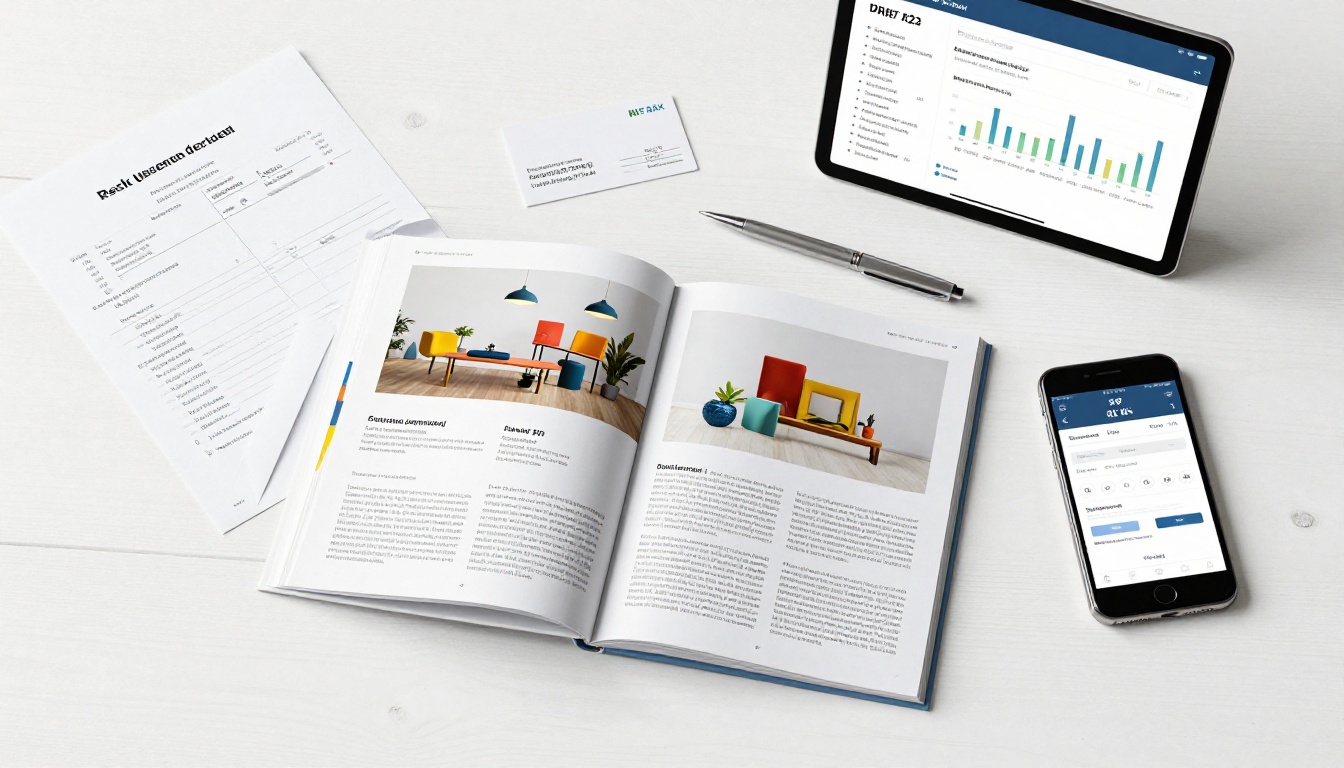
No matter which billing model you choose, the contract is where expectations become binding. A few practices consistently produce smoother projects on both sides.
What to Watch for in the SOW
- Vague deliverables: "A digital catalog" is not a deliverable. "A 48-page interactive flipbook in PDF and web format with two revision rounds" is.
- Missing kill fees: If the client cancels mid-project, the agency should be compensated for completed work. A 25 to 50 percent kill fee on remaining phases is standard.
- Ambiguous asset ownership: Clarify who owns the design files, the template system, and the final output before work begins.
Getting Value Without Overpaying
Clients who want polished digital catalogs without enterprise budgets have real options. Using a platform like Flipbooks AI reduces the technical build cost substantially, letting smaller agencies and in-house teams produce catalog outputs that look agency-grade. Browse the pricing plans to find what fits your production volume, and check the full range of catalog tools available on the platform.
The billing conversation does not have to be uncomfortable. When both sides are clear on what goes into a digital catalog and what each phase costs, projects run cleaner and client relationships last longer. If you are ready to add high-quality interactive catalog delivery to your agency services, or want to produce your own catalog without outsourcing the whole process, Flipbooks AI is built for exactly that workflow.
Start for free and see how fast a polished, interactive catalog comes together. When you are ready for analytics, lead capture, and multi-client management, compare plans to find the right fit.



