A pro shop buyer has maybe twenty minutes for your brand, a budget that has to stretch across a dozen vendors, and a members' base that wants polos in sage this spring and charcoal by October. Winning that slot is a selling skill, and how golf apparel brands sell seasonal collections to pro shops comes down to timing, tangible samples, and a catalog the buyer can actually use after you leave. Tools like Flipbooks AI now make that last piece far easier than emailing a 90 MB PDF.
This article walks through the real wholesale cycle, what buyers expect at each stage, and how top brands package their seasonal story so it turns into purchase orders.
Why Seasonal Selling Is Different
Golf apparel is not a year-round commodity. Pro shops buy in tight windows, commit money months before a single member walks in, and live with the consequences of a bad color call for an entire season.

That pressure shapes everything about the pitch. A buyer is judging three things at once:
- Sell-through risk: Will members really wear this?
- Margin: Does the wholesale price leave room for a healthy retail markup?
- Delivery reliability: Will the product land before the weather turns?
Brands that address all three in the first five minutes tend to get the order. Brands that lead only with a lookbook full of pretty course photography tend to get a polite "send me the info."
The Two Big Buying Seasons
Most golf apparel sells in two main collections, with smaller drops in between. Spring/summer product is typically shown the previous late summer or early fall. Fall/winter product is shown in the dead of winter or at the January trade show.
| Collection | Typical Preview Window | Delivery Window | Core Items |
|---|
| Spring/Summer | August to October | January to March | Polos, shorts, skorts, sun layers |
| Fall/Winter | January to March | July to September | Quarter-zips, vests, outerwear |
| In-season Refresh | Rolling | 2 to 4 weeks | Best-sellers, color fills |
| Holiday/Gift | June to August | October to November | Gift sets, headwear, accessories |
💡 Pro tip: Buyers plan open-to-buy budgets backward from delivery. If your preview lands after their budget is spent, the product is dead on arrival no matter how good it looks.
Building the Sales Calendar
The brands that win consistently run their selling like a campaign, not a series of random visits. They map out each touchpoint six to nine months ahead.
A Typical Wholesale Timeline
- Product lock (T minus 10 months): Colors, fabrics and styles are finalized, with prototypes in hand.
- Catalog and line sheet build (T minus 9 months): Photography, pricing, size runs and minimums are packaged.
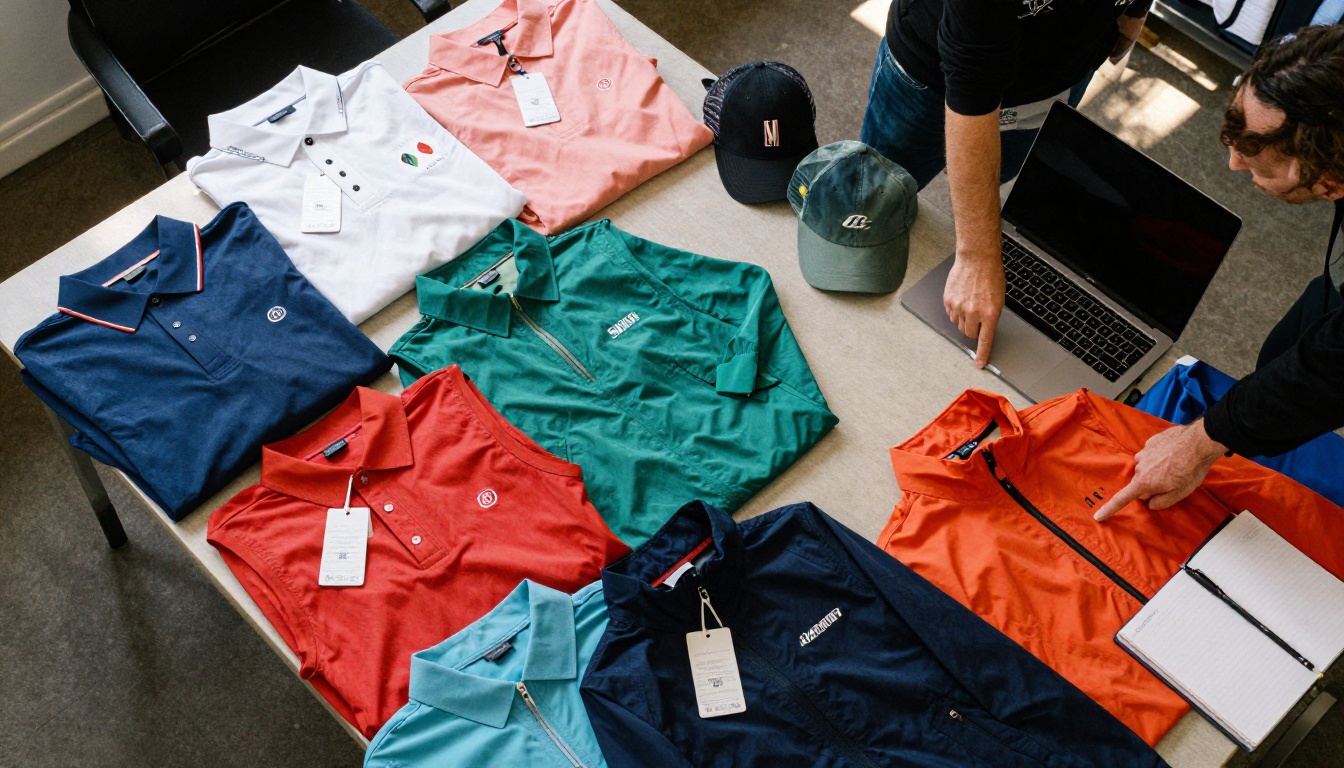
- Sample kits ship (T minus 8 months): Reps receive physical garments for appointments.
- Trade show and appointments (T minus 7 to 5 months): Orders are written and early-order discounts apply.
- Order cutoff (T minus 4 months): Production quantities are confirmed with the factory.
- Delivery and in-season reorders (T minus 0 to +3 months): Best-sellers are replenished from stock.
Why Early Orders Get Rewarded
Production is the bottleneck. A brand that knows 70 percent of its volume by cutoff can cut fabric with confidence. That is why most offer one or more of these incentives for early commitments:
- Extra discount of 3 to 8 percent
- Extended payment terms such as net 60 or net 90
- Free freight above a set order value
- Guaranteed delivery windows
Samples, Swatches and Line Sheets
Golf is a tactile sport and golf apparel is a tactile product. A buyer wants to feel the hand of a fabric, check the stretch, and see how a color reads under shop lighting. That is why physical samples still matter even in a digital world.
What a Strong Sample Kit Contains
- One garment per core style in the hero colorway
- Fabric swatch cards for every color option
- A printed line sheet with wholesale and suggested retail prices
- A short story card explaining the collection's inspiration and fabric technology
- A QR code or short link to the digital catalog
The line sheet is the workhorse of the entire process. It must be scannable in seconds: style number, name, colors, sizes, wholesale price, MSRP, and delivery date.
| Line Sheet Element | Why Buyers Care | Common Mistake |
|---|
| Style number | Needed to write the order | Inconsistent numbering across documents |
| Wholesale and MSRP | Shows margin at a glance | Hiding MSRP |
| Size run and packs | Controls inventory risk | No guidance on size curve |
| Fabric and features | Supports retail storytelling | Marketing jargon with no specifics |
| Delivery window | Aligns with shop calendar | "TBD" dates |
⚠️ Warning: Out-of-date prices in a shared PDF are one of the fastest ways to lose a buyer's trust. If you update pricing, every copy in circulation becomes a liability.
Presenting to the Pro Shop Buyer
Buyers are not all alike. A head pro at a private club thinks about member identity and logo programs. A resort shop buyer thinks about tourists, impulse purchases and gift items. A public course shop manager thinks about price points and quick turns.

Tailor the Pitch by Account Type
| Account Type | What They Want | Best Pitch Angle |
|---|
| Private club | Exclusivity, logo options, premium fabrics | Limited colorways, custom embroidery |
| Resort shop | Gifts, trend color, broad size range | Capsule collections, visual merchandising help |
| Public course | Value, durable basics, fast turns | Core programs with reorder support |
| Off-course golf store | Variety, brand pull, women's range | Full-line story with sell-through data |
A Pitch Structure That Works
- Open with their members. Reference what sold last season at their shop, not what sold nationally.
- Show the hero pieces. Lead with three styles, not thirty.
- Prove the margin. Walk through wholesale, retail and expected sell-through.
- Offer a clear path. Suggest an opening order, a reorder plan and a display plan.
- Leave something behind. A digital catalog link that works on a phone.
✅ Best practice: Send the catalog link before the appointment and ask the buyer to bookmark two or three styles. The meeting becomes a conversation, not a presentation.
Merchandising Support Closes Orders
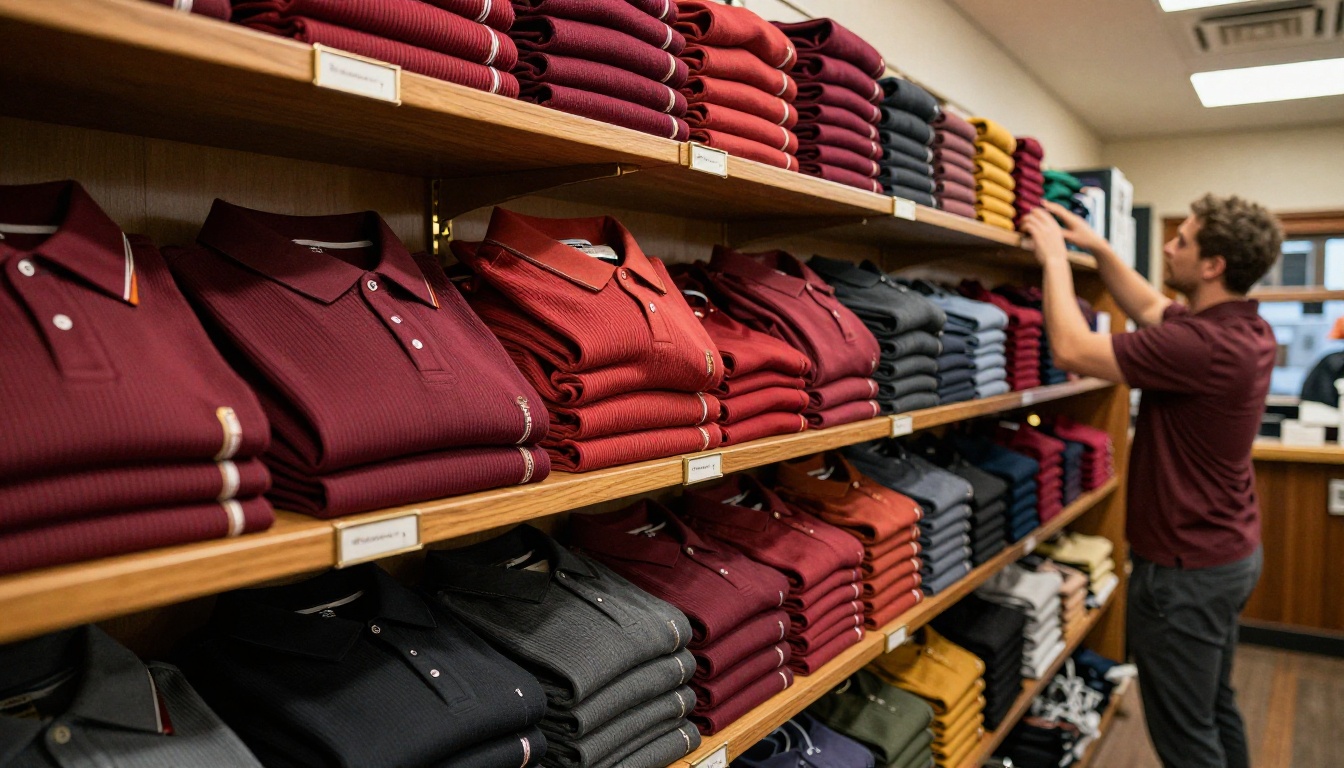
Pro shops have limited floor space and limited staff. Brands that make the display easy get shelf space. Brands that leave a pile of folded product for the buyer to sort out do not.
Display Tools Brands Provide
- Color-blocked folding guides so walls look intentional
- Mannequin outfit suggestions with style numbers listed
- Window and entry table concepts tied to the season
- Shelf talkers explaining fabric benefits in one sentence
- Staff training notes on the top three selling points
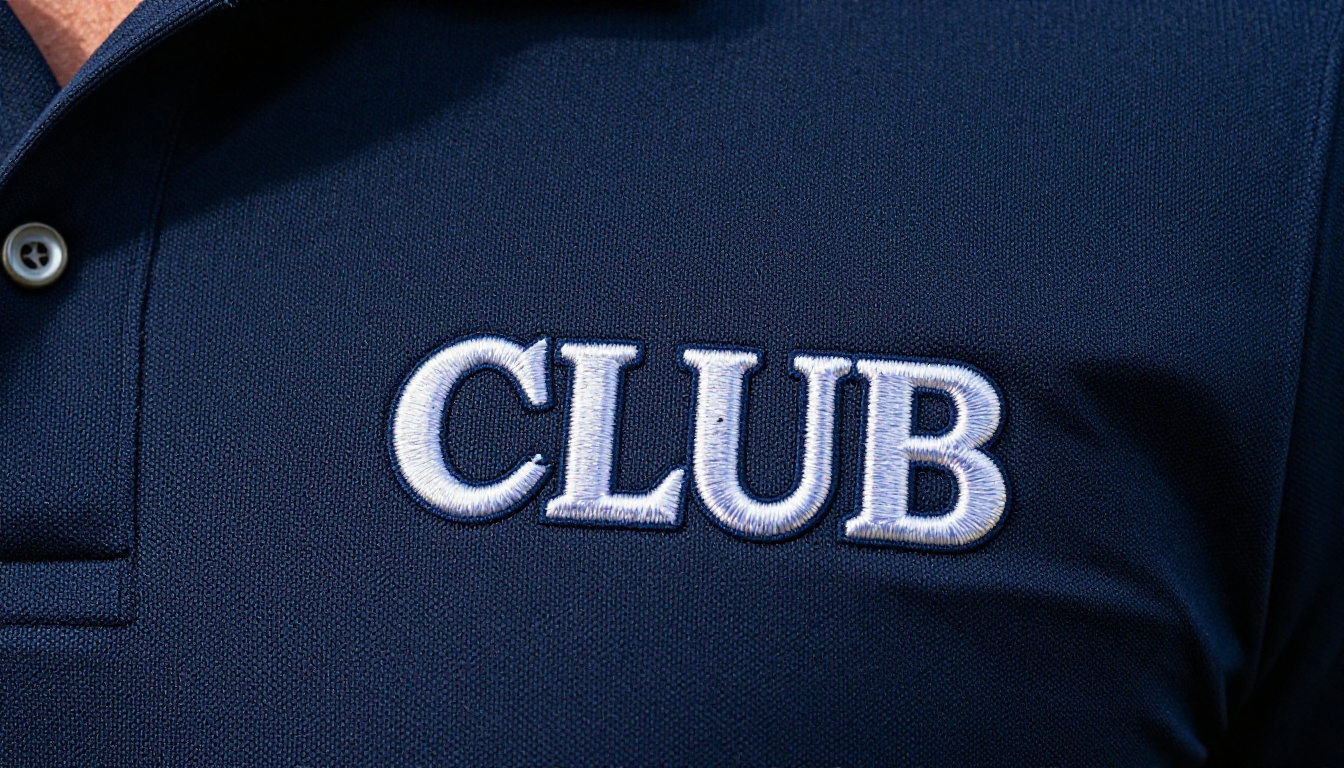
Details matter here, too. The embroidery quality, the button finish and the hem construction are what a buyer inspects up close.
Trade Shows and Showrooms
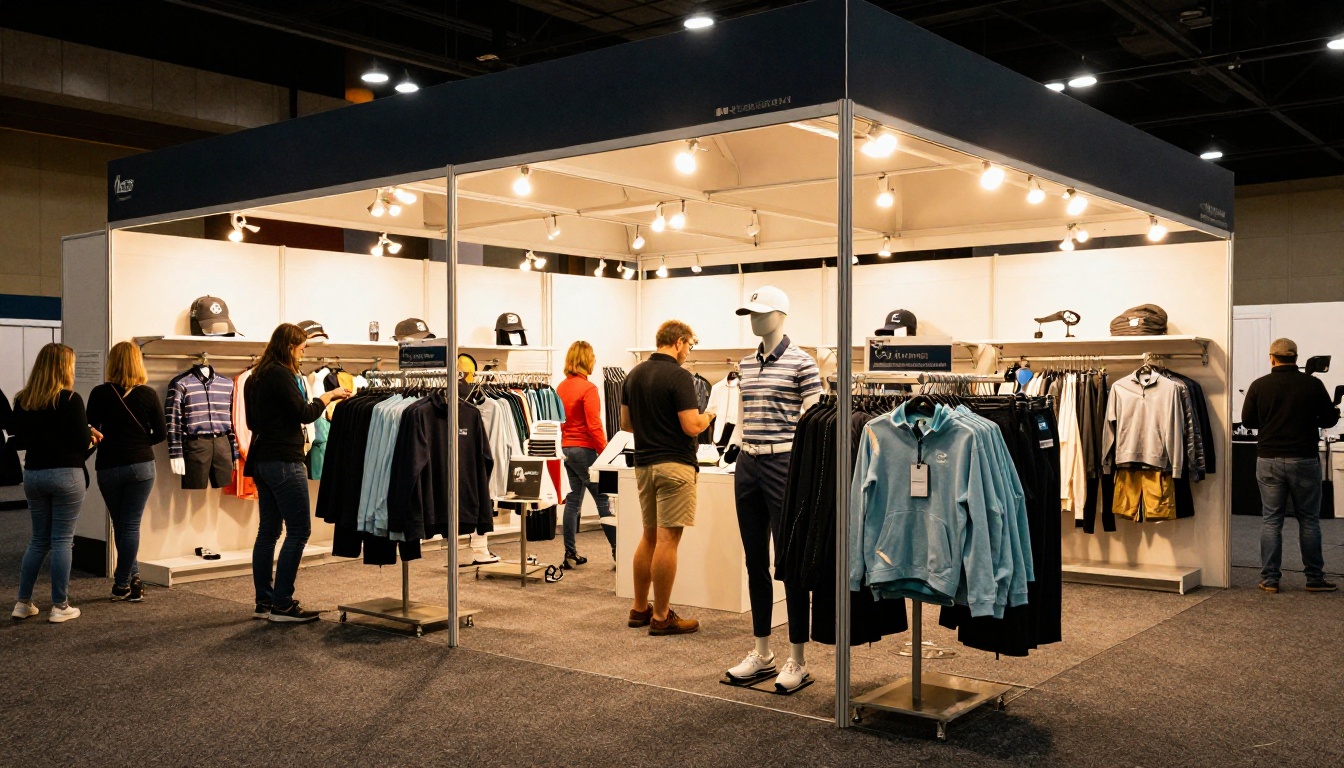
The big industry show in January is still where a large share of orders get written. A good booth makes the collection easy to browse in under two minutes, because that is how long most visitors stay.
Before, During and After the Show
| Phase | Action | Output |
|---|
| Before | Email a digital catalog and book appointment slots | Pre-booked calendar |
| During | Scan badges, write orders, note color preferences | Qualified lead list |
| After | Send a thank-you with order summary and catalog link | Faster confirmation |
| Follow-up | Check in 30 days later about delivery and display | Reorder readiness |
Many brands now keep a tablet at the booth with the full digital catalog, so buyers can zoom into any garment without waiting for a rep to dig through a sample rack.
Why Digital Catalogs Beat PDFs
A static PDF is better than nothing, but it has limits. It is heavy, hard to read on a phone, and impossible to track. A flipbook catalog changes the equation.

| Feature | Email PDF | Flipbook Catalog |
|---|
| Loads on mobile | Slow, pinch and zoom | Fast, responsive pages |
| Always up to date | No, old copies linger | Yes, one live link |
| Analytics | None | Page views and time spent (Professional plan) |
| Branding | Basic | Custom colors, logo, page effects |
| Privacy | Anyone can forward | Password protection available |
| Embeds | No | Embed on your dealer portal |
💡 Pro tip: Use analytics to see which pages a buyer lingers on. If a pro shop spent four minutes on your outerwear pages, lead with outerwear on the follow-up call.
How to Create a Wholesale Catalog with Flipbooks AI
Here is a simple workflow any brand can follow with Flipbooks AI.
- Create your account. Sign up on Flipbooks AI and open your dashboard.
- Upload your PDF. Export your line sheet or lookbook from your design software and drop it into the PDF to Flipbook Converter. Pages convert in moments.
- Pick a starting point. The Fashion Catalog Creator and Digital Catalog Maker suit seasonal collections well, and the Interactive Lookbook Designer works for the visual story.
- Customize the look. Add your logo, match brand colors, choose page-turn effects, and embed a short video of the collection in action. There are no watermarks.
- Protect and share. Set a password for wholesale-only pricing, copy the direct link, or use the Embed Flipbook on Website option for your dealer portal.
- Track results. On the Professional plan, analytics and lead generation show who opened the catalog and which pages they read. See the pricing plans for details.
- Offer offline access. Offline downloads help reps who visit shops with weak clubhouse Wi-Fi.
Standard plans give you unlimited flipbooks, so you can publish a separate catalog for every season and every account tier without worrying about counts.
Pricing, Terms and Reorders
Even the best pitch stalls on unclear terms. Buyers compare brands on more than looks.
Terms Buyers Compare
- Minimum opening order: Lower minimums win smaller shops.
- Payment terms: Net 30, 60 or 90, often with early-pay discounts.
- Return and markdown policies: Some brands offer markdown money on slow sellers.
- Reorder lead time: In-season replenishment in two weeks beats six.
- Exclusivity: Territory protection can persuade a private club to commit.
| Term | Typical Range | Impact on Buyer |
|---|
| Opening minimum | $500 to $2,500 | Determines which shops can say yes |
| Payment terms | Net 30 to net 90 | Cash flow relief before season |
| Reorder shipping | 2 to 7 days | Protects best-sellers |
| Markdown support | 0 to 10 percent | Reduces end-of-season risk |
Make Reorders Effortless
The first order is a relationship starter. Reorders are where profit lives. Keep a live catalog of in-stock styles, and send a short update when popular colors run low. Pro shops appreciate being told early rather than finding out when the order bounces.
Common Mistakes to Avoid
- Showing too many styles. Buyers retain the first handful. Edit ruthlessly.
- Ignoring women's and youth lines. These are often the fastest-growing segments in pro shops.
- Sending outdated files. Always point to a single live link.
- Skipping the in-season check-in. A quick call at week three tells you what is selling and what needs support.
- Forgetting to equip the shop staff. If associates cannot explain the fabric in ten seconds, the product sits.
Putting It Into Practice
Picture a mid-sized brand launching a spring/summer women's capsule. In September, the team finalizes six core styles and builds a line sheet. By October, reps carry sample kits with swatches and a QR code. The catalog, published as a flipbook with password protection, shows wholesale pricing and delivery dates. After each appointment, the rep sends the link and checks analytics to see which pages the buyer opened. At the January show, the booth tablet loads the same live catalog. Orders are confirmed in February, and by April, members are walking out of shops in sage quarter-zips.

Ready to Pitch Smarter?
Selling a seasonal collection to pro shops rewards brands that plan early, show product clearly, and make buying simple. A polished digital catalog supports every step of that process.
Your next season's orders start with the catalog in the buyer's hands, so make it one they will open.



