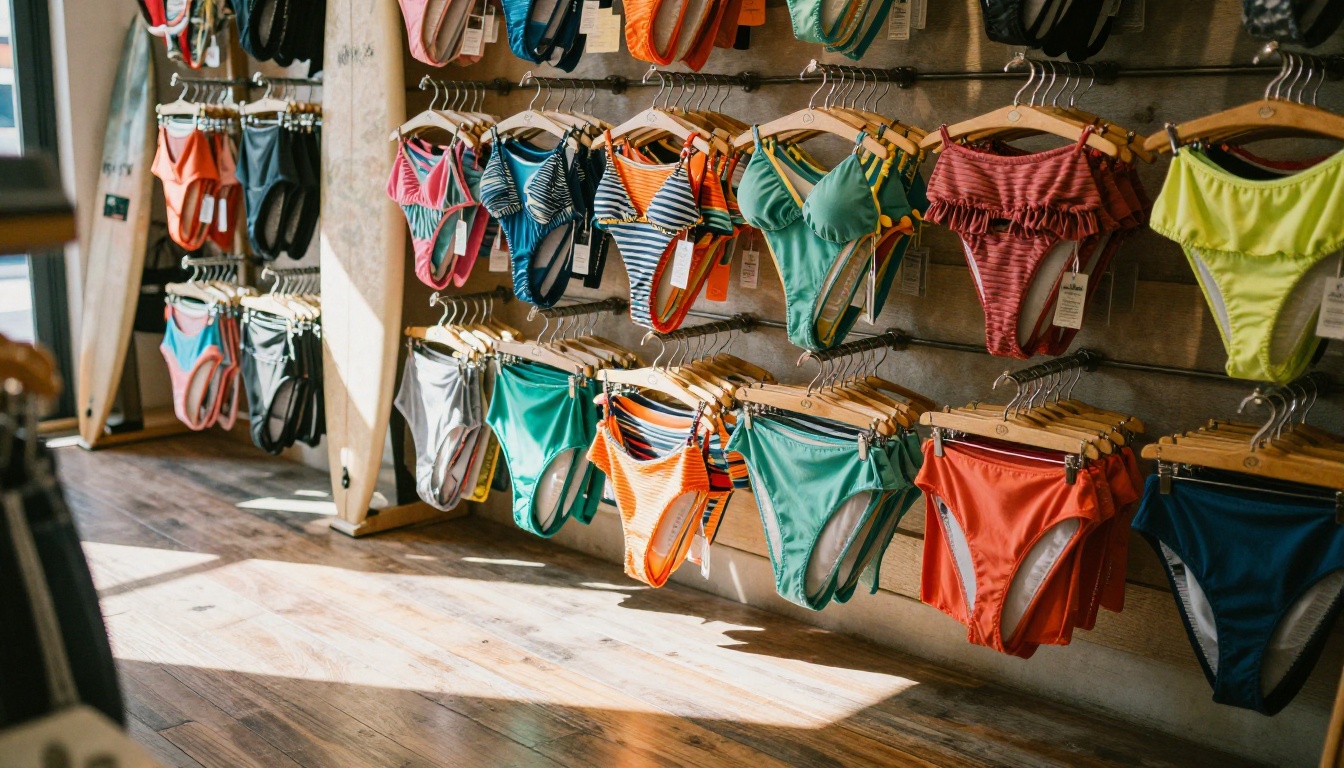
A surf shop buyer gives your resort collection about ninety seconds before deciding whether it belongs next to the wax and the leashes. That is the real test behind how swimwear labels present resort collections to surf shops: you are not selling to a department store committee, you are selling to an owner who surfs at dawn, restocks on a tight budget and knows exactly which prints their regulars will touch. Labels that win these accounts bring a clear story, tangible samples and a lookbook the buyer can open on a phone between customers. Many of them now build that lookbook with Flipbooks AI, so the same polished catalog works in person, by email and on a shop counter tablet.
Why Surf Shops Buy Differently
Surf retail is not fashion retail with a wave painted on the wall. The customer base is local, loyal and practical. They want swimwear that survives salt, sun and a long paddle out, and they want it to look good at the beach bar afterward. A resort collection, with its relaxed cover-ups, printed sets and vacation palettes, has to prove it belongs in that setting.
Buyers at surf shops usually share a few habits:
- They order small, frequent batches instead of one giant seasonal commitment.
- They trust fabric and fit more than runway language.
- They want products that sell through in six to eight weeks, not pieces that sit.
- They care about the brand's reputation in the water, not only in magazines.
- They often handle buying, merchandising and sweeping the floor themselves.
The Buyer Is Also the Customer
Most owners wear the product. If your resort line does not make sense on a person who spends weekends at the coast, they will say so, politely, and move on. Invite them to try a trunk or a rash guard during the meeting. A five minute fit test does more than a ten page deck.
Time Is the Scarcest Resource
Reps often get a slot between a delivery and an opening shift. Your pitch needs a short path: three headline stories, a price sheet and a way to place an order without a second meeting. Everything else lives in a lookbook they can read later.
Build the Resort Story First
Before the first sample hits the counter, strong labels write a one paragraph story that a buyer can repeat to a customer. It names the place that inspired the collection, the fabric and the moment of use. "Sunrise sessions at a Baja point break, followed by a long lunch" is more useful than "versatile resort essentials."
Pick Three Hero Stories
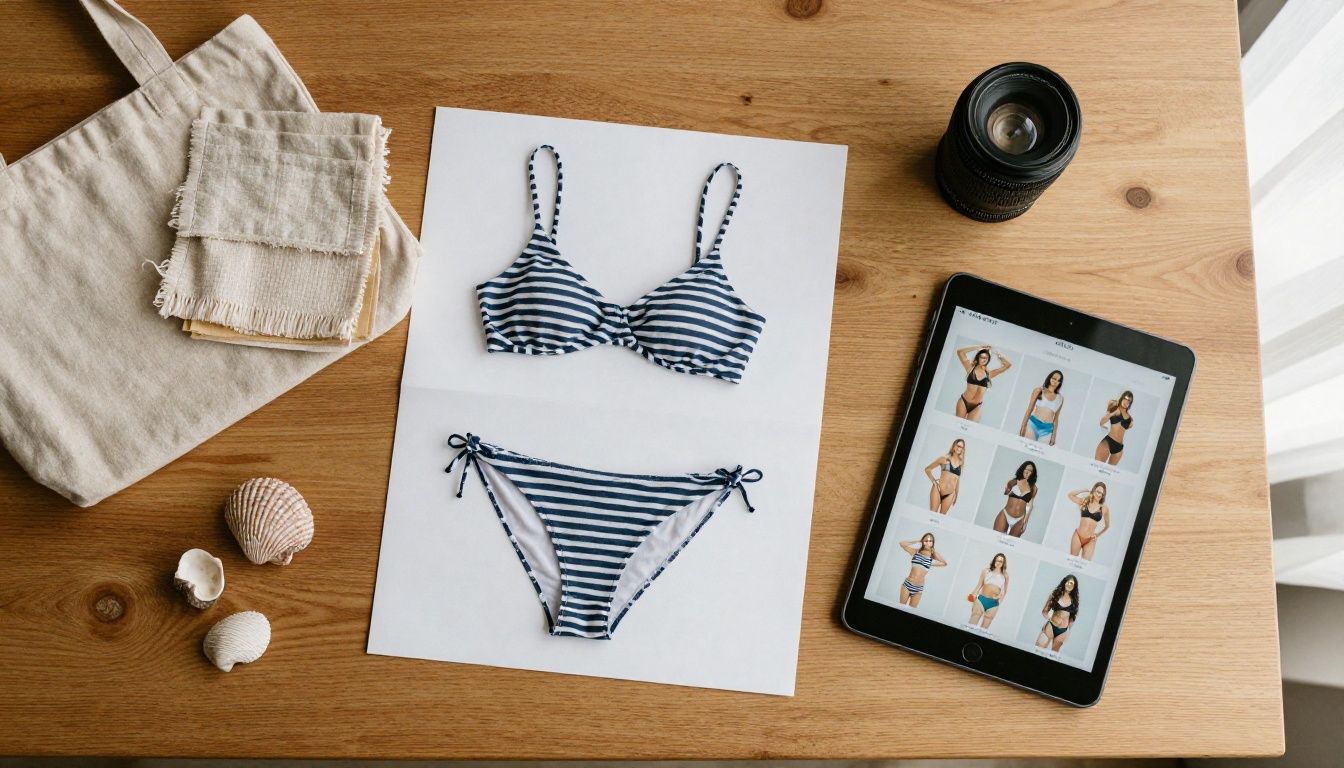
A resort collection can hold forty styles, but a surf shop will only remember three. Choose them on purpose:
- The entry piece: a boardshort or classic bikini at an approachable price that anchors the order.
- The statement print: the pattern people photograph on the rack and ask about.
- The crossover piece: a cover-up, overshirt or wrap that sells to travelers as well as locals.
Present these first. Everything else becomes supporting cast.
Translate Fashion Language
Swap runway words for shop floor words. "Relaxed silhouette" becomes "easy to move in." "Elevated textile" becomes "recycled nylon that dries in twenty minutes." Buyers repeat what they understand, and your words become their sales pitch.
💡 Pro tip: Write one sentence per hero piece that a shop employee could say out loud in under ten seconds. Put it on the hang tag and in the lookbook caption.
What Goes in the Sample Kit
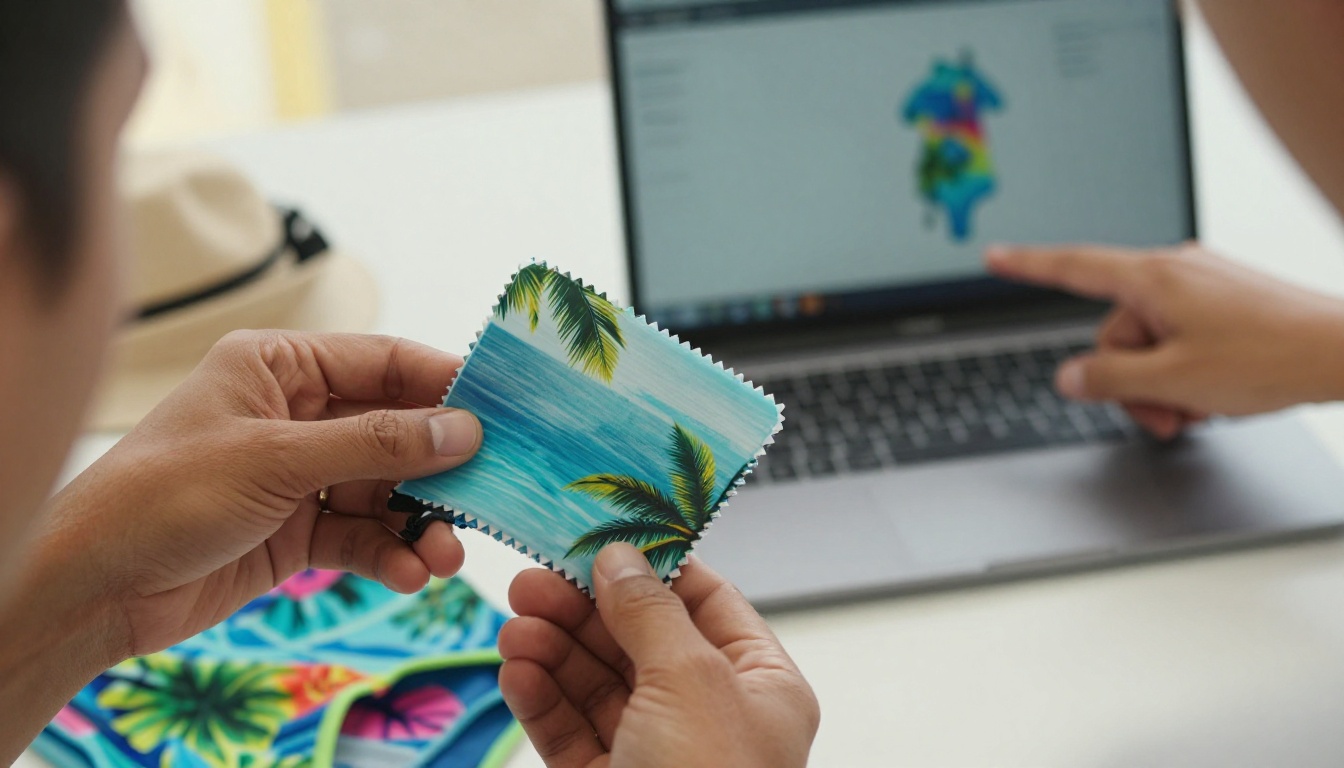
Physical samples still matter in surf retail because buyers want to feel stretch, lining and print saturation. A good kit is small, organized and easy to carry into a cramped back office.
| Kit Item | Purpose | Buyer Reaction to Watch |
|---|
| Hero samples (6 to 8 pieces) | Show fit, print and finish | Do they hold the fabric or just look? |
| Fabric swatch card | Prove durability and stretch | Do they pull on it? |
| Printed one page line sheet | Wholesale and retail prices | Do they circle prices? |
| Digital lookbook link or QR | Full range, reorders, details | Do they scan it on the spot? |
| Hang tag sample | Show retail presentation | Do they ask for more? |
Keep Samples Honest
Bring sizes that actually exist in the production run. Nothing damages trust faster than a sample in a color that will not ship. If a print is still in development, label it clearly and give a delivery estimate.
Add One Surprise
A small gift, such as a wax comb with your logo, gives the meeting a human moment. It also sits on the counter and keeps your label visible after you leave.
Show the Collection in Context
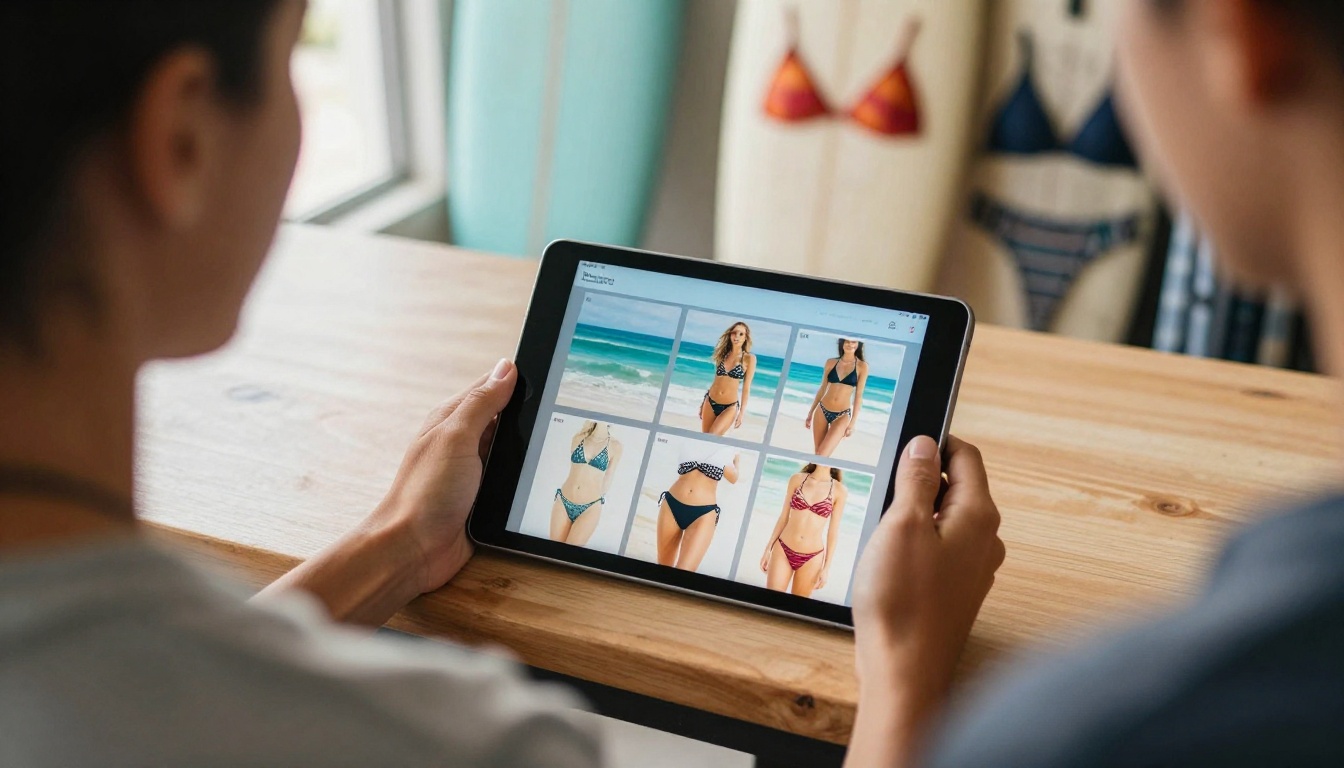
Resort swimwear lives or dies by imagery. A flat product photo says nothing about how a piece moves in the wind or looks on a real body at the beach. Strong labels shoot editorial images outdoors, in natural light, with people who look like the shop's customers.

Lookbook Structure That Works
A tight resort lookbook for wholesale follows a rhythm:
- Opening spread: one big lifestyle image and the collection story.
- Hero pages: one per hero piece, with fabric notes and sizes.
- Color and print pages: swatches next to each style.
- Pricing page: wholesale, suggested retail and minimum order.
- Reorder page: lead times, contact and a simple order link.
Photograph Like the Shop Sells
Shoot at the same kinds of beaches your buyer's customers visit. Include a few detail shots: stitching, waistbands, prints in sunlight. These images double as social content the shop can repost.
Not every pitch needs the same package. A walk in visit, an email follow up and a trade show booth each reward a different format.
| Format | Best For | Strength | Weakness |
|---|
| Printed lookbook | In person meetings | Tactile, impressive | Costly, outdated fast |
| PDF attachment | Email follow ups | Easy to send | Heavy on mobile, no tracking |
| Digital flipbook | Every channel | Page flip feel, links, tracking | Needs a short setup |
| Slide deck | Large chain buyers | Familiar | Feels corporate for surf retail |
| Instagram only | Brand awareness | Fast, social | No pricing or order path |
A digital flipbook combines the best of the printed book and the shareable link. You upload your design as a PDF and the platform turns it into a page turning experience that opens on any phone. The PDF to Flipbook Converter handles that conversion, and the Interactive Lookbook Designer suits labels that want clickable hotspots and embedded video.
How to Build a Resort Lookbook with Flipbooks AI
Here is a practical workflow a small swimwear label can finish in an afternoon.
- Design your pages in your usual tool at a landscape or square format. Keep each hero piece on its own spread.
- Open Flipbooks AI and create an account. Choose a plan on the pricing page that fits your needs.
- Upload the PDF. The converter keeps your layout, fonts and image quality intact and produces a flipbook in seconds.
- Customize the look: add your logo, set brand colors, choose page flip effects and pick a background that matches your campaign.
- Add multimedia: embed a short beach video or audio clip on the story spread, and add links from each style to its line sheet entry.
- Set sharing options: copy the direct link, use the embed code for your wholesale page or generate a QR code for the sample kit.
- Protect the pricing: turn on password protection so wholesale prices stay with approved retailers.
- Track what happens: on the Professional plan, analytics show which pages buyers open and for how long, and lead generation captures their contact details.
The Fashion Catalog Creator and the Lookbook Flipbook Builder are good starting points if you want a purpose built layout. You can also embed the flipbook on your website so the wholesale page always shows the latest season.
✅ Best practice: Keep the same file name and link between seasons. Buyers bookmark it, and every update reaches them without a new email.
Features That Matter for Wholesale
- ✅ No watermarks, ever, so the book looks like your brand alone
- ✅ Mobile responsive design for buyers who read on a phone between customers
- ✅ Offline downloads for shops with weak signal near the water
- ✅ Embedded video and audio for movement and mood
- ✅ Custom branding from the first page to the last
Price the Pitch Clearly
Surf shop owners are practical about money. Show wholesale price, suggested retail and margin in one view. Avoid forcing them to do math in their head.

| Style | Wholesale | Suggested Retail | Margin | Minimum Order |
|---|
| Classic boardshort | $34 | $78 | 56% | 6 units |
| Printed bikini set | $38 | $88 | 57% | 6 sets |
| Ribbed one piece | $46 | $110 | 58% | 4 units |
| Resort wrap | $41 | $96 | 57% | 4 units |
| Rash guard | $30 | $68 | 56% | 6 units |
These numbers are examples, but the structure is the point. Round margins, small minimums and a single glance comparison help owners say yes on the spot.
Make Small Orders Easy
Offer mixed size packs and a first order of as few as twelve units across styles. Surf shops would rather reorder a winner than overcommit to a gamble. A clear reorder path, with lead times printed beside each style, builds the habit.
⚠️ Warning: Avoid pushing a minimum that exceeds what the shop can sell in two months. A buyer who feels stuck with inventory will not return next season.
Plan the Store Visit
The meeting itself follows a short script. Practice it until it fits comfortably into fifteen minutes.
A Fifteen Minute Run of Show
- Minutes 0 to 2: Share the resort story in two sentences.
- Minutes 2 to 7: Hand over the three hero pieces and let the buyer handle them.
- Minutes 7 to 10: Open the digital lookbook on the shop tablet or their phone.
- Minutes 10 to 13: Walk through pricing and a suggested first order.
- Minutes 13 to 15: Confirm the order, delivery date and reorder link.
Offer Merchandising Help
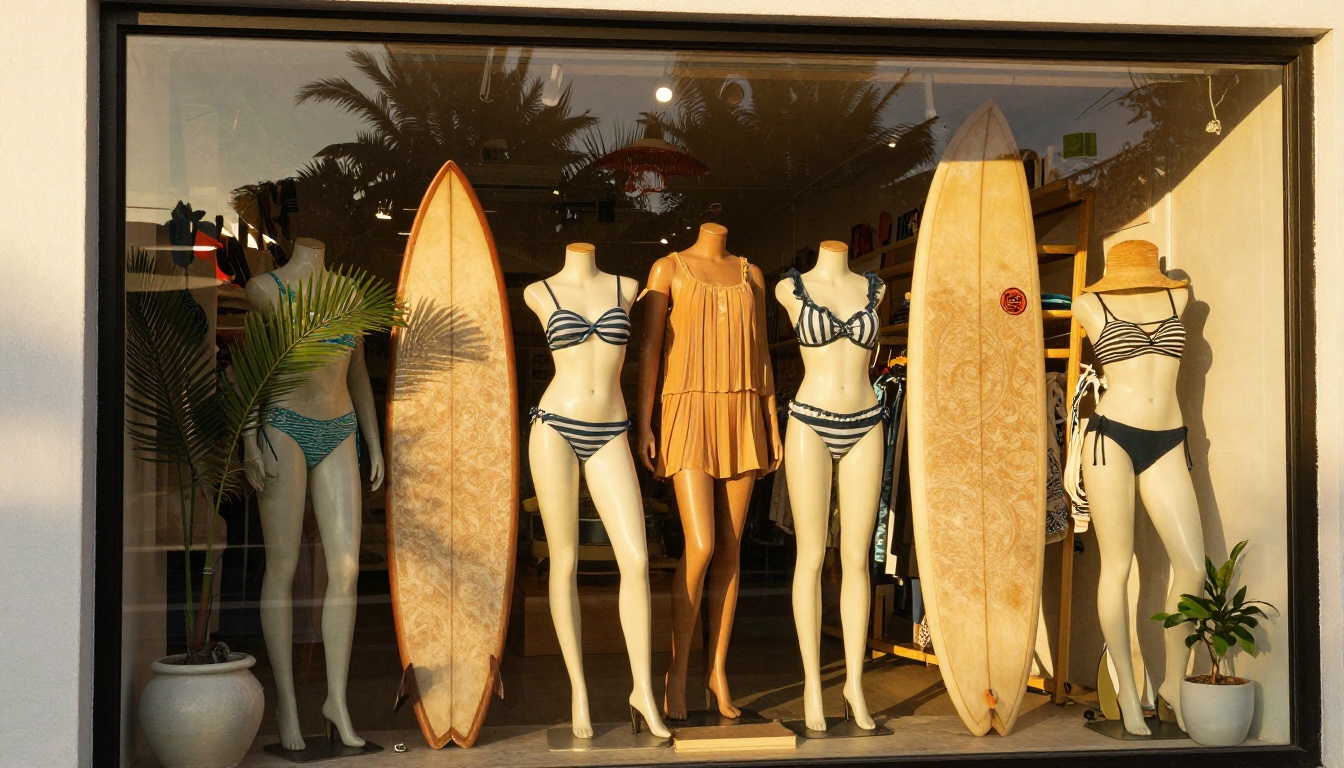
Many surf shops lack visual merchandising time. Offer a simple display plan: a rack layout, a window idea, a printed shelf talker. The window display above shows how a few mannequins, a longboard and a plant can turn a swimwear drop into a destination.
| Support Item | Cost to Brand | Benefit to Shop |
|---|
| Rack layout sheet | Low | Faster setup |
| Window display kit | Medium | Foot traffic |
| Shareable photo set | Low | Free social content |
| In store staff briefing | Low | Better selling |
| Reorder reminder email | Very low | Repeat orders |
Follow Up Without Being Pushy
The sale rarely closes in the room. What happens in the next two weeks decides whether you land a reorder.
A Simple Follow Up Sequence
- Day 1: Send a thank you with the flipbook link and the order summary.
- Day 5: Share a product photo set and one styling tip.
- Day 14: Check sell through and offer a quick top up on the best colors.
- Day 30: Send a short note with a preview of the next drop.
If your flipbook has analytics, use them gently. Seeing that a buyer opened the pricing page three times tells you to call with a small incentive, not to send more content.
Turn Sales Into Stories
When a style sells well, ask the shop for a photo of the display or a customer wearing it. Add it to the next edition of your lookbook. Buyers trust proof from a peer shop more than any sales line.
Common Mistakes to Skip
Even strong brands trip on the same details.
- Showing too many styles at once, so nothing stands out.
- Using studio only photography that feels disconnected from the beach.
- Sending large PDFs that fail to open on a phone.
- Hiding prices until the third email.
- Ignoring reorder timing, so bestsellers run out mid summer.
- Forgetting the hang tag story, which is the last thing the customer reads.
Ready to Pitch Your Next Line
A resort collection earns its place in a surf shop when the story is short, the samples are honest and the buyer can act immediately. Put the story into a lookbook that opens fast on any phone, protect your wholesale pricing and follow up with proof from the shops already selling your line.
Ready to build yours? Get started for free on Flipbooks AI, browse all flipbook tools for catalogs, line sheets and presentations, or compare pricing plans to pick the one that fits your label. For a more polished buyer meeting, the Sales Presentation and Digital Catalog Maker tools pair well with the lookbook workflow above.



