Craft distilleries pour their soul into every bottle, but most still rely on flat PDFs, printed one-sheets, or static websites to tell that story to buyers, distributors, and event guests. That gap is exactly where a well-built distillery flipbook changes everything. A digital flipbook carries the visual weight of a premium print catalog while living on any device, shareable in seconds, and interactive enough to stop someone mid-scroll. Flipbooks AI is built for exactly this, and in this article you will see precisely how to make a flipbook for your distillery, from strategy and content to publishing and sharing.
Why Your Distillery Needs a Digital Flipbook
The craft spirits market has never been more crowded. In 2024 alone, the United States counted over 2,300 active craft distilleries, each one competing for shelf space, distributor attention, and tasting room traffic. A printed brochure gets left in a bag. An email attachment sits unopened. A digital flipbook, on the other hand, loads instantly in a browser, feels like flipping real pages, and can be tracked, shared, and embedded anywhere.
Buyers Want the Experience, Not Just the Specs
Wholesale buyers and retail accounts are not looking for a spec sheet. They want to feel the brand. A well-designed spirits catalog with immersive photography, tasting notes, and a cohesive visual identity communicates quality before a single drop is tasted. When that catalog can be flipped through on a phone or embedded directly in your website, the barrier between interest and purchase shrinks dramatically.
Static PDFs Are Hurting Your Brand
A PDF is not a neutral choice. It signals that your digital presence stops at the file format your printer uses. In a category where packaging and presentation are half the product, sending a flat document to a distributor is a missed opportunity. Digital flipbooks are interactive, mobile-responsive, and far more memorable than a static file sitting in someone's downloads folder.
⚠️ A PDF that requires downloading, zooming, and scrolling sideways loses buyers before they reach page two. Interactive flipbooks eliminate that friction entirely.
What to Put Inside a Distillery Flipbook
Structure matters as much as photography. A flipbook that opens with three pages of legal boilerplate and then shows blurry product shots will not convert. Here is the content architecture that actually works for craft spirits brands.
Pages Every Spirits Catalog Needs
- Brand story spread: Two pages covering your origin, your method, your obsession. Buyers remember stories, not dates.
- Product range overview: A clean grid of your full lineup with names, categories, and ABV at a glance.
- Individual product profiles: One or two pages per SKU. Hero image, tasting notes, production details, and suggested retail price.
- Awards and recognition: If you have accolades from competitions or press, place them prominently.
- Distribution and ordering information: A clear page for wholesale buyers with contact details and minimum order quantities.
- Tasting room and tour details: Event-goers and tourists want to know how to visit.
- Social proof: Real quotes from bartenders, sommeliers, or press coverage.
Tasting Notes vs. Technical Specs
This is a debate that comes up in every distillery marketing conversation. The answer depends on your audience.
| Audience | Prioritize | Secondary |
|---|
| Wholesale buyers | Technical specs, ABV, case pricing | Tasting notes |
| Retail consumers | Tasting notes, flavor story | Origin story |
| Bartenders and mixologists | Cocktail applications, flavor profile | Proof, yield |
| Event guests | Brand story, visual appeal | Anything else |
A great distillery flipbook serves multiple audiences by front-loading the visual story and moving technical details to later pages, where the motivated buyer will find them.
💡 Create separate flipbooks for wholesale pitches and consumer-facing sales. The same content reordered for a different audience performs dramatically better.
How to Design a Spirits Catalog That Moves Product
Design is not decoration. In spirits marketing, design is the first sensory signal a buyer receives. It sets expectations for what is inside the bottle before the bottle is ever opened.
Photography Is Non-Negotiable
Every major spirits brand invests heavily in photography. For small distilleries, this is the single highest-ROI investment you can make in your marketing materials. You do not need a massive budget, but you do need:
- Natural or controlled studio light (no harsh on-camera flash)
- A consistent background system: dark slate, raw wood, or white marble
- Lifestyle context shots that show the bottle in a setting, not just on a plain background
- Close-up detail shots of the label, the liquid color, and any unique bottle features
Bad photography in a beautiful digital flipbook is still bad photography. Get the assets right before you build the catalog.
Color and Typography for Spirits Brands
Most successful spirits brands lean toward one of three visual identities:
- Heritage and craft: Warm amber tones, serif typefaces, aged textures, hand-lettered details.
- Modern premium: High-contrast black and white, clean sans-serif, minimal color palette.
- Artisan and natural: Earthy greens and browns, hand-drawn illustrations, rough textures.
Your flipbook should mirror the identity on your labels. If your bottles use a 19th-century woodblock aesthetic, your digital catalog should feel like it belongs in the same universe.
✅ Consistency between your bottle design, your flipbook, and your website is the fastest way to build brand recognition in a crowded spirits market.

How to Create a Distillery Flipbook with Flipbooks AI
This is where the process becomes simple. Flipbooks AI converts any PDF into a fully interactive digital flipbook with realistic page-turn effects, custom branding, and sharing options that work across every device. You do not need design software experience beyond what you use to create your PDF.
Step 1: Design Your PDF in Your Preferred Tool
Before you open Flipbooks AI, build your catalog in whatever software you are comfortable with: Adobe InDesign, Canva, Affinity Publisher, or even PowerPoint. Focus on visual quality and a consistent layout. Export as a high-resolution PDF, 300 DPI minimum for image-heavy spreads.
Step 2: Create Your Account and Upload
Head to Flipbooks AI and create a free account. Once inside, click New Flipbook and upload your PDF. The platform processes your file and generates a fully interactive flipbook in seconds, featuring the signature page-turn animation that makes digital catalogs feel like the real thing.
Step 3: Apply Your Distillery Branding
This is where Flipbooks AI separates itself from basic PDF viewers. In the customization panel, you can:
- Upload your distillery logo to appear on the flipbook interface
- Set custom background colors or images that match your brand palette
- Choose page flip sound effects (or disable them for a quieter experience)
- Add your custom domain so the flipbook lives at your URL
- Set a password if the catalog is for wholesale buyers only
For distilleries building a premium brand, this level of control matters. Your digital catalog should feel like an extension of your tasting room, not a generic file viewer.
Step 4: Add Multimedia
Standard plans include the ability to embed videos and audio directly into your flipbook pages. For distilleries, this opens real possibilities:
- Embed a short distillation process video into your "How We Make It" spread
- Add ambient sound from your barrel warehouse to a rickhouse page
- Include a link to a cocktail recipe video within a product profile page
💡 A 30-second video of your distiller talking about a specific barrel on the product page creates emotional connection that no text block can match.
Step 5: Share, Embed, and Track
Once your flipbook is live, Flipbooks AI gives you multiple ways to get it in front of the right people:
- Direct link: Share via email, text, or social media instantly
- Embed code: Drop your flipbook directly onto your website or e-commerce page
- Password protection: Keep wholesale pricing catalogs private from the public
- Analytics (Professional plan): See exactly how many people opened your flipbook, which pages they spent the most time on, and where they dropped off

Flipbooks AI Plans for Distilleries
Choosing the right plan depends on how many catalogs you need and which features matter most to your operation.
| Feature | Free | Standard | Professional |
|---|
| Flipbooks | 1 | Unlimited | Unlimited |
| Watermark | Yes | No | No |
| Custom branding | No | Yes | Yes |
| Password protection | No | Yes | Yes |
| Embed on website | No | Yes | Yes |
| Analytics | No | No | Yes |
| Lead generation forms | No | No | Yes |
| Offline downloads | No | No | Yes |
Most distilleries with active wholesale programs will benefit from at least the Standard plan. The Professional plan becomes valuable when you are running distributor pitches and need to know which buyers are actually engaging with your catalog, or when you want to collect leads directly from the flipbook itself.
See current pricing plans to choose the right tier for your operation.
✅ No watermarks ever on paid plans. Your distillery brand stays front and center on every page.
Real Use Cases for Distillery Flipbooks
The format is flexible enough to serve multiple functions across your business. Here are the specific scenarios where distilleries get the most value.
Wholesale and Distributor Pitches
When you walk into a meeting with a regional distributor, your catalog is your calling card. A digital flipbook on a tablet beats a printed folder every time. It is always current (update your PDF and re-upload to refresh the flipbook), it does not get dog-eared, and you can send a follow-up link the same day. The analytics feature on the Professional plan tells you whether they actually opened it after the meeting.
Tasting Room and Event Use
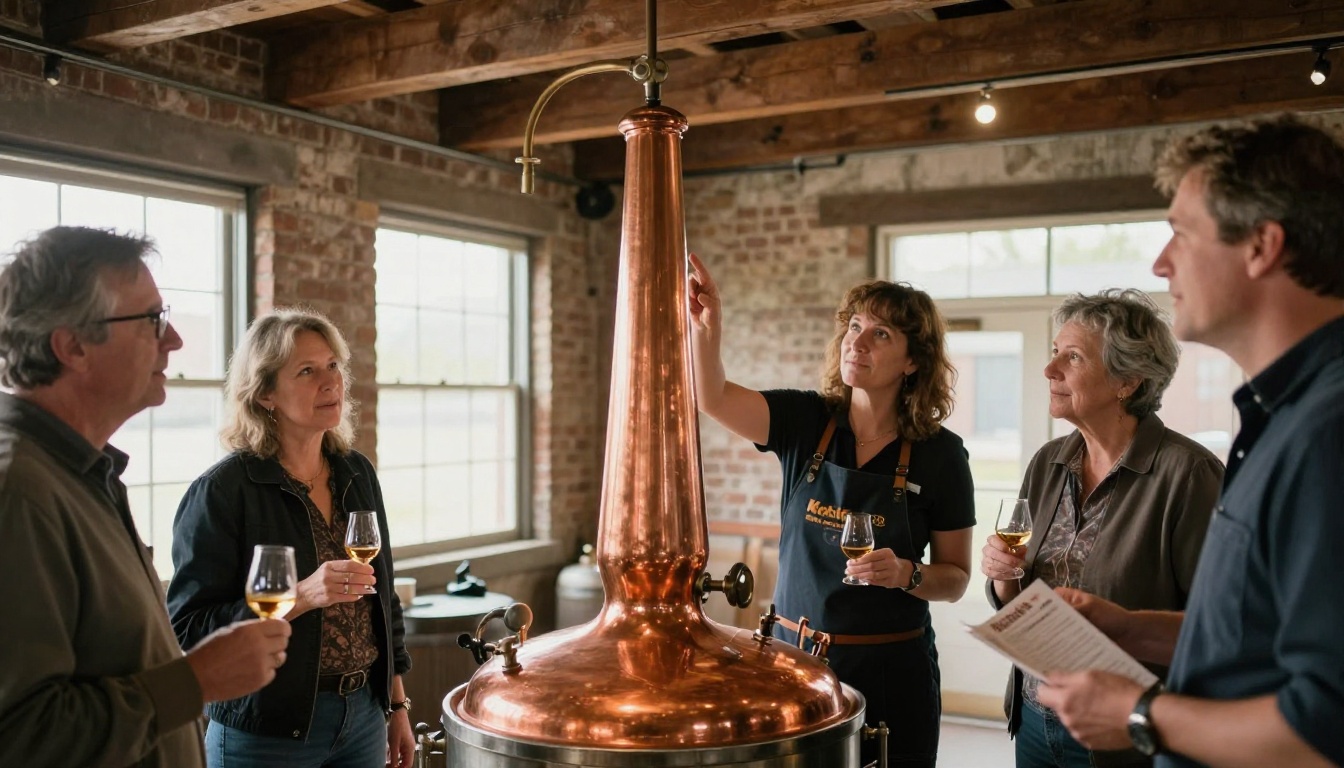
Set up a tablet or QR code in your tasting room that links to an interactive flipbook of your full product range. Guests who want to take something home can scan and save the link. At spirit festivals and farmers markets, a flipbook on a phone is easier to hand someone than a brochure.
Online Retail and E-Commerce
If you sell direct-to-consumer online, embedding your distillery flipbook on your product pages gives shoppers the full brand story before they buy. The Interactive Lookbook Designer is purpose-built for exactly this kind of visual selling experience.
Wholesale Price Lists
A password-protected digital price list is cleaner than a spreadsheet and far more on-brand. With the Digital Price List Generator, you can build a branded, interactive price sheet that updates in real time and never looks like it was made in Excel.
3 Mistakes Distilleries Make with Their Catalogs
Most distillery marketing fails not because the product is weak but because the presentation sells it short. These are the three patterns that come up again and again.
Too Much Text, Not Enough Visual
A catalog that reads like a technical document has lost its audience. Buyers skim before they read. If your opening spread does not hook them with a strong image and a single compelling headline, the rest of the pages will not matter. Cut your word count in half. Double your photography budget.
No Clear Next Step for the Buyer
What should someone do after flipping through your catalog? If the answer is "find our website somehow," you have a conversion problem. Every distillery flipbook should end with a clear call to action: a phone number for wholesale inquiries, an email for distributor contacts, a direct link to your tasting room reservation page. Make it effortless for the interested buyer to take the next step.
Sending a Static PDF in 2027
This one is worth repeating. A static PDF requires the recipient to download a file, open it in a PDF reader, and scroll through it on a screen that was not designed for two-page spreads. An interactive flipbook works in any browser, on any device, without downloading anything. The difference in response rates between a well-built flipbook and a standard PDF attachment is not small.
⚠️ If your distributor pitch deck is still a PDF attachment in an email, your catalog is already working against you before anyone opens it.
Beyond the standard spirits catalog, there are several flipbook formats that serve specific purposes in a distillery's marketing stack.
Each format serves a different moment in your customer or partner relationship. A distillery operating at scale may use three or four of these formats simultaneously for different audiences and channels.

Start Selling with Your Distillery Flipbook
The distilleries winning shelf space and distributor attention right now are not necessarily the ones with the biggest marketing budgets. They are the ones presenting their brand with the same care they put into the product. A stunning digital flipbook is one of the highest-leverage marketing assets a small distillery can build, and with the right platform, it takes a single afternoon to go from PDF to published.
Browse all available flipbook tools to find the format that fits your next catalog project. Compare pricing plans to find the right tier for your distillery's volume and needs. Or skip straight to building your first flipbook by creating a free account on Flipbooks AI today.
Your product deserves presentation that matches its quality. The page-turn is waiting.



