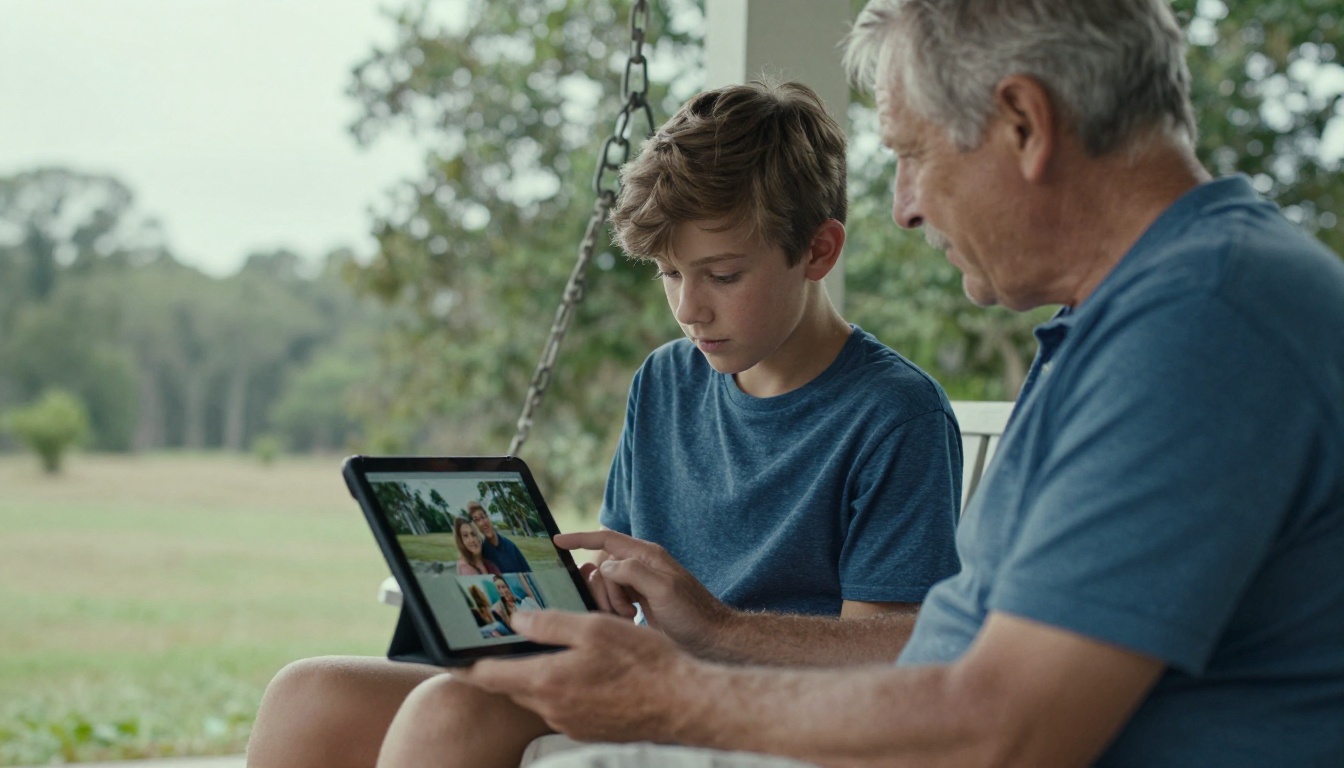
Most family history books die at page 12. The author spends three years chasing census records, and then the cousins skim the first chapter, say "wow, great work," and never open it again. If you want to know how to write a family history book relatives will finish, the answer has little to do with research and a lot to do with reading experience. Short chapters, real voices, plenty of photos, and a format that opens on a phone in two taps. This tutorial walks through each step, and shows how a Flipbooks AI flipbook can carry the final result to every branch of the family.
Why Relatives Stop Reading
Before writing a word, look at why family books fail. Your relatives are not lazy. They are busy, and the book asks too much of them.
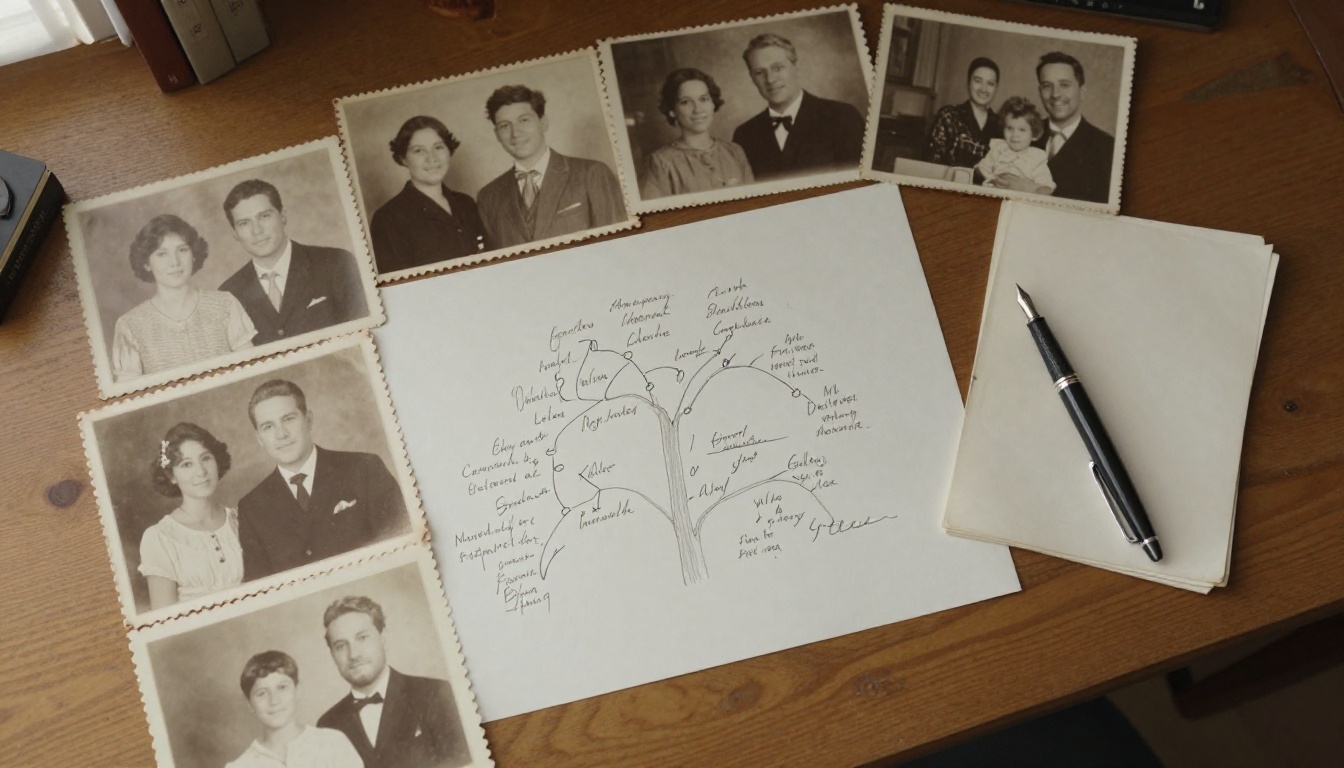
Here are the five most common reasons a family history book gets abandoned:
- Too many names too early. Chapter one lists forty ancestors and nobody remembers any of them.
- Dates instead of scenes. "Born 1894, died 1951" is a record, not a story.
- No faces. A page of text with no photo gives the reader nothing to hold on to.
- Heavy format. A 400-page PDF that takes a minute to load on a phone.
- No reason to continue. Nothing pulls the reader from one chapter to the next.
💡 Pro tip: Write for your most distracted cousin, not for the genealogy hobbyist. If that person finishes, everyone will.
Pick a Scope You Can Finish
The biggest mistake is trying to document every branch back to the 1700s. A book that never ends is a book that never ships. Pick one thread and commit to it.
Choose one lens
| Scope | Best for | Typical length | Time to write |
|---|
| One person (a grandparent) | Memorial or milestone birthday | 30 to 50 pages | 1 to 2 months |
| One couple and their children | Anniversary gifts | 40 to 70 pages | 2 to 3 months |
| One immigration story | Heritage and roots | 50 to 80 pages | 3 to 4 months |
| One family recipe collection with stories | Holiday gifts | 40 to 60 pages | 2 months |
| Whole surname line | Reunion project | 100+ pages | 6 months or more |
For a first book, stay in the top three rows. You can always publish a second volume. Many families find that a short first book makes everyone ask for the next one.
Set a page budget
Decide on the page count before you begin. Forty pages with roughly 30 photos is a strong target. It is long enough to feel like a real book and short enough that your aunt will read it in one sitting.
Gather Stories Before You Write
The raw material of a good family book is not documents. It is voices. Record people while you still can.

Run short interviews
Plan sessions of 30 to 45 minutes. Longer than that and both of you get tired. Use your phone's voice recorder, and ask permission first.
Good starter questions:
- What is your earliest memory of your home?
- Who in the family could make everyone laugh, and how?
- What was the hardest year, and what got you through it?
- What did a normal Sunday look like when you were ten?
- Which object in the house would you save from a fire, and why?
Notice that none of these ask for dates. Dates come later from documents. Stories come from questions that invite a scene.
✅ Best practice: Ask "what happened next?" at least three times per interview. The best details usually arrive after the first, rehearsed version of a story.
Collect the paper trail
While you interview, gather supporting material:
- Birth, marriage, and immigration records
- Letters, postcards, and recipe cards in handwriting
- Military papers, school reports, and newspaper clippings
- Photographs, with names written on the back if possible
Scan everything. A flatbed scanner at 600 dpi is plenty for photos, and a phone scanning app works for loose documents.

Build a Skeleton Outline
Now turn the pile into a structure. A timeline works for most families, but it is not the only choice. Compare the options.
| Structure | How it reads | Risk | Pick it when |
|---|
| Chronological | Birth to present | Slow, dull start | The life story has a clear arc |
| Thematic (home, work, food, faith) | Chapters by topic | Can feel scattered | You have many short anecdotes |
| Generational | One chapter per generation | Name overload | You have solid records for each |
| Journey | Leaving one place, arriving in another | Needs strong research | Immigration or migration stories |
Use a hook chapter
Start with the most vivid moment, not the earliest one. Open with the night the family left the village, or the day the farm was sold. Then loop back to the beginning. Readers who care about a scene will forgive a slower middle.

Write Short, Scene-Based Chapters
This is where books are won. Keep each chapter between 600 and 1,000 words, with at least two photos. A reader should be able to finish a chapter in five minutes.
The five-part chapter recipe
- Open with a moment. A smell, a sound, a sentence someone said.
- Name the person. Give their full name once, then use the name they went by.
- Add one fact that surprises. A job, a rumor, a number.
- Include a direct quote. Use their own words from the recording.
- End on a small question or a hint. Something that pulls the reader forward.

Show, then tell
Compare two versions of the same paragraph.
| Version | Text |
|---|
| Record style | "Maria Lopez was born in 1931 in Oaxaca. She married Tomas in 1952." |
| Story style | "Maria was twenty-one when Tomas showed up at her mother's door with a borrowed suit and a chicken. 'He thought the chicken would impress her,' she told me, laughing. 'It did not.' They married that spring." |
The second version has the same facts, but you can see the doorway. That is the difference between a book that sits on a shelf and one that gets passed around.
⚠️ Warning: Do not smooth out every voice into the same polished tone. If your grandfather spoke in short blunt sentences, keep them. Voice is what makes relatives say "that sounds just like him."
Handle sensitive topics with care
Every family has chapters people avoid. Decide early how to treat them.
- Ask living relatives before publishing anything about them.
- Present facts without blame. "He left in 1968 and did not return for nine years" says enough.
- Offer to leave a story out of the shared edition and keep it in a private one.
Make It Visual
Photos do more to keep people reading than any writing trick. Aim for one image every one or two pages.
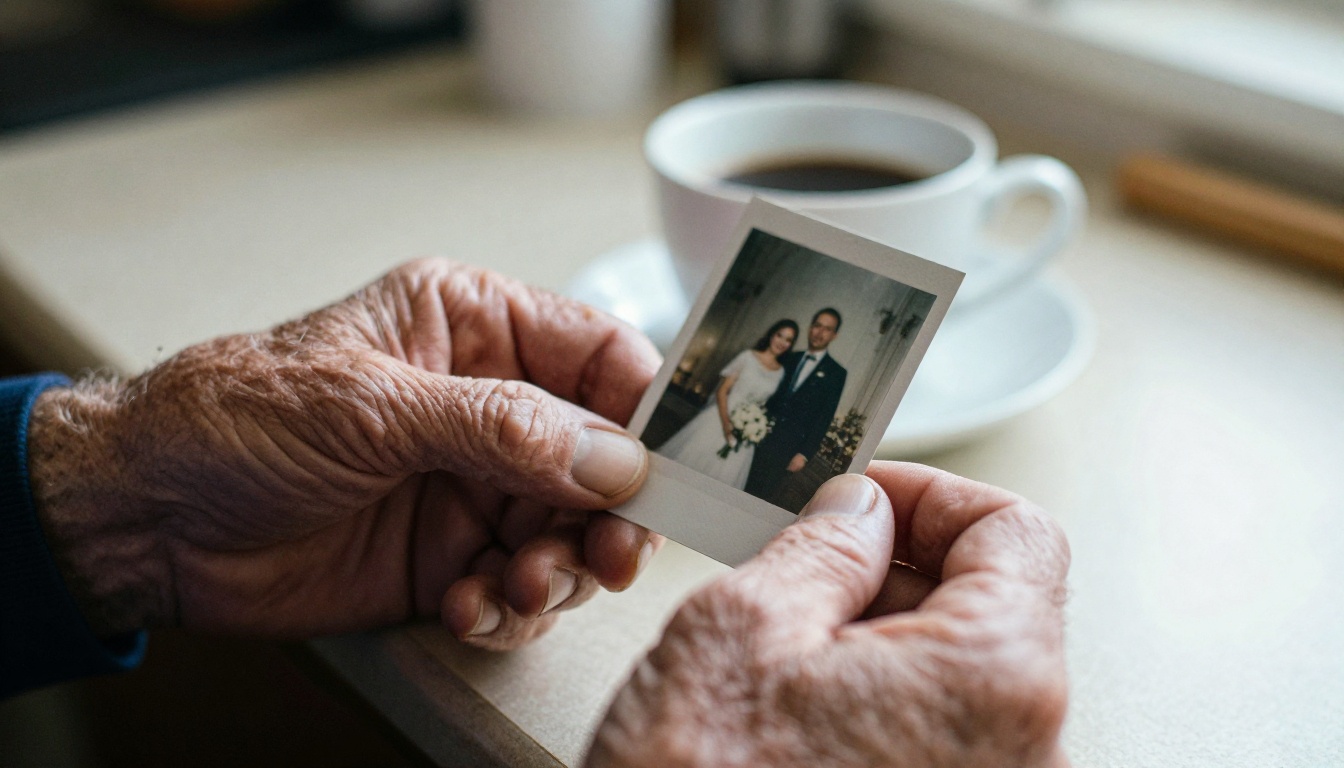
Photo checklist
- Scan at 600 dpi, save as high-quality JPG.
- Crop gently. Do not erase the creases and fold lines, they carry history.
- Write a one-line caption with names left to right and the year.
- Add a modern photo of the same place or person for contrast.
- Include pictures of objects: a ring, a recipe card, a pocket watch.
Layout rules that save readers' eyes
| Element | Recommended setting |
|---|
| Body font size | 12 to 14 pt, readable on a phone |
| Line spacing | 1.4 to 1.6 |
| Paragraph length | 3 to 5 lines |
| Photo width | Full page or half page, never tiny |
| Captions | Italic, one line |
| Pull quotes | One per chapter, large type |
Publish It as a Flipbook
Here is the step most family projects get wrong. A PDF attached to an email gets forgotten. A printed book reaches only the people you can afford to mail it to. A flipbook gives you a link that opens on any device, with real page turning, and it works for the cousin in another country as well as the aunt who only uses a tablet.

How to create your family flipbook with Flipbooks AI
- Export your manuscript as a PDF from Word, Google Docs, or Canva. Keep images embedded.
- Create a free account at Flipbooks AI and open the dashboard.
- Upload the PDF. The PDF to Flipbook Converter turns each page into a turnable spread in a few moments.
- Customize the look. Pick a cover color, add a family crest or logo, and choose the page turn effect. The Interactive E-Book Publisher is a good fit for narrative books.
- Add audio. Embed a recording of your grandmother telling the story, right next to the chapter about her. Hearing the voice is what makes people cry, in a good way.
- Set privacy. Turn on password protection so only family can open it.
- Share the link. Send it by text or email, or embed it on a family website.
💡 Pro tip: Put the link in the family group chat with one sentence: "Chapter 1 is 4 minutes. Tell me what you remember about it." Questions get opened. Announcements do not.
Why a flipbook beats the alternatives
| Feature | Email PDF | Printed book | Flipbook |
|---|
| Opens on any phone | Slow, awkward | No | Yes, mobile-responsive |
| Cost per extra reader | Free | $15 to $40 each | Free |
| Audio and video | No | No | Yes |
| Easy to update later | Resend the file | Reprint | Replace the file, same link |
| Password protection | No | Not applicable | Yes |
| Watermarks | None | None | None, ever |
If you plan several volumes, check the pricing plans. The Standard plan and above allows unlimited flipbooks, and the Professional plan adds analytics so you can see which chapters get read most.
Nudge Relatives to the Last Page
Publishing is not the finish line. Getting people to the final chapter takes a little design and a little social skill.
Release in installments
Do not drop the whole book at once. Share one chapter a week for eight weeks, each with a short note. A weekly rhythm becomes a family ritual, and it gives people time to send corrections and memories that improve the next edition.
Add built-in reasons to keep going
- A "mystery photo" page near the middle: who is this person? Reveal the answer at the end.
- A family quiz on the last spread with five questions drawn from the book.
- A blank "your story" page inviting readers to send their own memory.
- A recipe or object at the close of each chapter that people can actually use or look at.
Track what works
If you use a plan with analytics, look at where readers stop. A big drop at page 20 means chapter two needs shortening or an image. Fix it in the source PDF, re-upload, and the same link updates for everyone.
Common Mistakes to Avoid
- Starting with research instead of interviews. Documents will still be there next year. Your great-uncle may not be.
- Writing in a formal voice. If it does not sound like a person, nobody will keep reading.
- Skipping captions. A photo without names is a puzzle that frustrates the next generation.
- Waiting for perfect. A good 40-page book now beats a perfect 300-page book never.
- Forgetting to back up. Keep the manuscript, scans, and recordings in two places.
A Simple 8-Week Plan
| Week | Task | Output |
|---|
| 1 | Choose scope and page budget | One-paragraph plan |
| 2 | Interview two relatives | Two recordings |
| 3 | Scan photos and documents | Organized folder |
| 4 | Outline chapters | Hook chapter plus 5 to 7 chapters |
| 5 to 6 | Write drafts | 600 to 1,000 words per chapter |
| 7 | Layout and captions | Finished PDF |
| 8 | Publish and share | Flipbook link sent to family |
Start Your Family Book This Weekend
You do not need a literary gift or a genealogy degree. You need one person to interview, one folder of photos, and a format your relatives will actually open. Record the first conversation this weekend, while the stories are still within reach.
Ready to turn your pages into something the whole family can hold? Create a free account on Flipbooks AI, browse all the flipbook tools, or compare pricing plans to choose what suits your project. If recipes are part of your family story, the Recipe Book Flipbook pairs well with your history book, and the Wedding Album Flipbook is a lovely companion for anniversary editions.