Every year from December 26 to January 1, millions of families light a candle a night and ask the same question: what do we actually do on each of the seven days? If you want fresh Kwanzaa ideas for families that go beyond lighting the kinara, this plan gives you one activity, one conversation and one small project per principle. Better still, you can gather everything into a single page turning activity book using Flipbooks AI, so grandparents, cousins and kids can all follow along from any phone or tablet.
What Kwanzaa Celebrates
Kwanzaa was created in 1966 by Dr. Maulana Karenga as a harvest inspired celebration of African heritage, community and values. It runs for seven nights, and each night is tied to one of the Nguzo Saba, the seven principles. The name comes from the Swahili phrase matunda ya kwanza, meaning "first fruits."
The holiday is not a replacement for any religious or cultural tradition. Families of every background and belief observe it alongside other celebrations. What makes it special for households with children is its structure: seven nights, seven ideas, and a ready made rhythm for talking about who we are and who we want to be.
The Seven Symbols
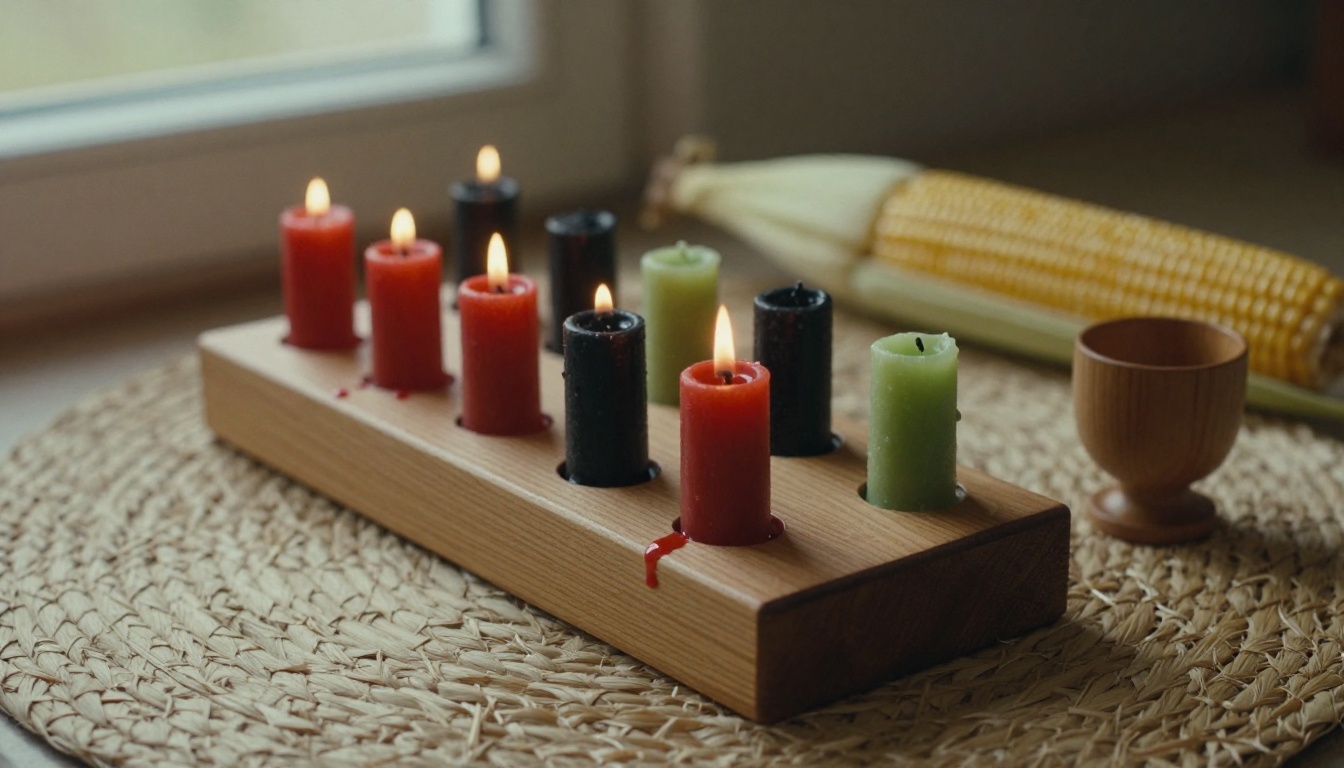
Before the first night, gather the symbols. Children love setting them out, and each one is a small lesson.
- Mkeka: the woven mat that holds everything, a symbol of tradition and foundation.
- Kinara: the candleholder with seven branches.
- Mishumaa Saba: the seven candles, three red, one black, three green.
- Mazao: fruits and vegetables that stand for the harvest.
- Muhindi: ears of corn, one for each child in the family.
- Kikombe cha Umoja: the unity cup shared during the ceremony.
- Zawadi: simple, meaningful gifts, often handmade or educational.
💡 Pro tip: Let a child place each symbol and say its name. Ownership of the setup makes the whole week feel like theirs.
A Quick Overview of the Seven Days
| Day | Swahili Name | Meaning | Candle | Family Focus |
|---|
| 1 | Umoja | Unity | Black | Working as one household |
| 2 | Kujichagulia | Self determination | Red | Choosing who you are |
| 3 | Ujima | Collective work | Green | Sharing responsibility |
| 4 | Ujamaa | Cooperative economics | Red | Supporting each other and local makers |
| 5 | Nia | Purpose | Green | Setting goals |
| 6 | Kuumba | Creativity | Red | Making something new |
| 7 | Imani | Faith | Green | Believing in family and community |
The black candle is lit first, then the candles alternate from the left (red) and the right (green) each night.
Day 1: Umoja Ideas for Unity
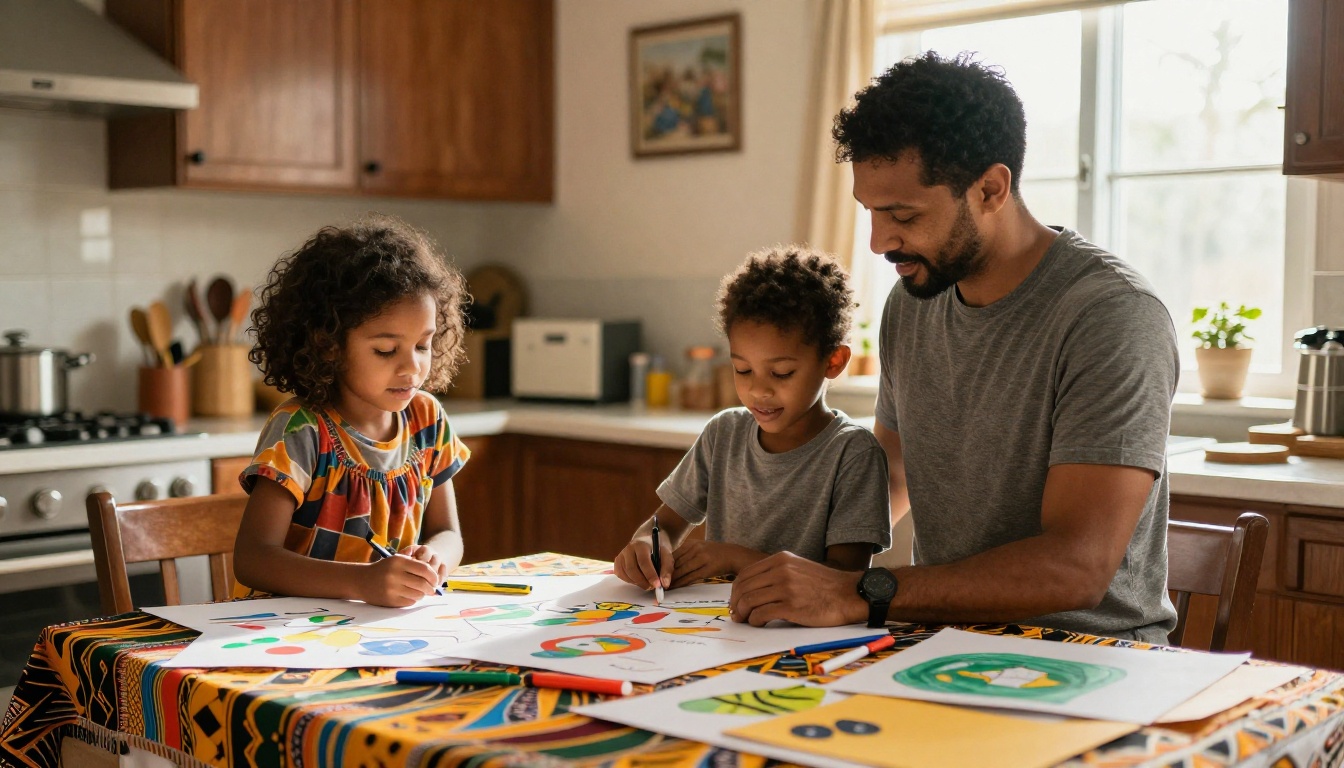
Umoja means striving for unity in the family, community, nation and race. On the first night the goal is simple: do something together that no single person could do alone.
Build a Family Banner
Spread a long sheet of craft paper on the table. Give each person a marker and ask them to draw one thing they love about the family. When everyone is done, connect the drawings with a border in red, black and green. Hang it where the kinara sits.
Pass the Unity Cup
Pour juice into the unity cup. Each person takes a sip and says one word that describes what unity means to them. Younger children can point to a photo or draw a picture instead of speaking.
Conversation Starters
- When did our family work as a team this year?
- What is one thing you do to make others feel included?
- Who in our family should we call tonight to say hello?
Day 2: Kujichagulia and Choosing Your Story
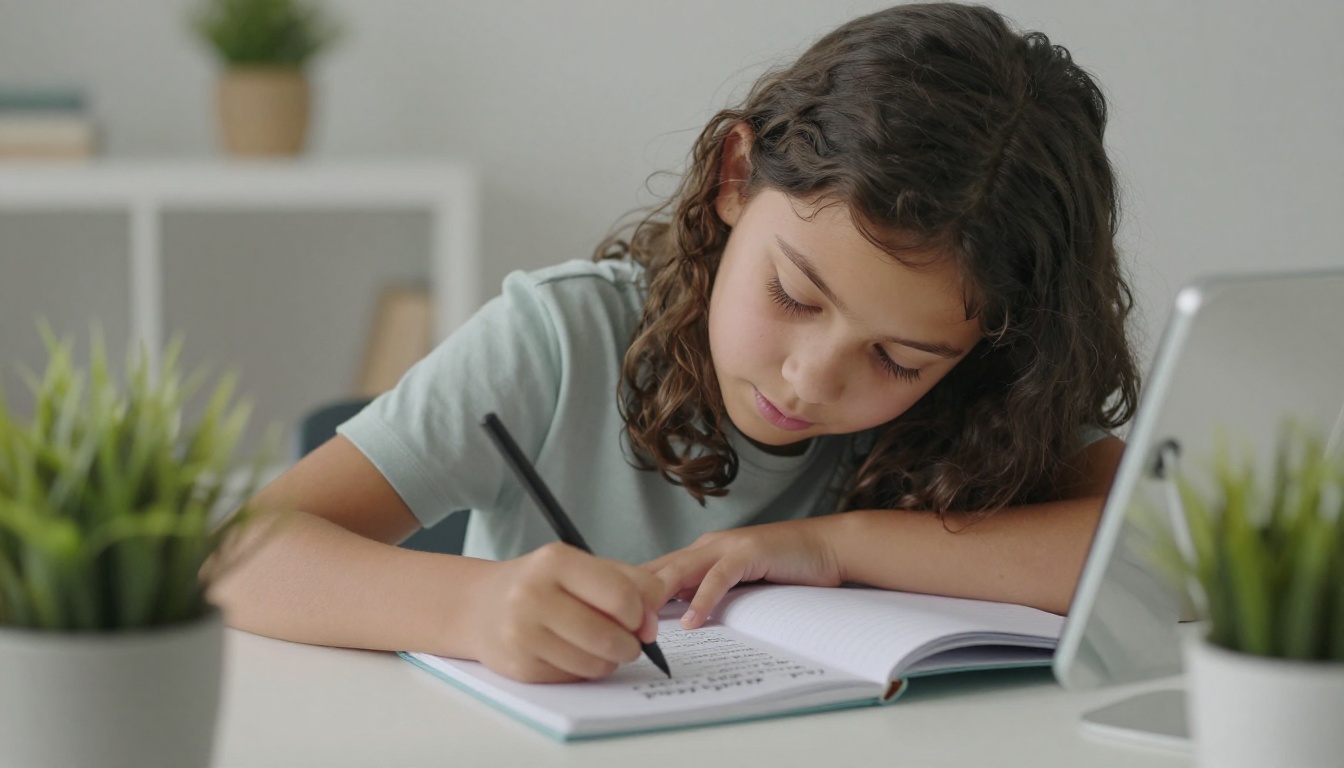
Kujichagulia asks us to define ourselves, name ourselves and speak for ourselves. It is a wonderful night for children because it invites them to say who they are in their own words.
Make an "I Am" Page
Ask each child to complete the sentence "I am..." five different ways. Encourage specifics: I am a builder of tall block towers. I am a good listener. I am the best at making pancakes. Older kids can add a short paragraph about a person from history who inspires them.
Name Story Time
Many families tell the story behind each person's name. Who picked it? What does it mean? Was someone named after a grandparent? Record these stories on a phone, since they make beautiful audio clips for your activity book later.
✅ Best practice: Keep this night free from corrections. There are no wrong answers when a child describes themselves.
Day 3: Ujima and Shared Work
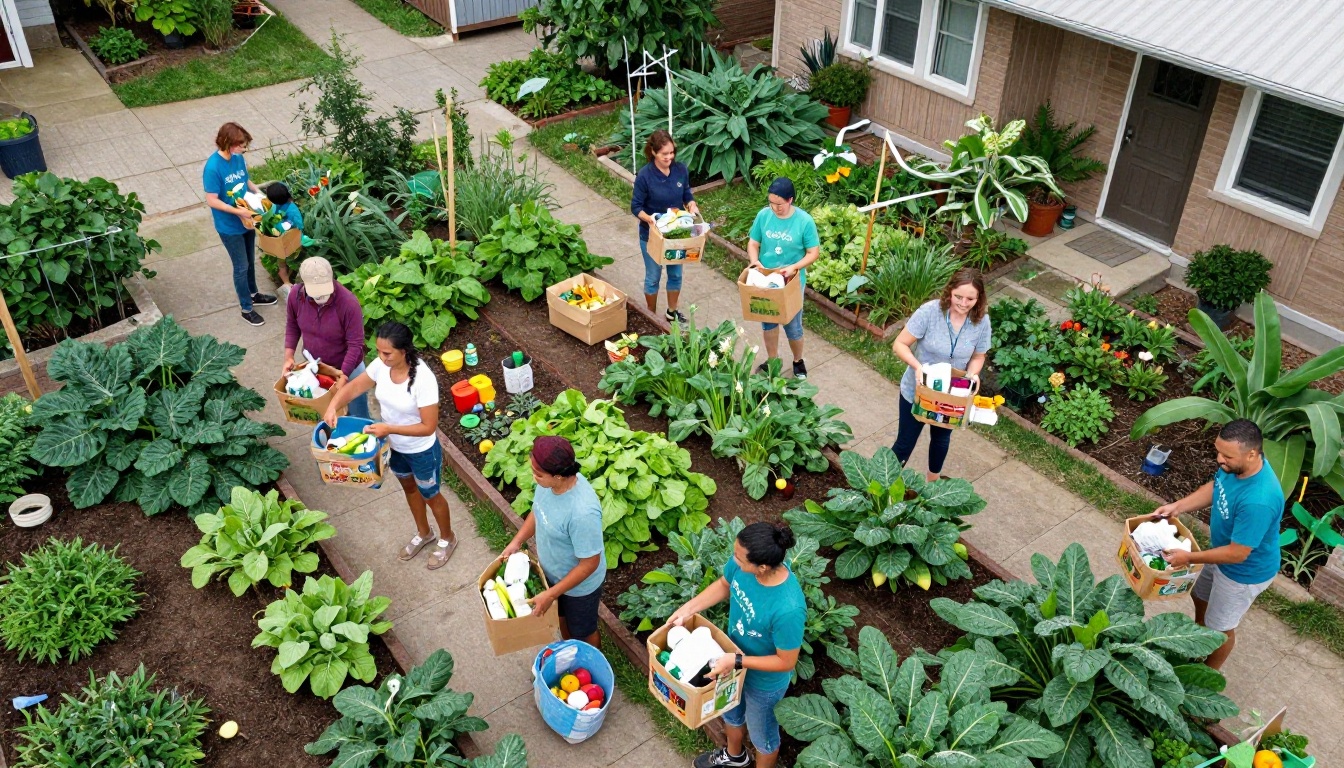
Ujima means collective work and responsibility: building and maintaining the community together and solving problems as a group. On this night, the family works rather than watches.
Run a Ten Minute Team Clean Up
Set a timer, put on music and split into pairs. One pair tidies the living room, another sorts the pantry, another wipes the kitchen. When the timer rings, everyone celebrates with a snack. The lesson is that a shared job gets small when many hands take part.
Give Back to the Neighborhood
Pick one small act that reaches beyond your home:
- Collect canned goods for a local pantry.
- Rake leaves for an older neighbor.
- Write cards for people in a care home.
- Organize a book swap on your street.
Take photos of whatever you do. They make a great page later in your activity book.
Day 4: Ujamaa and Supporting Local Makers
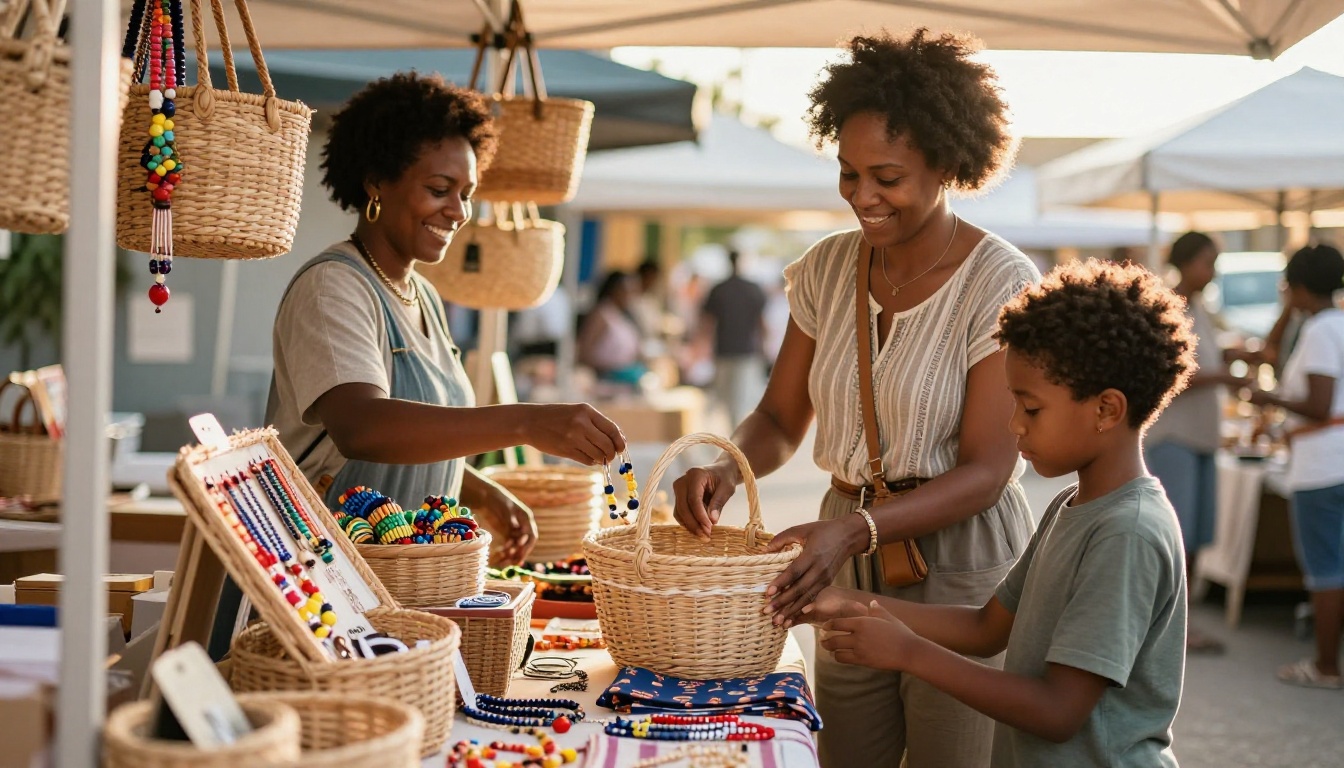
Ujamaa, or cooperative economics, encourages us to build and maintain our own stores, shops and businesses and to profit from them together. For families, that translates into a very practical habit: spend thoughtfully and support makers in your community.
Plan a Zawadi Shopping Trip
Visit a local Black owned shop, craft fair or online store and let each child choose one handmade item to give as a gift. Give them a small budget and ask them to explain why they picked it. This turns shopping into a lesson about value, craft and community.
Play Market Day at Home
Children set up a pretend stall with homemade goods, paper money and price tags. Siblings take turns as customers and shopkeepers. It is silly, loud and a surprisingly effective way to introduce saving, sharing profits and fair prices.
| Idea | Best Age | Time Needed | Materials |
|---|
| Pretend market stall | 4 to 8 | 30 minutes | Paper, markers, toys |
| Zawadi shopping trip | 6 to 14 | 1 to 2 hours | Small budget |
| Family savings jar | 5 and up | Ongoing | Jar, labels |
| Support a local maker | All ages | 1 hour | Phone, curiosity |
Day 5: Nia and Setting Goals
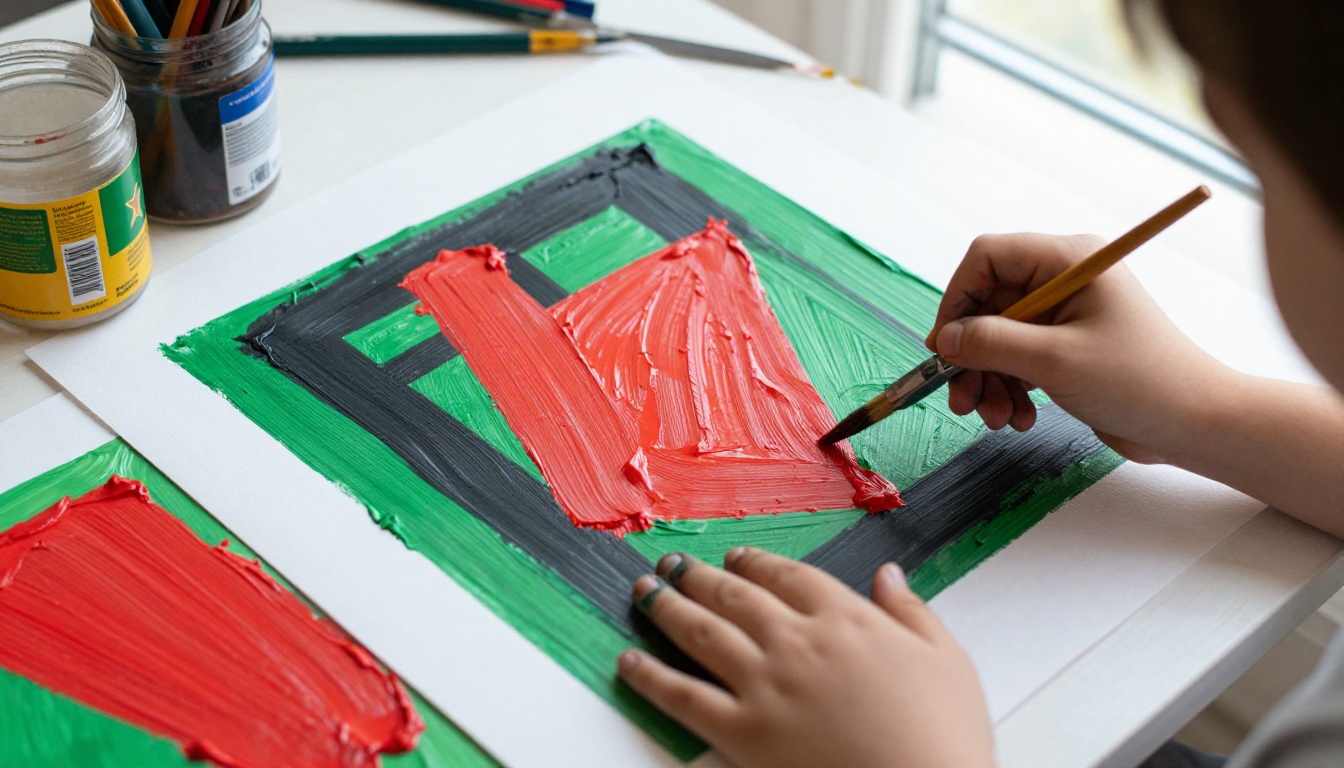
Nia means purpose: making our collective vocation the building and developing of our community. In a family setting, it is the night for hopes and plans.
Paint a Vision Canvas
Give every child a small canvas or thick sheet of paper. Ask them to paint what they hope to do, be or build in the coming year. A bold pattern in red, black and green works well as a background, with goals written in the center.
Write a Family Purpose Statement
Together, finish this sentence: "Our family exists to..." Let everyone suggest words, then vote on the best version. Post it on the fridge.
💡 Pro tip: Keep goals small and concrete for young kids, such as "read ten books" or "learn to ride a bike." Big dreams are welcome, but a finish line helps.
Day 6: Kuumba and Creative Making
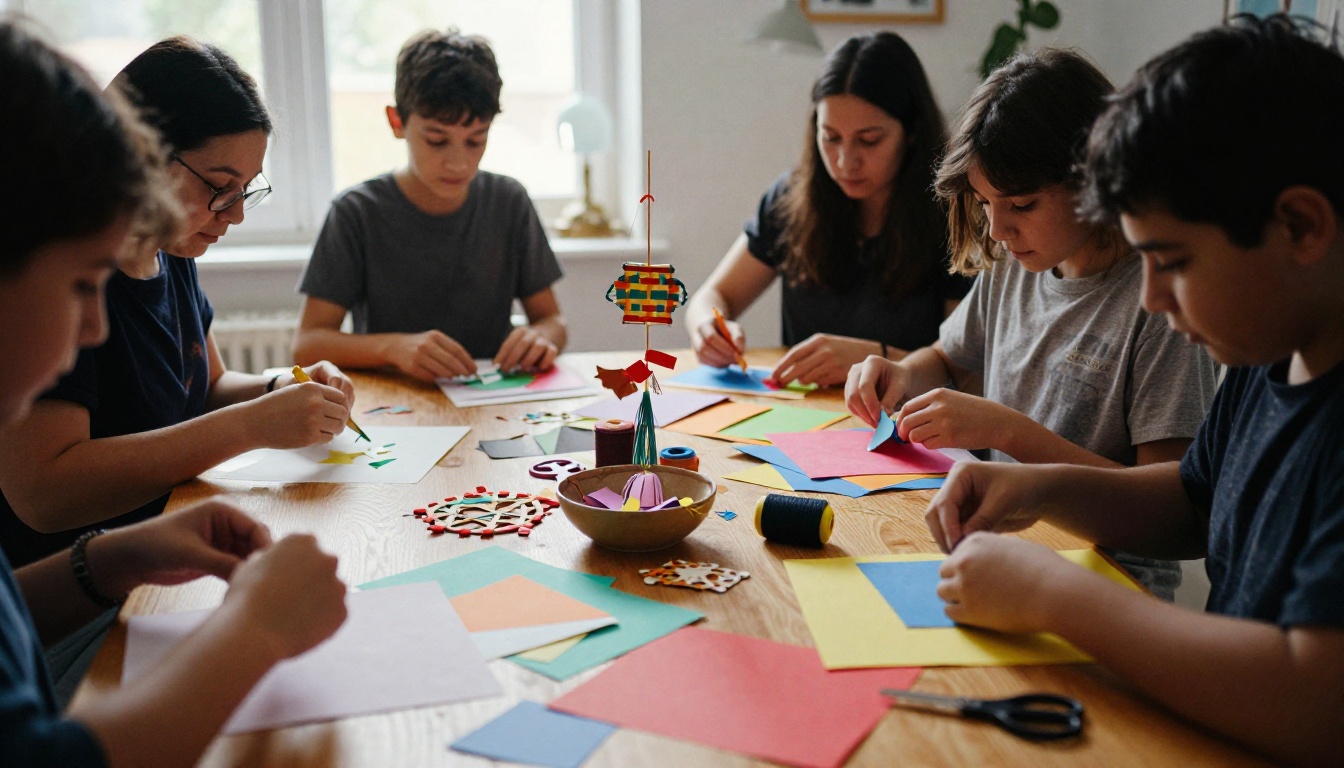
Kuumba is creativity: doing always as much as we can, in the way we can, to leave our community more beautiful than we inherited it. It is also the night before the big feast, so many families spend the day crafting decorations.
Craft Ideas That Work for Every Age
- Paper kinara: cut seven candle shapes from construction paper and glue them to a curved branch.
- Woven mkeka: weave strips of red, black and green paper into a mini mat.
- Beaded bracelets: thread beads in the three colors for gifts.
- Story drawings: illustrate a favorite family memory in comic panels.
- Kente inspired prints: stamp repeating shapes with potato halves and paint.
Perform Something
Kuumba also invites performance. Ask each person to share a poem, a song, a dance or a joke. Stage a living room talent show with a cardboard microphone. Record it, because those clips are treasures.
Day 7: Imani and the Karamu Feast
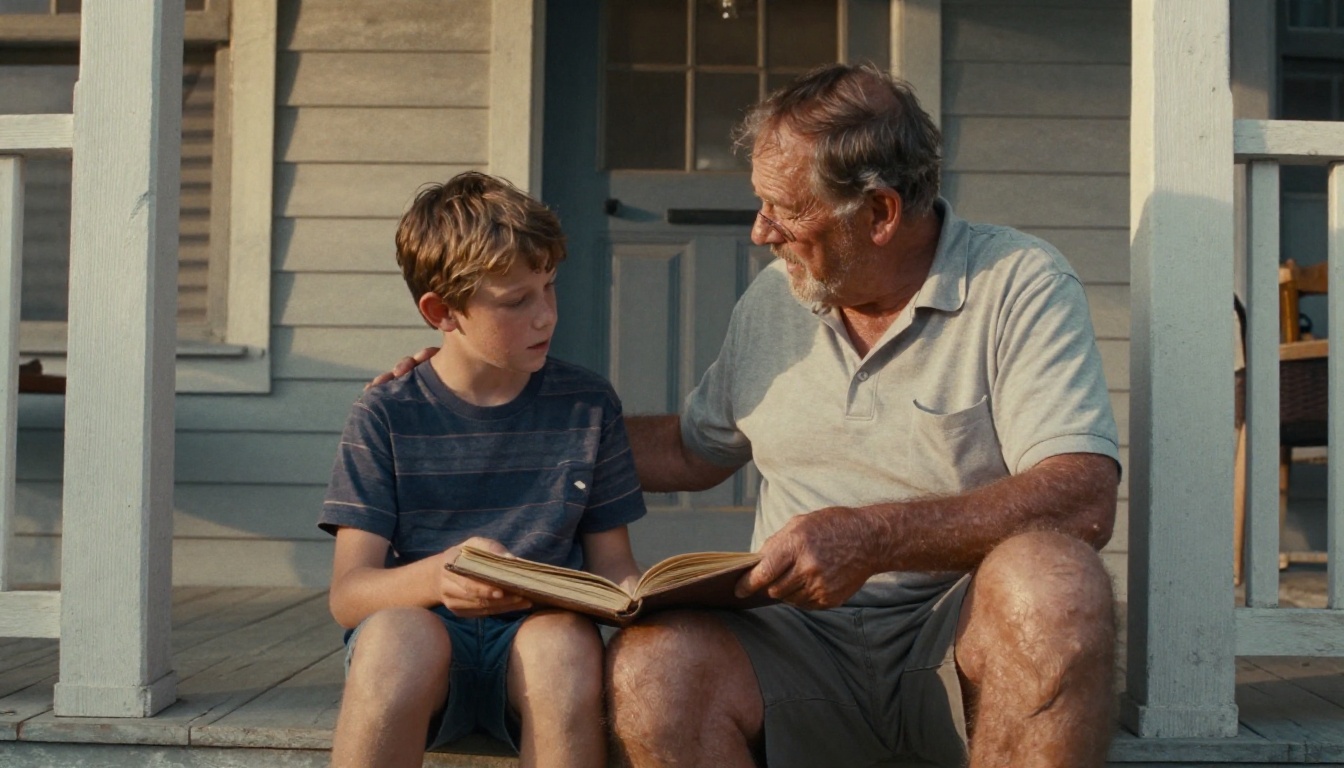
Imani means faith: believing in our people, our parents, our teachers, our leaders and the righteousness and victory of our struggle. On the final night, the family looks back, gives thanks and celebrates.
Share Stories Across Generations
Ask the eldest person present to tell a story about a time they believed in something when it was hard. Then ask the youngest to share something they believe about themselves. Family albums, old letters and recipe cards make wonderful prompts.
Host the Karamu
The Karamu is a communal feast, usually held on December 31. Every family has different dishes, and that is the beauty of it. Many tables include jollof rice, collard greens, black eyed peas, sweet potatoes, cornbread, peach cobbler and fresh fruit.
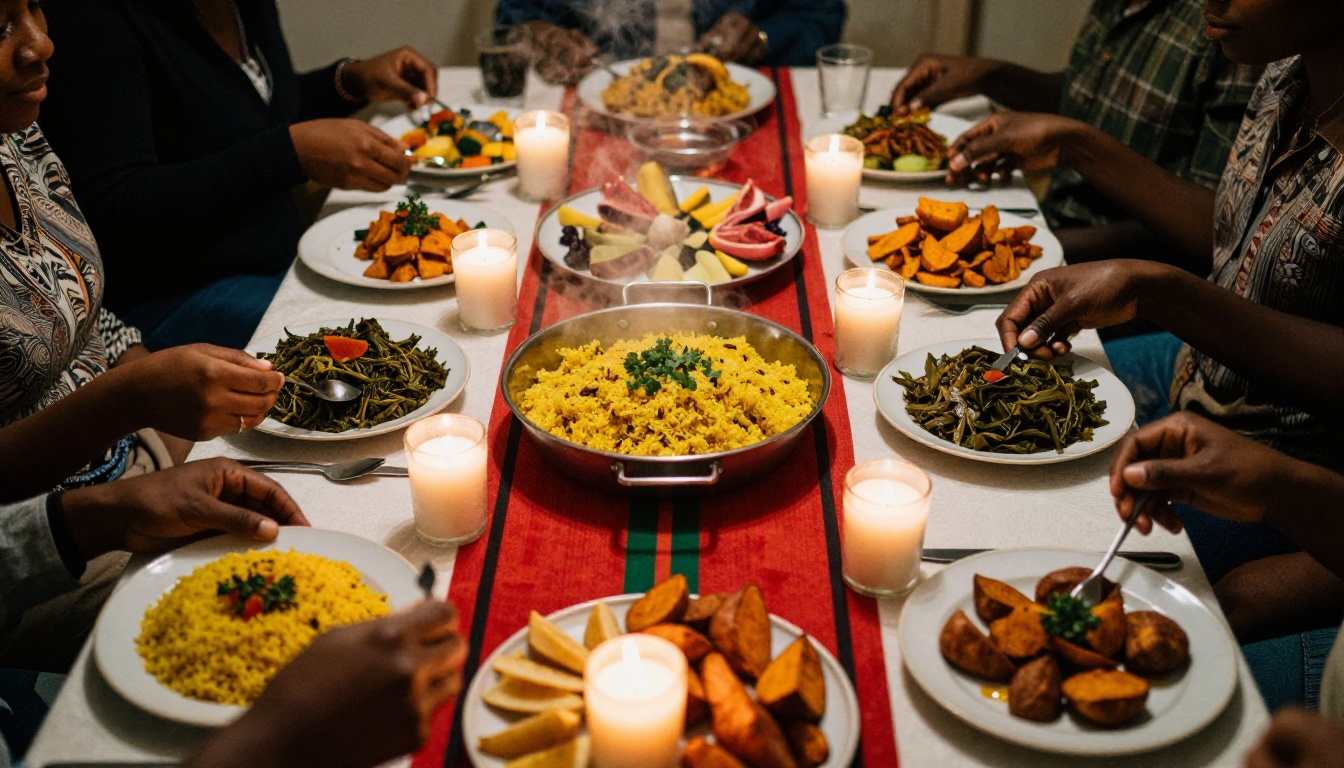
Ask each guest to bring one dish and a one sentence story about why it matters to their family. Begin with a libation, a toast to ancestors, and then eat, laugh and talk long into the evening.
Why an Activity Book Works
After seven nights you will have photos, drawings, audio clips, recipes and quotes. Left on a phone, they disappear in a camera roll. Collected into an activity book, they become something you can revisit every December and share with relatives far away.
A digital flipbook has real advantages over a stapled printout:
- No printing costs and no lost pages.
- Sharable by link with grandparents in another city.
- Embeds video and audio, so a child's poem is heard, not just read.
- Updates every year without starting from zero.
- Works on any screen, from a phone to a big TV.
| Format | Cost | Sharing | Audio and Video | Reuse Each Year |
|---|
| Printed packet | Ink and paper | Mail or hand out | No | Reprint |
| Shared photo album | Free | Link | Limited | Manual |
| PDF file | Free | Email | No | Edit and resend |
| Digital flipbook | Low | Link or embed | Yes | Duplicate and edit |

How to Create Your Kwanzaa Activity Book with Flipbooks AI
Here is a straightforward way to turn your family's week into a polished book. The E-Book Flipbook Generator and the Course Material Publisher are both a good fit for activity style content.
Step by Step
- Draft your pages. Use any tool you like, such as a word processor or a slide app. Plan one page per principle: the name, the meaning, the activity, a conversation prompt and a space for photos. Add a title page and a Karamu recipe page.
- Export as a PDF. Keep images sharp and text large enough for children to read on a phone.
- Create an account. Head to Flipbooks AI and sign in.
- Upload your PDF. The PDF to Flipbook Converter turns it into a page turning book in moments, with a realistic page curl.
- Customize the look. Choose red, black and green accents, add your family name and select the page effects you prefer. No watermarks appear, ever.
- Add media. Embed a video of the talent show, an audio clip of grandma telling the name story or a link to a recipe.
- Share it. Copy the direct link, send it by text or embed the flipbook on a website for a church group or classroom.
- Protect it if needed. Turn on password protection for private family photos.
⚠️ Heads up: Get permission before including photos of other people's children, especially if you plan to share the link with a wide group.
Plan Comparison for Families and Groups
| Need | Suitable Plan | Why |
|---|
| One family book | Free or Standard | Simple and quick |
| Many yearly books | Standard | Unlimited flipbooks |
| School or community group | Professional | Analytics and lead tools |
| Offline copies for travel | Standard and above | Offline downloads |
Review the current pricing plans to see exactly what fits your needs. Teachers and community leaders can also see the Training Manual Flipbook and School Newsletter Creator for classroom versions of the same idea.
Practical Examples from Real Households
A family of five lives across three states. The mother builds a seven page book, adds a short video message from each grandparent, and sends one link. On each night of Kwanzaa, everyone opens the page for that day and joins a video call to do the activity together.
A third grade teacher adapts the seven principles into a classroom booklet. Each page has a short story, a drawing prompt and a reflection question. The booklet goes home to parents through a link, so there is no photocopying.
A community center hosts a Kwanzaa evening. Volunteers collect recipes, poems and photos from neighbors, then publish a shared keepsake book that families open year after year.
Tips for Making It Last
- Keep a single template and swap in new photos each year.
- Ask every child to write the last page in their own words.
- Add a dedicated page for new family members and traditions.
- Save a backup copy of the original PDF.
Bringing It All Together
Kwanzaa works best when it feels like a week of doing, not just watching. Seven nights, seven principles and one shared book give your family a rhythm to return to year after year. Start small: pick one activity per night, take a few photos and write down what the kids say. By the final candle, you will have the makings of something worth keeping.
Ready to turn it into a keepsake? Get started for free on Flipbooks AI, browse all flipbook tools for more ideas, or compare plans to find the right fit for your family. Heri za Kwanzaa!



