Boutique hotels sell something that big chains can't replicate: a feeling. The curated artwork, the hidden rooftop terrace, the handwritten welcome note on the pillow. Your marketing materials need to capture that same feeling, and a printed tri-fold brochure left in a lobby rack simply doesn't cut it. Flipbooks AI gives boutique hotel owners a way to turn their property story into an interactive digital experience that guests browse before they book, share with friends, and return to long after checkout.
The average hotel guest visits 17 different websites before making a booking decision. They want to feel the property before they commit. A static PDF buried in an email attachment doesn't do that job. A beautifully designed digital flipbook with realistic page-turn animations and embedded media does.
What the Data Actually Shows
| Format | Avg. Time Spent | Shareability | Mobile-Friendly | Cost to Update |
|---|
| Printed Brochure | 45 seconds | Very Low | No | High (reprint) |
| Static PDF | 1.2 minutes | Low | Limited | Low |
| Digital Flipbook | 3.8 minutes | Very High | Yes | Free |
| Hotel Website Page | 2.1 minutes | Medium | Yes | Medium |
The time-on-content difference is significant. When guests spend nearly four minutes flipping through your property, they build familiarity and desire that translates directly into bookings and, critically, into fewer questions once they arrive.
What Guests Research Before Booking
Before you build anything, think about what your guests are actively looking for:
- Room details: Bed type, view, exact square footage, bathroom style, toiletry brands
- Dining options: Breakfast hours, in-house restaurant menus, local restaurant tips
- Wellness facilities: Spa treatments, pool hours, fitness room access
- Local experiences: Curated neighborhood tips only the hotel knows
- Practical policies: Check-in time, pet policy, parking, cancellation terms
A flipbook lets you cover all of this in one cohesive, scannable document without overwhelming a single webpage.
What Goes Inside a Boutique Hotel Flipbook
This is where most hotels get it wrong. They upload a compressed version of their old printed brochure and call it done. A flipbook built for conversions needs original content structured around the booking decision.
Section 1: The Property Story
Open with why your hotel exists. Not a mission statement, but a story. Who founded it? What's the building's history? Why does this neighborhood matter? This section sets the emotional tone and differentiates you from every other "boutique hotel" within five miles.
Section 2: Room Showcase
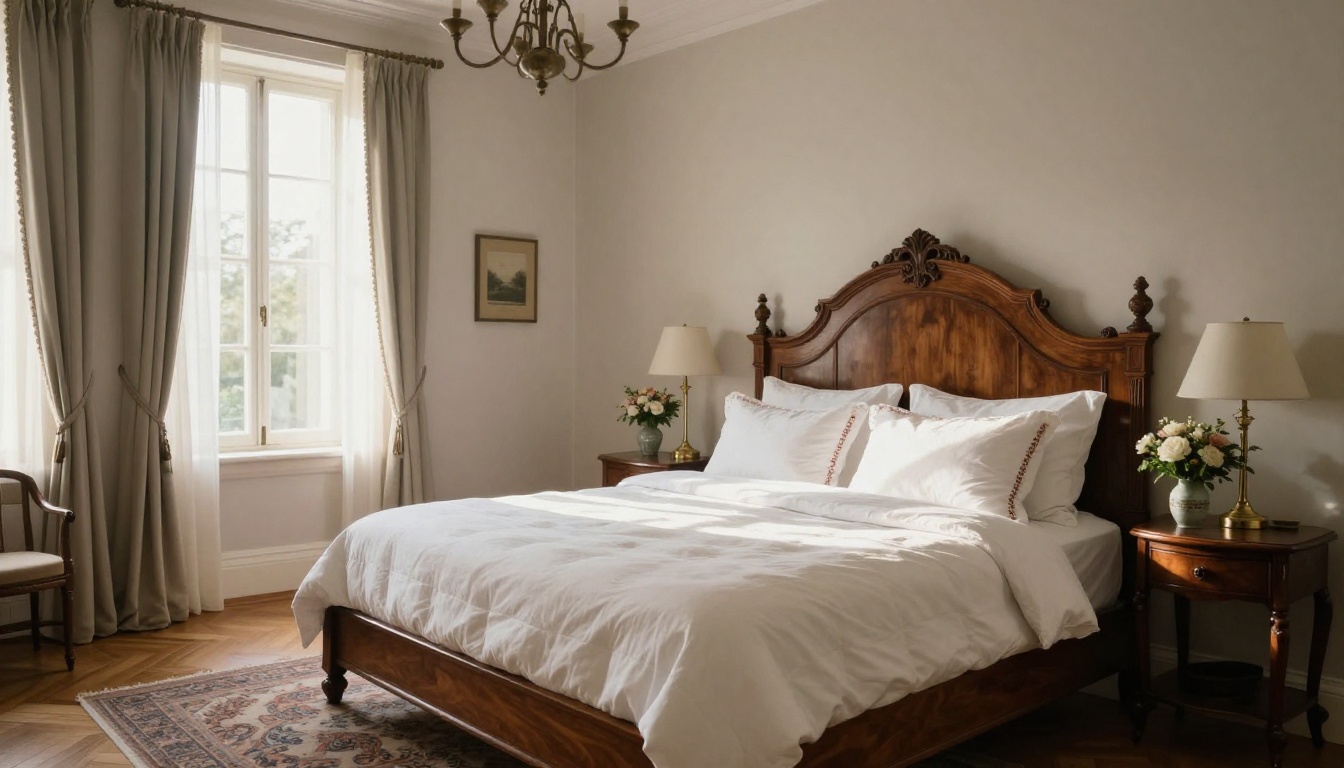
Each room category deserves its own spread with a full-bleed photography page, a bullet list of amenities (thread count, screen size, bath type), a view description, and a starting nightly rate. People book rooms, not properties.
💡 Pro Tip: Include a QR code on your printed check-in card that links directly to the room section of your flipbook. Front desk staff can share it instantly via WhatsApp during inquiry calls.
Section 3: Dining and Bar
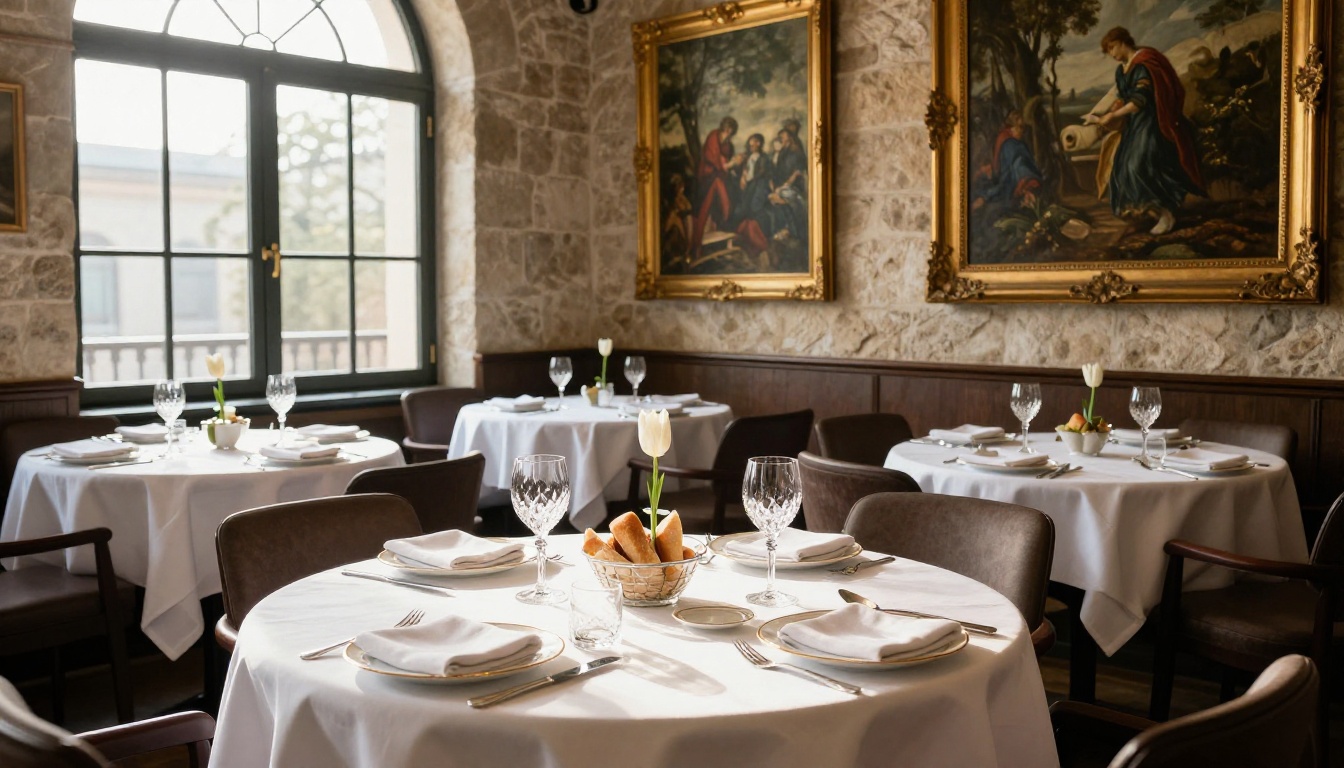
This section doubles as a restaurant menu creator opportunity. Feature the chef's background and philosophy, signature dishes with real photography, dietary accommodations, the bar program with cocktail specialties, breakfast hours, and whether it's included in the room rate.
Section 4: Wellness and Experiences
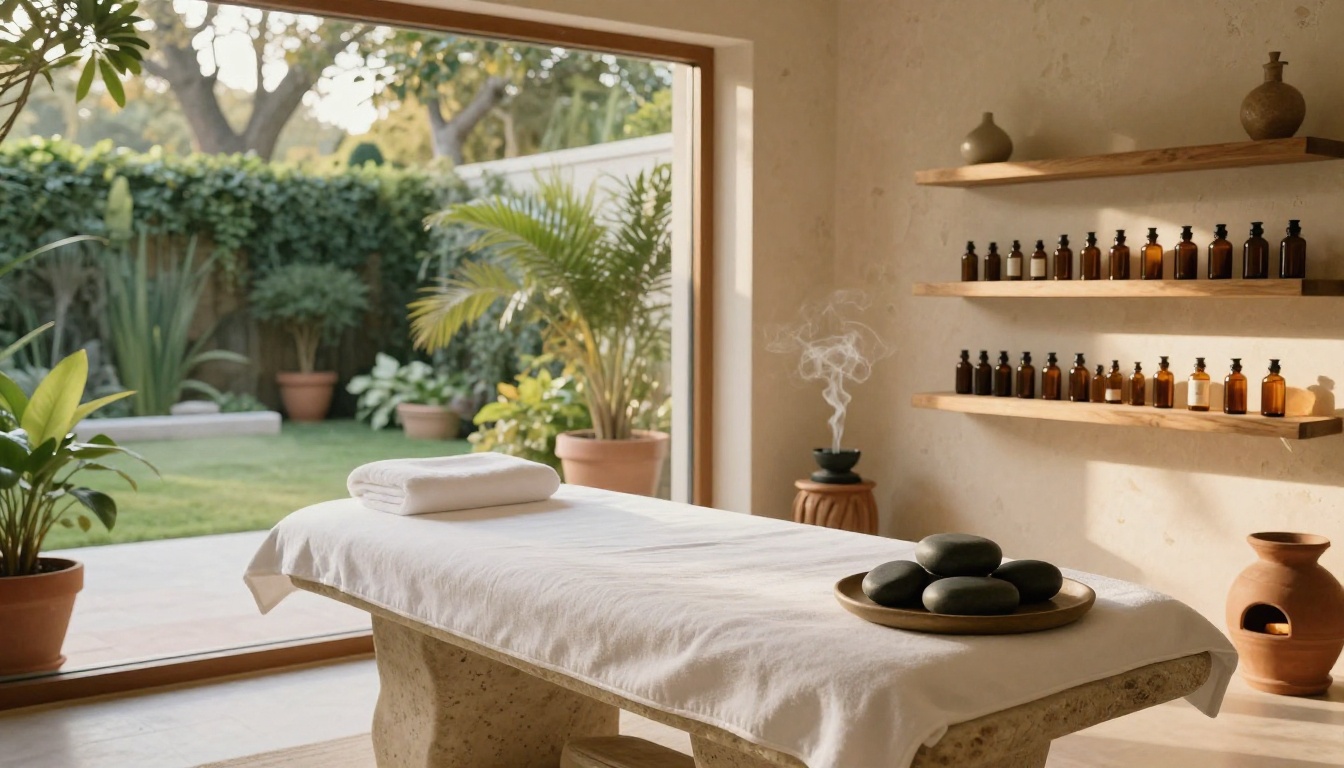
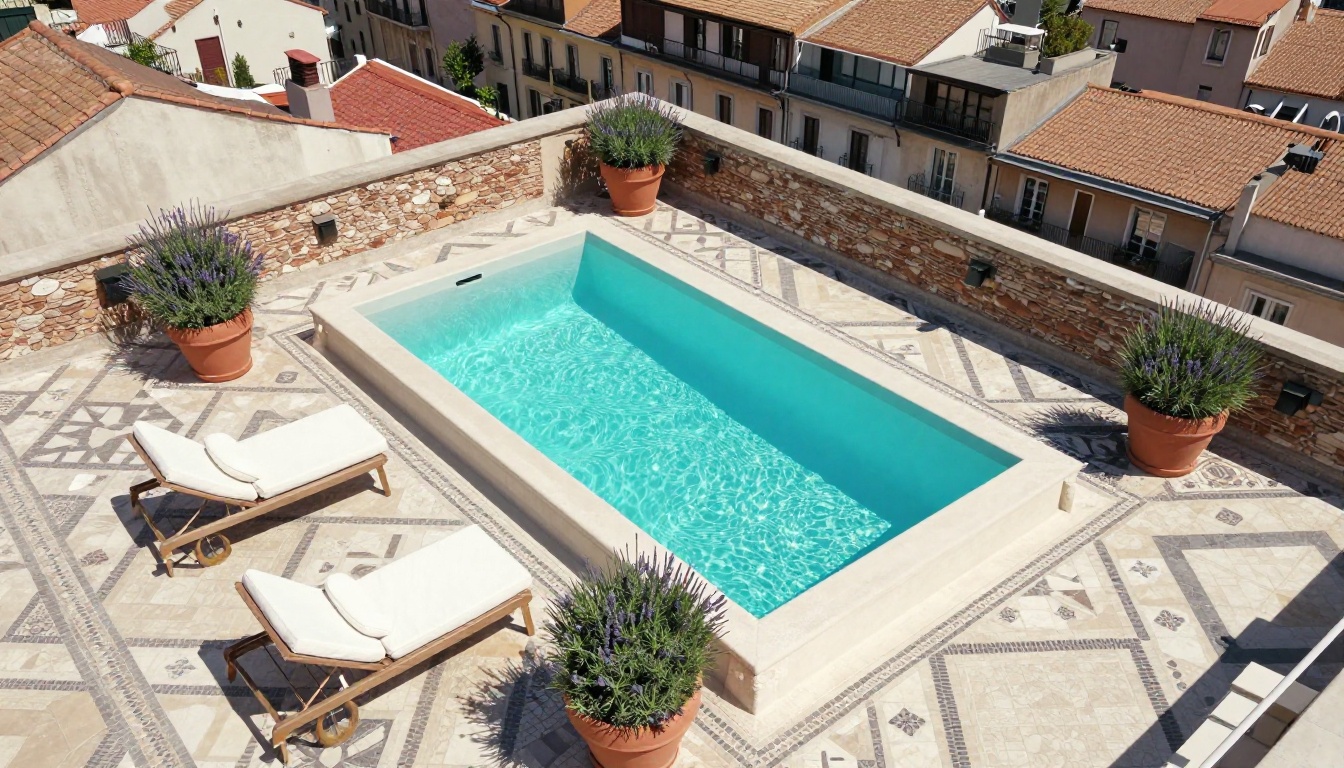
Show the spa treatment menu with real pricing, pool and terrace access details, and any curated experiences you offer such as cooking classes, private wine tastings, or local cycling tours. This section often drives upsells worth 30-40% of the base room rate for properties that present it well.
Section 5: The Local Edit
This is your competitive advantage. No booking platform gives guests a handpicked neighborhood list written by the people who actually live and work there. Your recommendations for the best morning coffee spot, the Friday market, the hidden viewpoint, these are what guests share on social media and what drives return visits.
✅ Best Practice: Update this section each season. A flipbook costs nothing to edit, so your summer edition and winter edition can stay current without reprinting a single page.
Section 6: Packages and Pricing
End with a clear, scannable pricing section that answers the question before guests have to ask:
| Package | Includes | Min. Nights | Rate From |
|---|
| Room Only | Accommodation | 1+ | Base rate |
| Bed & Breakfast | Room + breakfast for 2 | 2+ | Base +18% |
| Romance Escape | Room + champagne + late checkout | 2+ | Base +35% |
| Full Experience | Room + B&B + spa credit + experiences | 3+ | Base +60% |
How to Make a Flipbook for Your Boutique Hotel
The actual production process is faster than most hotel owners expect. Here's how it works from start to finish using Flipbooks AI.
Step 1: Create Your Account
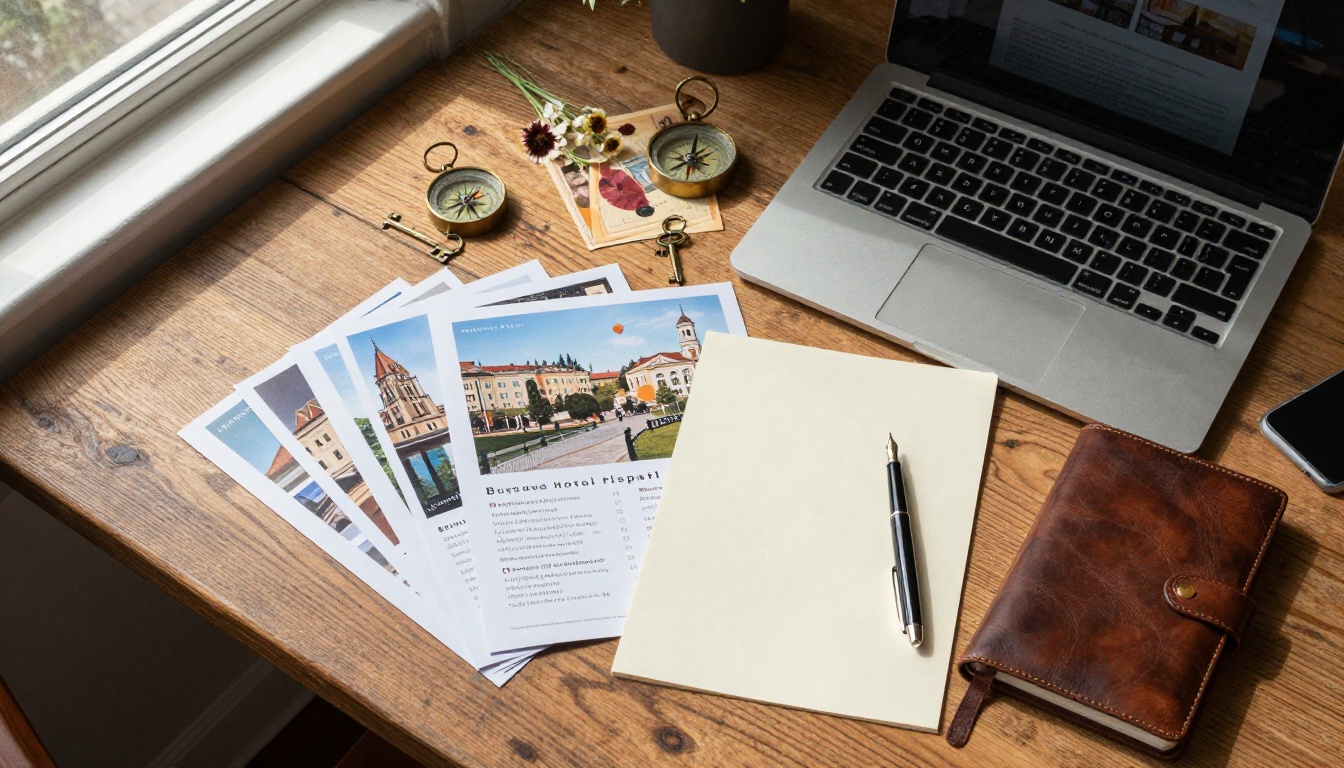
Go to Flipbooks AI and sign up. The free plan lets you test the platform fully, but for a live hotel brochure you'll want at least the Standard plan, which removes watermarks and allows unlimited flipbooks.
Step 2: Design Your PDF Source File
Flipbooks AI converts any PDF into an interactive flipbook. You have two routes:
- Design tool: Build a multi-page layout in Canva, Adobe InDesign, or Figma at 1920x1080px landscape format for best screen display
- Existing file: If you already have a printed brochure as a PDF, upload it directly
⚠️ Warning: Low-resolution PDFs (under 150 DPI) produce blurry flipbook pages. Always export at 300 DPI minimum for sharp results on high-density screens.
Step 3: Upload and Convert
From your Flipbooks AI dashboard:
- Click New Flipbook
- Select Upload PDF
- Drag your file into the upload zone (up to 200MB supported)
- Wait for automatic conversion, typically under 60 seconds
The PDF to Flipbook Converter engine creates a perfectly paginated interactive version with realistic page-turn physics and smooth mobile performance across every device.
Step 4: Apply Your Hotel Branding
Once converted, open the Customize panel:
- Upload your hotel logo in PNG format with a transparent background
- Set your brand colors for the viewer toolbar and chrome
- Choose a page flip sound (a subtle paper rustle works well for luxury properties)
- Add a custom background color or texture behind the flipbook viewer
This is where independent boutique hotels can genuinely compete with branded chain properties. Every visual element reflects your identity, not a platform's.
Step 5: Add Interactive Elements
This is what separates a flipbook from a PDF:
- Embedded links: Tap a room name and it opens your booking engine directly
- Embedded video: Drop in a room tour or chef's introduction video
- Clickable maps: Your local section with interactive location pins
- Audio: Ambient background sound for the spa and wellness section
Step 6: Set Up Sharing and Distribution
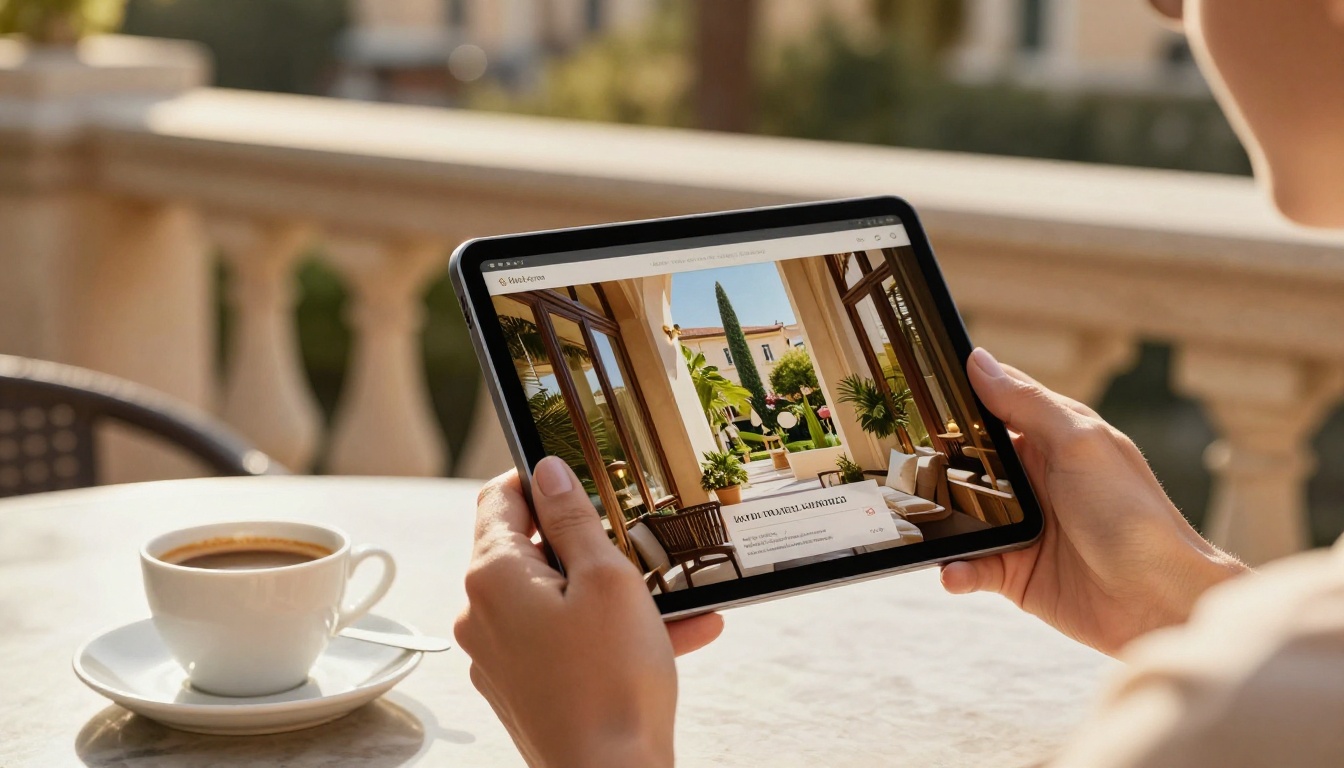
Flipbooks AI gives you multiple ways to get your flipbook in front of the right guests:
| Distribution Method | Best For | How to Access |
|---|
| Direct link | Email, WhatsApp, social bio | Copy from share panel |
| Embed code | Hotel website | Embed flipbook on website |
| QR code | Printed materials, lobby signage | Download from share panel |
| Password protected | VIP guests, press materials | Set in privacy settings |
| Offline download | In-room tablets, trade shows | Professional plan |
Step 7: Track What Works
On the Professional plan, built-in analytics show which pages guests spend the most time on, where they drop off, and total view counts over time. If the spa menu holds attention for 45 seconds but the pricing page gets skipped in under five seconds, you know exactly what to rewrite in the next update.
| Feature | Free | Standard | Professional |
|---|
| No watermarks | No | Yes | Yes |
| Unlimited flipbooks | No | Yes | Yes |
| Custom branding | Limited | Yes | Yes |
| Password protection | No | Yes | Yes |
| Analytics | No | No | Yes |
| Lead generation forms | No | No | Yes |
| Offline downloads | No | No | Yes |
| Embed on website | Yes | Yes | Yes |
See the full breakdown on the Flipbooks AI pricing page.
💡 Pro Tip: The lead generation feature on the Professional plan lets you add an email capture form before guests access the full flipbook. Even a 10% opt-in rate on a well-trafficked brochure builds a direct booking list worth considerably more than the annual subscription cost.
Distributing Your Hotel Flipbook Across Channels
Producing the flipbook is half the work. Here's where boutique hotel teams actually put it to use.
Pre-Arrival Email Sequence
Most booking confirmation emails from boutique hotels are utilitarian to the point of being cold. Replace the generic "we look forward to welcoming you" with a flipbook link and a personal line: "While you count down the days, here's everything about the property, your room, and our favorite spots in the neighborhood." Guests arrive more informed, more excited, and with far fewer questions for the front desk.
OTA Listing Optimization
Booking.com and Airbnb don't allow flipbook embeds in listings directly, but they do allow external links in host-to-guest messaging. Use your flipbook link in the first message sent to every new booking as a warm welcome and property introduction. It takes 30 seconds to set up and creates an immediate impression of professionalism.
Social Media Content
The animated page-turn effect is genuinely engaging as a screen recording on Instagram Stories or TikTok. Film a 15-second screen capture of yourself flipping through the hotel brochure and caption it simply: "Everything you need to know before you arrive." These posts consistently outperform static property photography for saves and shares, and each save is a potential future booking.
Travel Agent and Press Materials
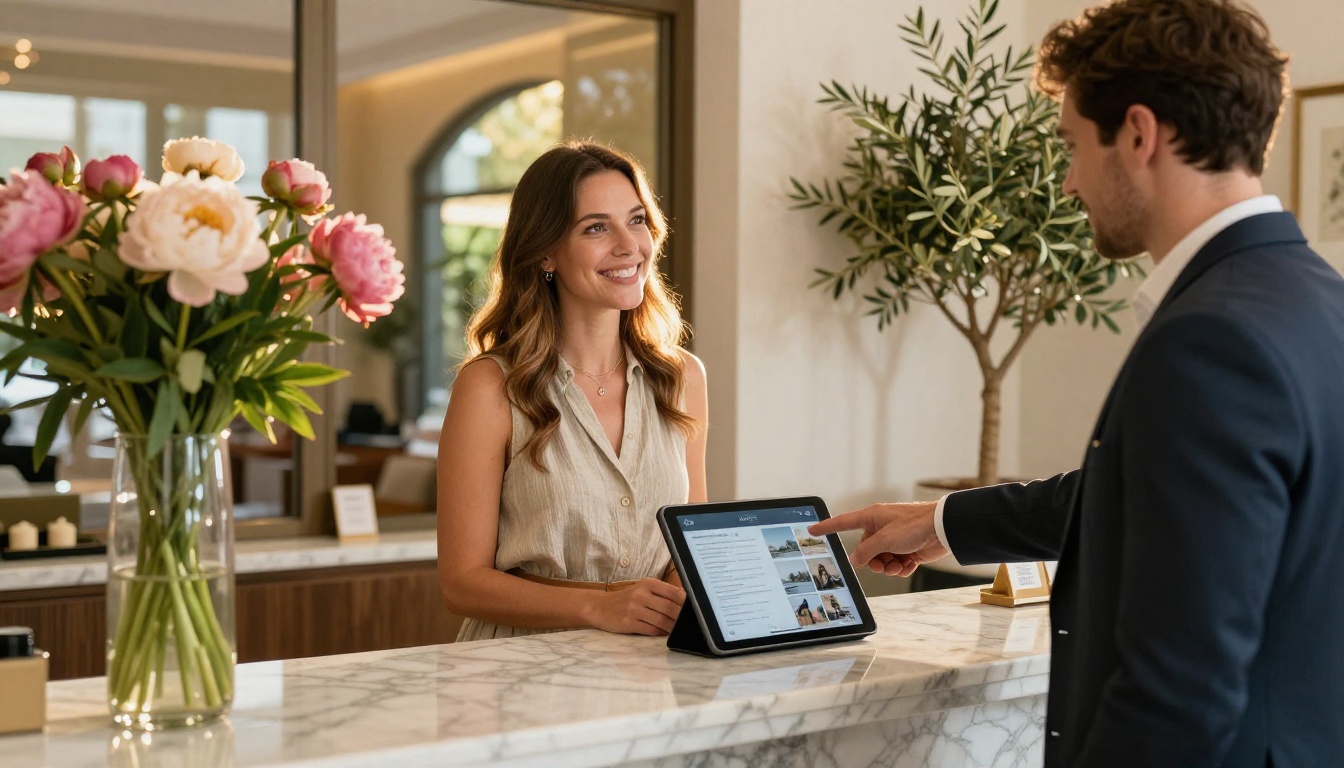
Travel agents and lifestyle journalists receive dozens of property briefs every week. A password-protected flipbook sent as a single clean link, containing your full property story, photography, rates, and commission structure, stands out immediately from a pile of PDF attachments. The Hotel Brochure Designer template is built specifically for this professional use case.
In-Room Digital Access
Print a small card with a QR code linking to your in-room services flipbook and place it on the bedside table or writing desk. Guests scan it to check restaurant hours, book a spa treatment, or browse the neighborhood section without calling reception. This reduces staff interruptions and measurably improves the in-stay experience, which feeds directly into post-stay reviews.
Mistakes Boutique Hotels Make with Digital Brochures
Even well-resourced hotel marketing teams fall into these traps:
- Too many pages: Aim for 24-32 pages maximum. Completion rates drop sharply beyond that threshold.
- Generic or stock photography: Images that don't match your actual property undermine the authenticity that boutique hotels depend on. Use your own photography exclusively.
- No booking link: Every 4-5 pages, include a clickable button pointing directly to your reservation engine.
- Updating only annually: Seasonal updates take under 30 minutes and dramatically increase repeat engagement from past guests.
- One language only: If you attract international visitors, separate flipbooks for two or three languages take minutes to produce from translated PDFs.
✅ Best Practice: Create separate flipbooks for different guest segments. A "Romantic Escapes" version focused on couples packages, spa, and fine dining will perform differently than a "Corporate Retreat" version focused on meeting spaces, connectivity, and group rates. Both live on the same Flipbooks AI account at no extra cost on the Standard plan.
The Cost Case for Going Digital
The financial argument for digital flipbooks over printed materials is straightforward:
| Cost Category | Printed Brochures | Digital Flipbook |
|---|
| Initial design | $800-2,000 | $0 (template) or $300-800 |
| Print run (500 copies) | $600-1,200 | $0 |
| Reprint for each update | $600-1,200 per run | Free, unlimited |
| Distribution | Staff time + postage | Single shareable link |
| Analytics | None | Included (Professional) |
| Estimated annual cost | $2,000-5,000+ | $120-360/year |
The financial case is obvious. But the qualitative case is just as compelling. A digital flipbook that a guest browses on their phone during a long commute home, while dreaming about their upcoming trip, is doing marketing work that no printed brochure left in a lobby rack ever could.
Your Next Step
Boutique hotels that win on direct bookings share one trait: they obsess over every touchpoint in the pre-arrival window. From the moment a guest decides they want to stay at your property to the moment they complete the reservation is the most valuable stretch in hospitality marketing. A flipbook lives precisely in that window.
Create your first hotel flipbook on Flipbooks AI today. The free plan lets you build and test before committing. When you're ready to publish without watermarks and share it with confidence, compare pricing plans and choose what fits your property's size and ambitions.
Browse all available hotel and hospitality tools to find templates built specifically for properties like yours.



