Selling digital templates is one of the few online businesses that genuinely pays you while you sleep. Designers who figured out how to make money selling flipbook templates online are pulling in hundreds to thousands of dollars per month from files they created once. This is not hustle culture hype. It is a straightforward model: you design a template, list it on a marketplace or your own site, and buyers purchase it repeatedly with zero extra work on your end. With interactive flipbooks surging in demand across restaurants, real estate, corporate communications, and education, the timing has never been better to carve out your share of this market.
Why Flipbook Templates Are Hot Right Now

The digital publishing market has shifted dramatically. Businesses that once relied on PDF attachments and static brochures now want something that feels interactive, alive, and shareable. Flipbooks deliver that without requiring clients to hire a developer or learn complex software. And because the demand is spread across dozens of industries, there is always a niche where a well-designed template will find buyers.
The Demand Behind the Numbers
Interactive content consistently outperforms static formats in click-through rates and time-on-page metrics across B2B and B2C sectors. Restaurants want menus that feel premium. Real estate agencies want property brochures that stand out in a crowded inbox. Coaches want course materials that feel professional. None of these buyers want to start from scratch, which is exactly why templates sell at a steady clip month after month.
The buyers looking for flipbook templates fall into predictable categories:
- Small business owners who need professional materials fast and lack design skills
- Freelancers who want to deliver polished work to clients without rebuilding every project from zero
- Marketing teams at mid-size companies looking for branded, consistent document formats
- Educators and trainers who need visually rich course or training materials
- Agencies building white-label document systems for multiple clients at once
The Passive Income Math
A single template listed at $25 with consistent monthly traffic from buyers who are already in purchase mode can generate meaningful recurring income without ongoing labor. Most successful template sellers build a catalog of 30 to 80 products over 6 to 12 months. The catalog itself becomes the asset. Every new template added increases your surface area in marketplace search results, which compounds visibility over time.
💡 The biggest mistake new sellers make is treating each template as a one-time product. Bundle them, update them seasonally, and release niche variants. A restaurant menu template becomes a brunch menu, a cocktail list, and a prix fixe template, each sold separately at full price.

Where you list your templates determines your audience size, fee structure, and long-term ownership of the customer relationship. There is no single best answer. The right platform depends on how much upfront work you want to do versus how much commission you are willing to share.
Etsy and Creative Market
Etsy has a surprisingly strong market for digital design products. Buyers trust the platform, transactions are simple, and organic search inside Etsy surfaces products to buyers who are already in purchase mode. The downside is a 6.5% transaction fee plus listing fees, and you have limited control over the buyer relationship.
Creative Market attracts a more design-savvy buyer who is willing to pay higher prices for professional quality. The platform takes 40% commission but handles payment processing, fraud protection, and customer support. For new sellers, that trade-off is often worth it because you get immediate access to a buyer pool that already knows what it wants.
Gumroad and Your Own Store
Gumroad charges 10% on transactions but gives you full ownership of your customer list. You can build email relationships, offer discounts to past buyers, and create product bundles. It is the best middle ground between a full marketplace and running your own e-commerce site.
Running your own Shopify or WooCommerce store requires more setup and marketing investment, but you keep nearly all revenue. This strategy works best once you have proven your templates sell on other platforms and have an audience to drive direct traffic.
| Platform | Commission | Audience Size | Customer Data |
|---|
| Etsy | 6.5% + listing fees | Very large | No |
| Creative Market | 40% | Design-focused | No |
| Gumroad | 10% | Medium | Yes |
| Own Store | ~3% payment fees | Yours to build | Full control |
⚠️ Do not list exclusively on one platform. Diversify across at least two to protect your income from algorithm changes or policy shifts. A single platform update wiped out revenue for thousands of Etsy sellers in 2023 when search ranking rules changed overnight.
The Most Profitable Template Niches
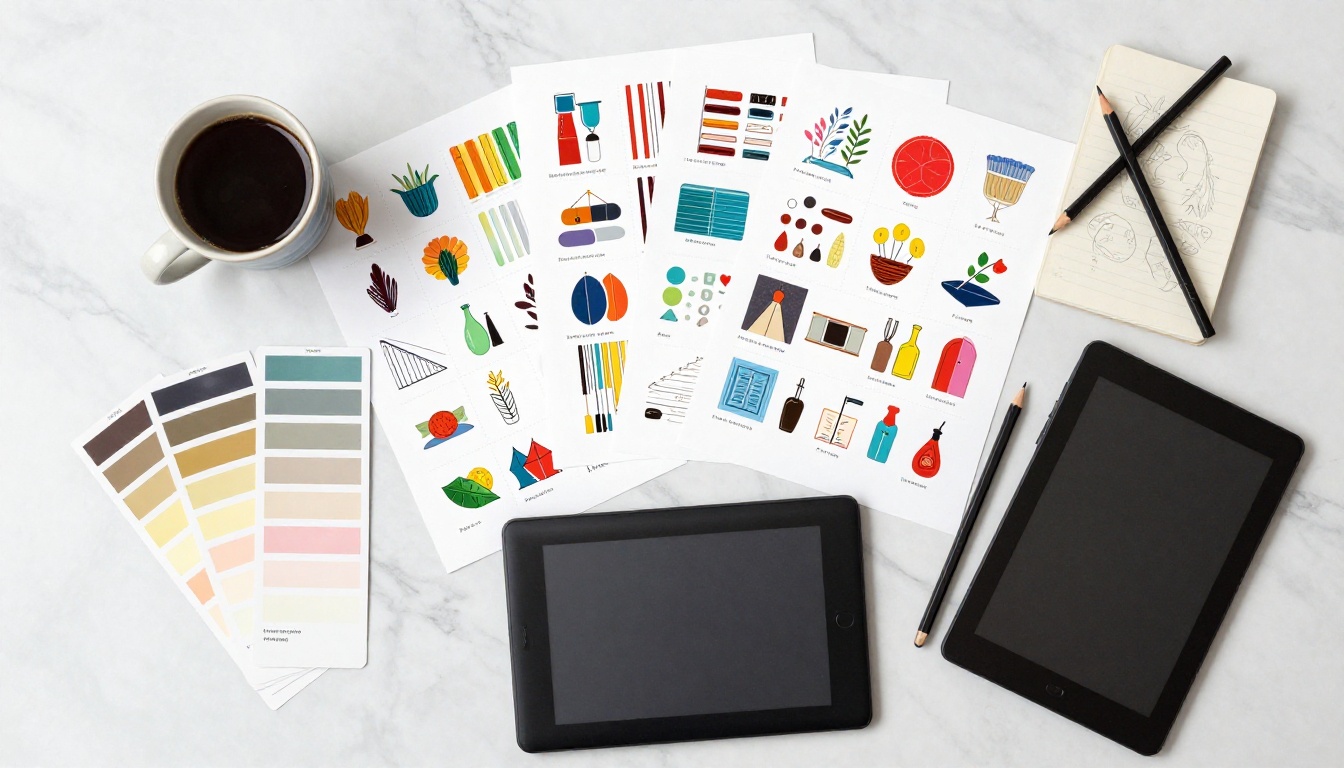
Not all niches are equal. Some template categories have low competition and high willingness to pay. Others are flooded with low-quality products competing on price alone. Choosing the right niche early saves months of wasted effort and positions your shop for faster growth.
Business and Corporate Templates
Annual reports, sales presentations, and press kits are high-value purchases. Corporate buyers are not price-sensitive the way individual consumers are. A $49 corporate annual report template is a bargain to a company that would otherwise pay a designer $500 for the same result. Flipbooks AI supports this use case directly with tools like the Annual Report Creator and Sales Presentation, making it straightforward to design and publish polished corporate documents.
Restaurant, Hospitality, and Food
Restaurant menus are perennial sellers. Every new restaurant needs one. Existing restaurants refresh their menus seasonally. The Restaurant Menu Creator and Spa & Wellness Menu formats are consistently in demand. Price these templates between $18 and $45 depending on complexity and the number of pages.
Real Estate and Property Marketing

Real estate agents need property brochures, area overviews, and listing presentations. They buy templates regularly because inventory turns over constantly. A well-designed real estate brochure template built with the Real Estate Brochure tool can sell at $30 to $65 per download, especially if it includes multiple page variants for different property types.
Education and Training
Training manuals, course workbooks, and school newsletters have institutional buyers who purchase in volume. Schools, corporate learning and development departments, and online course creators all need these materials repeatedly. The Training Manual Flipbook and Course Material Publisher formats are practical starting points for this niche.
Fashion and Creative Industries
Lookbooks, photography portfolios, and fashion catalogs attract buyers in creative fields who have strong visual standards and a genuine need for interactive digital formats. The Interactive Lookbook Designer and Photography Portfolio tools give you a solid production base for this niche.
| Niche | Price Range | Competition | Buyer Type |
|---|
| Corporate Reports | $35 to $65 | Low | Business |
| Restaurant Menus | $18 to $45 | Medium | Small Business |
| Real Estate Brochures | $30 to $65 | Medium | Agents |
| Education Materials | $20 to $40 | Low | Institutions |
| Fashion Lookbooks | $25 to $55 | Medium | Brands |
| Digital Portfolios | $20 to $40 | High | Creatives |
How to Price Your Templates

Pricing is where most new sellers undersell themselves. A $7 template signals low quality to buyers who have learned to associate price with value in digital products. Pricing too high without social proof is equally problematic. The goal is to find the tier that matches your template's complexity and your niche's buyer expectations.
Pricing Tiers That Sell
The market naturally segments into three tiers:
Entry-level ($15 to $25): Single-purpose templates with fewer customization options. Good for building reviews and initial sales velocity. These are your "door openers" that get buyers into your shop.
Mid-range ($30 to $55): Multi-page templates with multiple color variants or style options. This is the sweet spot for most niches. Buyers at this tier are serious about quality and expect professional results.
Premium ($60 to $120+): Template bundles, industry-specific systems, or templates with video embed placeholders and analytics setup instructions. Corporate buyers pay these prices without hesitation when the product saves them meaningful time.
Bundles vs. Single Templates
Bundles consistently outsell single templates on a per-product basis once your catalog has depth. A "Restaurant Starter Pack" bundling a menu, a specials board, and an events flyer at $55 provides more value than selling each at $20 individually, and the perceived savings drive conversion. Buyers who might hesitate at $20 per item often click buy instantly on a bundle.
✅ Offer bundle pricing at 30 to 40% off individual item totals. Buyers feel they are getting a deal. You earn more per transaction and clear more products from your catalog in a single sale.
Seasonal and Niche Variants
A restaurant menu template for a standard dinner service becomes a holiday prix fixe template in November, a Valentine's Day special in January, and a summer brunch menu in May. Each variant is a new listing at full price with almost no additional design work. This strategy multiplies your catalog size without multiplying your design hours.
Create Flipbook Templates with Flipbooks AI

This is where the practical work happens. Flipbooks AI gives you the tools to design, publish, and share professional interactive flipbooks without writing a line of code. Here is a step-by-step process for building a template worth selling at premium prices.
Step 1: Set Up Your Account
Go to flipbooksai.com/account and create your account. The free plan lets you try the platform and test the basic features. To build templates without watermarks and with full customization control, the Standard plan gives you unlimited flipbooks, custom branding, and all core functionality buyers expect.
Step 2: Pick Your Tool and Upload Your PDF
Go to the tools directory and select the tool matching your niche. Designing a product catalog? Use the Digital Catalog Maker. Building a portfolio template? Use the Digital Portfolio Creator. For brochures, the Online Brochure Designer covers most real estate and hospitality formats. Upload your designed PDF. The platform converts it automatically into a page-turning flipbook.
Step 3: Customize Branding and Appearance
Apply color schemes, select fonts, and set up the overall visual system. Enable custom branding so the template reflects a consistent identity your buyers can replace with their own. Toggle page effects for the signature page-turning animation that makes flipbooks feel premium and worth every dollar of the asking price.
Step 4: Add Interactive Elements
Embed YouTube or Vimeo videos for video-capable templates, add audio for e-learning materials, and set up navigation links between sections. These interactive layers are what justify mid-range and premium pricing. Buyers who see a flipbook with embedded video react differently than buyers looking at a static PDF.
Step 5: Package and Prepare for Buyers
Once the template is finalized:
- Download the offline version for buyers who need desktop access (available on the Professional plan via pricing)
- Generate an embed code buyers can use to place the flipbook on their own websites
- Export a clean PDF version as the editable base file buyers will receive
- Write clear setup instructions describing exactly what a buyer must do to customize the template for their brand
💡 Always sell two files: the editable PDF source and a live preview link to the published flipbook. The live preview is your strongest sales asset. Buyers who see the interactive version convert at significantly higher rates than those who only see static screenshots.
Features that make Flipbooks AI templates worth premium pricing:
- No watermarks on Standard plan and above
- Password protection for private or exclusive content
- Analytics and lead generation tools on the Professional plan
- Offline download capability for buyers who need it
- Mobile-responsive flipbooks that work on any device
- Embed codes for seamless website integration
Marketing Your Template Shop

Templates do not sell themselves. Even on high-traffic platforms like Etsy or Creative Market, discoverability requires deliberate effort. A few high-leverage moves make the difference between a shop that earns pocket change and one that generates consistent monthly income.
SEO Inside Your Listings
Marketplace search algorithms work similarly to Google. Use the exact phrases buyers type when they search: "restaurant menu template flipbook," "real estate brochure PDF template," "corporate annual report interactive." Long-tail specificity beats generic terms every time. The more specific your targeting, the less competition you face and the more qualified your buyers are.
Your listing title, description, and tags all carry weight. Write descriptions that explain the problem the template solves, not just what it looks like. "Save 4 hours on your next client proposal" is more compelling than "a beautiful 10-page proposal template."
- Use all available tag slots on every platform
- Include industry-specific terms (hospitality, property marketing, B2B sales)
- Write your listing description for buyers who are skimming, not reading
- Update listings with seasonal language to stay fresh in search
Pinterest and Instagram for Visual Products
Template sellers consistently find Pinterest to be their highest-quality organic traffic source. Pins have a long shelf life, are searched actively by buyers, and drive direct links to listings. Create multiple pin images for each template showing different color variants or use cases.
Instagram Reels showing a flipbook animation in motion reach audiences who did not know they needed the product until they saw it. The page-turning effect is visually compelling and stops scrollers reliably.
✅ Post a short screen recording of your flipbook page-turning animation as a Reel or TikTok with a link to your shop. Visual movement stops scrollers in a way static images cannot, and these posts regularly drive traffic spikes to listings.
Scaling to Real Income

The sellers who build substantial income from templates treat it as a product business, not a creative hobby. Scaling requires systems, not just more templates. The structure you build in the first six months determines how much the business can grow without requiring proportionally more of your time.
Build in Phases
Phase 1 (months 1 to 3): Create 10 to 15 templates across 2 to 3 niches. Optimize all listings with thorough descriptions and tags. Collect reviews. Identify which templates sell without paid promotion. This is your market research phase.
Phase 2 (months 4 to 6): Double down on what sells. Create variants, bundles, and seasonal editions of your top performers. Expand to a second platform. Start collecting buyer email addresses.
Phase 3 (months 6+): Build an email list. Offer a lead magnet (a free single-page template works well). Promote to your list before new releases. Add your own storefront to reduce commission dependency.
Automate the Delivery
Use Gumroad, Etsy's digital delivery, or platforms like Lemon Squeezy to handle file delivery automatically. You should never manually email a file to a buyer. Set up automated thank-you emails and post-purchase upsells from day one. Automation is what makes this model genuinely passive rather than just semi-passive.
| Income Stage | Monthly Revenue | Templates in Catalog | Primary Channel |
|---|
| Starting | $50 to $200 | 5 to 15 | Single marketplace |
| Growing | $200 to $800 | 15 to 40 | Two marketplaces |
| Established | $800 to $2,500 | 40 to 80 | Multi-channel + email |
| Scaling | $2,500+ | 80+ | Own store + affiliates |
3 Mistakes That Keep Sellers Stuck

Most sellers who fail do not fail because their templates are bad. They fail because of avoidable process mistakes that are easy to identify once you know what to look for.
1. Designing for yourself instead of buyers. Your personal aesthetic taste is irrelevant. Research what buyers actually search for. Look at bestsellers on Etsy and Creative Market. Notice the niches, price points, and visual styles that move product consistently, then design to meet that proven demand rather than to express your preferences.
2. Listing without optimizing. A beautiful template buried on page 8 of search results earns nothing. Spend as much time on your listing title, tags, and thumbnail image as you spend designing the template itself. The thumbnail is an advertisement. It is the only thing buyers see before deciding whether to click.
3. Quitting before the catalog compounds. The first 10 templates rarely generate significant income. The 50th template in a proven niche benefits from the reviews, shop authority, and search ranking the first 49 built. Sellers who quit at 10 to 20 templates almost always quit just before momentum would have built into something meaningful.
⚠️ Avoid listing in too many niches too early. Marketplace algorithms favor shops with niche authority. A shop selling restaurant menus, real estate brochures, and wedding programs simultaneously confuses the algorithm and dilutes your ranking potential in all three categories. Pick one or two niches and go deep before branching out.
Start Building Your Template Business Today
Selling flipbook templates online is one of the most accessible passive income models available to designers right now. The upfront investment is your time and creative skill. The return is a growing catalog of products that sell around the clock without additional labor. Every template you add increases your earning potential without increasing your workload proportionally.
The smartest move you can make today is to pick one niche, design three strong templates, and list them this week. Do not wait until the catalog is perfect. Get real market feedback early, optimize based on what buyers respond to, and build from there.
Get started for free on Flipbooks AI and use the tools that make your templates worth buying at premium prices. Browse all available tools to find the right fit for your niche, and compare pricing plans to choose the features that match where you are in building your business.



