Ramadan passes quickly. Thirty days sounds like plenty until the third week arrives and you realize the Quran khatm you promised yourself is only a third finished, the fasting log lives half in your head, and the goals you wrote on the first night are buried in a notes app. A well designed planner fixes that, and a Ramadan planner PDF is the easiest format to build, print, share and reuse every year. You can even turn it into a page-turning digital edition with Flipbooks AI so it opens on any phone without an app.
This article walks through the pages worth including, how to lay them out, and how to assemble the whole thing into one clean file.

Why a PDF Planner Works
Apps are convenient, but they pull you into notifications at exactly the moment you want to be present. A planner asks for a pen and two minutes. The PDF format adds three real advantages:
- Print on demand. Print only the weeks you need, or reprint a page you ruined.
- Works everywhere. Phones, tablets, laptops and printers all read PDFs the same way.
- Easy to share. Send it to family, a mosque group or a study circle without worrying about versions.
💡 Pro tip: Decide before you design whether the planner is mainly for print or for screens. Print needs margins for a hole punch. Screens need bigger tap targets and fewer tiny boxes.
Print Versus Screen
| Factor | Print Planner | Digital Planner |
|---|
| Writing feel | Pen and paper, tactile | Stylus or typing |
| Distraction level | Very low | Depends on device |
| Editing | Reprint or cross out | Instant |
| Sharing | Hand out copies | Send a link |
| Best for | Daily trackers, reflection | Quran logs, meal lists, reminders |
Many people choose both. They print the daily pages and keep a digital copy for reference.
Pick Your Planner Length
A Ramadan planner can be built at three sizes. Choose based on how much time you realistically spend each day.
- Light (12 to 15 pages): one overview, one tracker, one Quran log and a goals sheet.
- Standard (30 to 40 pages): adds weekly spreads, meal plans and reflection pages.
- Full (60+ pages): a daily page for every day, plus Eid preparation and a follow-up month.
Fasting Tracker Pages
The fasting tracker is the page you will open most often, so make it simple. A grid of thirty boxes with a few small columns beats a busy design nobody keeps up.

Daily Fasting Checklist
Each day can include:
- A tick for fast completed
- Suhoor and iftar times
- Water intake (eight small circles to fill in)
- A mood or energy rating from one to five
- A one line note, such as "headache after Asr"
Makeup Days Log
Many people forget the days owed from previous years. A short qada tracker with a column for date owed, date made up and a note keeps that organized. Place it at the back so it does not clutter the main month.
Prayer and Taraweeh Grid
Add a small row for the five daily prayers plus Taraweeh. A seven column weekly layout fits easily on one page, and checking boxes gives a satisfying sense of progress.
✅ Best practice: Use soft shades for completed boxes in the printed version. Heavy black fills waste ink and look harsh.
Quran Reading Pages
Most people plan to finish the Quran during Ramadan. The math is simple, but seeing it on paper makes it real.

The Khatm Schedule
The Quran has 30 juz, so one juz per day finishes in a month. If you read about 20 pages, that is roughly one juz. Here are common pacing options:
| Plan | Daily Amount | Time Needed | Finish Date |
|---|
| One juz a day | About 20 pages | 30 to 45 minutes | Final night |
| Half juz after each of two prayers | 10 pages twice | 15 to 20 minutes each | Final night |
| Two khatms | 40 pages | 1.5 hours | Final night |
| Slow with meaning | 5 to 10 pages | 30 minutes plus notes | Partial |
Reflection Prompts
A tracker tells you how much you read. A reflection page tells you what stayed with you. Add three lines per day:
- One verse that stood out
- One thing I want to apply
- One person I made dua for
Memorization Corner
If you are working on a short surah, make a mini page with the verse list, a repeat counter and a review date. Memorizing in small daily chunks sticks better than a last week push.
Meal and Iftar Planning Pages
Food planning rescues time and energy. It also reduces waste, which matters during a month of generosity.
Weekly Meal Grid
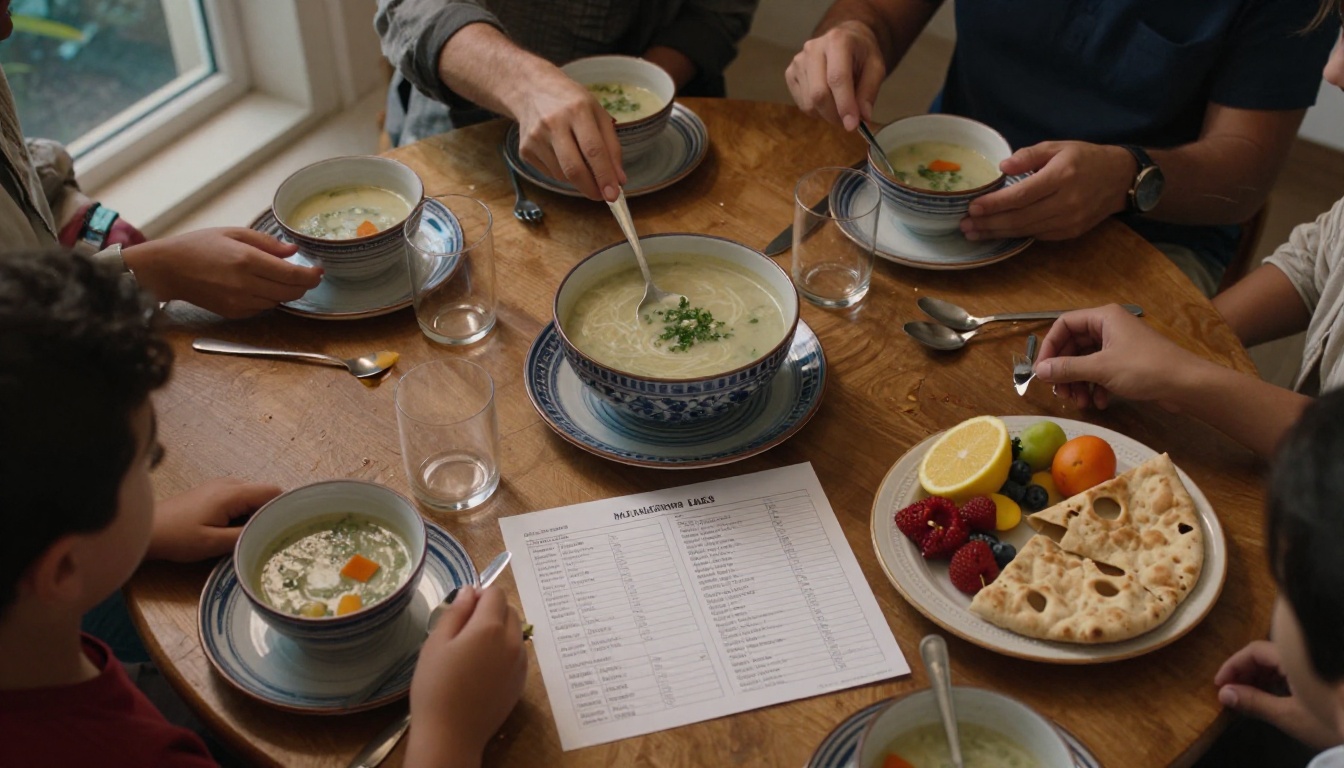
Create a seven row table with columns for suhoor, iftar and a snack. Add a sidebar for the shopping list. People who plan Sunday evening tend to cook calmer meals all week.
Suhoor Ideas Page
Keep a short list of filling options so you are not deciding at 3 a.m.:
- Oats with dates and nuts
- Eggs with whole grain bread
- Yogurt, fruit and seeds
- Lentil soup made the night before
Meal Page Comparison
| Page Type | Best For | Space Needed |
|---|
| Weekly grid | Families who cook daily | One page per week |
| Batch cooking list | Busy workers | Half page |
| Guest iftar planner | Hosting invitations | Full page |
| Grocery checklist | Reducing waste | Half page |
⚠️ Watch out: Do not over plan. Ramadan energy changes through the month, so leave blank slots for leftovers and rest days.
Goal Setting and Habit Pages
Goals are what lift a planner from a calendar to a personal tool. Keep them few and clear.

The Three Goal Method
Choose one goal for each area:
- Worship: for example, pray all Taraweeh nights
- Character: for example, reduce complaining
- Practical life: for example, quit late night scrolling
For each goal, write the reason, one action per day and a weekly check in.
Habit Tracker
A simple grid with five habits and thirty days is enough. Good Ramadan habits include morning dhikr, a daily dua, a walk after iftar, a call to a relative and no phone during suhoor.
Charity and Gratitude Page
Give generosity its own space. A log with columns for date, amount or act, and who benefited keeps zakat and sadaqah organized. Pair it with a gratitude line each night.

💡 Family idea: Children can have their own simple page with a star chart for kindness, prayer and helping at home.
How to Build the PDF
You do not need a design degree. Most people finish a basic planner in an afternoon.

Choose Layout and Style
Set a page size first. A5 is comfortable for daily use, while US Letter or A4 suits printing at home. Stick to two fonts and three colors. Deep green, cream and soft gold feel natural for the month and print well.
Step by Step Process
- List your pages. Use the sections above and cross out anything you will not use.
- Design master pages. Build one tracker, one weekly grid and one reflection page as templates.
- Duplicate and fill dates. Copy the master pages and add Hijri and Gregorian dates.
- Check the margins. Leave a wide inner edge for binding.
- Export to PDF. Use high quality export so text stays sharp.
- Test print one page. Fix any cut off lines before printing everything.
Tools for the Job
| Tool Type | Example Use | Skill Level |
|---|
| Document editor | Simple tables and checklists | Beginner |
| Design app | Custom layouts and icons | Intermediate |
| Spreadsheet | Trackers with formulas | Intermediate |
| Flipbook maker | Interactive digital version | Beginner |
Turn the PDF into a Digital Flipbook
A static PDF works, but a page-turning version feels like a real planner on a screen. With the PDF to Flipbook Converter you can upload your finished file and share it with a single link. It suits family groups, community classes and anyone who sells or gives away planners.
How to Create Your Flipbook
- Go to Flipbooks AI and create an account.
- Upload your Ramadan planner PDF. Conversion takes a short moment.
- Choose a background color that matches your planner, add your logo or a short title, and pick a page turning effect.
- Add a short audio recitation or a video message on the intro page if you like.
- Share the link, or paste the embed code into your website using the embed flipbook tool.
- Turn on password protection if the planner is only for your family or paid members.
What You Get
- ✅ No watermarks, ever
- ✅ Mobile responsive pages that read well on phones
- ✅ Custom branding and colors
- ✅ Embedded video and audio
- ✅ Offline downloads for reading without internet
- ✅ Analytics and lead generation on the Professional plan, listed on the pricing page
Anyone creating a larger planner library can also browse the full list of flipbook tools for related formats like ebooks and course material.
Sharing Options Compared
| Method | Best For | Notes |
|---|
| Direct link | Family chats | Fastest |
| Embed code | Mosque or business website | Matches your site |
| Password protected | Paid planners | Limits access |
| Downloadable copy | Offline use | Print friendly |
Planner Page Ideas Worth Adding
If you want extra pages beyond the basics, these small additions tend to be used the most:
- Laylat al-Qadr tracker: a page for the last ten nights with a dua list and worship plan
- Dua list: space for personal requests and names of people to pray for
- Sleep and energy chart: a simple line to spot patterns
- Eid preparation checklist: gifts, clothes, zakat al-fitr and family visits
- Post Ramadan plan: three habits to keep in Shawwal
Suhoor and Dawn Routine Page
Mornings are where plans succeed or fail. A short routine page with a wake time, a prayer, a meal and a Quran slot helps everyone in the house move together.

Common Mistakes to Avoid
- Too many pages. A planner you abandon on day six helps no one. Start lean.
- Tiny boxes. If you can barely fit a tick, you will skip it.
- No reflection space. Numbers show effort, but notes show growth.
- Perfectionism. A missed day is not a failed month. Add a "restart" line to every weekly page.
- Heavy ink. Dark backgrounds look good on screen but drain printers.
⚠️ Reminder: Check dates against your local moon sighting announcement. Hijri start dates can shift by a day.
A Sample Week Layout
To make it concrete, here is how one weekly spread can look:
| Day | Fast | Quran Pages | Taraweeh | Habit Focus | Note |
|---|
| Mon | ✔ | 20 | ✔ | Morning dhikr | Easy day |
| Tue | ✔ | 20 | ✔ | Walk after iftar | Tired |
| Wed | ✔ | 15 | Missed | Call a relative | Late work |
| Thu | ✔ | 25 | ✔ | Charity | Caught up |
| Fri | ✔ | 20 | ✔ | Family iftar | Guests |
| Sat | ✔ | 20 | ✔ | No phone at suhoor | Good |
| Sun | ✔ | 20 | ✔ | Review week | Plan meals |
A page like this takes less than a minute to fill each night, and by the end of the week you can see exactly where your time went.
Start Your Own Planner Today
You now have the page ideas, the structure and the steps. Pick five sections, sketch them on paper, then build the file. When it is ready, get started for free on Flipbooks AI to turn it into a shareable flipbook, compare pricing plans if you plan to give it to a larger community, and browse all tools and templates for more ideas. Ramadan is short, so begin before the first night arrives.



