The freelance market for interactive digital documents is growing fast, and most businesses still don't know what a well-crafted flipbook can do for them. If you've already built a few flipbooks for clients or personal projects, you're closer to running a small agency than you might think. The path from "I know how to make flipbooks" to "I run a digital publishing studio" comes down to three things: how you package your service, how you find clients, and how you structure repeatable work. This article walks through all of it, step by step, so you can start billing like a business instead of doing favors like a freelancer.
The Business Case for a Flipbook Agency
Small businesses are desperate for a professional way to share their catalogs, menus, brochures, and reports online. Static PDFs feel dated. Social media doesn't hold product detail well. A polished interactive flipbook fills that gap, and almost no local agency is offering it as a packaged service yet.
That creates an opening.
What clients are actually paying for
When a restaurant owner hires you to produce their digital menu, they're not paying for a PDF conversion. They're paying to look professional online, to avoid the cost of reprinting whenever prices change, and to have something they can send to customers via a link. When a real estate agent wants a digital property brochure, they want something that opens on a phone, loads fast, and can be shared without an email attachment.
Your flipbook skills solve a real pain point. The more you position the outcome rather than the process, the easier it is to charge real money.
💡 Never describe your service as "I make flipbooks." Say instead: "I create interactive digital catalogs and brochures that clients can share instantly and update without reprinting."
Markets with the highest demand right now
Not every market will pay the same. Some niches buy on price alone; others buy on presentation.
| Niche | Typical Deliverable | Willingness to Pay |
|---|
| Restaurants and cafes | Digital menus, seasonal specials | Medium, high volume |
| Real estate agencies | Property brochures, listing booklets | High |
| Fashion and retail brands | Seasonal lookbooks, product catalogs | High |
| Hotels and resorts | Guest welcome booklets, spa menus | High |
| Non-profit organizations | Annual reports, donor brochures | Medium |
| Coaches and consultants | Digital portfolios, course materials | Medium |
| Event planners | Event programs, sponsorship decks | Medium |
Focus first on sectors where presentation is tied directly to revenue. A restaurant that makes its menu interactive and shareable can see direct table bookings increase. A real estate agent with a polished property brochure closes faster. These clients feel the value immediately.

The fastest way to confuse a potential client is to offer too many custom options. Agencies that scale efficiently sell packaged services, not one-offs.
Starter packages that close fast
Your entry-level package should be low-risk for the client and simple for you to deliver. Think: one flipbook, one revision round, delivered in three to five business days.
A good starter package includes:
- PDF to interactive flipbook conversion
- Basic branding (logo, color match)
- Shareable link and embed code
- Mobile-responsive output
- One round of revisions
Price this between $150 and $350 depending on page count and complexity. The goal isn't maximum margin here, it's getting the client through the door with minimal friction.
Premium retainers that scale
Once a client trusts you, offer ongoing support. A retainer arrangement might look like:
- Monthly catalog or menu update for seasonal changes or new products
- One new flipbook per quarter for newsletters, reports, or promotions
- Analytics review and sharing recommendations
- Priority turnaround on revisions
Retainers between $300 and $800 per month per client are reasonable for this kind of ongoing relationship. Five retainer clients puts you at $1,500 to $4,000 per month in recurring revenue without adding a single new client.
| Package Tier | What's Included | Price Range |
|---|
| Starter | 1 flipbook, basic branding, link and embed | $150 to $350 |
| Professional | Up to 5 flipbooks, advanced customization, analytics | $500 to $1,200 |
| Monthly Retainer | Ongoing updates and new flipbooks monthly | $300 to $800/mo |
| White-Label | Branded to client's domain, no platform attribution | +$200 add-on |
✅ Always include at least one revision round in every package. Clients feel safer buying when there's a clear path to adjustments.
How to Build a Portfolio Without Clients Yet
No portfolio, no clients. No clients, no portfolio. This is the classic trap, and the way out is straightforward: build spec work.

Spec work that actually converts
Pick three industries you want to target and build a sample flipbook for each. Use real brands you admire but make clear these are portfolio pieces, not live client work. Create a restaurant menu for a fictional cafe, a product catalog for a fictional outdoor gear brand, and a property brochure for a fictional listing.
When a prospect sees a sample that matches their business type, they stop imagining what you could do for them. They see it.
Publish these samples using Flipbooks AI and link to them from your portfolio page or social profiles. The flipbooks themselves become the demonstration, which is far more persuasive than any written description of your services.
Niching down vs. staying broad
Starting broad might feel safer, but it makes positioning harder. If your portfolio shows restaurants, retail, and real estate all at once, no single prospect feels like you specialize in them.
Consider starting in one niche for your first three months. Build two to four samples in that space, reach out to prospects in that vertical, and get your first two or three paid clients there. Once you have a reputation in one niche, expanding into a second is much easier because you have proof of delivery.
⚠️ Avoid over-designing spec work. It sets unrealistic expectations about turnaround time. Build samples that reflect what you'd actually deliver in a real paid engagement.
How to Create Flipbooks for Clients with Flipbooks AI
Flipbooks AI is the platform that makes this agency model operationally simple. Rather than using complex desktop software or building custom solutions, you upload a PDF and the platform handles the interactive conversion, hosting, sharing, and analytics. Here's how the client workflow runs from start to finish.
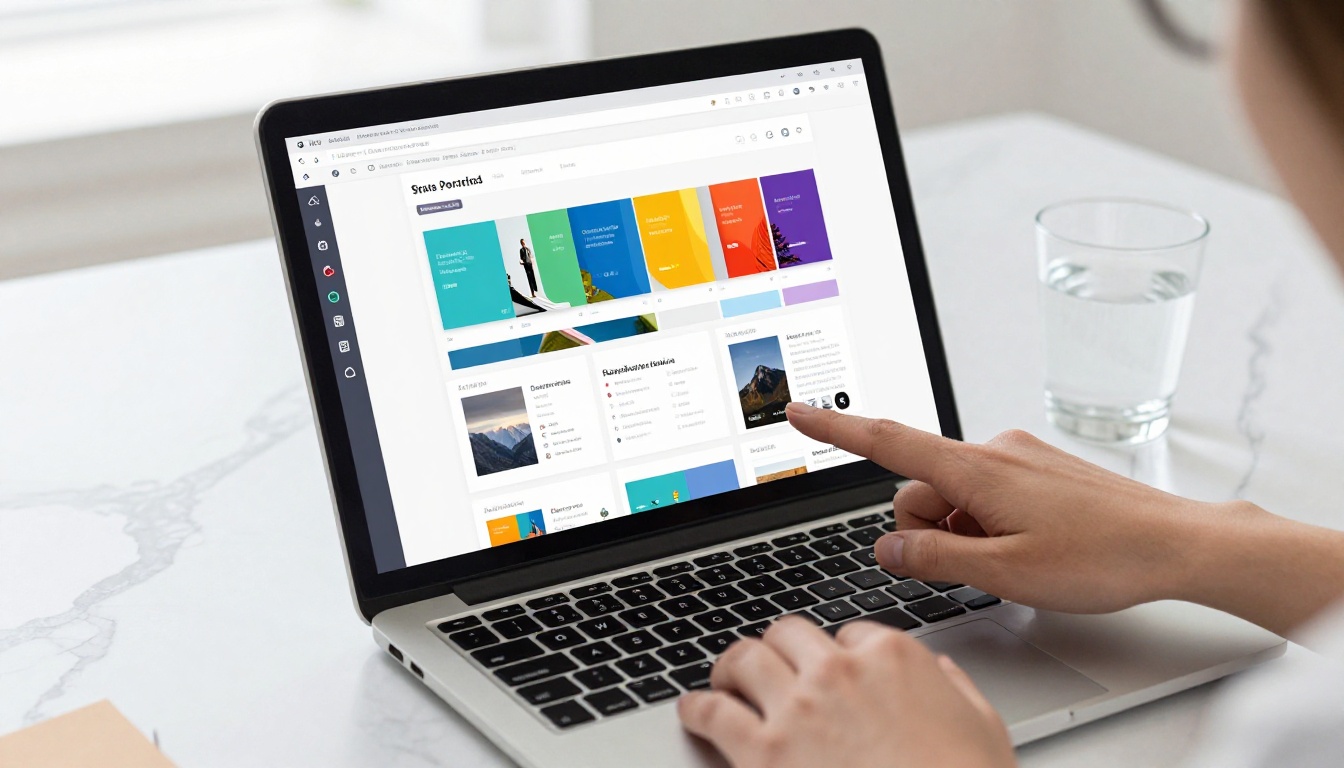
Setting up your workspace
- Create your account at flipbooksai.com/account. The Standard plan or above gives you unlimited flipbooks, which matters once you're managing multiple clients simultaneously.
- Organize your projects by client. Use clear naming conventions like "ClientName_ProjectType_Month" so you can find and update projects without digging.
- If clients want their flipbooks delivered with no platform attribution, check the white-label options available in the pricing plans. This is worth the add-on fee for any client who places a premium on brand consistency.
Customizing for each client
Once you upload a client's PDF, the real value-add begins. This is where your agency skills separate you from a client who might try to do this themselves and give up halfway through.
Branding adjustments:
- Match the brand's primary color in the flipbook background and navigation controls
- Add the client's logo to the flipbook viewer header
- Remove any default watermarks, available on all paid plans
Interactive elements:
- Embed video clips from product demos or testimonials directly within pages
- Add audio narration if relevant, such as hotel room descriptions or podcast previews
- Enable lead generation forms if the client wants to capture viewer contact details, available on the Professional plan
Accessibility and mobile:
- Test every flipbook on a mobile device before delivery. Flipbooks AI output is mobile-responsive, but check that the client's original PDF formatting holds up at smaller sizes
- Use password protection for confidential documents like internal reports, exclusive pricing lists, or early-access catalogs
💡 For clients in retail or fashion, the Digital Catalog Maker and Interactive Lookbook Designer tools let you start from purpose-built templates that save significant setup time on every project.
Delivery and sharing options
Once the flipbook is ready, deliver it to your client in three ways simultaneously:
- Direct link: A clean URL the client can share in emails, social media bios, or messaging apps
- Embed code: A snippet the client's web developer can drop into their website in minutes
- PDF download: Enable offline downloads for clients who need a printable backup, available on the Standard plan and above
For clients on the Professional plan, share a screenshot of the analytics dashboard showing page views, time spent per page, and traffic sources. This extra touch makes clients feel like they're receiving a data-driven service, not just a document file. It also makes your retainer easier to justify at renewal.

Finding and Closing Your First Clients
The biggest mistake new freelancers make is building a website and waiting for clients to find them. At the agency's earliest stage, you need to go where clients already are.

Where small business owners are looking
Small business owners don't browse creative portfolios online. They look at:
- Local Facebook Groups: Join neighborhood business communities. Restaurant owners, boutique shops, and service providers are active there and vocal about their pain points.
- Google Business Profiles: Find local businesses with outdated or missing digital materials. A florist with a years-old PDF price list is a warm prospect.
- LinkedIn: Target operations managers, marketing coordinators, and business owners at small to mid-size companies. A brief direct message showcasing a relevant sample works well here.
- Chamber of Commerce events: In-person networking still closes deals that digital outreach misses. Show up with a live flipbook demo on your phone.
- Upwork and Fiverr: Starting on freelance platforms gives you early reviews and social proof, even if the margins are lower. A strong rating on Upwork becomes a trust signal you can reference in all future pitches.
The pitch that converts cold contacts
Keep it short. One problem, one outcome, one next step.
Example message:
"Hi [Name], I noticed your menu is a static PDF on your website. I create interactive digital menus that load instantly on phones and can be updated without reprinting. Would it help to see a sample I made for a similar restaurant? Happy to put together a quick demo if you're interested."
That's it. No lengthy portfolio links, no pricing up front. The goal of the first message is to get a reply, not to close the deal.
⚠️ Never lead with pricing in cold outreach. Lead with the problem you solve and a low-commitment next step. Price comes after the prospect has seen the value.
Pricing Your Flipbook Agency Services
Pricing is where most solo operators leave money on the table. They underprice out of insecurity or overprice without justification. The right approach is to price based on the client's outcome, not your hours.

Project vs. retainer models
A project model is straightforward: one deliverable, one invoice. It's simple to sell but creates income volatility. You close one client and immediately need another.
A retainer model creates predictable income. You agree on a set of monthly deliverables and invoice the same amount each month.
| Model | Pros | Cons |
|---|
| Per-project | Easy to scope, simple to sell | No recurring income, constant prospecting |
| Monthly retainer | Predictable income, deeper relationships | Harder to pitch initially, requires trust |
| Annual contract | Maximum stability, volume pricing | Longer sales cycle, needs strong track record |
Start with per-project work to build confidence and case studies. After your first two or three satisfied clients, introduce the retainer option at the end of the project delivery conversation. The timing is natural: the client is happy, the work is fresh, and they're already thinking about what comes next.
What to charge at each level
Use this framework as a starting point and adjust for your local market and client industry:
- Solo freelancer, early stage: $150 to $400 per flipbook
- Established freelancer with portfolio: $400 to $900 per flipbook
- Small agency with one to two contractors: $800 to $2,000 per project
- Retainer (one to three flipbooks per month): $350 to $1,000 per month per client
Add-ons that increase average project value without requiring extra time to sell:
- Rush delivery (48-hour turnaround): plus 30 to 50% on the base project fee
- Analytics setup and monthly reporting: plus $100 to $200 per month
- White-label delivery with no platform branding: plus $150 to $250 per project
- Training session teaching the client's team to upload their own updates: plus $100 to $300
Scaling Beyond the Solo Operator
At some point, you'll have more work than you can handle alone. This is a good problem, and it's the point where you stop being a freelancer and start running a real agency.

When to bring in help
The right time to add a contractor is when you're regularly turning down work or when client timelines start slipping. At that point, hiring a part-time designer to handle production work while you focus on sales and client relationships is the natural next step.
You don't need to hire someone full-time first. Start with a per-project subcontractor. Pay them 40 to 50% of the project fee and keep the rest for client management and business overhead. Test with one project, then expand as volume increases.
Building systems for repeatability
The difference between a one-person freelance operation and a real agency is documentation. When every step of your production process is written down, someone else can follow it without asking you questions every hour.
Build these four assets early:
- A client intake form: Collects brand colors, logo files, content, and deadline before work begins so nothing is missing on day one
- A production checklist: Every step from PDF upload to final delivery, including mobile testing and link verification
- A delivery template: A standard email with the direct URL, embed code, download link, and client instructions
- A feedback loop: A short survey after delivery asking for a testimonial and a satisfaction rating
Once these systems exist, you can onboard a contractor in a day rather than a week. The systems are also what make your agency attractive to acquire later, if that's ever a direction you want to take.
The revenue math at scale
This model is simple to project:
- 3 retainer clients at $500 per month: $1,500 per month recurring
- 4 per-project clients per month at $400 average: $1,600 per month
- 1 premium project per month at $1,200: $1,200 per month
That's $4,300 per month at a stage where most people would still describe themselves as freelancers. With one part-time contractor handling production, your time shifts entirely to sales and client relationships, which is where the next tier of revenue comes from.

Start Small, Stay Specific, Charge Fairly
The most profitable flipbook agencies don't try to serve everyone. They pick two or three niches, build deep familiarity with what those clients need, and price confidently because they know the value they're delivering. The restaurant that can now update its seasonal menu in an afternoon instead of reprinting at $300 a run is saving real money. The real estate agent whose property brochure gets 400 views in the first week instead of sitting in an email attachment is closing more viewings.
Your job is to make that value visible, and then make it easy to buy.

Flipbooks AI gives you everything on the production side: unlimited flipbooks, white-label options, analytics, password protection, and a library of purpose-built tools for every niche you'll serve, from the Restaurant Menu Creator to the Digital Portfolio Creator to the Real Estate Brochure tool. All you need to bring is the client relationship and the positioning.
Ready to put your first client package together? Create your account and start building your portfolio samples today. When you're ready to scale, review the pricing plans to pick the tier that fits where your agency is heading.



