You got a quote from the printer, and the number looked manageable. Then the postage estimate arrived, the mailing list invoice showed up, and the designer sent a final bill. Suddenly the "cheap" catalog costs three times what you planned. This article adds up every line so you can budget the real cost per catalog before you commit. We will also look at when a digital version built with Flipbooks AI makes more sense than paper, and when it does not.
Short answer: most small and mid-size brands spend between $1.50 and $6.00 per catalog all-in, and postage alone often eats 40 to 60 percent of that. The details below explain why.
The Real Cost Per Catalog
Printing is only one of seven cost buckets. Brands that budget only for the press run are usually off by 100 percent or more.
| Cost bucket | Typical share of total | Notes |
|---|
| Printing and paper | 25 to 35% | Falls sharply as quantity rises |
| Binding and finishing | 3 to 8% | Saddle stitch is cheapest |
| Design and photography | 5 to 25% | Fixed cost, spread over copies |
| Mailing list | 3 to 10% | Rented or cleaned lists |
| Addressing and sorting | 3 to 6% | Lettershop services |
| Postage | 30 to 55% | The biggest swing factor |
| Returns and tracking | 1 to 3% | Often forgotten |
💡 Pro tip: Always divide your total budget by the number of catalogs mailed, not printed. Extra copies for sales reps and walk-in customers are real cost, but they should not hide the true mailed cost.
Printing and Paper Costs
Print cost depends on page count, trim size, paper weight, and quantity. A 24-page, 8.5 x 11 inch saddle-stitched catalog on 80 lb gloss text with a 100 lb cover is the standard benchmark.
What Drives Print Price
- Quantity: Setup costs are fixed, so the second thousand copies cost far less than the first.
- Page count: Pages come in multiples of four for saddle stitch. Going from 24 to 28 pages can cost more than you expect.
- Paper weight: Heavier stock feels premium but raises both print and postage cost.
- Color: Full color on both sides is the norm for catalogs. Spot colors rarely save money.
- Coating: Gloss, matte, and aqueous coatings add a small per-piece charge.
Sample Print Pricing
| Quantity | 24 pages, saddle stitch | 48 pages, perfect bound |
|---|
| 1,000 | $1.80 to $2.60 each | $3.20 to $4.50 each |
| 5,000 | $0.85 to $1.30 each | $1.80 to $2.60 each |
| 25,000 | $0.45 to $0.75 each | $1.10 to $1.60 each |
| 50,000 | $0.35 to $0.60 each | $0.90 to $1.30 each |
These ranges are estimates from typical commercial printer quotes. Your own numbers will move with paper markets and region, so request at least three quotes.
Binding and Finishing
Binding is where small decisions create surprising price jumps.
Saddle Stitch vs Perfect Bound
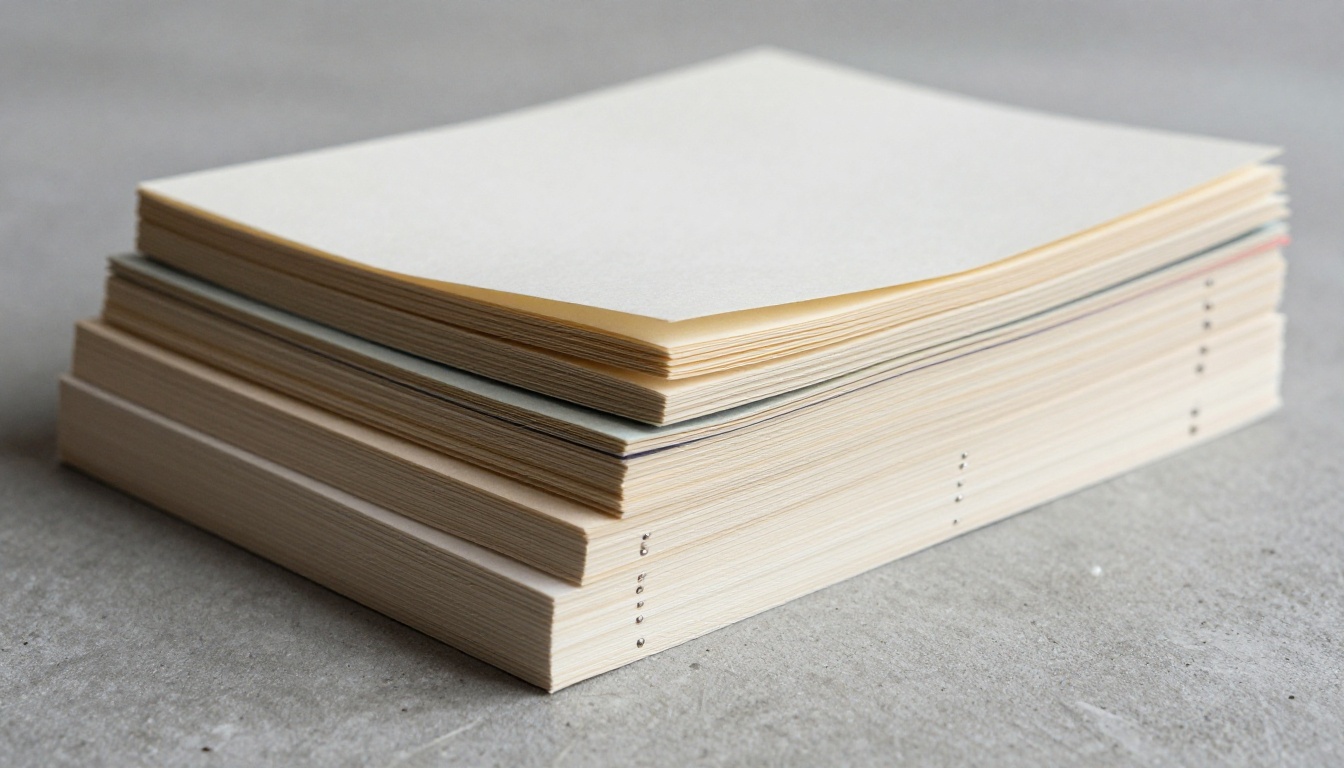
Saddle stitch uses staples through the fold. It works up to roughly 64 pages and is the cheapest option. Perfect binding glues a flat spine and looks like a book. It starts at about 40 pages and costs noticeably more per copy.
Extras That Add Up
- Polybagging: adds $0.10 to $0.25 per piece but protects against damage.
- Inserts and order forms: $0.05 to $0.20 each.
- Personalized covers: variable data printing can add $0.15 to $0.50 per catalog.
- Special trim sizes: non-standard sizes increase paper waste and postage class risk.
⚠️ Warning: A square or oversized catalog can fail postal machinability rules and trigger a surcharge on every piece. Ask your lettershop to check your dimensions before you print.
Design, Photography, and Copy
Creative work is a fixed cost, so it hurts most on small runs. Spread $8,000 of design and photography over 1,000 catalogs and you add $8.00 to every piece. Spread it over 50,000 and you add $0.16.
| Creative item | Low | High |
|---|
| Layout and design (24 pages) | $1,200 | $6,000 |
| Product photography (per image) | $25 | $150 |
| Copywriting | $500 | $3,000 |
| Retouching and proofs | $300 | $1,500 |
| Revisions after approval | $0 | $1,000 |
How to Control Creative Spend
- Reuse product photos from your website instead of reshooting.
- Build one master template and reuse it for every seasonal edition.
- Lock copy before layout starts to avoid paid revisions.
- Keep a library of approved page layouts for bestsellers.
If you already have a PDF from a past print run, you can reuse the same file as a digital edition. The PDF to Flipbook Converter turns that file into a page-turning online catalog, so your design spend works twice.
Mailing Lists and Addressing
You can mail to your own customers for almost nothing. Prospecting is where list cost appears.
Typical List and Lettershop Fees
| Service | Typical cost |
|---|
| Rented prospect list | $60 to $150 per 1,000 names |
| Address cleaning (NCOA) | $3 to $10 per 1,000 |
| Inkjet addressing | $15 to $30 per 1,000 |
| Sorting, bagging, trays | $20 to $45 per 1,000 |
| Delivery to postal facility | $150 to $600 per job |
A rented list for 10,000 prospects can cost $600 to $1,500 before a single catalog is printed. Rented lists are usually one-time use, so every new campaign pays again.
✅ Best practice: Mail your best customers first, then lapsed buyers, then prospects. Response rates drop quickly across those tiers, and so should your spend.
Postage: The Biggest Variable
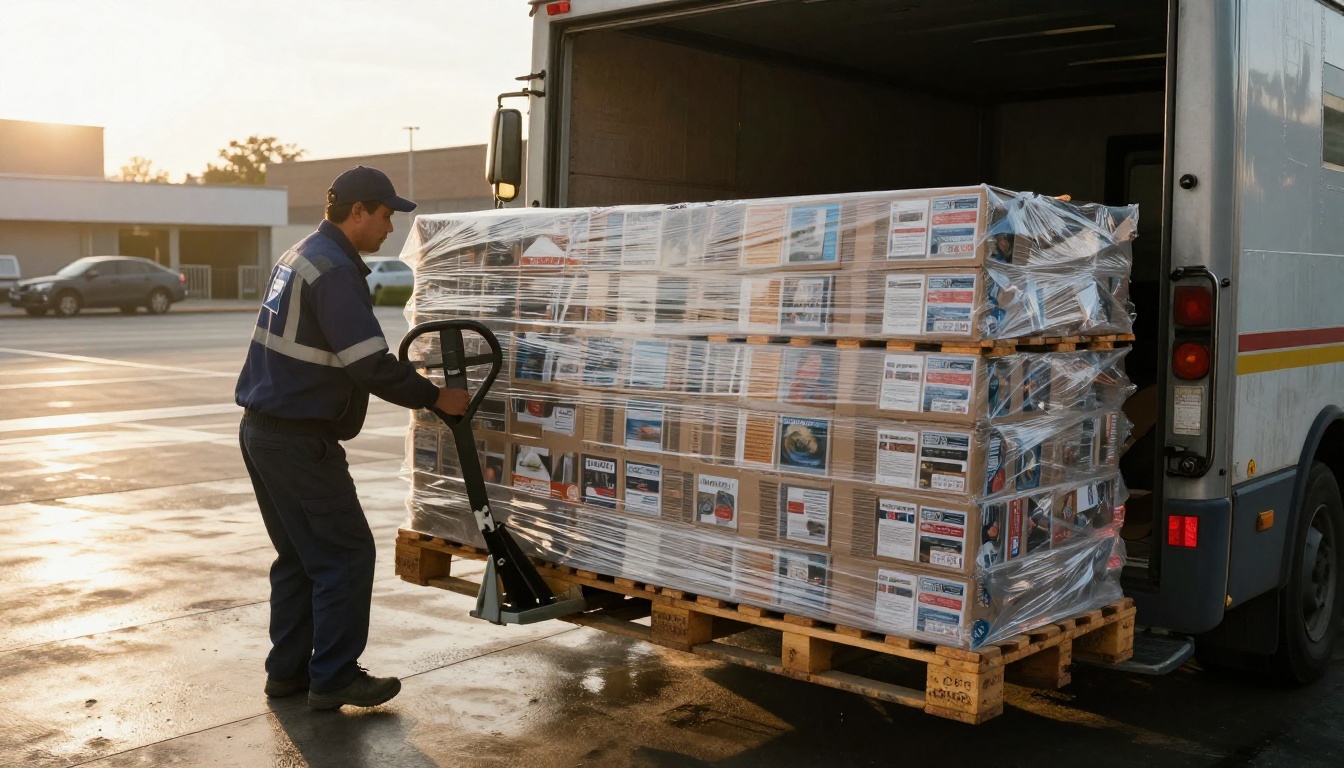
Postage is where budgets break. Rates depend on weight, shape, how well the mail is sorted, and how far it travels. Rates also change on a regular schedule, so always get a current quote from your lettershop or postal rep.
Postage Options Compared
| Method | Approx. cost per piece | Minimum volume | Delivery speed |
|---|
| First-Class single pieces | $0.75 to $1.50 | None | 2 to 5 days |
| Marketing Mail (commercial) | $0.30 to $0.80 | 200 pieces | 5 to 10 days |
| Carrier route saturation | $0.20 to $0.40 | 200 per route | 5 to 10 days |
| Bound printed matter | $1.00 to $2.50 | 300 pieces | 5 to 12 days |
Why Weight Matters So Much
A catalog that weighs 3.2 ounces can cost noticeably less to mail than one at 4.2 ounces. That single ounce can add several cents on bulk rates and far more at single-piece rates. Dropping from 100 lb to 80 lb paper often saves more on postage than it costs in perceived quality.
💡 Pro tip: Ask your printer to produce a blank dummy using your exact paper and page count. Weigh it on a postal scale before approving the job.
Full Budget Examples
Here is how the numbers combine for real campaign sizes. All figures assume a 24-page saddle-stitched catalog and bulk Marketing Mail rates, with a mix of owned and rented names.

| Line item | 1,000 catalogs | 5,000 catalogs | 25,000 catalogs |
|---|
| Printing | $2,200 | $5,000 | $14,000 |
| Design and photography | $4,500 | $4,500 | $6,000 |
| List rental and cleaning | $300 | $900 | $2,800 |
| Addressing and sorting | $60 | $250 | $1,100 |
| Postage | $650 | $2,900 | $13,000 |
| Delivery and handling | $200 | $350 | $900 |
| Total | $7,910 | $13,900 | $37,800 |
| Cost per catalog | $7.91 | $2.78 | $1.51 |
Notice the pattern. At 1,000 copies, creative work dominates. At 25,000, postage does. Your strategy should change with scale.
A Quick Example
A boutique homeware shop mails 2,000 catalogs to past buyers. Print cost is $3,400, addressing and postage are $1,300, and the design is a $2,500 reuse of a template. Total: $7,200, or $3.60 per catalog. If 4 percent of recipients order at an average $140, revenue is $11,200 before product cost. That works, but only because the audience is warm.
Hidden Costs Nobody Mentions
The following items rarely appear on the first quote, yet they show up on the invoice.
- Proofing and press checks: physical proofs cost $50 to $300 each.
- Storage: leftover catalogs take pallet space.
- Undeliverable mail: without address cleaning, 5 to 12 percent of a list can bounce.
- Reprints: a wrong price or phone number can force a costly reprint.
- Staff time: inserting, tracking codes, and call center scripts all take hours.
- Outdated pricing: a printed catalog freezes prices for months.
That last point is subtle. If supplier costs change after printing, you either sell at lower margin or confuse customers with a correction slip. A digital catalog can be updated in minutes.
Print vs Digital Catalogs
Print still wins on certain audiences. Older buyers, luxury goods, and tactile products often respond better to paper. But digital is far cheaper per view and offers data print never can.
| Factor | Printed catalog | Digital flipbook catalog |
|---|
| Cost per recipient | $1.50 to $8.00 | Cents or less |
| Time to launch | 4 to 8 weeks | Same day |
| Updates after launch | Not possible | Instant |
| Analytics | Coupon codes only | Views, pages, clicks |
| Reach | Mailing list only | Anyone with a link |
| Shelf life | Weeks | Unlimited |
| Tactile experience | Excellent | Limited |
The Hybrid Approach
You do not have to choose. Many brands mail a short print teaser to top customers and send the full catalog as a flipbook to everyone else. The mailed piece carries a QR code that links to the online edition. This cuts page count, weight, and postage while keeping the tactile touch for your best buyers.

How to Build a Digital Catalog
If you already have a print-ready PDF, turning it into an interactive catalog takes minutes with Flipbooks AI.
- Create your account. Sign up at Flipbooks AI and open the dashboard.
- Upload your PDF. Drag in your catalog file. The platform converts each page into a smooth page-turning flipbook.
- Customize the look. Add your logo, brand colors, and page-flip effects so it matches your printed edition.
- Add media. Embed product videos or audio to show items in use, something paper cannot do.
- Set sharing rules. Copy a direct link, grab an embed code for your site, or add password protection for wholesale price lists.
- Track results. On the Professional plan, analytics and lead generation show which pages buyers read and who they are. Check the pricing plans to see what each tier includes.
Flipbooks AI never adds watermarks, supports offline downloads, and works on phones and tablets. For specific catalog styles, try the Digital Catalog Maker, the Product Catalog generator, or the Catalog Flipbook Creator. You can also embed the flipbook on your website so shoppers never leave your store.
Ways to Cut Your Costs
Whether you stay with print or go hybrid, these moves cut spend without hurting response.
Ten Practical Savings
- Trim pages in multiples of four. Avoid blank filler pages.
- Use lighter paper. Save on both print and postage.
- Print larger runs less often. Unit price drops fast with volume.
- Segment your list. Mail only buyers likely to respond.
- Clean addresses first. Stop paying postage on dead names.
- Use a presort discount. Your lettershop can handle it.
- Mail on a schedule. Avoid peak seasons when delivery slows.
- Test small. Send 1,000 pieces before committing to 20,000.
- Track with unique codes or URLs. Know which batch performs.
- Send a digital version to everyone else. Reserve paper for top buyers.
✅ Best practice: Measure cost per order, not cost per catalog. A $5 catalog that wins a $200 order beats a $1 catalog that wins nothing.
Use this simple calculation before you approve any catalog budget.
Break-even response rate = Cost per catalog ÷ (Average order value × Gross margin)
For example, with a $3.00 catalog, a $120 average order, and a 40 percent margin, you need a response rate of 3.00 ÷ 48, or about 6.25 percent, just to break even on the first order. Repeat purchases improve that, but you should know the number going in.
| Cost per catalog | Order value | Margin | Break-even response |
|---|
| $1.50 | $100 | 40% | 3.75% |
| $3.00 | $120 | 40% | 6.25% |
| $5.00 | $150 | 35% | 9.52% |
| $7.00 | $250 | 45% | 6.22% |
If your list has never delivered a response rate close to your break-even number, a digital test is the safer next step.
Ready to Cut Your Catalog Costs?
Printing and mailing a catalog costs far more than the printer's quote suggests. Paper, binding, creative work, list fees, postage, and hidden extras can multiply the first number several times over. The good news is that you can control most of those lines with smart sizing, tight lists, and a digital companion edition.
Ready to publish your first interactive catalog? Get started for free on Flipbooks AI. Browse all available flipbook tools and templates to find the right layout, or compare pricing plans to choose what fits your volume. When you are ready to commit, pick a plan here and send your catalog to every customer today.



