Print catalogs served their purpose for decades. They were tactile, browsable, and a staple of retail and B2B marketing. But in 2027, the math no longer works. Printing costs have surged, consumer behavior has shifted almost entirely to mobile, and the window between designing a catalog and getting it into a buyer's hands feels impossibly long. Flipbooks AI represents a fundamental rethinking of how product catalogs work, and the businesses making the switch are not looking back.
The Real Cost of Printing Catalogs
Most marketing teams dramatically underestimate the true cost of print catalogs. They see the per-unit printing quote and assume that is the full picture. It is not.
Paper, Printing, and Shipping Bills
A mid-sized retailer printing 10,000 copies of a 48-page full-color catalog typically spends between $8,000 and $25,000 per print run depending on paper stock, binding, and color profile. Then comes distribution. Bulk mail rates for catalogs in the US average $0.40 to $0.80 per piece, adding another $4,000 to $8,000 per mailing. A seasonal retailer running four catalog editions per year is looking at $48,000 to $132,000 annually in print and postage alone.

Those figures do not account for design agency fees, photography, proofing rounds, or the warehousing and logistics costs of storing and distributing physical materials.
| Cost Category | Print Catalog | Digital Flipbook |
|---|
| Design & Production | $3,000 - $15,000 | $0 - $500 |
| Printing (10,000 units) | $8,000 - $25,000 | $0 |
| Distribution / Postage | $4,000 - $8,000 | $0 |
| Updates & Reprints | Full cost every time | Instant, no extra cost |
| Storage / Warehousing | $500 - $2,000/year | $0 |
| Total Annual (4 editions) | $62,000 - $200,000 | $99 - $499/year |
⚠️ These figures are conservative estimates. Brands with larger print runs and international distribution regularly spend upward of $500,000 annually on print catalog operations.
Outdated Content: A Hidden Tax
The moment a print catalog ships, it starts becoming obsolete. Products go out of stock. Prices change. New items launch. A printed catalog locks your content in amber for its entire distribution lifecycle, typically 3 to 6 months.
For B2B suppliers, this creates real problems. Procurement teams ordering from a catalog published six months ago may find discontinued SKUs, wrong pricing, or unavailable stock. That erodes trust fast. With a digital flipbook, updates take minutes: change the PDF, re-upload, and every link and embed pointing to your catalog now serves the latest version automatically.
What Flipbooks Actually Do Better
The cost savings alone make the case for switching. But the feature gap between a printed page and a modern digital flipbook is where the argument becomes overwhelming.
Interactive Features That Convert
A printed catalog is passive. A reader browses, maybe circles items with a pen, then has to go somewhere else entirely to actually buy. That friction kills conversions.
Digital flipbooks eliminate it. With Flipbooks AI, you can embed clickable product links directly into catalog pages, so a reader who sees a product they like clicks it and lands on the product page in seconds. You can embed video demonstrations inside the catalog. You can add audio commentary for luxury brands that want a guided experience. None of this is possible on paper.
Key interactive features available in digital flipbooks:
- Clickable hotspots on individual products
- Embedded product videos and audio tracks
- Live inventory and pricing links
- Lead capture forms and contact buttons
- Social sharing directly from catalog pages
- Password-protected access for wholesale buyers
- Mobile-optimized page-turn interface
Analytics That Print Can Never Offer
This is perhaps the single biggest advantage flipbooks hold over print, and it is one that marketing and sales teams consistently undervalue until they experience it firsthand.
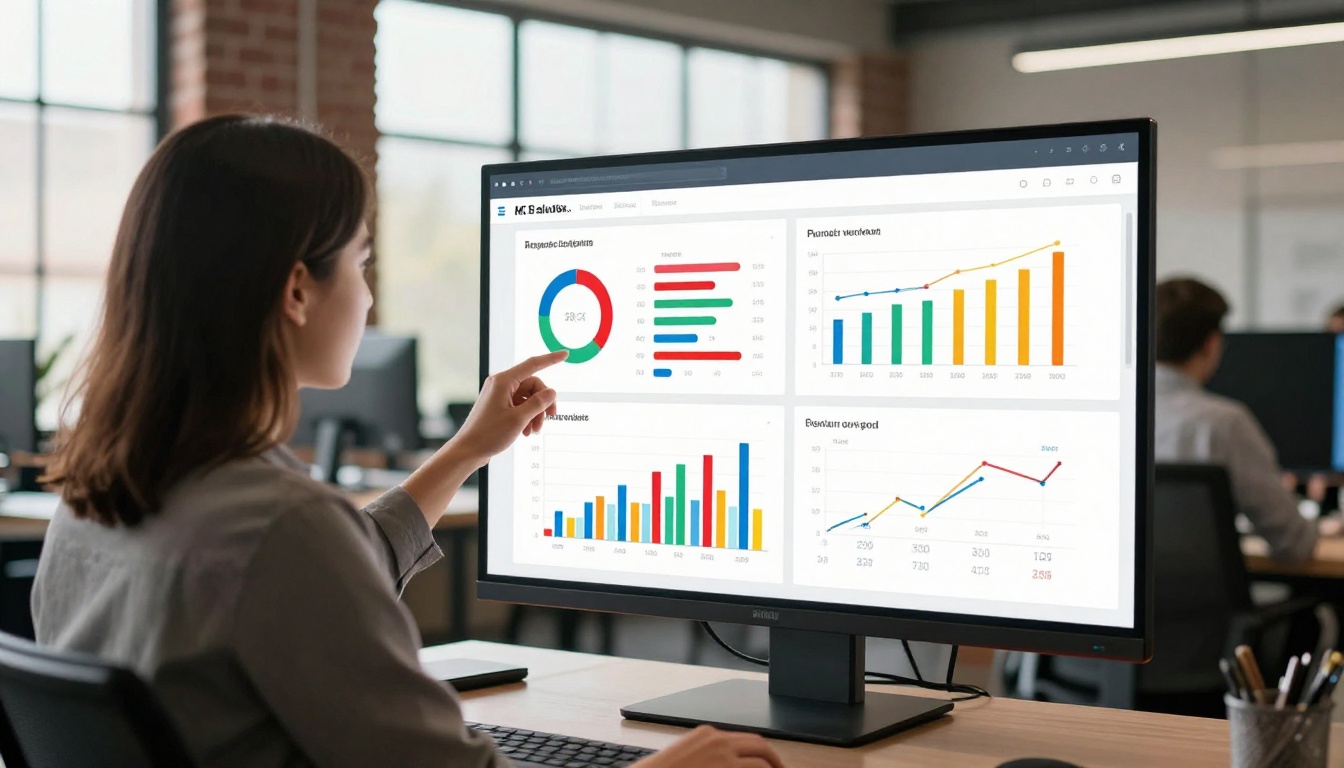
With a print catalog, you have no idea what happens after it leaves your hands. You might run a coupon code to track attribution, but that is about it. With a digital flipbook, you get page-level analytics: which products got the most views, which pages had the highest dwell time, where readers dropped off, how many unique viewers opened the catalog, and from which devices and locations.
💡 Professional plan users on Flipbooks AI get full analytics plus lead generation tools, letting you capture contact details from catalog browsers directly inside the flipbook experience.
That data feeds directly into product decision-making, merchandising, and future catalog design. Print simply cannot compete here.
Industries Already Making the Switch
The migration from print to digital flipbooks is not theoretical. It is happening right now across every major industry that relied on print catalogs as a core sales and marketing tool.

Retail and Fashion
Fashion brands publish seasonal lookbooks, trend reports, and product collections on tight timelines. The print production cycle for a seasonal catalog typically runs 8 to 12 weeks from photo shoot to distribution. By the time the catalog reaches consumers, half the inventory featured may already be low-stock or sold out entirely.
The Fashion Catalog Creator lets fashion brands publish a pixel-perfect digital lookbook in hours, not months. Brands can launch a new collection catalog the same day products go live in their online store, with embedded buy buttons on every spread.
Real Estate and Property
Property listings go stale within days. A printed brochure showing an available listing may sit in a prospect's mailbox weeks after the property sold. Real estate agencies using the Real Estate Brochure Creator can publish up-to-date property portfolios that reflect current inventory, complete with embedded virtual tour links and contact forms.
B2B Product Catalogs
Industrial suppliers, wholesale distributors, and manufacturers still rely heavily on product catalogs, but the B2B procurement cycle demands accuracy above all else. A purchasing manager sourcing components from a printed catalog and finding that 30% of listed parts are discontinued or repriced will not trust that supplier again.
The Product Catalog Generator and Digital Catalog Maker are purpose-built for this use case, allowing B2B teams to maintain always-current digital catalogs with password-protected wholesale buyer access and embedded specification sheets.
Print vs. Digital: Side-by-Side
The comparison below covers the dimensions that matter most to marketing and sales teams evaluating the switch from print to digital.
| Feature | Print Catalog | Digital Flipbook |
|---|
| Time to publish | 8 - 16 weeks | Hours |
| Update speed | Reprint required | Instant |
| Distribution cost | $0.40 - $0.80/unit | $0 |
| Mobile-friendly | No | Yes |
| Analytics | None | Full page-level data |
| Interactive elements | None | Video, links, audio |
| Searchability | None | Full-text search |
| Password protection | Not possible | Yes (all plans) |
| Offline access | Yes | Yes (downloadable) |
| Environmental impact | High | Minimal |
| Lead generation | Coupon codes only | Built-in forms |
| Shelf life | Fixed, expires | Indefinite, updatable |
✅ Digital flipbooks win on every axis except one: a printed catalog can be physically held. For brands where tactile experience matters, a hybrid approach works well. Maintain a small print run for in-store and trade shows, and use a digital flipbook for all remote and online distribution.
How to Convert Your Catalog with Flipbooks AI
If you have an existing print catalog in PDF format, you are one upload away from a fully interactive digital version. Here is exactly how the process works on Flipbooks AI.

Step-by-Step: PDF to Interactive Flipbook
-
Create your account at flipbooksai.com/account. Free accounts let you get started immediately with no credit card required.
-
Upload your PDF catalog. Drag and drop your existing catalog PDF. Flipbooks AI converts it automatically with page-turn animation and maintains all your original typography, photography, and layout exactly as designed.
-
Add interactive elements. Use the editor to add clickable product links on specific pages, embed product videos, set up lead capture forms, or add audio commentary for premium catalog experiences.
-
Customize your branding. Apply your brand colors to the flipbook reader interface, add your logo, and configure the background style. No watermarks appear on Standard plans and above.
-
Set sharing options. Publish with a direct shareable link, generate embed code for your website, set up password protection for wholesale buyer access, or enable offline download for sales reps who need catalog access without internet connectivity.
-
Share and track. Distribute the catalog link via email, social media, or your website. Monitor page-level analytics from your dashboard to see which products generate the most interest.
💡 For teams managing multiple catalog editions or product lines, the Catalog Flipbook Creator lets you organize all your catalogs in a branded content hub with a single URL to share with buyers.
Plan Options and What Each Includes
Flipbooks AI offers tiered pricing designed to scale from individual creators to enterprise catalog operations. Here is how the plans stack up for catalog-focused teams.
| Feature | Free | Standard | Professional |
|---|
| Flipbooks | 3 | Unlimited | Unlimited |
| Watermark | Yes | No | No |
| Custom branding | No | Yes | Yes |
| Password protection | No | Yes | Yes |
| Analytics | No | Basic | Full page-level |
| Lead generation | No | No | Yes |
| Offline downloads | No | Yes | Yes |
| Embed on website | No | Yes | Yes |
| Embed video / audio | No | Yes | Yes |
| Support | Community | Email | Priority |
Common Objections, Addressed Directly
"Our customers prefer physical catalogs"
This was true five years ago. Consumer behavior data consistently shows that mobile browsing now accounts for over 60% of e-commerce traffic in most retail categories. The preference for physical catalogs persists primarily among older demographics and select luxury categories. Even in those cases, having a digital version alongside a print run adds zero incremental cost while opening access to a much wider audience.
"We don't have internal resources to manage a digital catalog"
The entire conversion process from PDF upload to published flipbook takes under 30 minutes. Updating a price or swapping a product image takes under 5 minutes. This is dramatically less resource-intensive than coordinating a full print production cycle.
"We're worried about our catalog being shared without authorization"
Password protection on Flipbooks AI solves this entirely. Wholesale buyers and trade accounts get their own access-controlled catalog link. You can revoke access at any time without reprinting a single page.
Flipbooks AI has purpose-built tools for virtually every catalog use case. Here are the most relevant for teams making the move from print:
Retail and Consumer Brands:
Hospitality and Food Service:
B2B and Professional Services:
Browse the complete directory of flipbook tools to find the right starting point for your specific catalog type.
The Shift Is Already in Progress
The brands that held onto fax machines the longest in the 1990s did not disappear overnight, but they did lose ground. The same dynamic is playing out now with print catalogs. B2B buyers increasingly expect a digital-first experience. Retail consumers browse on mobile by default. And marketing budgets are under more scrutiny than ever, making a $150,000 annual print operation very hard to justify when a digital alternative costs under $500 per year.

The transition is not complicated. The tools exist. The cost difference is dramatic. The feature gap is one-sided. The only thing left is the decision.
Ready to replace your print catalog with something that actually performs in 2027? Get started for free on Flipbooks AI today, compare pricing plans to find the right tier for your team, or browse all available tools and templates to see exactly what your catalog could become in a digital format.



