If your product catalog is still a stack of glossy printed pages mailed out once a quarter, you are not just behind the curve: you are actively losing sales to competitors who figured this out years ago. Static catalogs were once the backbone of B2B and retail selling. Today, they are a liability. Buyers scroll, tap, share, and purchase digitally. When your catalog cannot do the same, you lose them the moment they put it down. Flipbooks AI exists precisely to fix that problem before it costs you another quarter.

The Real Cost of Printing a Catalog Nobody Reads
Physical catalogs cost more than most businesses care to admit. Design, print runs, shipping, storage, and the inevitable reprint when a price changes or a product gets discontinued: it all adds up fast. Industry estimates put the cost of a single direct-mail catalog campaign at anywhere from $0.50 to $2.00 per piece, before you factor in postage. For a list of 10,000 customers, that is $5,000 to $20,000 per mailing.
What do you get in return? A static document that cannot be updated, cannot be tracked, and gets recycled within days of arriving. There is no way to know if a recipient even opened it, let alone which products caught their attention. You are spending thousands of dollars on a one-way communication channel that tells you nothing and cannot respond to your buyer.
⚠️ Warning: If you are running quarterly print runs and revising prices manually with stickers on leftover stock, every corrected label is a trust problem waiting to happen with your customer.
| Cost Factor | Printed Catalog | Digital Flipbook Catalog |
|---|
| Design and Production | $500 to $5,000+ per edition | One-time setup, free updates |
| Printing | $0.50 to $2.00 per unit | $0 |
| Shipping and Distribution | $0.50 to $1.50 per unit | Instant via link or embed |
| Price Correction | Full reprint required | Update in minutes |
| Tracking and Analytics | None | Full page-by-page data |
| Shelf Life | Weeks to months | Perpetual, always current |
The financial math alone should stop most businesses in their tracks. But cost is only one dimension of the problem.
Why Buyers Are Ignoring Your Printed Materials

Consumer behavior shifted permanently in the last decade. Over 70% of B2B buyers now prefer to self-educate digitally before ever contacting a sales representative. In retail, smartphone usage during the shopping process has become the norm rather than the exception. Buyers do not wait for your mailed catalog to arrive. They search, compare, and often decide before your print run even ships from the warehouse.
This is the core disconnect: your buyer is digital, but your catalog is not.
A printed catalog forces the buyer to:
- Hunt for a product manually with no search function
- Accept outdated pricing without knowing it is outdated
- Call or email you to ask questions the catalog cannot answer
- Contact you separately to check stock availability
- Share your catalog by physically handing it to someone else
- Revisit a specific page with no bookmarks or links
Every single one of those friction points is a moment when a competitor with a shareable, searchable, always-current digital catalog wins the sale instead of you. The problem is not that buyers stopped wanting information about your products. The problem is that the format you are delivering that information in no longer fits how they want to receive it.
💡 Pro tip: The average time a prospect spends with a printed catalog before setting it aside is under 3 minutes. An interactive digital catalog with embedded video holds attention for 8 to 12 minutes on average, giving your products far more time to make an impression.
What Static Catalogs Simply Cannot Do
The limitations of a printed or basic PDF catalog are not minor inconveniences. They are structural. No matter how beautiful your design or how high your print quality, static formats cannot compete with what buyers now expect from a purchasing experience.
No Real-Time Price Updates
Pricing changes constantly. Promotions run. Stock levels shift. Supply chain disruptions alter costs overnight. With a printed catalog, none of that can be reflected without a full reprint. Buyers who call to order a product and discover the price is different from what the catalog shows do not become more trusting. They become less trusting, and less likely to order again.
Zero Visibility Into Buyer Behavior
Do you know which products in your catalog got the most attention last month? With a printed catalog, the answer is always no. You might know how many units you mailed. You have no idea what happened after that. Digital catalog analytics change this entirely. You can see exactly which pages buyers spent the most time on, where they dropped off, and what they clicked. That behavioral data shapes your next product strategy, your promotions, and your sales conversations.
No Multimedia, No Interaction
A photograph of a piece of furniture is informative. A video of that same furniture being assembled and used in a real home is persuasive. A printed catalog can only offer the photograph. A digital interactive catalog embeds the video directly into the page. Buyers can see the product in motion, hear it described, and visualize it in context. That experiential difference directly impacts how many of them convert from browsers into buyers.
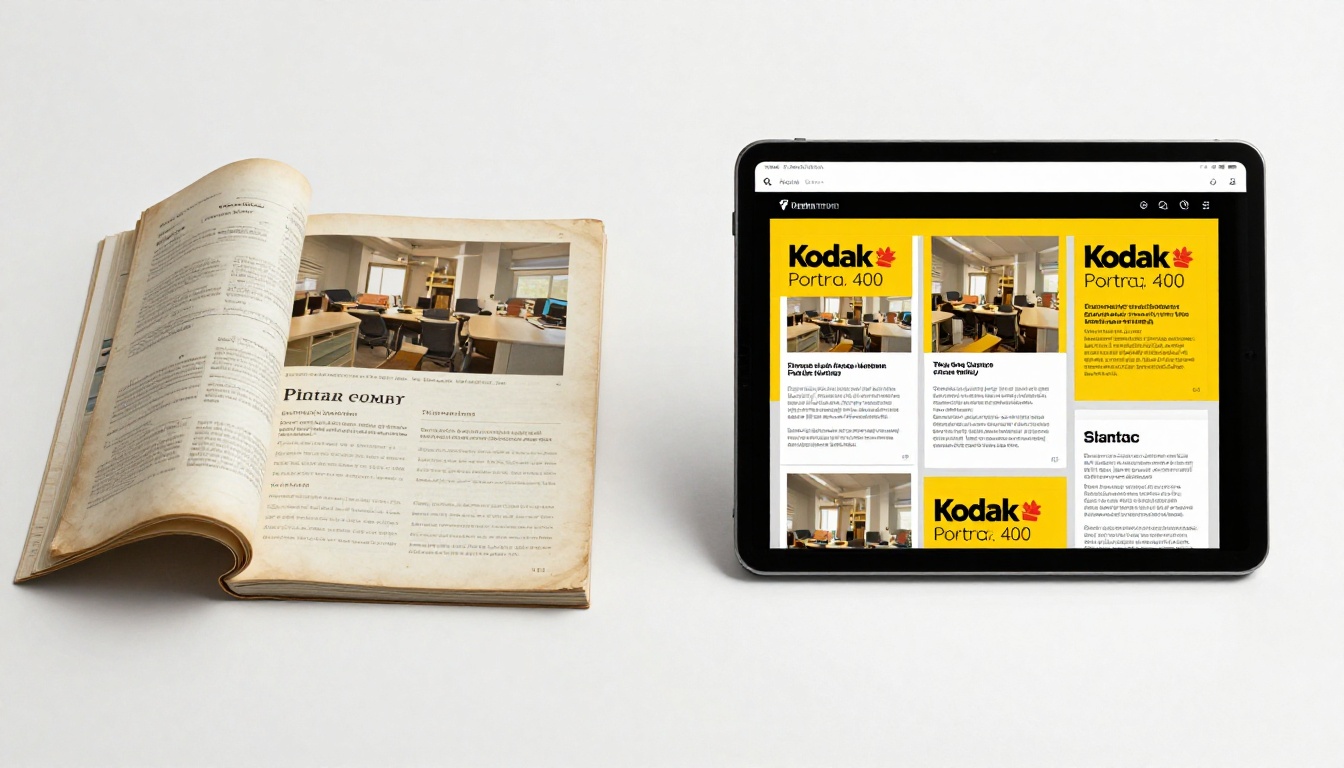
Static vs. Interactive: The Numbers
| Metric | Static Printed Catalog | Interactive Digital Catalog |
|---|
| Average time spent browsing | 2 to 3 minutes | 8 to 12 minutes |
| Ability to share | Physically only | Link, embed, email, social |
| Price accuracy | Outdated at print | Always current |
| Mobile optimized | No | Yes |
| Embedded video | No | Yes |
| Behavioral analytics | No | Full page-by-page data |
| Lead capture | No | Yes (Professional plan) |
| Password protection | No | Yes |
| Updates required | Full reprint | Instant edits |
| Per-unit distribution cost | $1.00 to $3.50 | $0 |
The gap is not subtle. It is a structural difference in what your sales tool is capable of doing for you. A printed catalog is a one-way broadcast. A digital interactive catalog is a sales conversation you can measure, refine, and improve over time.
How Digital Catalogs Actually Close More Sales

The shift to digital catalogs is not about aesthetics. It is about the mechanics of how buyers move through a purchase decision. Every friction point you remove increases the probability of a completed sale. Digital catalogs remove friction in three critical ways that printed formats simply cannot replicate.
Buyers Browse on Mobile
More than 60% of digital content is consumed on mobile devices. A printed catalog is completely incompatible with that reality. A basic PDF is barely functional on a phone screen, requiring constant pinching and zooming just to read product descriptions. A digital flipbook catalog built with a tool like Flipbooks AI is mobile-responsive by default. Your buyer can scroll through your full product range on their phone during a commute, a lunch break, or from a job site. That accessibility means your catalog reaches buyers in the moments when they are most receptive to purchasing.
Embedded Video Sells Products Better
Video converts at a significantly higher rate than static imagery. Products presented with video see up to 80% higher purchase intent than those presented with photography alone. The Digital Catalog Maker on Flipbooks AI lets you embed video directly into catalog pages, so your products are not just shown. They are experienced. A furniture retailer can show a sofa being arranged in a living room. An apparel brand can show a jacket being worn in motion. A food company can show a dish being prepared. The impact on buyer confidence is immediate.
✅ Best practice: Add a short 30 to 60 second product demo video for your top 10 best-sellers. That single change can meaningfully lift conversion on your highest-margin items without requiring a full catalog redesign.
Analytics That Show What Works
When you know which pages hold attention and which ones lose it, you can make data-backed decisions about your product presentation. Interactive catalog platforms with built-in analytics show you time-on-page, click-through rates, device types, geographic data, and repeat visitor behavior. That feedback loop is unavailable with printed catalogs and transforms how quickly you can iterate and improve your sales materials.

How to Build a Digital Product Catalog with Flipbooks AI
Flipbooks AI makes converting your static catalog into an interactive digital flipbook straightforward. You do not need a developer, a designer, or any technical expertise. Here is how to do it.
Step 1: Create your account
Go to flipbooksai.com/account and sign up. The onboarding process takes minutes and no credit card is required to start.
Step 2: Upload your PDF catalog
Use the PDF to Flipbook Converter to upload your existing catalog PDF. The platform converts each page into a beautifully rendered, interactive flipbook with realistic page-turning animation. If your catalog has 50 pages or 500, the process is the same.
Step 3: Customize your branding
Add your logo, set your brand colors, adjust fonts, and configure the opening page image. Every flipbook is fully branded so it feels native to your company identity rather than a generic third-party tool.
Step 4: Embed multimedia
Add video to product pages, embed audio for narration or background music, and insert clickable links that take buyers directly to product pages, contact forms, or checkout. This is where a static PDF becomes a living sales tool.
Step 5: Set sharing and protection options
Share your catalog via direct link, embed it on your website with a simple code snippet, or set a password for restricted access to protect pricing from competitors. Purpose-built tools like the Catalog Flipbook Creator and the Product Catalog Generator let you tailor the experience to specific product types and industries.
Step 6: Activate analytics and lead generation
On the Professional plan, activate the analytics dashboard and lead capture forms. Collect contact details from buyers who interact with your catalog and route those leads directly to your sales team. You can also enable offline downloads so buyers can access your catalog without an internet connection.
💡 Pro tip: Use the analytics from your first digital catalog to plan your second one. Products with high time-on-page deserve more prominent placement. Pages with low attention need stronger imagery or clearer pricing presentation.

Which Businesses Benefit Most from Going Digital

Almost every industry that still relies on printed catalogs would see immediate returns from switching to digital. But some sectors feel the pain of static catalogs most acutely.
| Industry | Static Catalog Pain Point | Digital Catalog Advantage |
|---|
| Fashion and Apparel | Seasonal collections go stale fast | Update instantly with new arrivals |
| Furniture and Home Decor | Products discontinued mid-print run | Remove items in seconds, no reprint |
| B2B Wholesale | Complex pricing tiers hard to convey | Layer in interactive pricing and specs |
| Real Estate | Listings change daily | Always-current property flipbooks |
| Food and Beverage | Menu prices fluctuate weekly | Real-time menu updates, zero print waste |
| Automotive | Models and packages change annually | Embed configuration and feature videos |
| Hospitality | Seasonal offers need regular refreshes | Password-protected exclusive catalogs |
For fashion businesses, the Fashion Catalog Creator is purpose-built for seasonal, fast-moving content. For furniture retailers, the Furniture Catalog Maker handles complex product libraries with ease. Real estate professionals can use purpose-built brochure tools, and restaurant operators can build beautiful menus with the Restaurant Menu Creator.
✅ Best practice: If you are in B2B sales, distribute your digital catalog with password protection to keep pricing confidential from competitors. Flipbooks AI makes this a one-click setting on any flipbook.
The Hidden Cost You Pay in Buyer Trust
There is a dimension to this problem that is harder to quantify but equally damaging to your business. When a buyer picks up your printed catalog and the price is wrong, a product is discontinued, or the contact information has changed, they do not just encounter an inconvenience. They encounter a signal that your business is not operating at a professional level.
In markets where multiple vendors are competing for the same buyer, that impression carries weight. A beautifully designed, always-accurate, mobile-friendly digital catalog communicates that your business is organized, current, and attentive to customer experience. A worn printed booklet with a corrected price sticker communicates the opposite. That perception gap feeds directly into your close rate, even when the product itself is identical to what your competitor is selling.
The technology barrier between a static catalog and an interactive digital one is no longer expensive or complex to bridge. Platforms like Flipbooks AI have removed every technical obstacle that once made digital catalog publishing inaccessible to small and mid-size businesses.

Flipbooks AI Plan Features at a Glance
| Feature | Availability |
|---|
| No watermarks, ever | All plans |
| Unlimited flipbooks | Standard plan and above |
| Password protection | Standard plan and above |
| Custom branding | All plans |
| Embed video and audio | All plans |
| Mobile-responsive design | All plans |
| Analytics dashboard | Professional plan |
| Lead generation forms | Professional plan |
| Offline downloads | Professional plan |
Review the full breakdown and compare tiers on the Flipbooks AI pricing page to find what fits your volume and use case.
Stop Printing, Start Converting
Your static catalog is not just an outdated format. It is a daily cost measured in print bills, in missed buyer insights, in sales that go to more digitally-ready competitors, and in buyer trust eroded by inaccurate information delivered too late. The ROI on printed catalogs was always difficult to prove. Today it is impossible to justify when the digital alternative is faster, cheaper, more informative, and directly measurable.
The solution is straightforward: convert your existing PDF into a digital flipbook that buyers can access on any device, share with a link, interact with through video, and that your team can update in minutes rather than weeks.
Ready to stop losing sales to a format that no longer fits how buyers shop? Get started for free on Flipbooks AI today. Browse all available catalog tools to find the right fit for your industry, and review the pricing plans to choose what works for your business.
Your competitors are not waiting for print runs anymore. Neither should you.



