You spent hours on a brochure, a training manual or a product catalog, and now you want it to talk. Maybe a calm voiceover on each page, maybe soft background music while someone browses. Here is the catch: a standard PDF is built for print-style reading, and sound support is patchy at best. The good news is that there are working routes, from the old Acrobat method to converting the file into an interactive flipbook with a tool like Flipbooks AI.
This article compares every realistic way to add audio to PDF files, shows where free online options help (and where they fall short), and gives you a clear embed workflow so your sound plays on desktop, tablet and phone.
💡 Short answer: if your readers will open the file in Chrome, Safari or a phone app, embedded PDF audio will probably stay silent. Hosting the audio and presenting the document as a flipbook is the dependable path.
Why PDFs Struggle With Sound
What Acrobat Actually Supports
The PDF format does allow sound. Adobe Acrobat can attach an MP3 or WAV file to a page, either as a sound object or inside a multimedia (rich media) annotation. You pick a rectangle on the page, choose the file, and set playback to trigger on click or on page open. On paper, that is exactly what you want.
In practice, only Adobe's own desktop reader handles this properly, and even there security settings sometimes block playback until the reader asks the user for permission. The sound lives inside the file, which also means a 10 MB music loop makes every download 10 MB heavier.
Where Embedded Audio Breaks
Most people do not open PDFs in Acrobat. They tap a link on a phone, preview an attachment in an email app, or let the browser show it inline. Each of those viewers draws the page and ignores the sound object entirely. There is no error message. The reader just sees a silent page and assumes nothing was added.
Here is how the common viewers behave with an embedded sound file:
| Viewer | Plays embedded audio? | Notes |
|---|
| Adobe Acrobat (desktop) | Usually yes | May ask for permission first |
| Chrome / Edge built-in viewer | No | Renders pages only |
| Safari / macOS Preview | No | Sound objects ignored |
| iOS and Android mail previews | No | Static page images |
| Flipbook viewer (web) | Yes | Audio is hosted, plays on tap |
If your audience is unknown, treat embedded PDF audio as a bonus for Acrobat users rather than your main delivery method.
Three Ways to Add Audio
Before picking a tool, decide which trade-off you can live with: file portability, playback reliability or effort.
| Method | Works on phones? | Effort | File size impact | Best for |
|---|
| Acrobat sound object | Rarely | Medium | Large | Internal files opened in Acrobat |
| Hyperlinks to hosted audio | Yes (opens a player) | Low | None | Quick fixes, email attachments |
| Flipbook with embedded audio | Yes | Low | None on source PDF | Public sharing, websites, catalogs |
Method 1: Acrobat Sound Object
Open the PDF in Acrobat Pro, choose the tool for adding multimedia, and draw a box where the audio control should sit. Select your MP3, set the poster image (a small play icon works well), and choose whether playback starts on click or when the page opens. Save and test in a second viewer to confirm what your audience will experience.
⚠️ Never rely on auto-play on page open. Many readers dislike surprise sound, and Acrobat may block it anyway. Use a visible play button.
Method 2: Hosted Audio Links
This is the simplest workaround. Upload your MP3 to a hosting service, copy the share link, then add a text or image link in the PDF that points to it. When the reader taps the link, their device opens an audio player in the browser. It is not elegant, because the reader leaves the page, but it works everywhere and keeps the PDF light.
Good places to host audio include your own website, a podcast host, or a cloud drive with public sharing turned on. Check that the link opens without a login screen.
Method 3: Flipbook Conversion
A flipbook turns the PDF into a web page with turning pages. Because it runs in the browser, it can play audio from a hosted file using the same player technology as any website. Readers do not need Acrobat, plug-ins or special permissions. The PDF to Flipbook Converter handles the conversion, and you attach audio afterward without touching the original file.
Background Music Done Right
Background music sets a mood in seconds. A hotel brochure with gentle acoustic guitar feels different from the same pages in silence. But bad music choices (too loud, too busy, wrong licence) can push readers away or cause legal trouble.
Choose Royalty-Free Tracks
Never drop a popular song into a brochure you plan to publish. Copyright claims can arrive months later. Safer sources include:
- Royalty-free libraries that sell a one-time commercial licence
- Creative Commons tracks that allow commercial use (read the attribution line)
- Music you or a collaborator composed and own outright
- Subscription libraries that include business use in the plan
Instrumental tracks work best. Lyrics compete with the words on the page, and people read slower when they hear a voice singing.
Set Volume and Loops
Aim for a track that sits quietly under the reading experience. A few practical rules:
- Trim the file to 60 to 120 seconds and make sure the loop point has no click or silence.
- Normalize the volume so it is gentle, around minus 18 to minus 20 LUFS for background use.
- Offer a mute button. Always. Open-plan offices and trains are real places.
- Compress the MP3 to 128 kbps. For ambient music, nobody hears the difference, and load time drops.
Voiceover Recording Tips
A voiceover turns a static page into a guided talk. It suits product tours, training manuals, language materials and anything where a person would normally say "let me walk you through this."
Script One Page at a Time
Write the narration per page, not as one long essay. Each page then gets its own short clip of 20 to 60 seconds, which makes editing far easier and lets readers jump around freely. Keep sentences short, read them aloud once before recording, and avoid repeating exactly what is printed. The audio should add context, not read the text back.
Record and Clean Up
You do not need a studio. A modern phone held about a hand-width from your mouth, in a room with curtains and carpet, produces usable speech. A USB condenser mic makes it better.
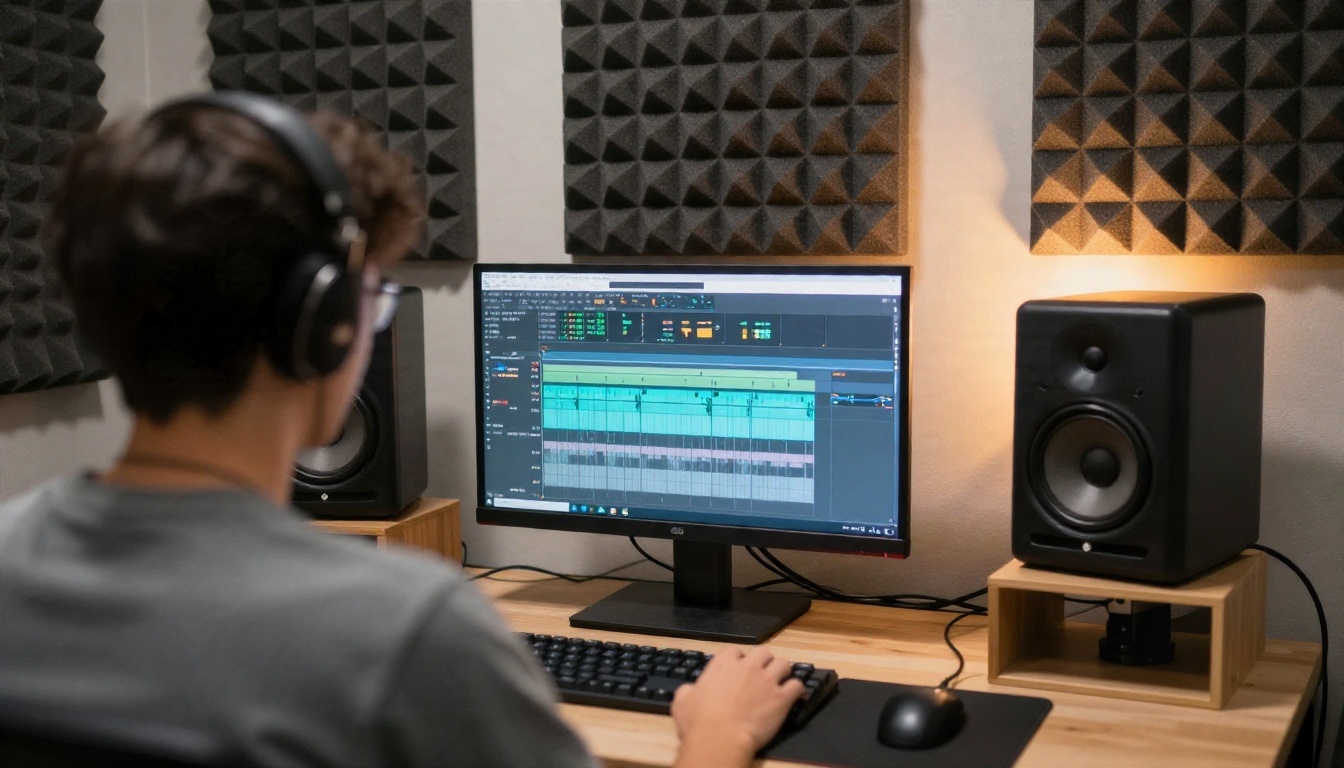
Then clean the recording:
- Remove long pauses and breaths at the start and end of each clip
- Apply light noise reduction, not heavy, or the voice sounds underwater
- Level every clip to the same loudness so pages do not jump in volume
- Export as MP3 at 96 to 128 kbps mono (voice does not need stereo)
💡 Free editors such as Audacity cover all of these steps. Record, trim, reduce noise, normalize, export. The whole process takes about five minutes per page once you have a routine.
Free Online Options Compared
Many sites claim to add audio to a PDF for free. Most fall into three groups, and the differences matter more than the price tag.
| Option type | Typical cost | Plays on phones? | Typical limits |
|---|
| Free online PDF editors with a sound tool | Free tier | Often not | File size caps, watermark on export |
| Audio hosting plus link in PDF | Free tier | Yes | Reader leaves the page |
| Free flipbook builders with audio | Free tier | Yes | Watermark, page limits or time limits |
| Paid flipbook platform | Subscription | Yes | None of the above on higher plans |
What Free Usually Costs You
Free tools are fine for a test or a personal project. For anything public, watch for these tradeoffs:
- Watermarks across pages or a banner on the viewer
- Expiring links that quietly break after 30 days
- Upload size caps that reject a decent MP3
- Data handling you cannot verify, which matters for contracts and internal documents
If the document carries your brand, a watermark defeats the point. Flipbooks AI never adds one, and you can compare the plans to see where unlimited flipbooks begin.
When Free Is Enough
A school handout shared once, a family recipe pack, a draft you want a colleague to hear. In those cases, hosting the MP3 anywhere free and linking to it is perfectly sensible. Once the file represents a business, upgrade the delivery.
How to Add Audio with Flipbooks AI
If you want the dependable route, here is the workflow. It takes roughly ten minutes for a short document.
Start Here: Create an Account
Head to Flipbooks AI and create an account. You can try the converter before choosing a plan.
Upload and Convert Your PDF
- Sign in and choose the option to create a new flipbook.
- Drag in your PDF. Text, links and images are preserved, and pages become a turning flipbook.
- Wait for processing. Short files finish in moments, longer catalogs take a little more.
- Check the page order in the preview before adding anything else.
Customize the Look
Add your logo, pick brand colors, choose the page-turn effect and set the background. A consistent look matters when sound is part of the experience, because readers judge polish quickly. Pick a calm page effect if your music is gentle.
Attach Audio and Media
Flipbooks AI lets you embed videos and audio in your pages. Place a sound element where it belongs:
- Open the page you want to edit.
- Add an audio element and select your MP3, or paste the link to a hosted file.
- Position the play button on the page, ideally near a heading or an image.
- Repeat for each page that needs narration. For background music, attach one track that persists while the reader browses.
- Preview on desktop, then on your phone.
✅ Best practice: keep the play button visible and labelled with a simple icon. Readers should never wonder where the sound went.
Share, Embed and Protect
When the flipbook looks right, you have several ways to publish it:
- Direct link for email, chat and social posts
- Embed code for your website (see the Embed Flipbook on Website tool)
- Password protection for private documents such as client proposals
- Offline download when readers need a copy without internet
Embedding is a one-line paste into your page builder. The flipbook is mobile-responsive, so audio controls remain tappable on small screens.
Pro Features Worth Knowing
On the Professional plan you get analytics and lead generation. That means you can see how many people opened the flipbook, which pages held attention, and capture an email before someone reads a premium document. Pair that with narration and you finally know whether the voiceover is getting played. See the pricing page for plan differences.
Real-World Examples
Abstract advice only goes so far. Here are three setups that work.
Restaurant Menus With Ambience

A trattoria can turn its PDF menu into a flipbook using the Restaurant Menu Creator, then add a soft Italian instrumental track and a 20-second chef narration on the specials page. Diners scanning a QR code on the table hear the chef explain the pasta of the day. Sales of featured dishes tend to benefit when guests feel a human voice behind the menu.
Training Manuals With Narration

Teachers and corporate trainers can attach a voice explanation to each exercise in a Training Manual Flipbook or Course Material Publisher project. Students who struggle with dense text can listen while they read, and language classes gain pronunciation samples next to every vocabulary list.
Property Brochures With a Personal Pitch

An agent can build a Real Estate Brochure and record a short welcome on the first page: who they are, what makes the neighborhood special, how to book a viewing. Buyers receiving the link by email get a personal introduction without scheduling a call.
Here is how these use cases line up:
| Use case | Audio type | Clip length | Suggested control |
|---|
| Restaurant menu | Ambient music plus chef note | 20 to 30 sec | Mute toggle, play on specials |
| Training manual | Per-page narration | 30 to 60 sec | Play button per exercise |
| Property brochure | Welcome message | 30 to 45 sec | Play button on page one |
| Product catalog | Short feature notes | 15 to 25 sec | Icon beside each product |
| Press kit | Founder statement | 60 sec | Play button on About page |
Common Mistakes to Avoid
Most failed audio projects share the same handful of problems. Check this list before you publish:
- Auto-play with no control. Browsers often block it, and readers dislike it.
- Huge files. A 40 MB WAV makes pages hang on mobile data. Export to MP3.
- Mismatched loudness. One quiet page and one loud page make people reach for the volume button.
- No transcript or captions. Some readers cannot hear, or are in a place where they cannot play sound. Keep the written text on the page as the main content.
- Unlicensed music. Keep a note of every track's source and licence.
- Skipping the phone test. Always open the final link on a real phone before sharing.
⚠️ Accessibility matters. Audio should add to the document, never replace the text. Keep the original words readable for screen readers and for anyone who cannot play sound.
Ready to Add Sound to Your PDF?
You now have the full picture. Embedded PDF audio works in Acrobat and almost nowhere else. Hosted links work everywhere but interrupt the reading. A flipbook keeps the pages, the layout and the audio together in a format any browser plays.
Start with the simplest version: one voiceover on the first page, one quiet music loop, a visible mute button. Then test it on your phone and share it.
Your PDF has plenty to say. Give it a voice.



